

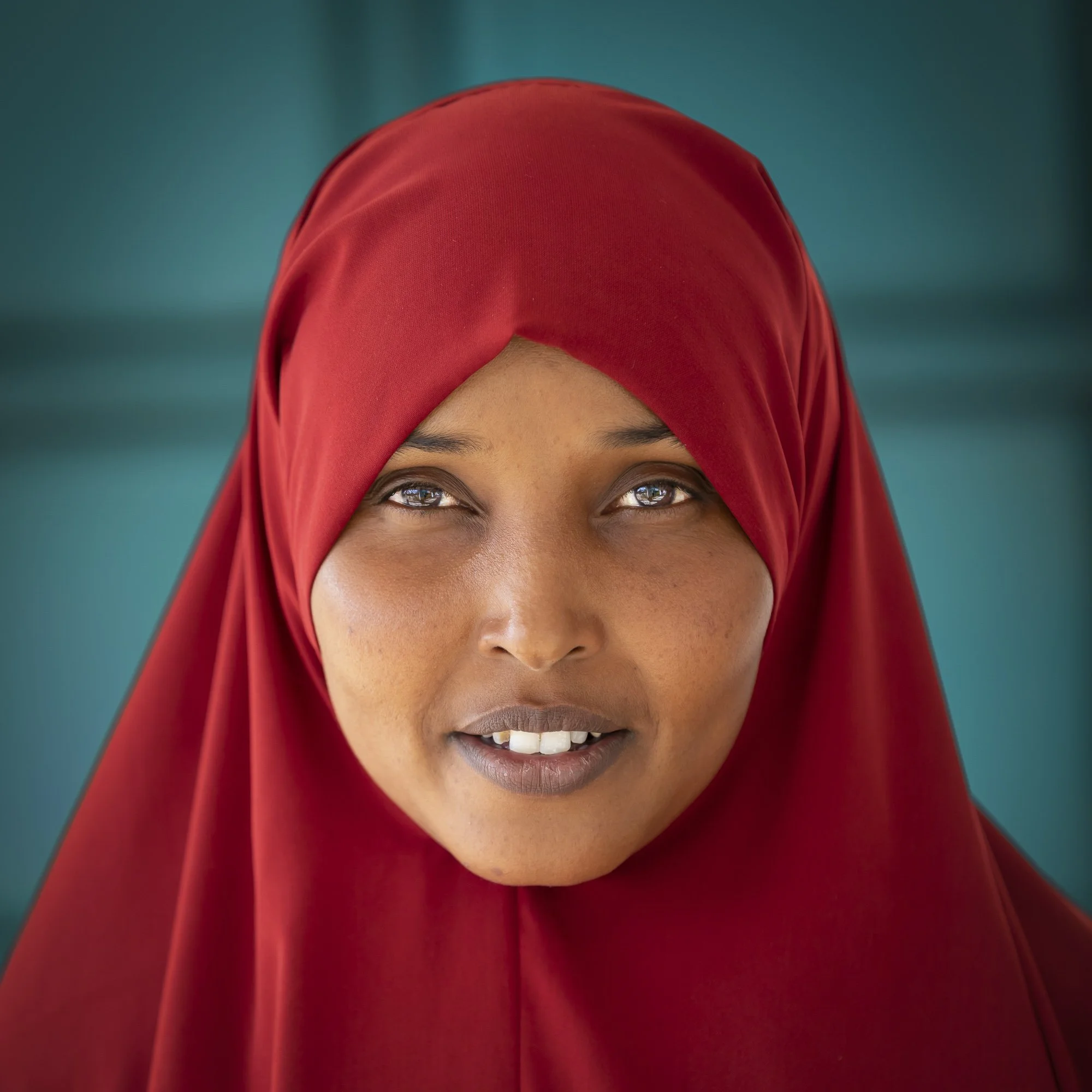
Saida arrived at Kakuma Refugee Camp from Somalia as a child, separated from her parents and growing up far from home. When I photographed her, she had just begun a university program through the Global Education Movement (GEM) — an opportunity available to only a fraction of the world’s 25+ million refugees.
Portraits
Portraits, for me, are conversations—quiet collaborations that reveal identity, history, and emotion. Each image is a story, not just a face. I approach every portrait as an act of listening, of creating space for someone to be fully seen—whether that means honoring vulnerability, celebrating resilience, or capturing the everyday poetry of a life. These photographs are not about perfection; they are about presence, nuance, and truth.
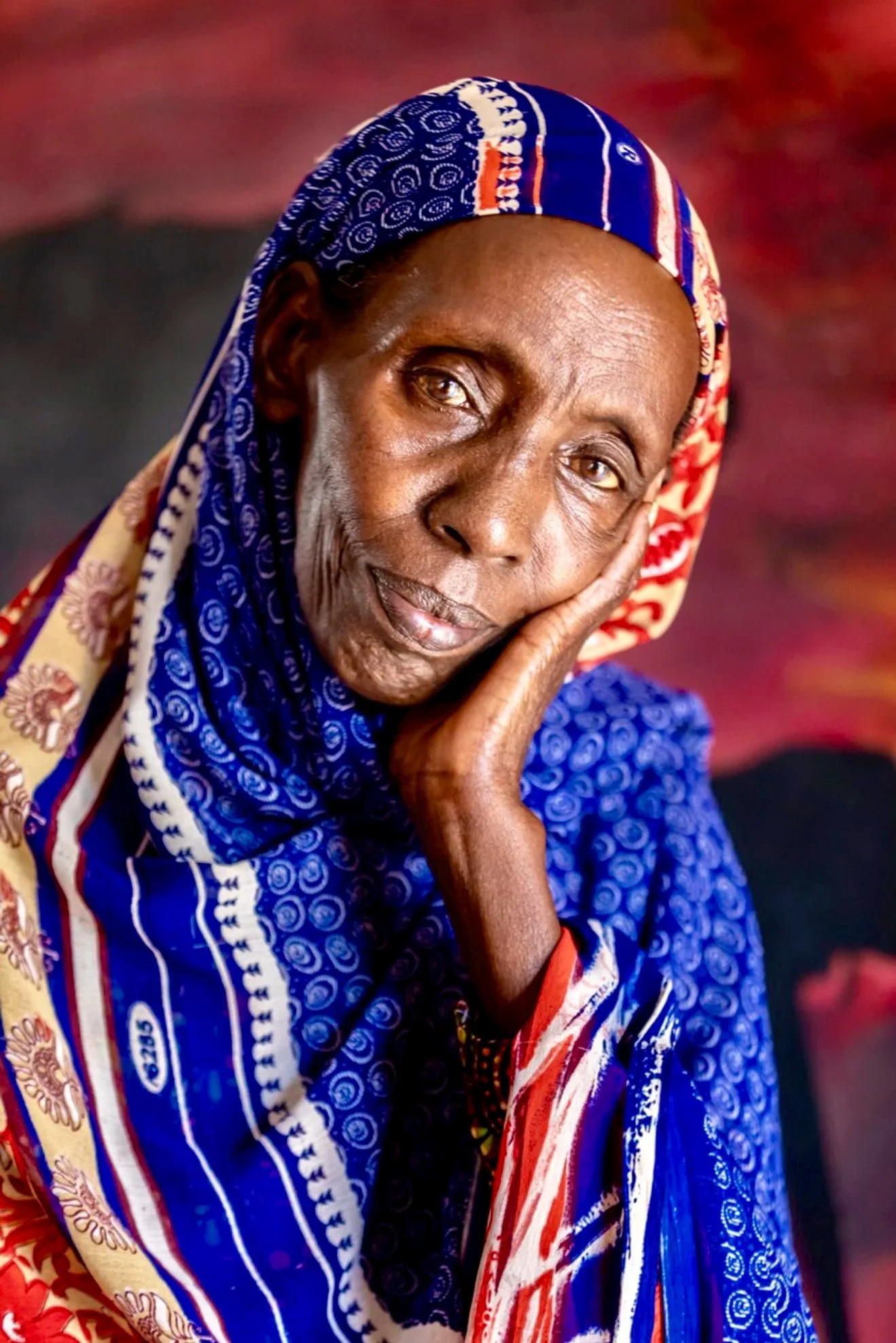
Mama Teta, a beloved craft teacher I meet while teaching in Kigali, Rwanda, brings gentleness and creativity to the children she works with. After years away, I returned to find her still guiding young hands with patience, dignity, and quiet strength.
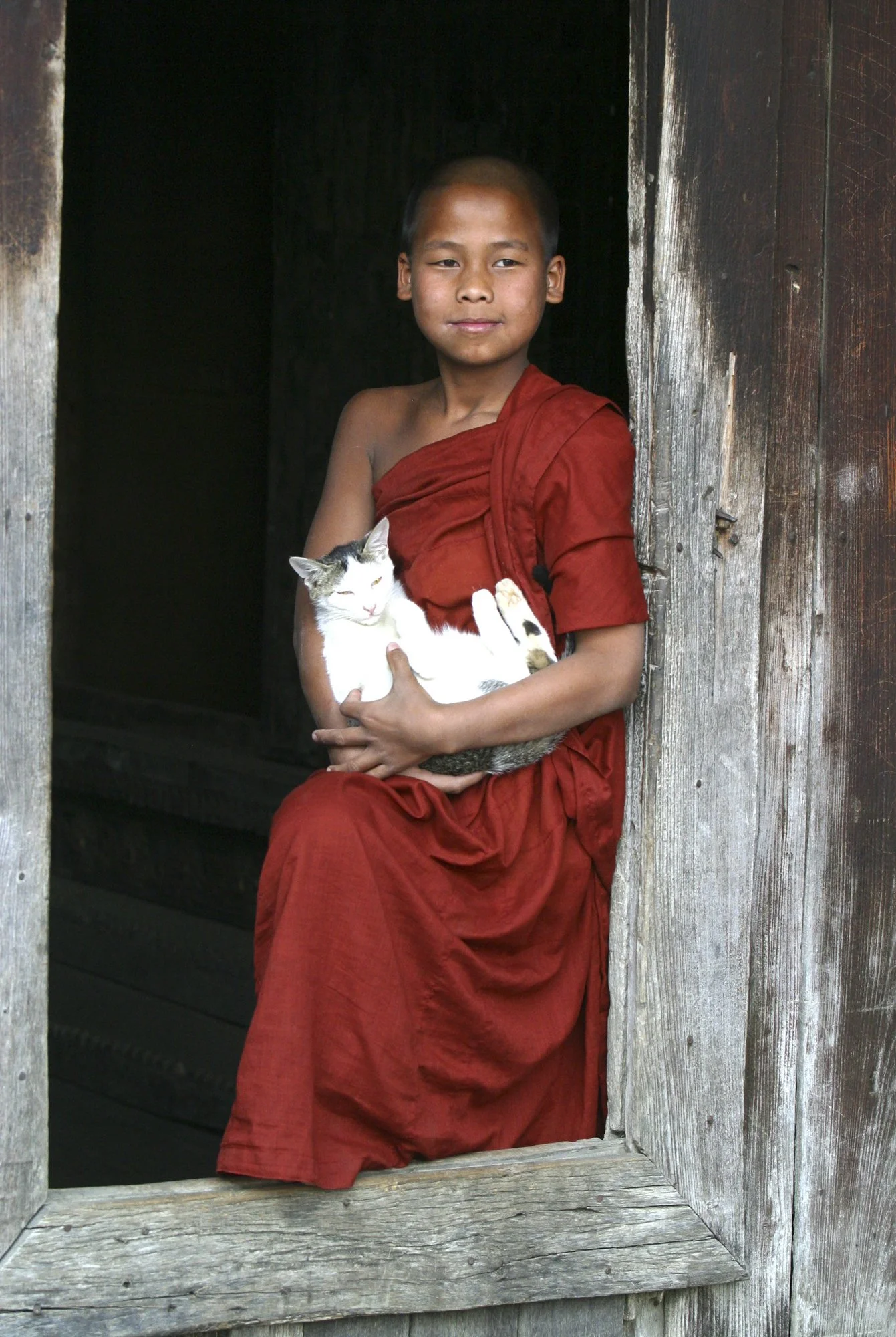
A young novice monk cradles the resident cat at a rural monastery in central Myanmar. In a place shaped by ritual and discipline, this quiet moment of tenderness offers a glimpse into the gentle, everyday humanity behind monastic life.
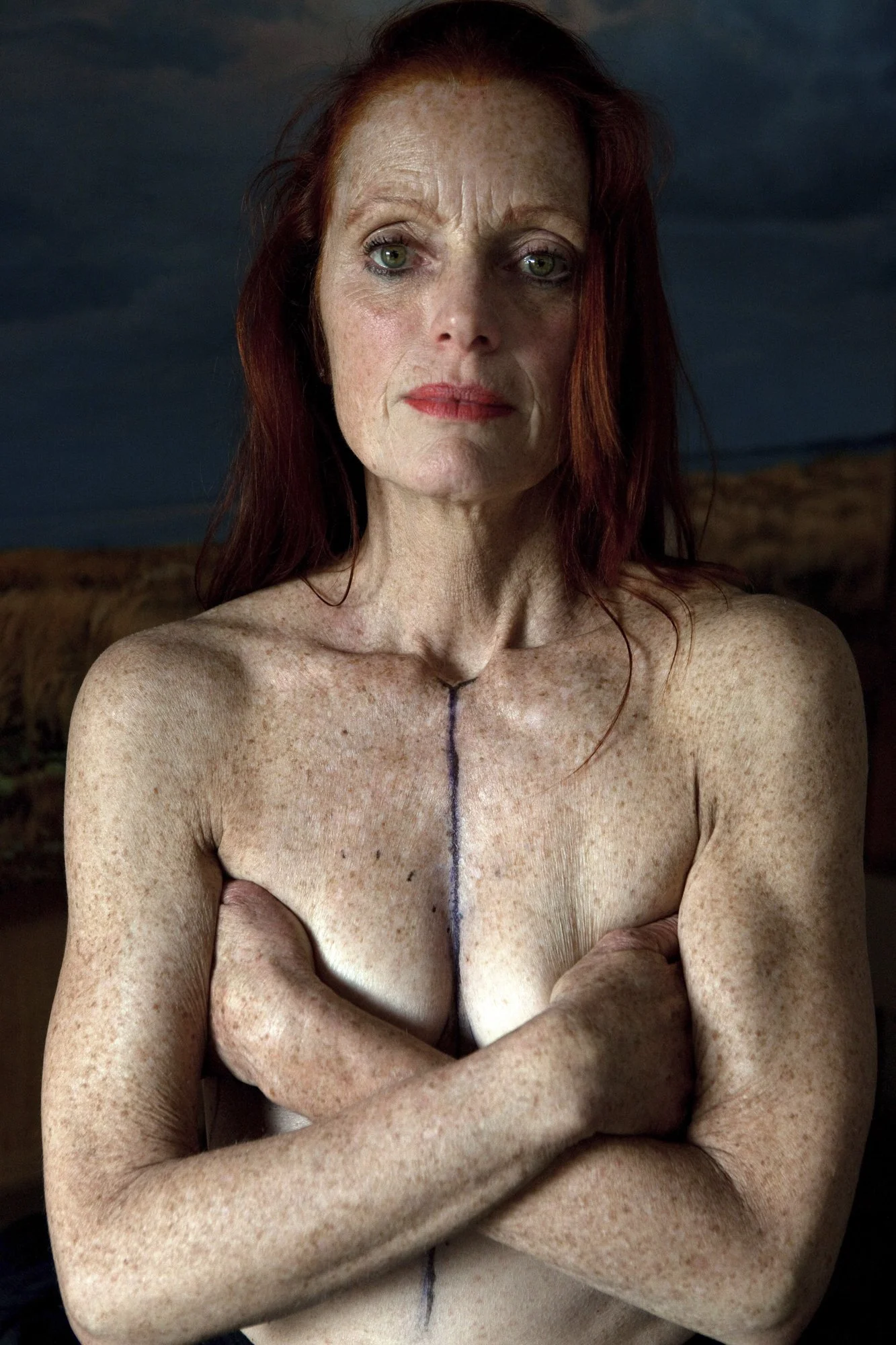
Artist Coco Larrain, photographed at home in Brewster, MA the day before her mastectomy and reconstructive surgery. After two earlier battles with breast cancer, she was diagnosed a third time and passed away in 2021. Her strength helped inspire Rise Above, my portrait series honoring women on Cape Cod who have lived through breast cancer.
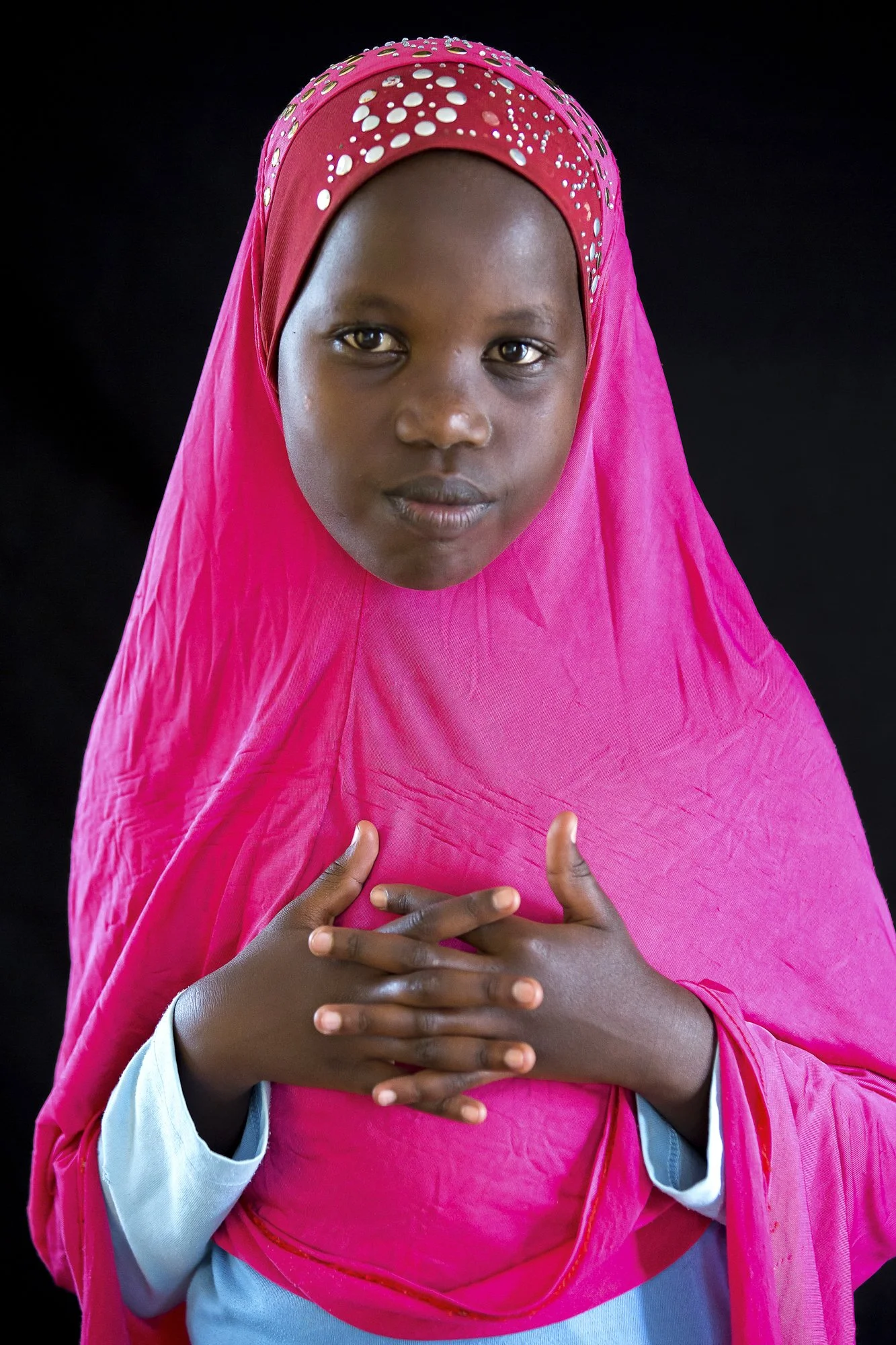
Umetesi watches quietly from the edge of the classroom at the “Through the Eyes of Hope” program in Kigali, Rwanda, even though the lessons are mostly attended by older boys. Rwanda has one of the highest literacy rates for girls in Africa, yet girls still face familiar barriers: limited school resources, heavy domestic expectations, and pressure to marry young
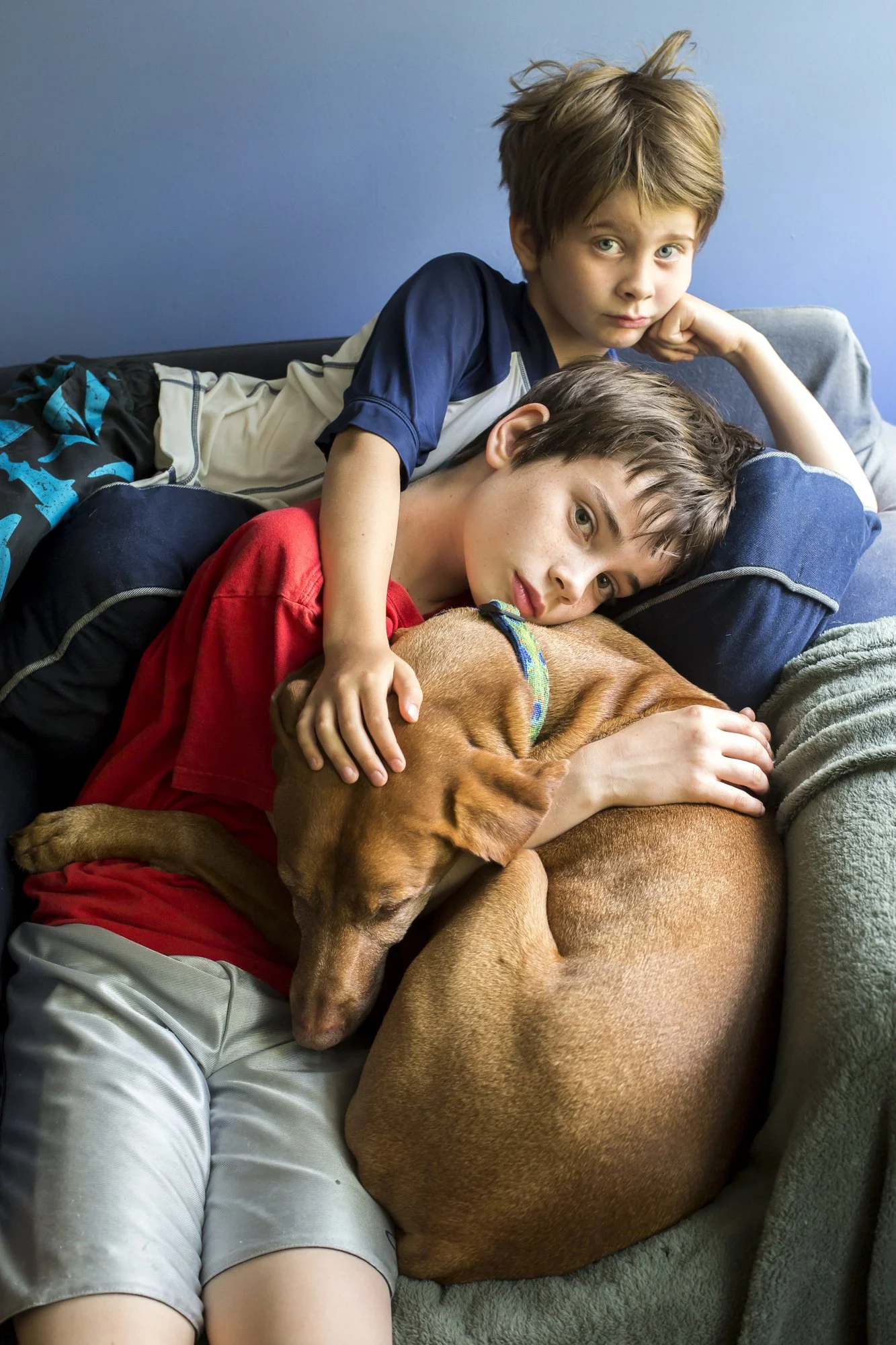
My nephews snuggle with their cousin, Winnie the Pooch, on their last morning before heading home. After a week together, the goodbye comes with quiet sadness and a final moment of closeness.
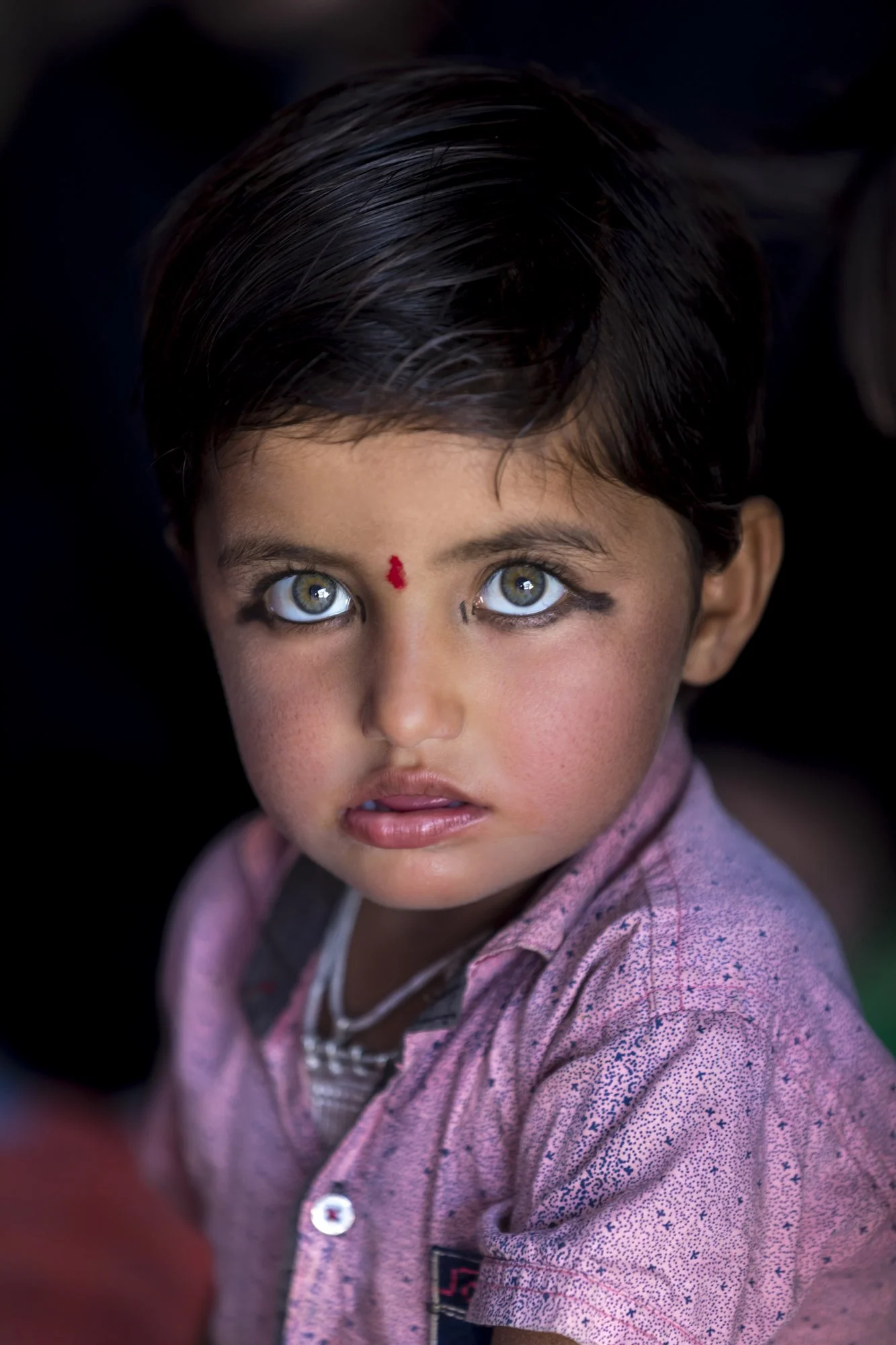
A young girl in rural Rajasthan meets the camera with startling confidence and kohl-rimmed eyes. Her expression is both playful and solemn—an unguarded moment that hints at the depth of childhood in a place rich with tradition and contradiction.
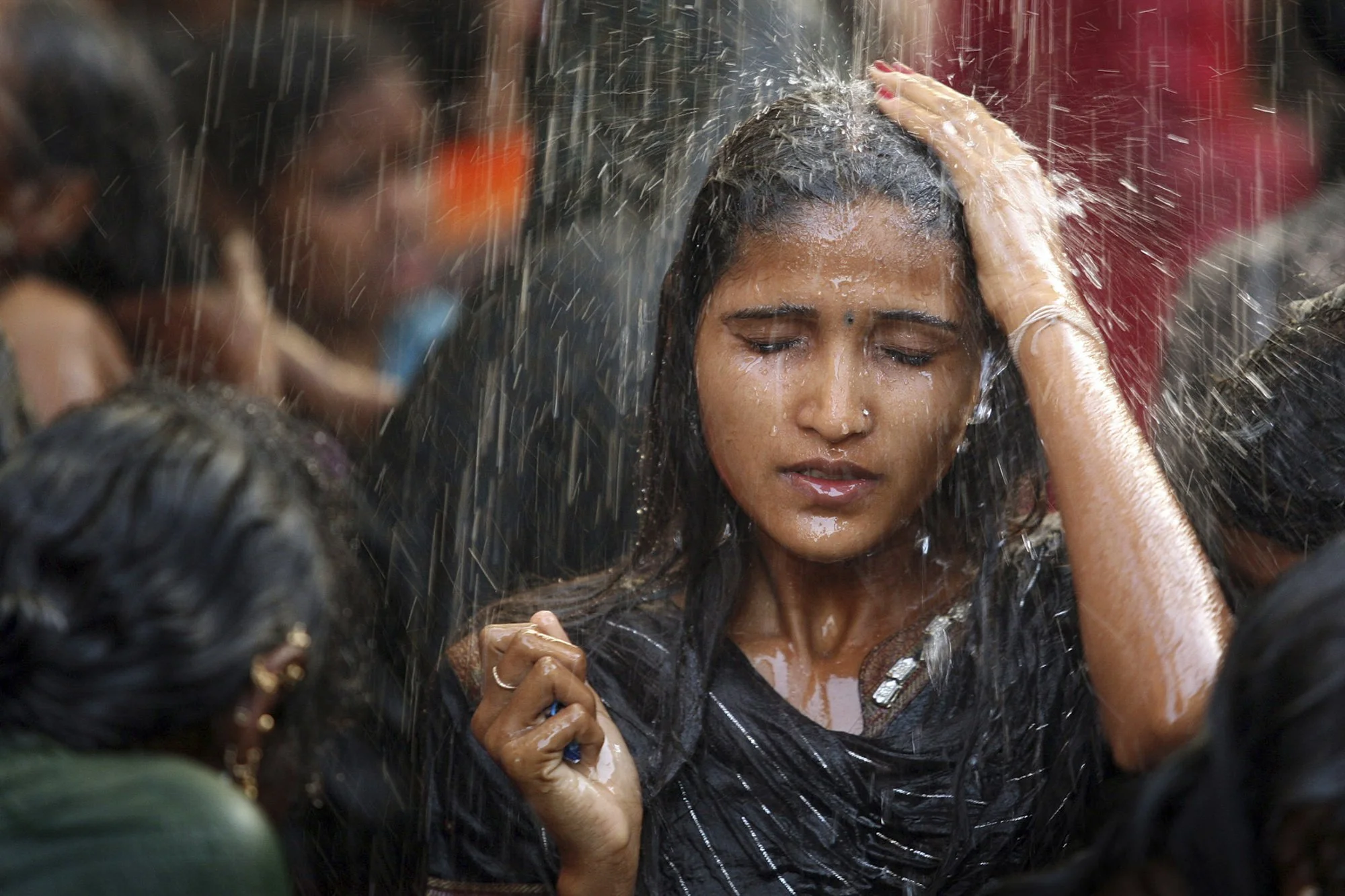
A young woman bathes in a communal shower before entering the Yellamma Temple during the Yellamma Jatre festival in Saundatti, India. The ritual cleansing is both practical and symbolic—a moment of purification before prayer—performed amid the crush of thousands who travel here seeking blessings, healing, and renewal.
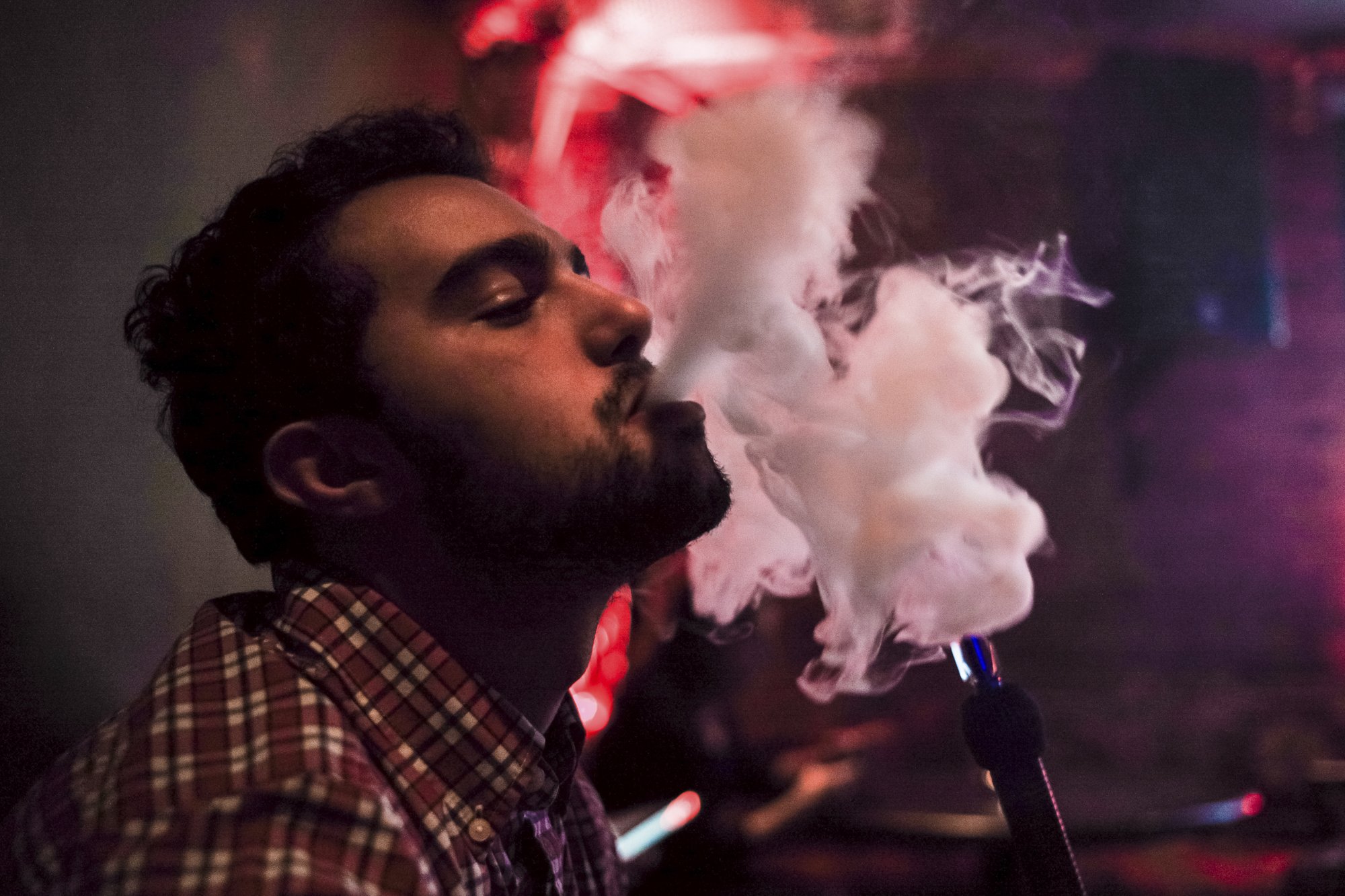
A man exhales a plume of smoke in a dimly lit hookah lounge in New York City. The soft red glow of the room and the drifting vapor create an intimate, cinematic moment—one of quiet ritual in the middle of the city’s constant motion.
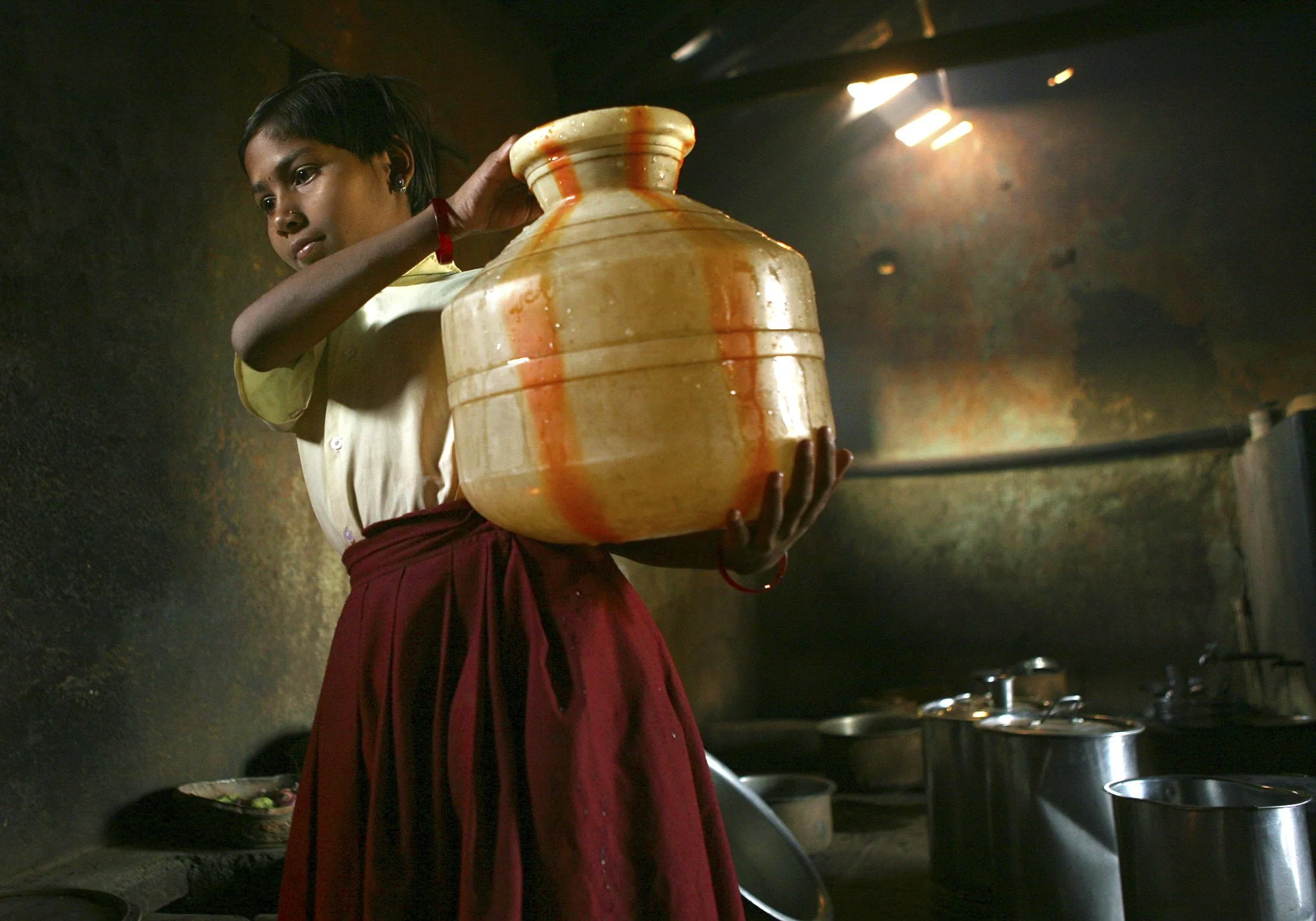
Vidhyashree, 14, carries water while doing chores at the Vimochana School in Malabad, India—founded to break the Devadasi cycle by giving daughters of Devadasis access to free education, food, and care.
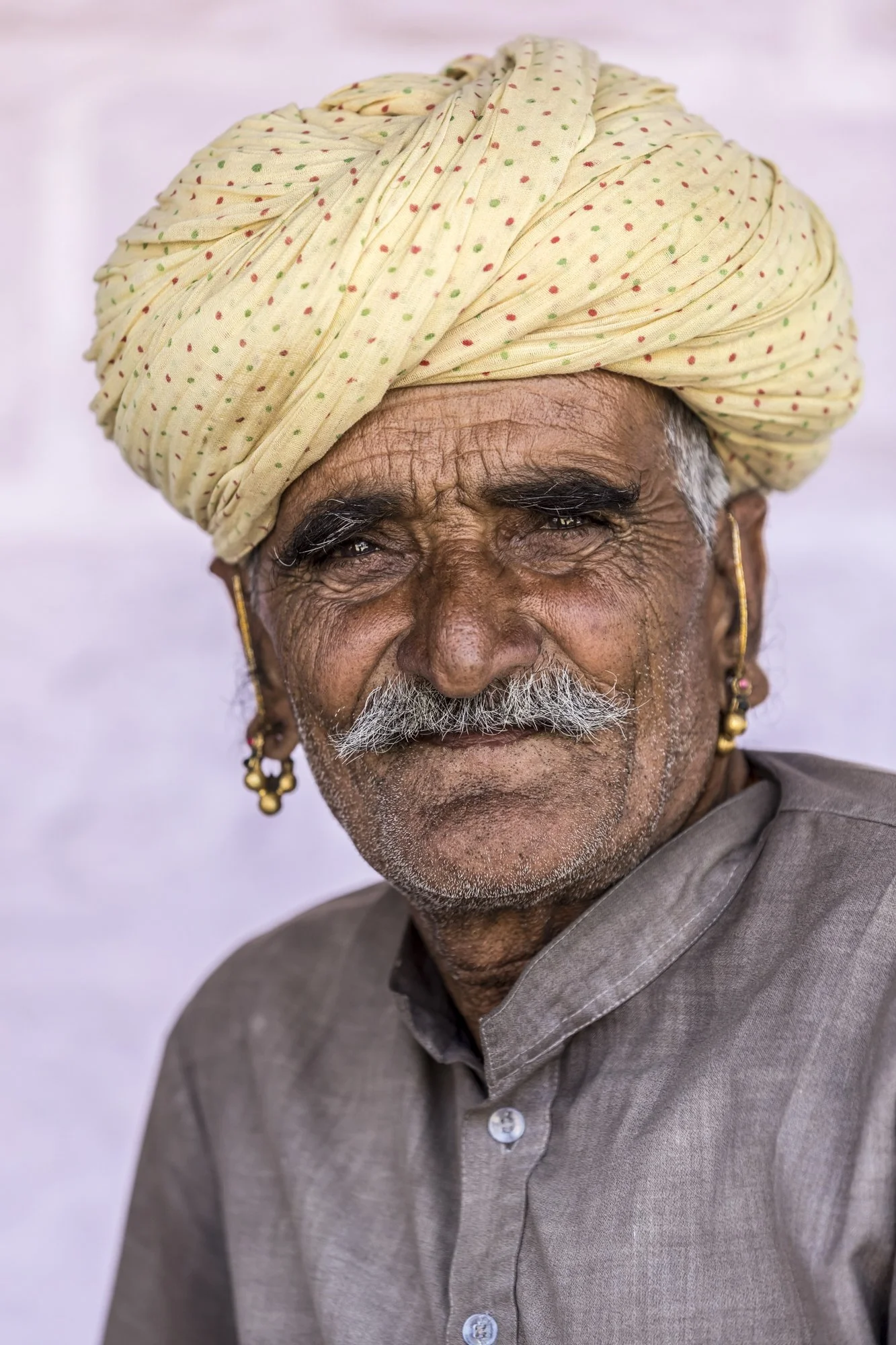
A Rajasthani elder I photographed in rural Rajasthan. His turban and traditional gold earrings—worn by many men in this region—reflect a long lineage of cultural pride, craftsmanship, and identity.
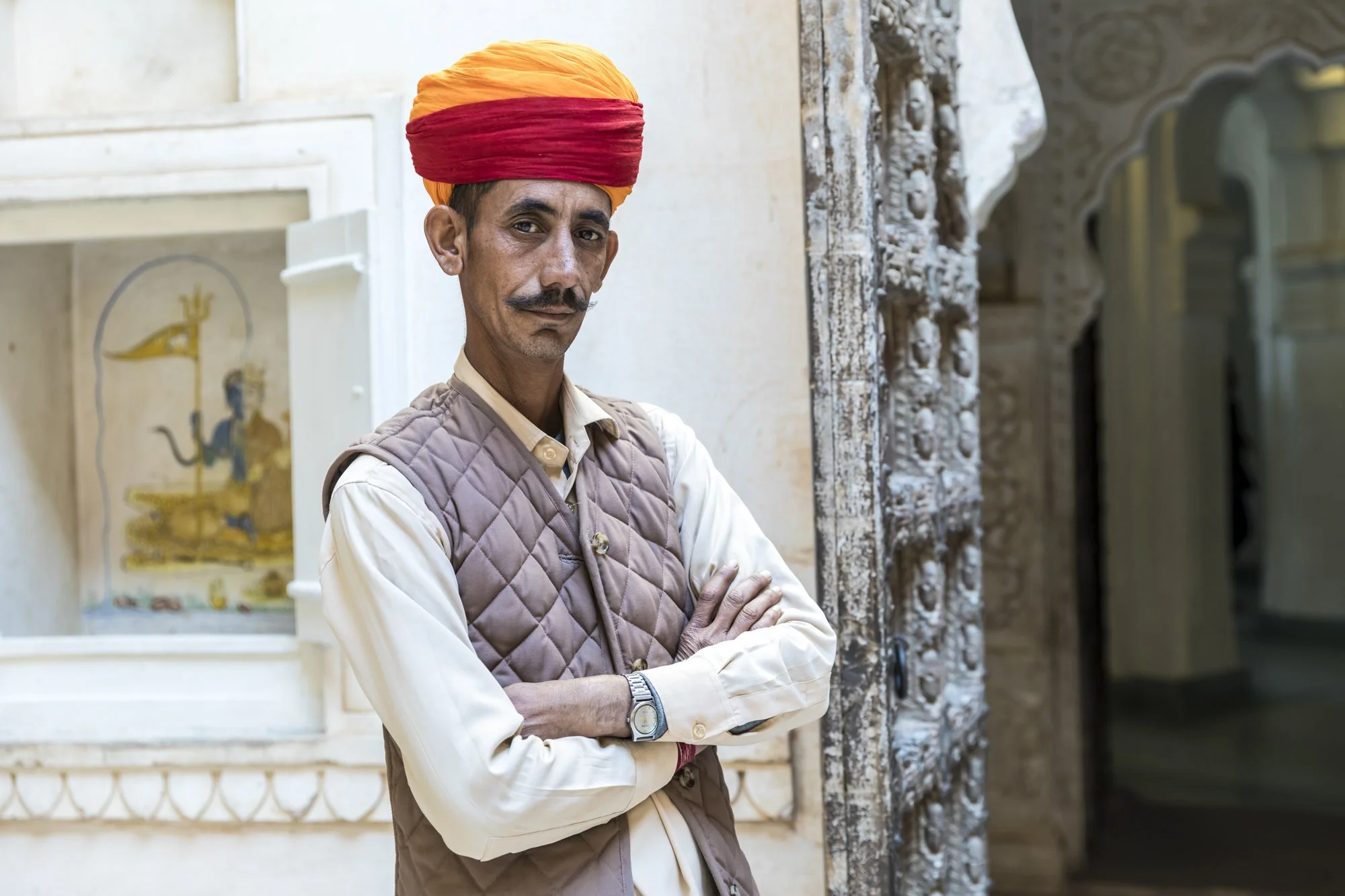
A palace guard in Rajasthan, his traditional pagri symbolizing honor and regional pride, stands for a portrait amid the historic stonework.
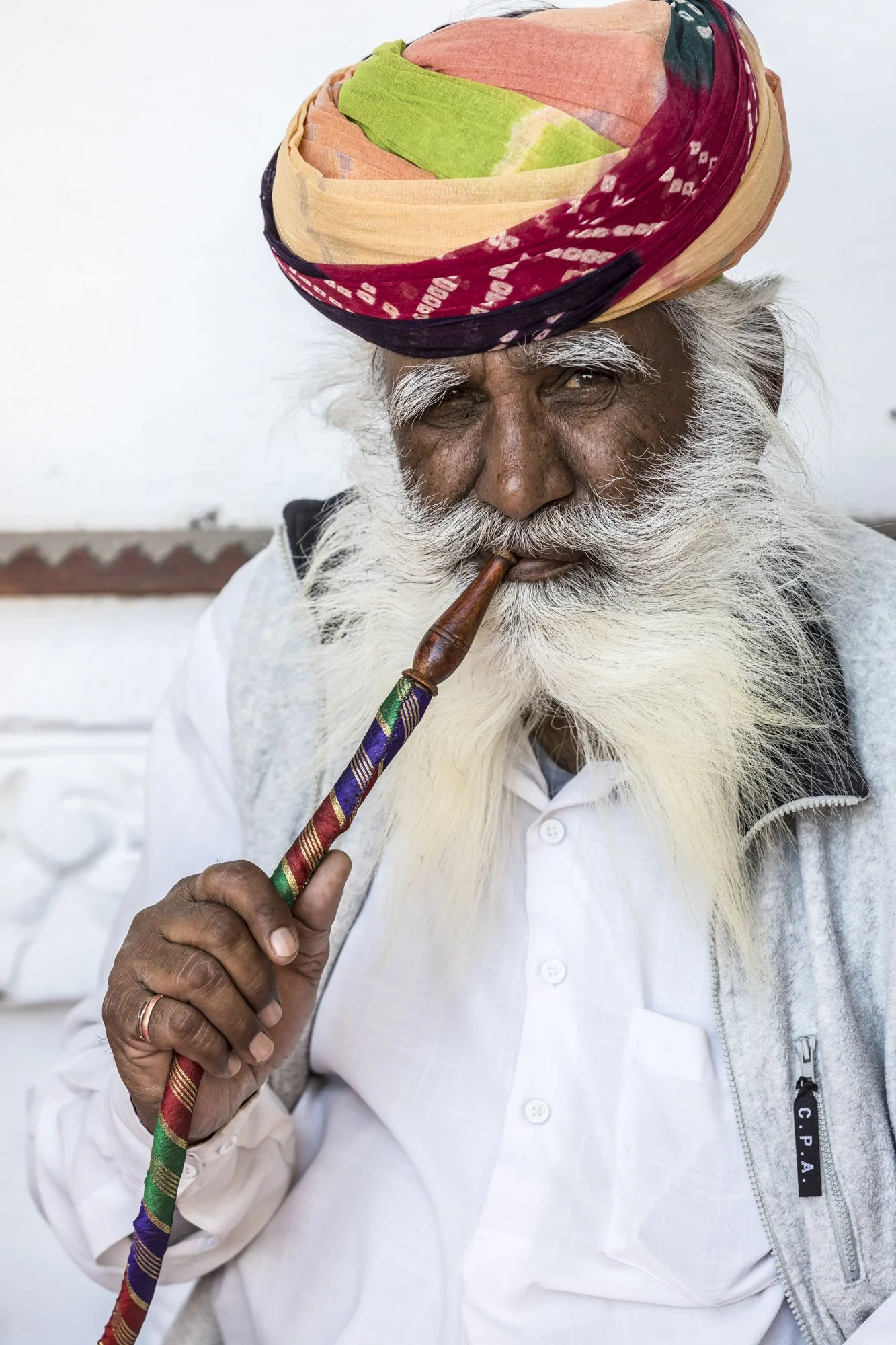
A Rajasthani man smokes his hookah, his vibrant turban and sweeping mustache echoing the cultural pride and traditional identity of the region.
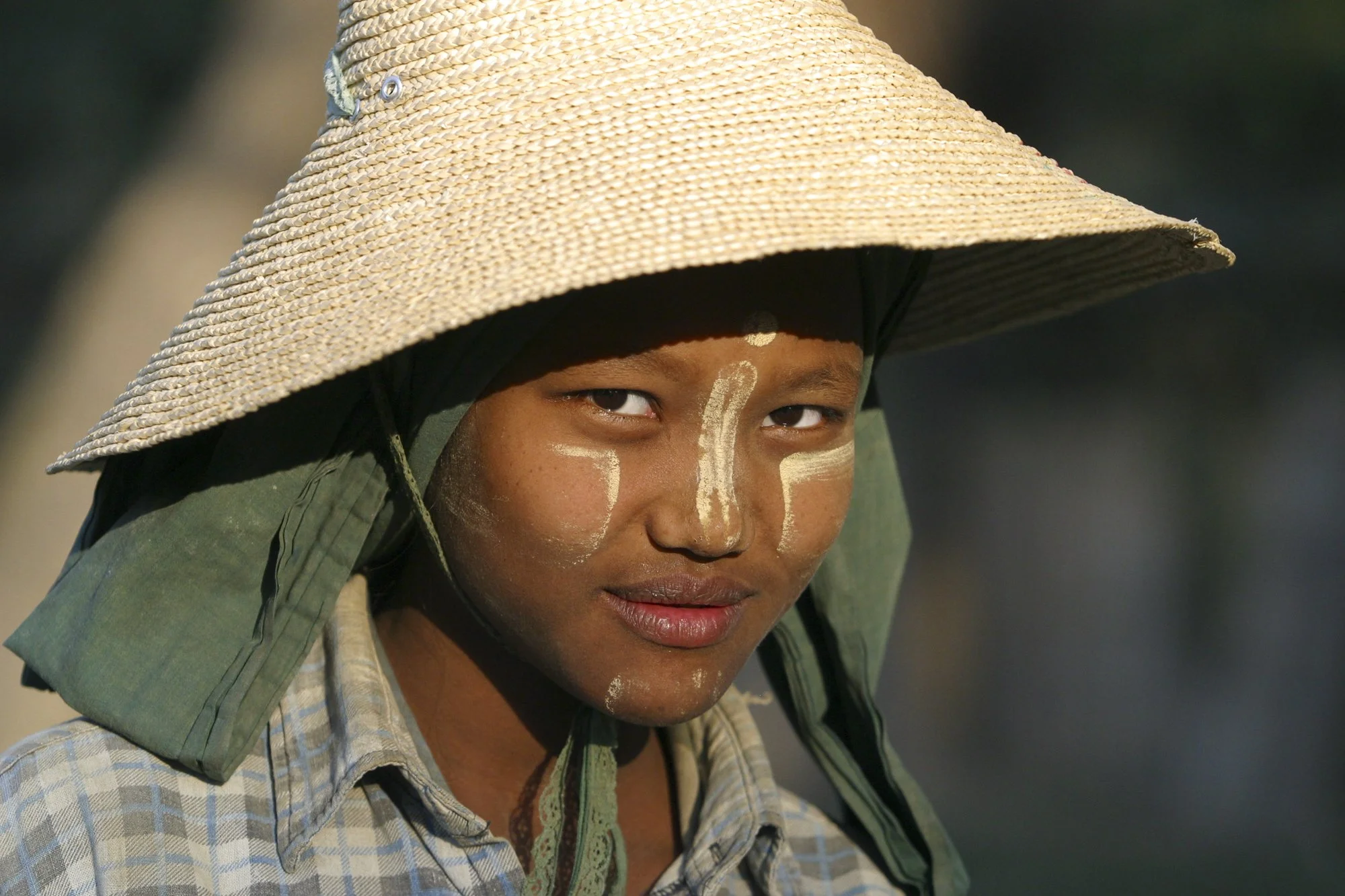
A young woman is photographed in Myanmar (Burma), her cheeks brushed with thanaka—a natural paste made from ground tree bark that has been used for centuries as sun protection, skincare, and decoration.
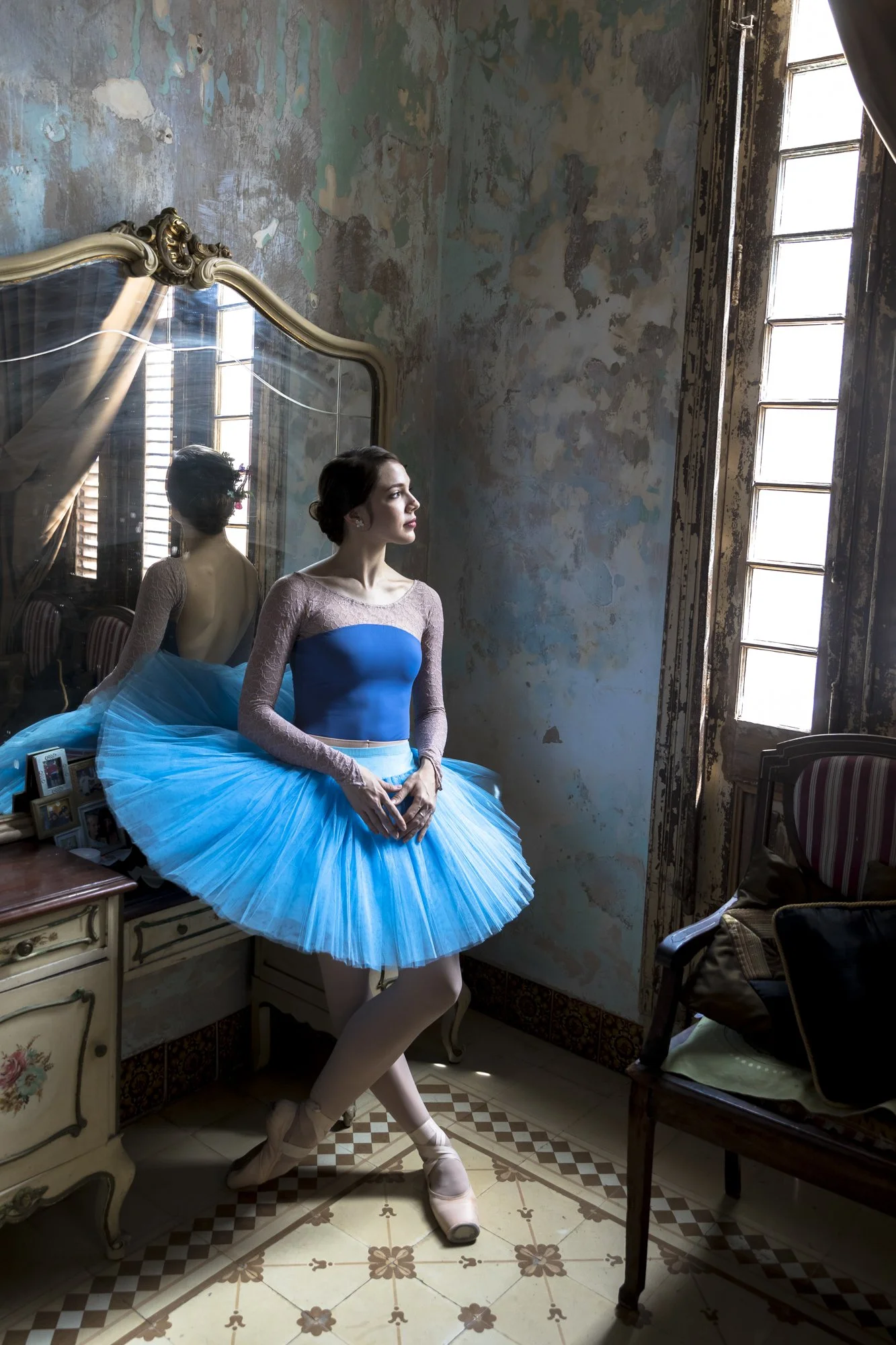
A Cuban ballet dancer stands in the quiet light of an aging Havana mansion. The faded walls behind her mirror the resilience of Cuba’s ballet culture—world-renowned, yet shaped by scarcity and devotion.
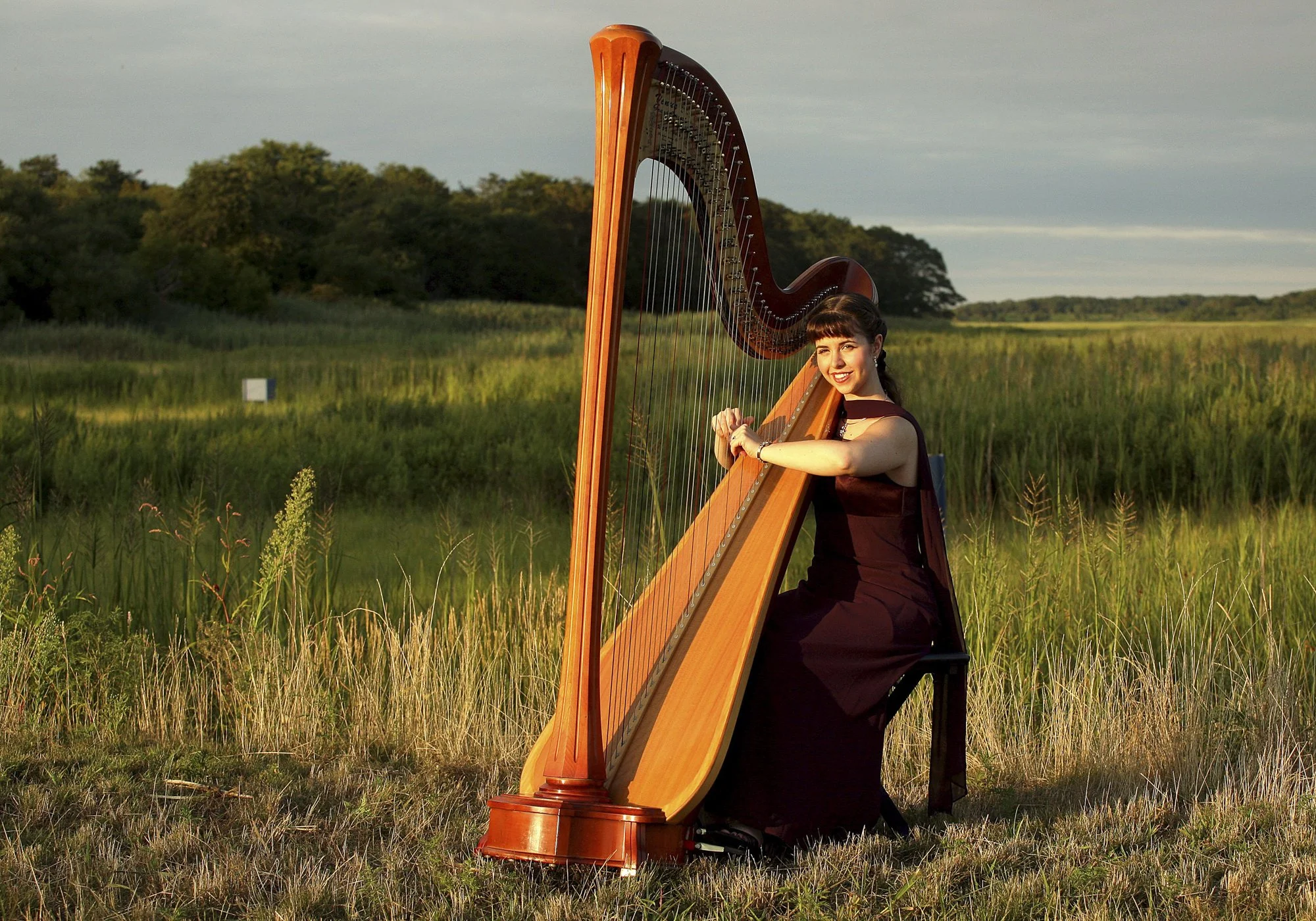
Harpist Katie Lynch is photographed at sunset with Quivet Creek Marsh behind her in Dennis, Massachusetts.
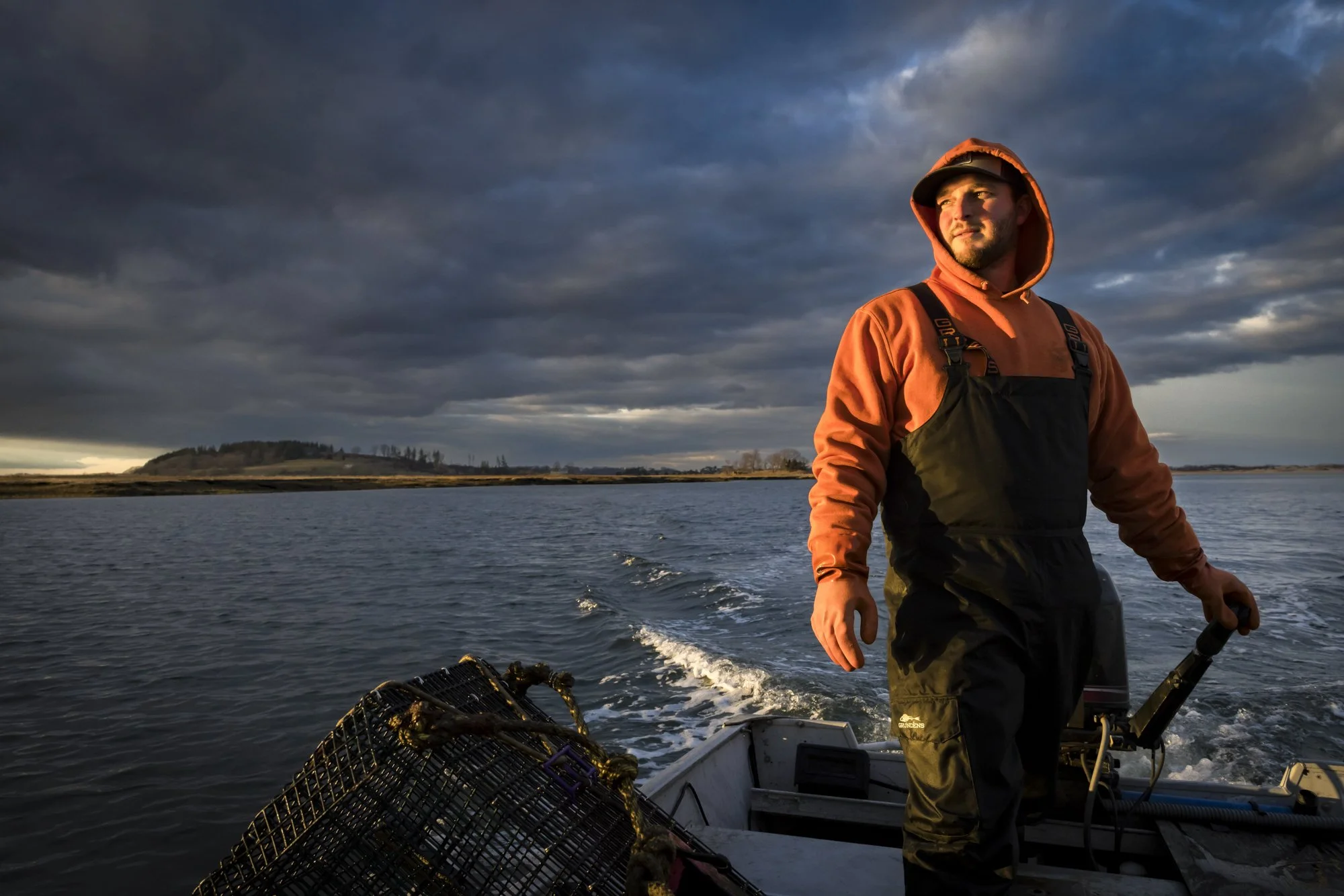
A green crab fisherman steers his skiff through the marshes of Gloucester, MA at golden hour. Considered an invasive threat, green crabs are now being harvested commercially for bait, culinary use, and innovative products like crab-based fertilizer and chips—turning a problem species into a new coastal economy.
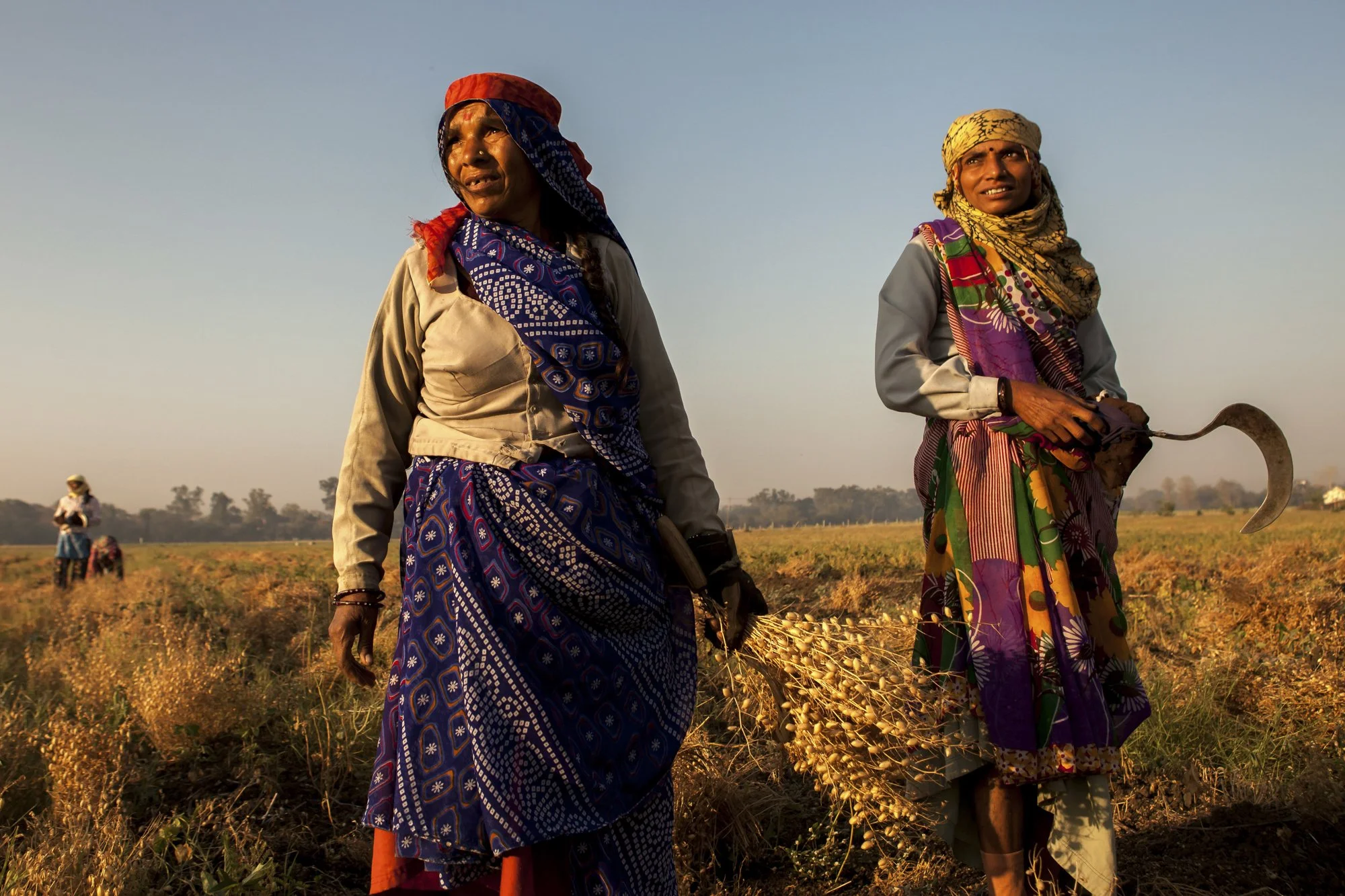
Agricultural workers harvest gram (chickpeas) in the fields outside Indore, India. Women form the backbone of the rural economy in much of the developing world, yet they typically receive only a fraction of the land, credit, agricultural training, and resources available to men.
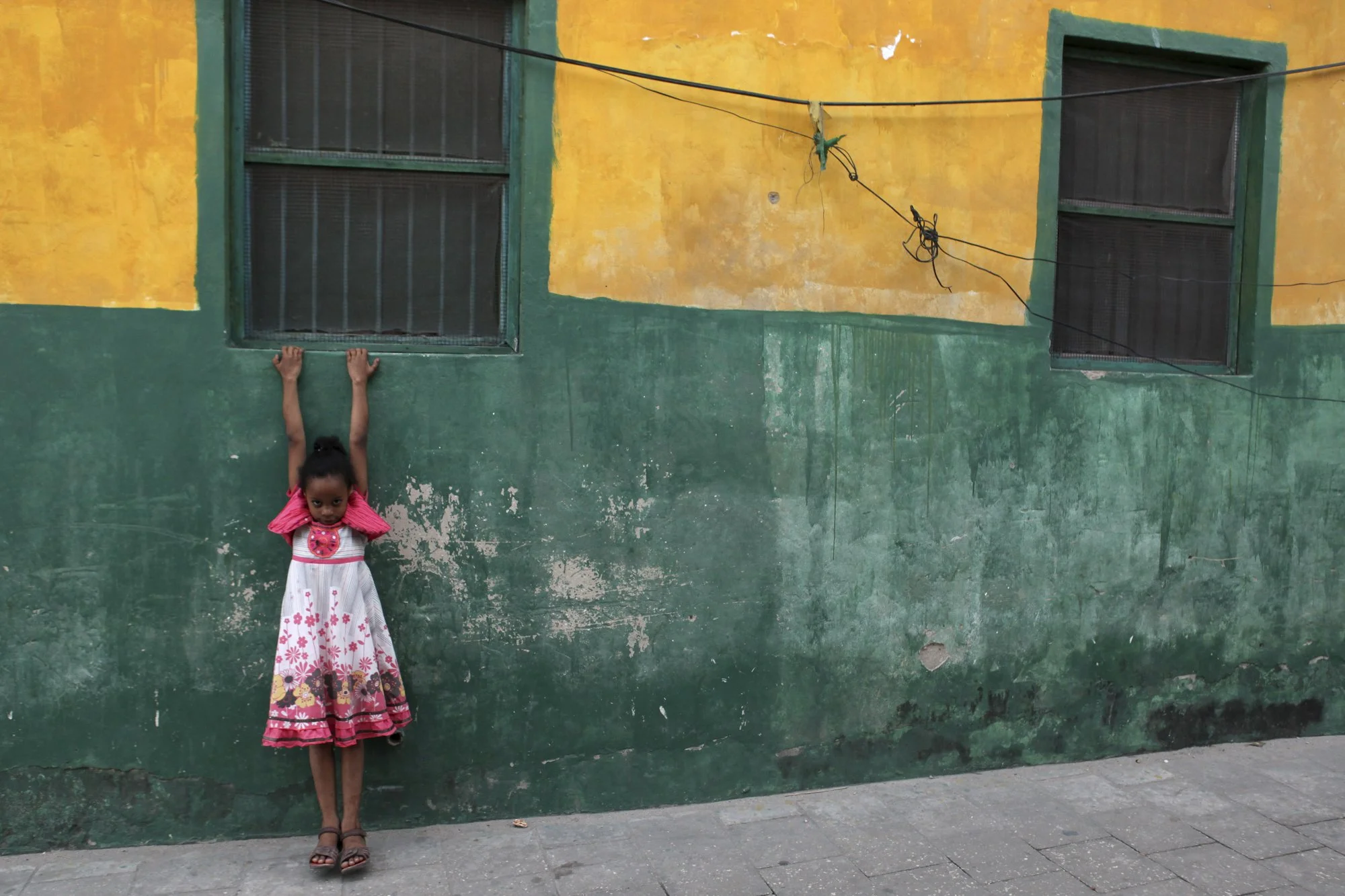
A young girl hangs from a windowsill in Stone Town, Zanzibar—a UNESCO World Heritage site shaped by centuries of cultural exchange along the Swahili coast.

I photographed this young Samburu girl while teaching a workshop with the Ong’aan Women’s Collective in northern Kenya. The layered red beads she wears signify her pre-marital status; once married, Samburu women traditionally don much larger, more colorful beaded collars handcrafted by their mothers.
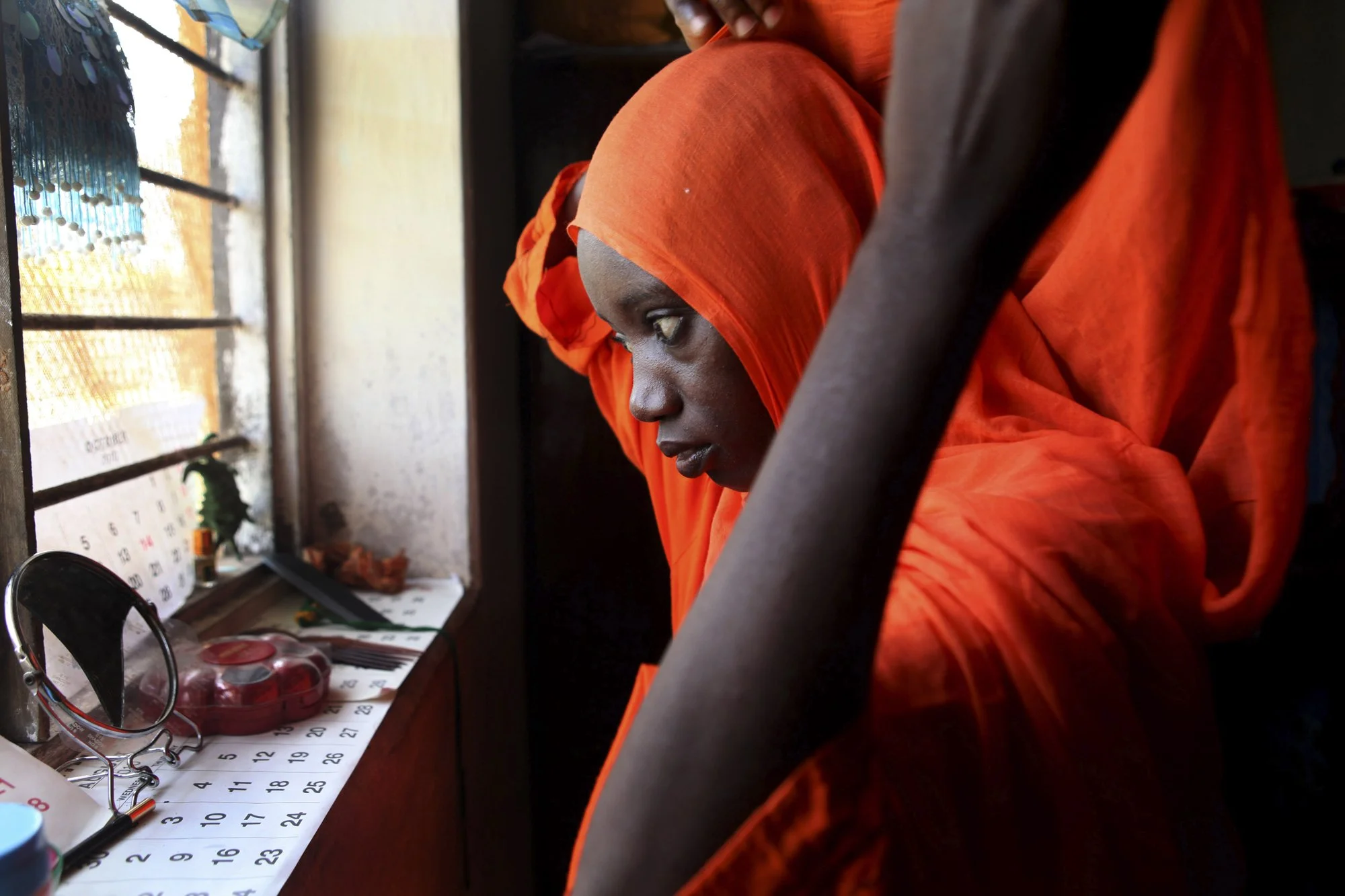
Ikiwa adjusts her hijab at home in Fumba, Zanzibar, after a long day gathering shellfish on the low-tide flats. She is part of a community-based program that trains women to cultivate shellfish—providing a sustainable source of protein for their families while creating new income opportunities in local markets.
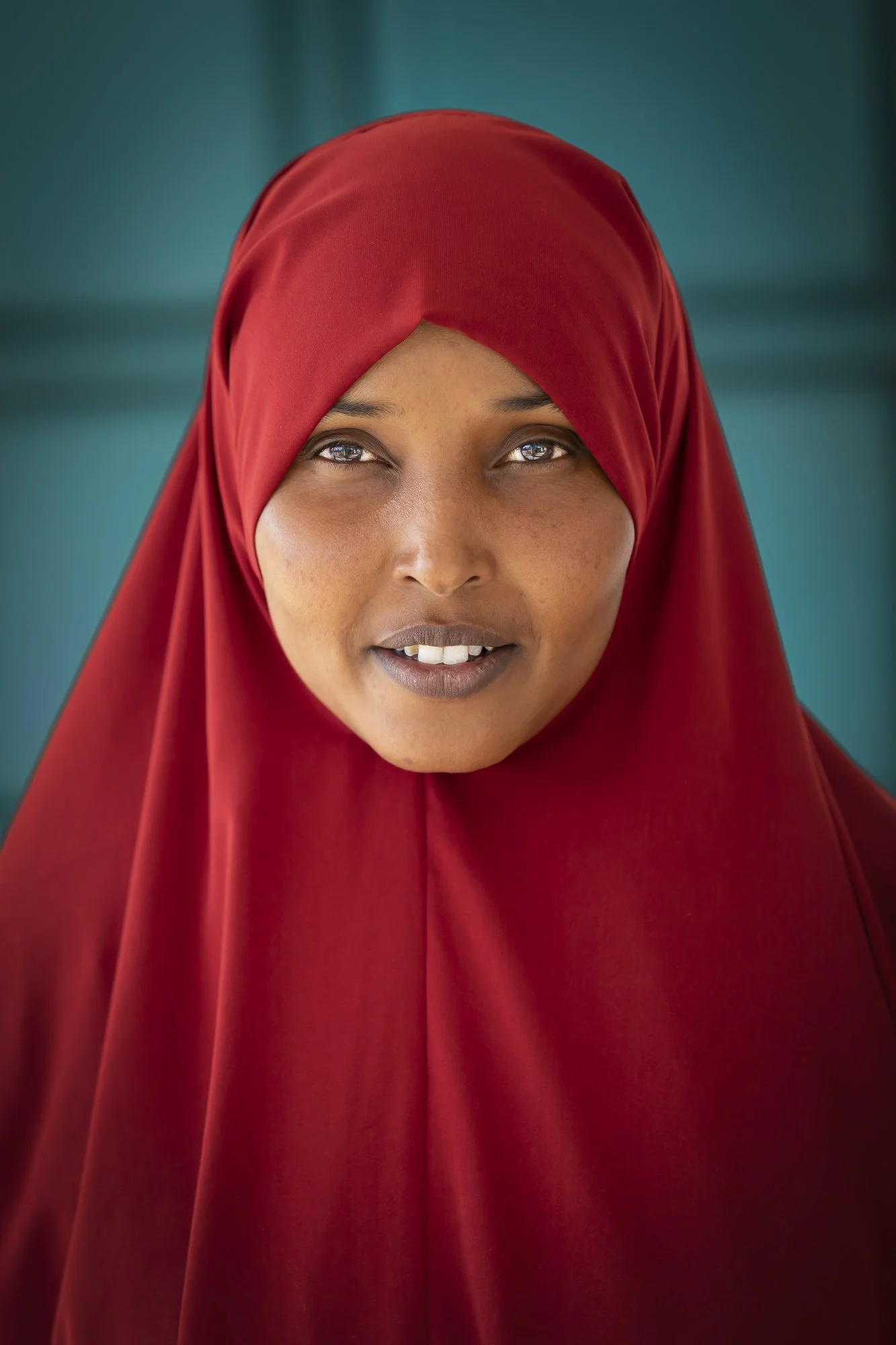
Saida arrived at Kakuma Refugee Camp from Somalia as a child, separated from her parents and growing up far from home. When I photographed her, she had just begun a university program through the Global Education Movement (GEM) — an opportunity available to only a fraction of the world’s 25+ million refugees.
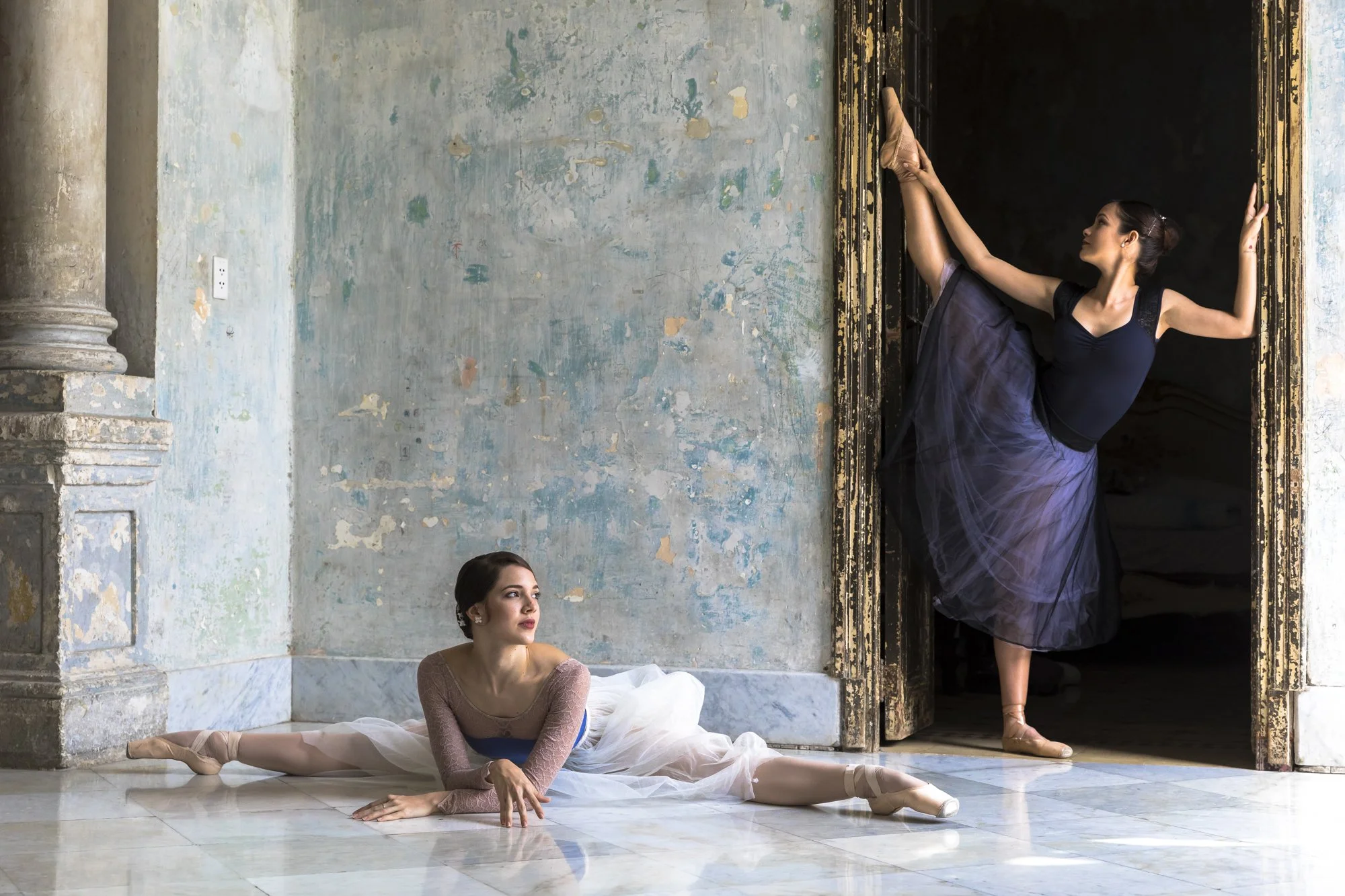
Ballet dancers rehearse inside a crumbling historic building in Havana, Cuba—where the grace of classical ballet endures despite the city’s aging infrastructure and economic challenges.
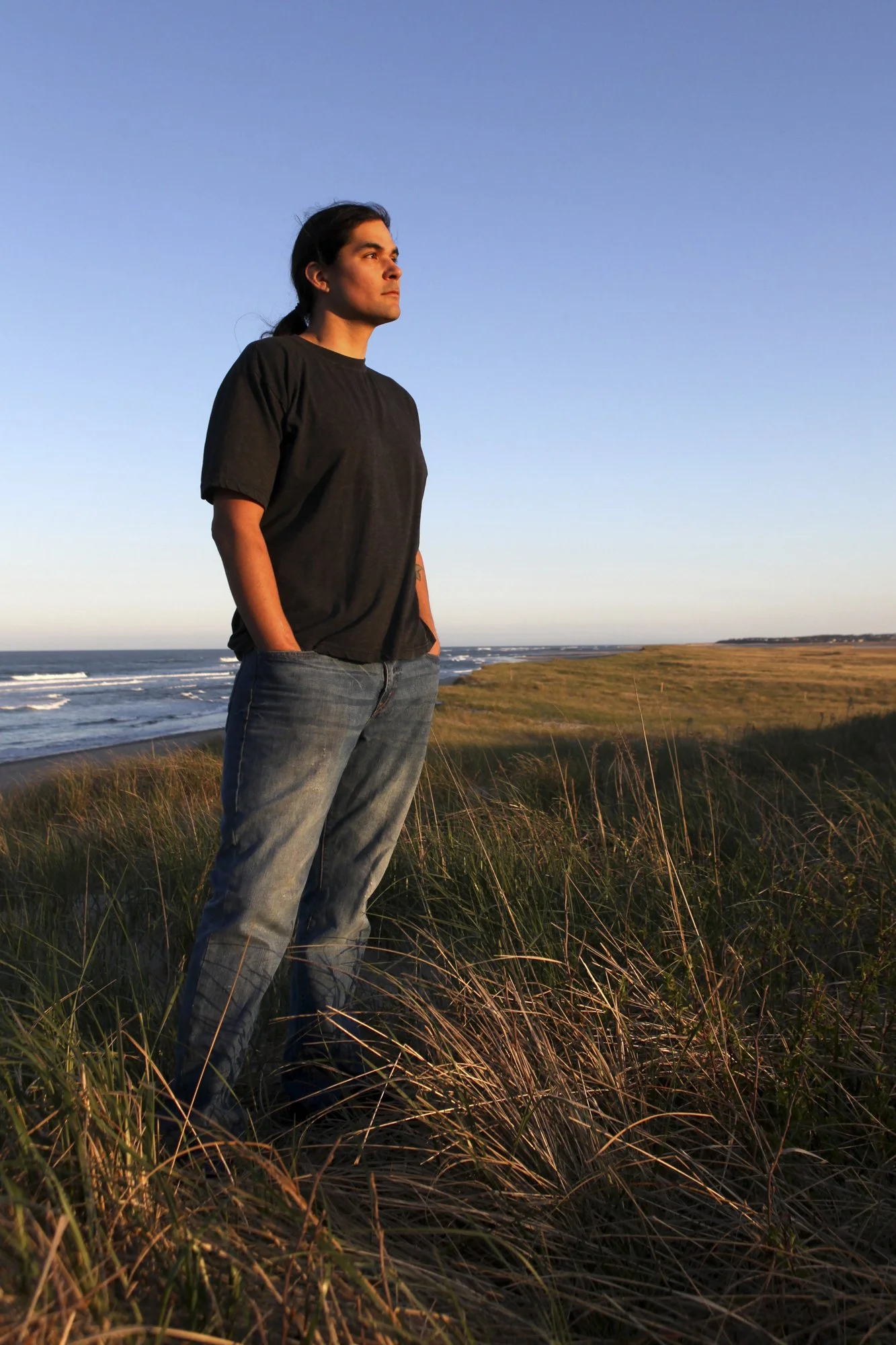
Billy Best stands at Coast Guard Beach in Eastham, Massachusetts, in a portrait created years ago for the cover of his book The Billy Best Story. Diagnosed with Hodgkin lymphoma at sixteen, Best became known nationwide after running away from chemotherapy and pursuing alternative treatments, a decision that remains part of ongoing conversations about patient rights and medical autonomy.
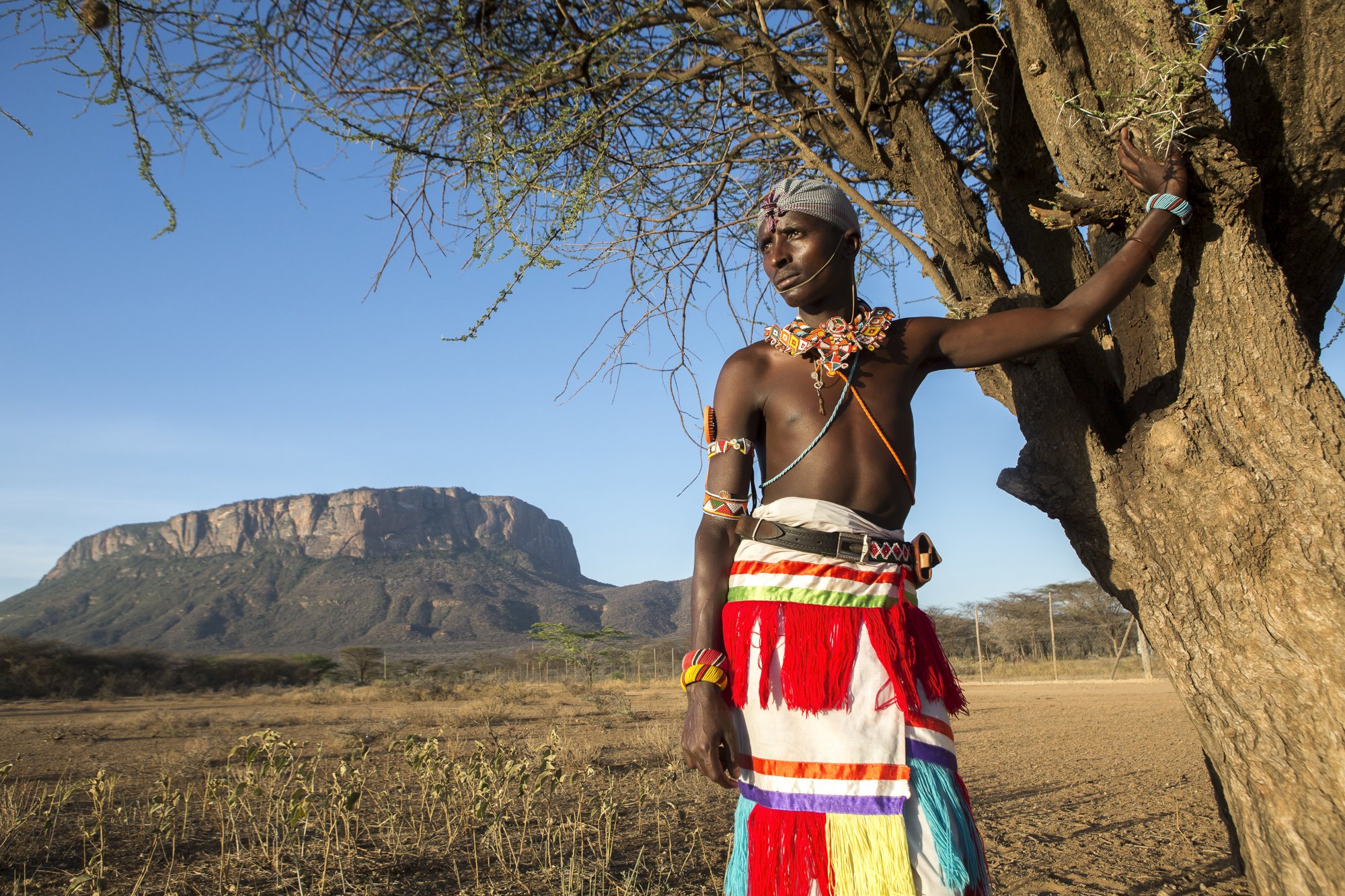
A Samburu warrior, one of my photography students, stands before Mount Ololokwe in northern Kenya. The workshop was created to help Samburu document lion encounters for research—and to provide a tool for safely recording their own interactions with authorities
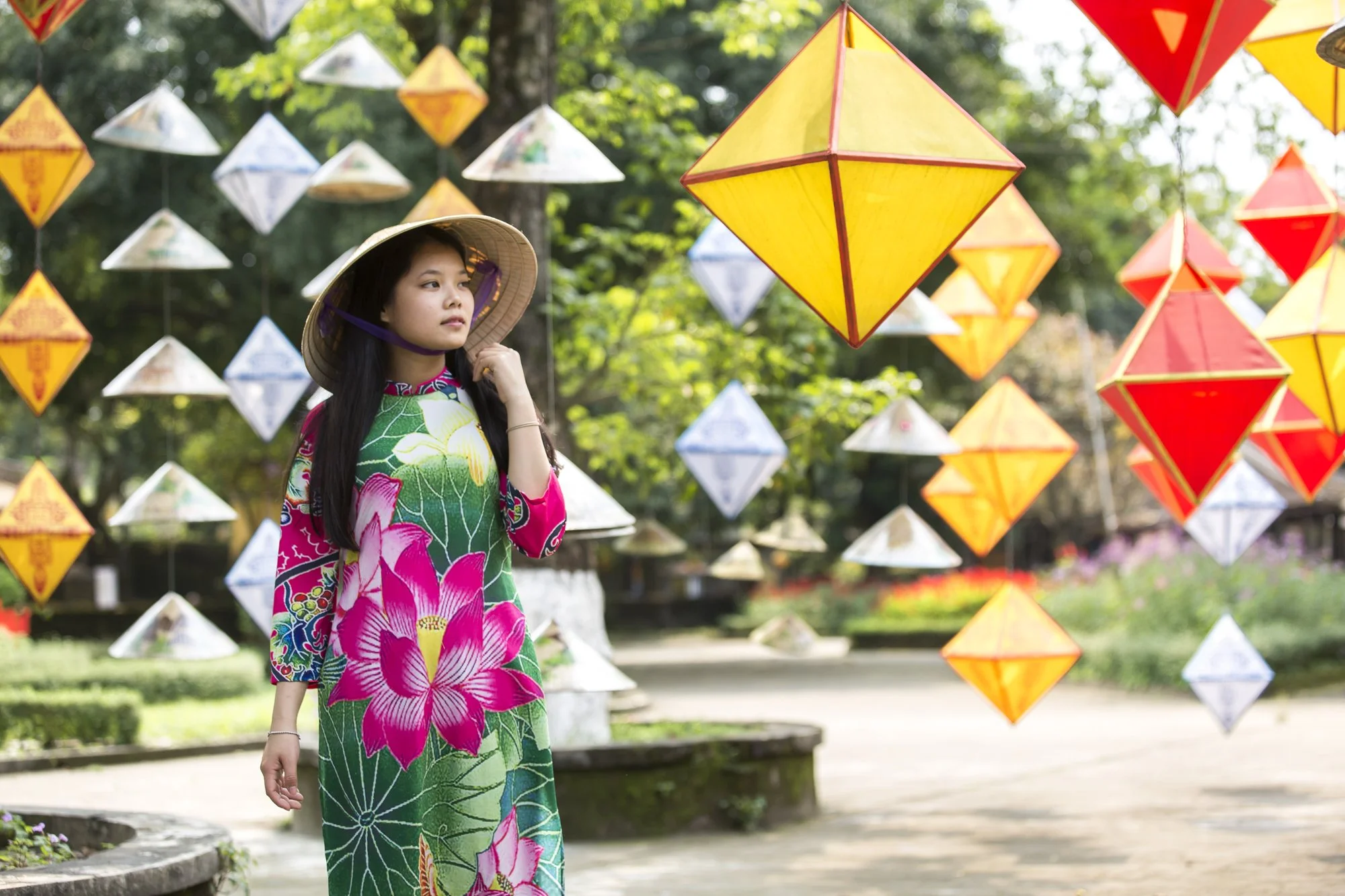
Thanh Nhàn sells paper lanterns at the Citadel in Huế, Vietnam, but her passion is crafting handmade paper flowers, each accompanied by an original poem. She hopes to open her own shop one day to share her art more widely.
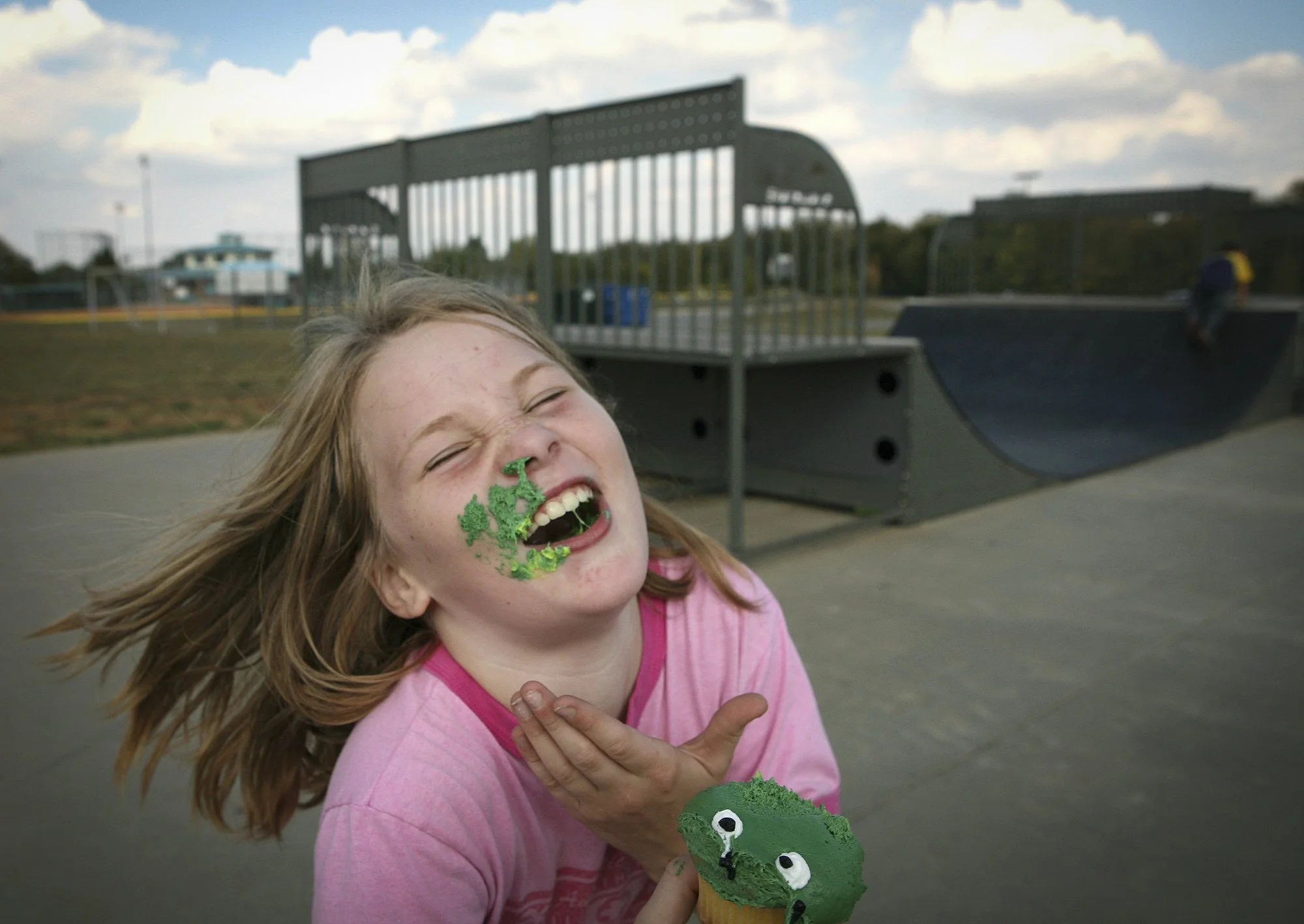
Caitlin Sholar, 9, bursts into laughter after her brother smashes a cupcake into her face at the skate park in Danville, KY. She and her siblings were celebrating a friend’s 9th birthday—fresh off Caitlin’s own big moment, earning MVP on her brothers’ football team.
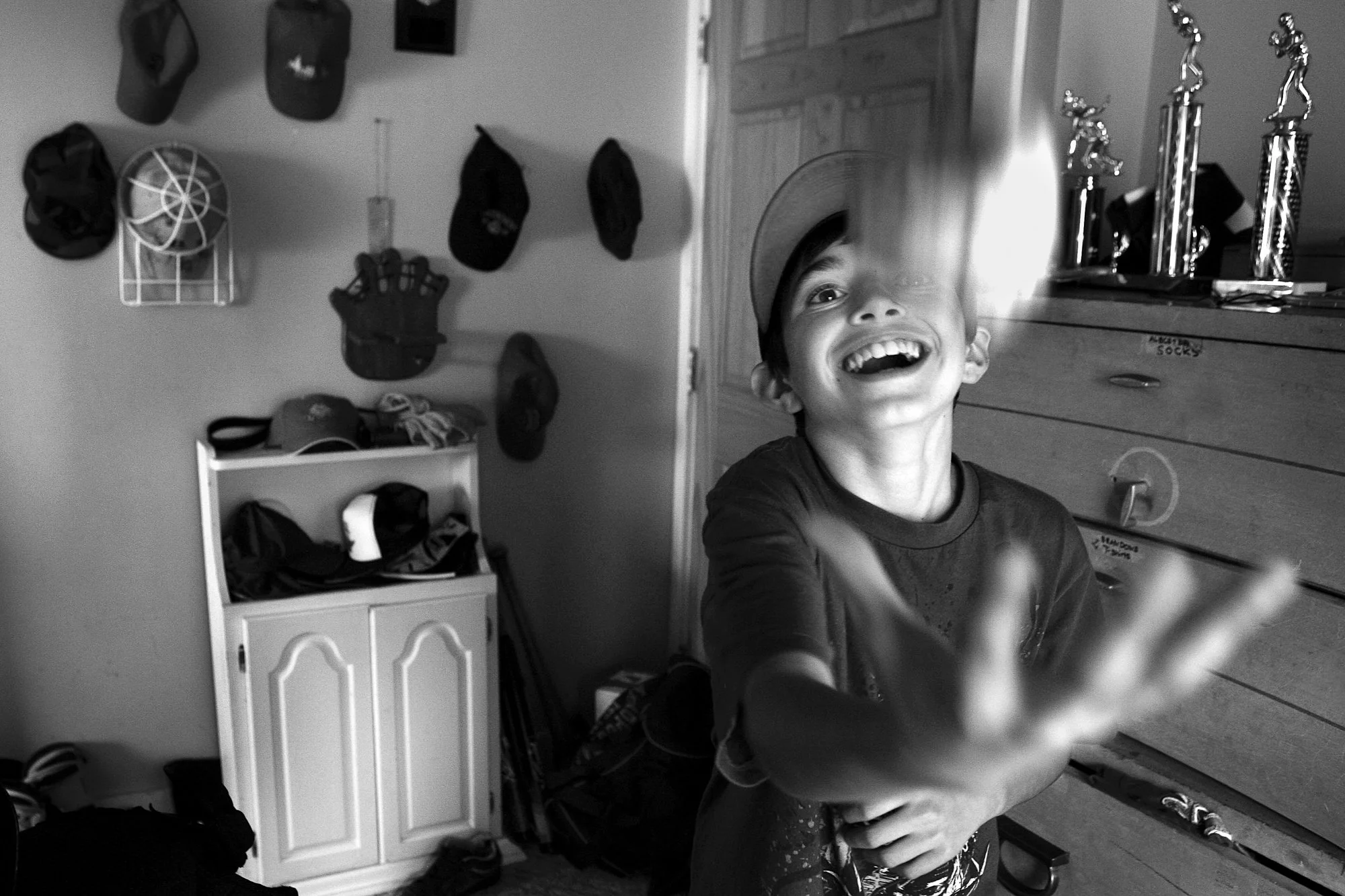
A boy plays with a baseball in his room in Peabody, Massachusetts, captured in a candid moment of joy and movement.
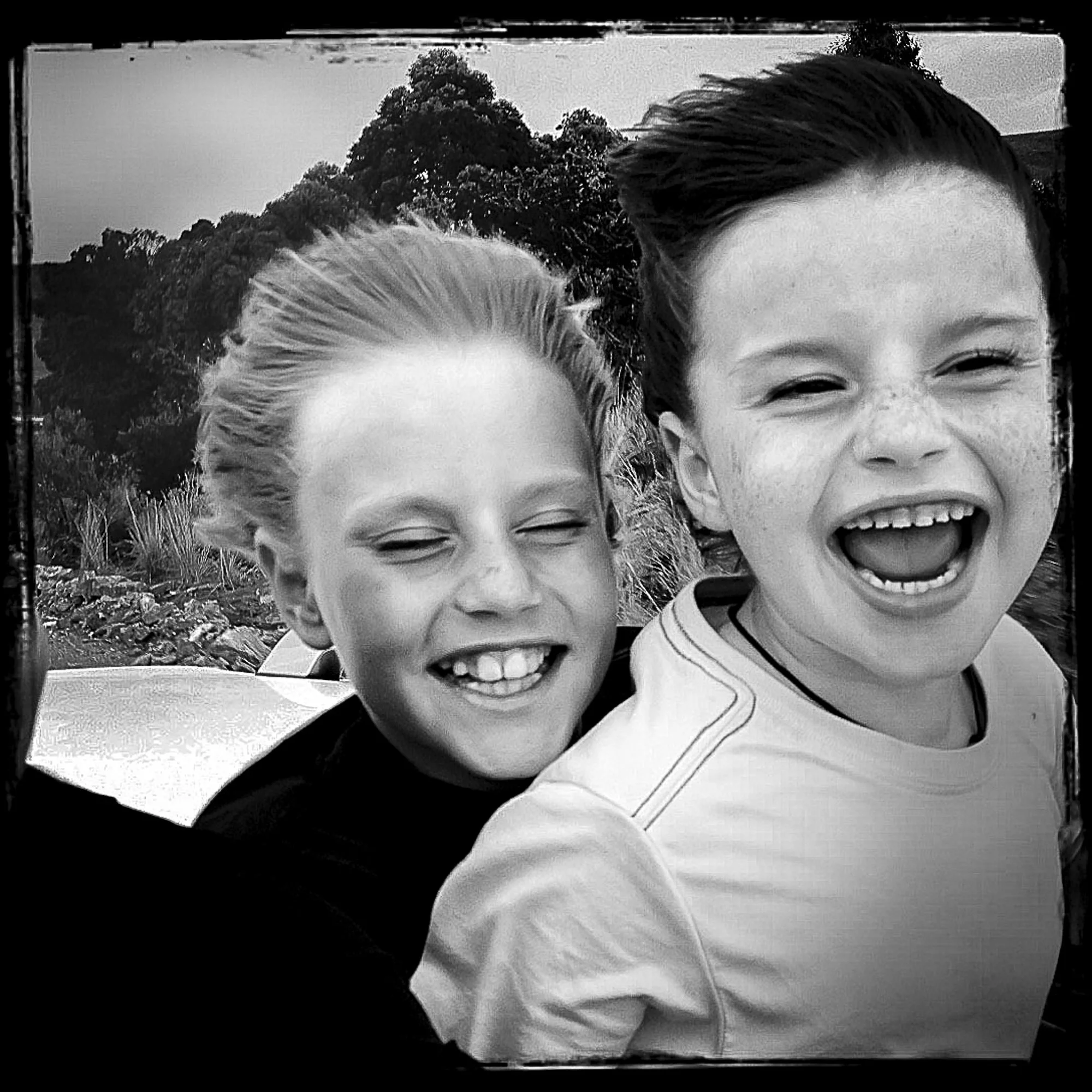
Odin and Juno laugh into the wind while riding in an open-topped safari vehicle in Tanzania.
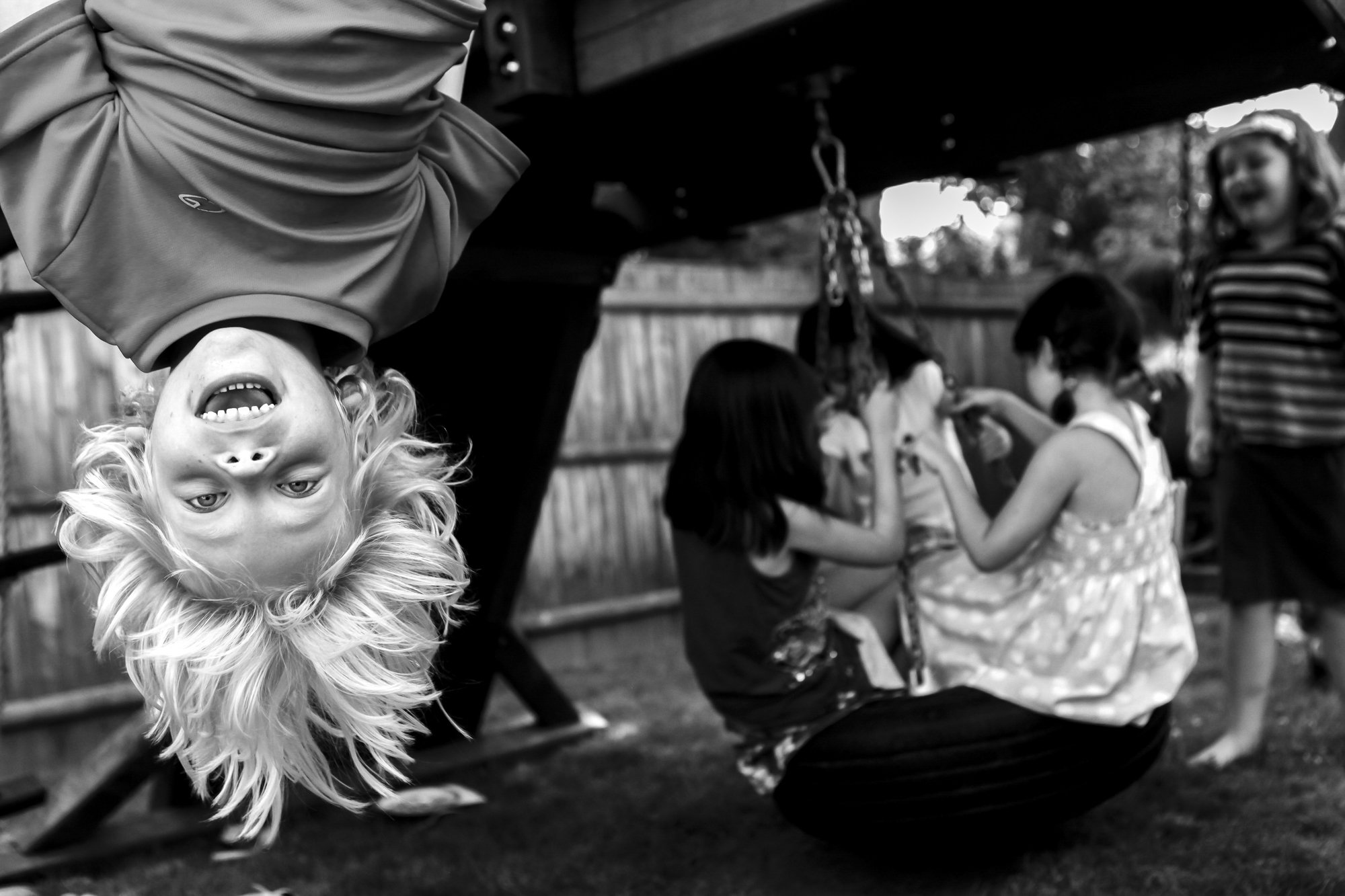
A child hangs upside down and laughs at a friend’s birthday party, capturing a spontaneous moment of childhood joy.
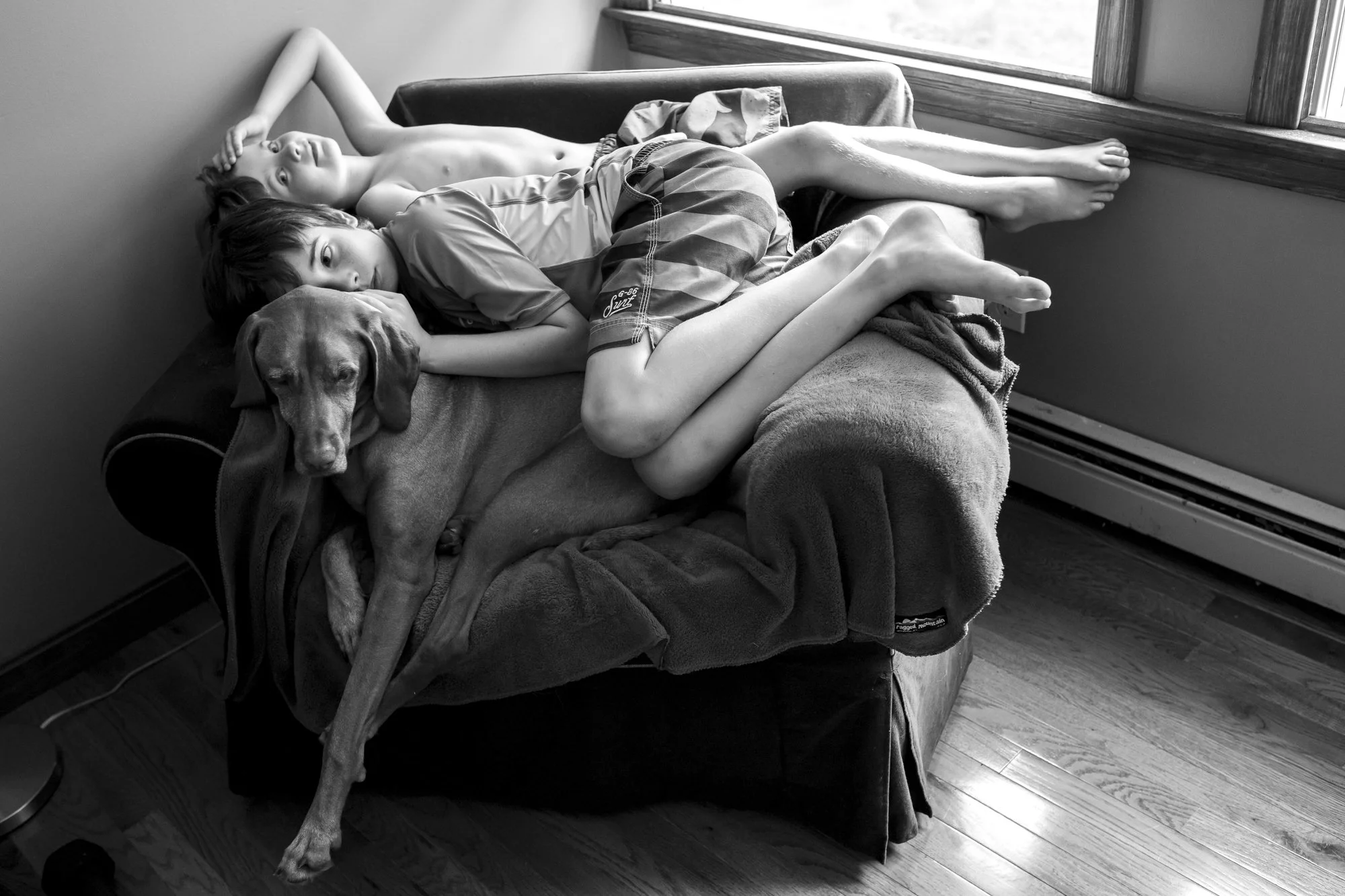
My nephews snuggle with their cousin, Winnie the Pooch, on their last morning before heading home. After a week together, the goodbye comes with quiet sadness and a final moment of closeness.
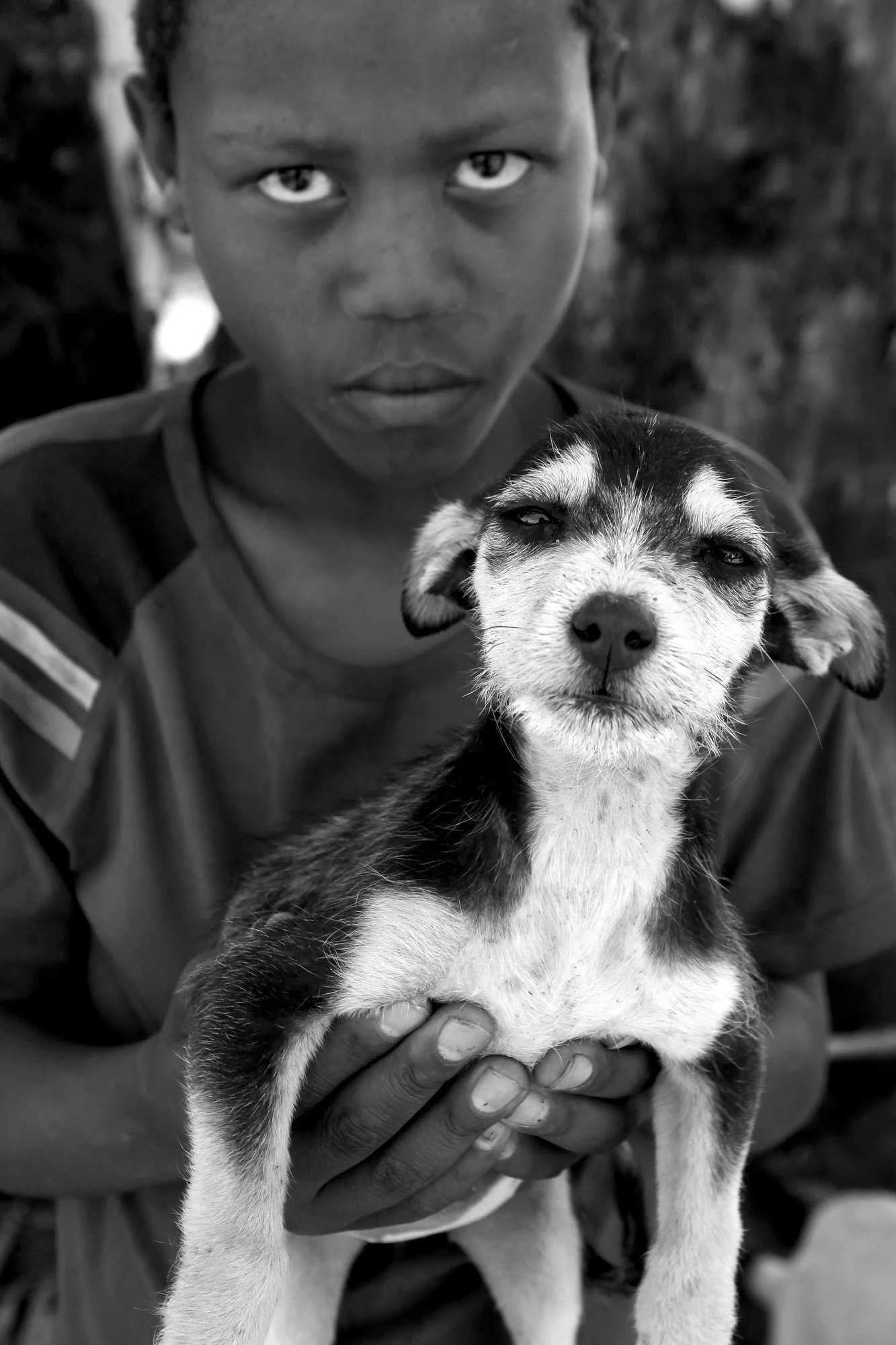
A boy holds his puppy while waiting for treatment at a mobile clinic in Soul City, a township — an under-resourced community outside Johannesburg, South Africa. IFAW’s CLAW program provides vital veterinary care to pets in communities with limited access to services.
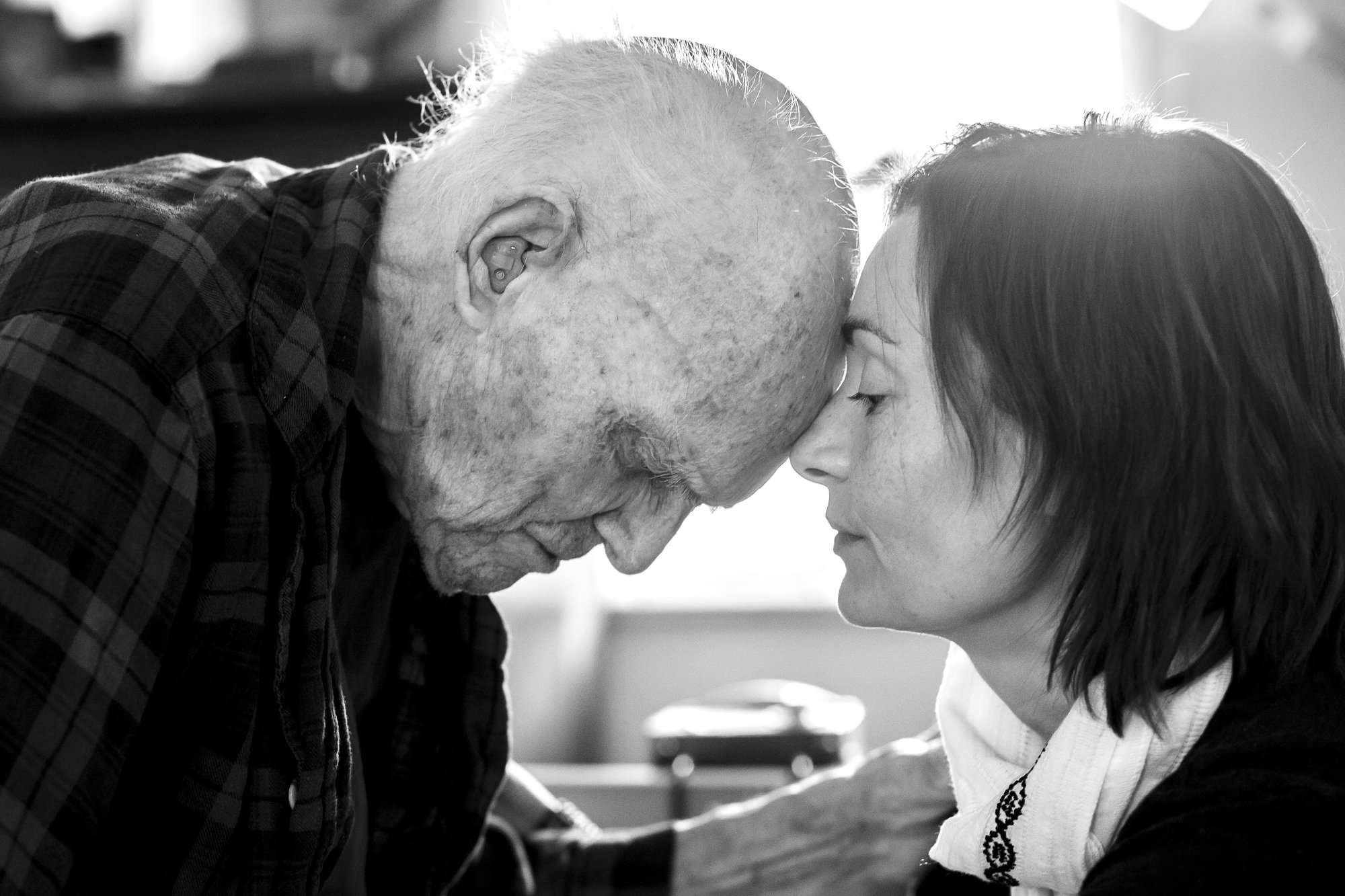
I photographed Reverend Gerald Gilmore, 100, with his granddaughter, Nina, at his home in Orleans. Nina had come to Cape Cod to spend the last few months with him, and I was deeply moved by the tenderness between them. She told me her grandfather — who had been like a father to her — was “filled with adventure, whimsy, and light.” This quiet moment seemed to hold all of that love. Just a few days after I made this photograph, Reverend Gilmore passed away.
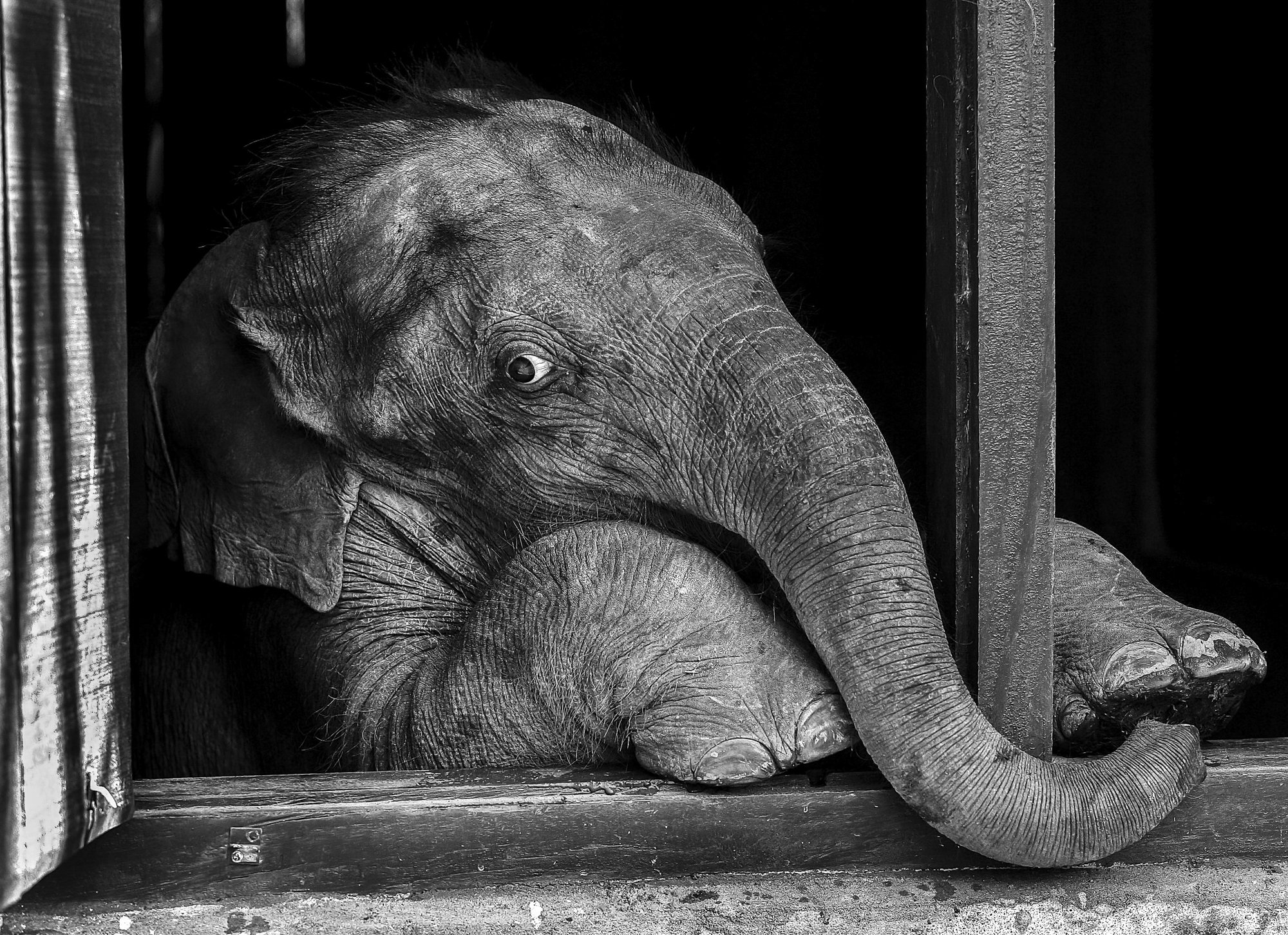
I met this baby elephant while documenting a rehabilitation and release program for orphaned calves in Assam, India. He had lost his mother in a flood, and over the days I spent with him, I grew surprisingly attached. When it was finally time for me to leave, I turned back toward the building where he was housed and saw him standing on his hind legs, peering out the window at me. In that moment, his expression felt almost human—full of longing, awareness, and something profoundly universal. It’s a moment I’ve never forgotten.