

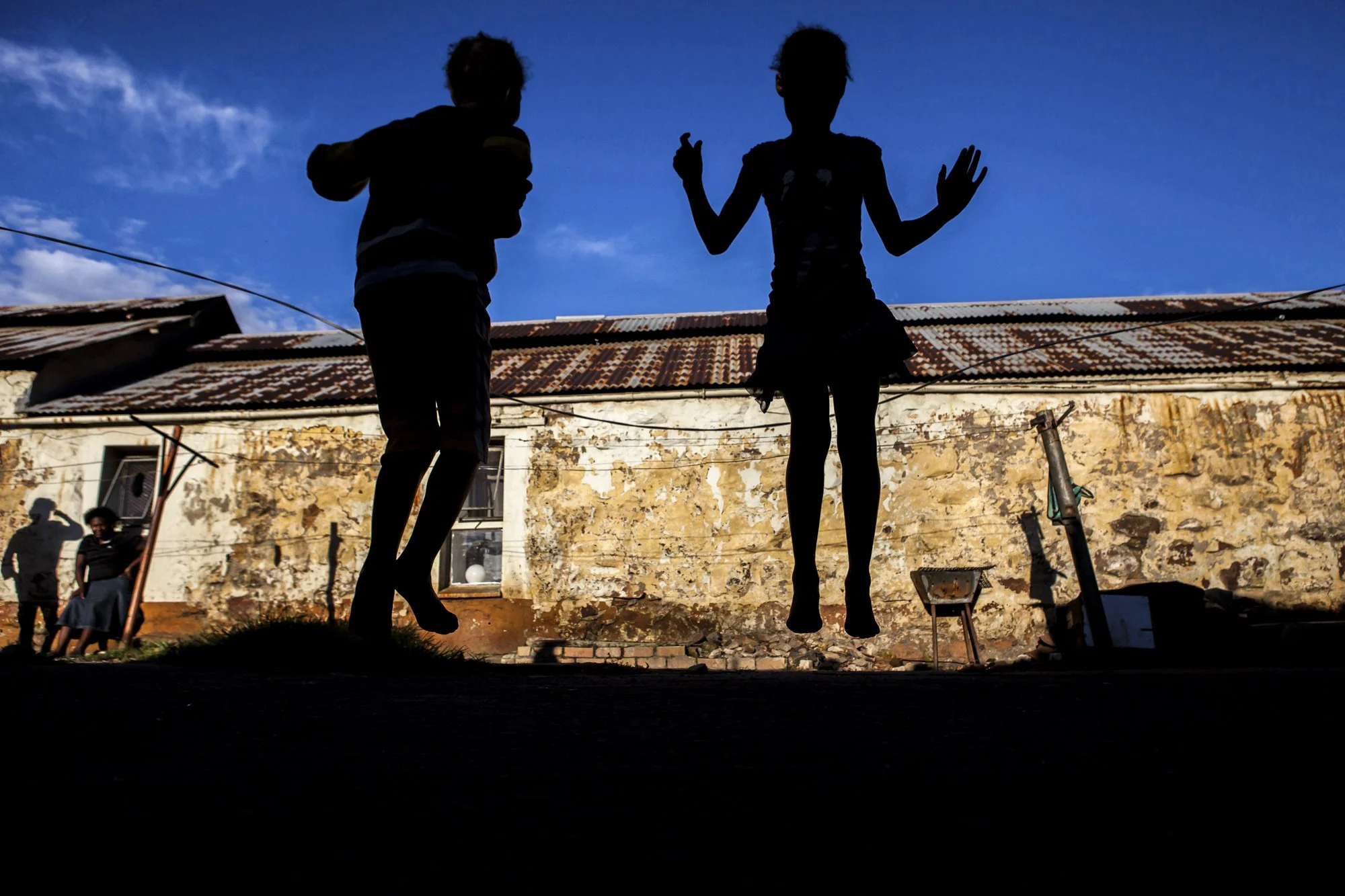
Children skip rope in the courtyard of an abandoned gold mine hostel on the outskirts of Johannesburg, using the plastic casing of stolen power cables. In a place shaped by extraction, neglect, and inequality, the remnants of industry become tools of play—small acts of resilience unfolding amid the ruins of a vanished economy.
After the Gold: Life on an Abandoned Goldmine
On the fringes of Johannesburg lies the hulking shell of the once-thriving Durban Deep Gold Mine. Long since abandoned hostels now stand silent—but their empty courtyards are far from lifeless. In the weeks before this photograph was taken, every power cable in the area was dug up and stolen, leaving the settlement in darkness. Yet here, among the crumbling walls, children who now call these ruins home turned the stripped plastic casings into skipping ropes, transforming an act of deprivation into a moment of play.
These hostels, once built for migrant mine workers, are now inhabited by a new generation of migrants and families with nowhere else to go—people squatting in the only shelter available to them as Johannesburg expands and inequality deepens. In this landscape of collapse, the cables that once powered the mine’s lights and machines now tether resilience and imagination, reminders of how communities reconstruct hope from what industry left behind.
Here, the legacy of gold—the boom and the bust—remains buried in the earth and visible in the ingenuity of children making joy from the remnants of a vanished economy.
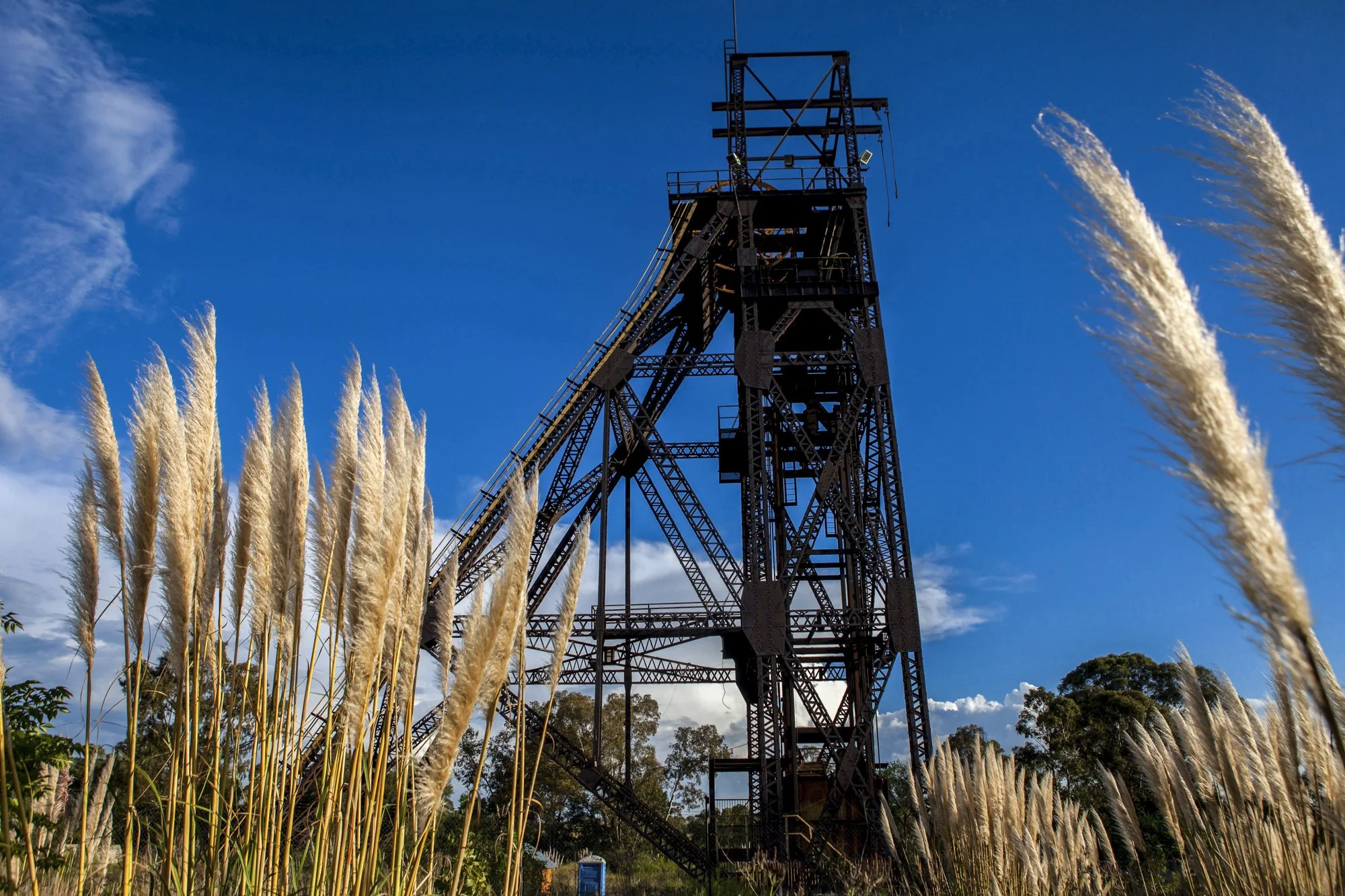
The rusting headgear of the long-abandoned Durban Deep Gold Mine rises above a field of pampas grass on Johannesburg’s western fringe. Once the gateway to one of South Africa’s most productive shafts, the structure now stands as a skeletal monument to an industry that shaped—and scarred—the region. Today its towering frame watches over a very different landscape, where displaced migrants have turned the derelict mine property into an improvised home amid the remnants of a bygone gold rush.
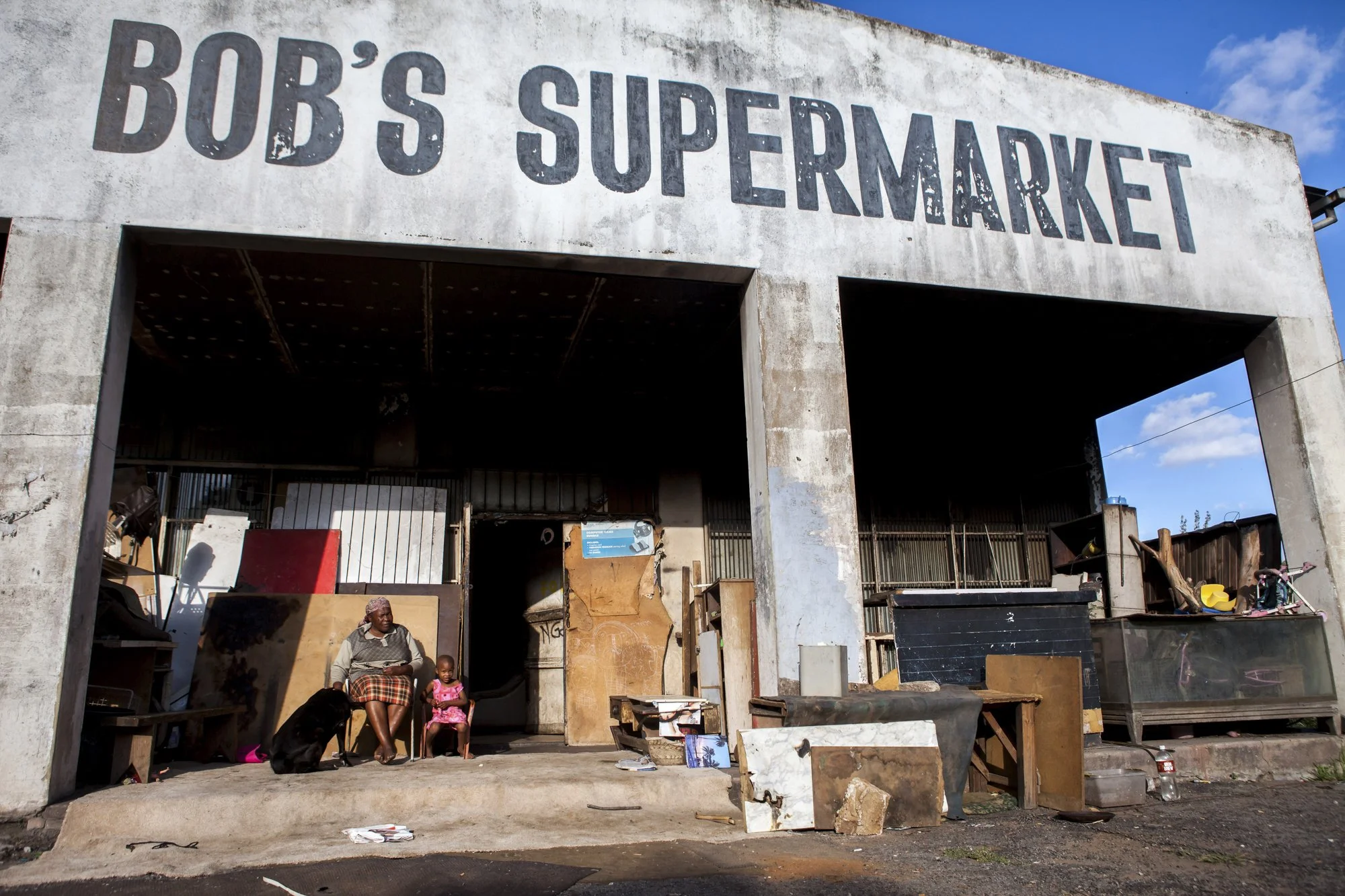
Once the bustling supermarket that served Durban Deep’s mining community, “Bob’s Supermarket” now shelters families who have carved makeshift rooms into its concrete shell. With no formal housing available, migrants and displaced South Africans have transformed the abandoned building into a patchwork of living spaces. In the late-afternoon light, a woman and her granddaughter sit outside their improvised home, framed by remnants of the mine’s past and the daily objects of a life rebuilt from what was left behind.

Two young girls walk arm-in-arm through the former mine compound, one clutching the head of a discarded white baby doll whose hair she has lovingly braided into tight rows. In a place where toys are scarce and most belongings arrive as castoffs from elsewhere, the children reimagine what they find, shaping it into something that feels like their own. Their play unfolds against the cracked walls of the abandoned Durban Deep hostels—now home to migrant families squatting in the derelict buildings left behind by the mine’s collapse.
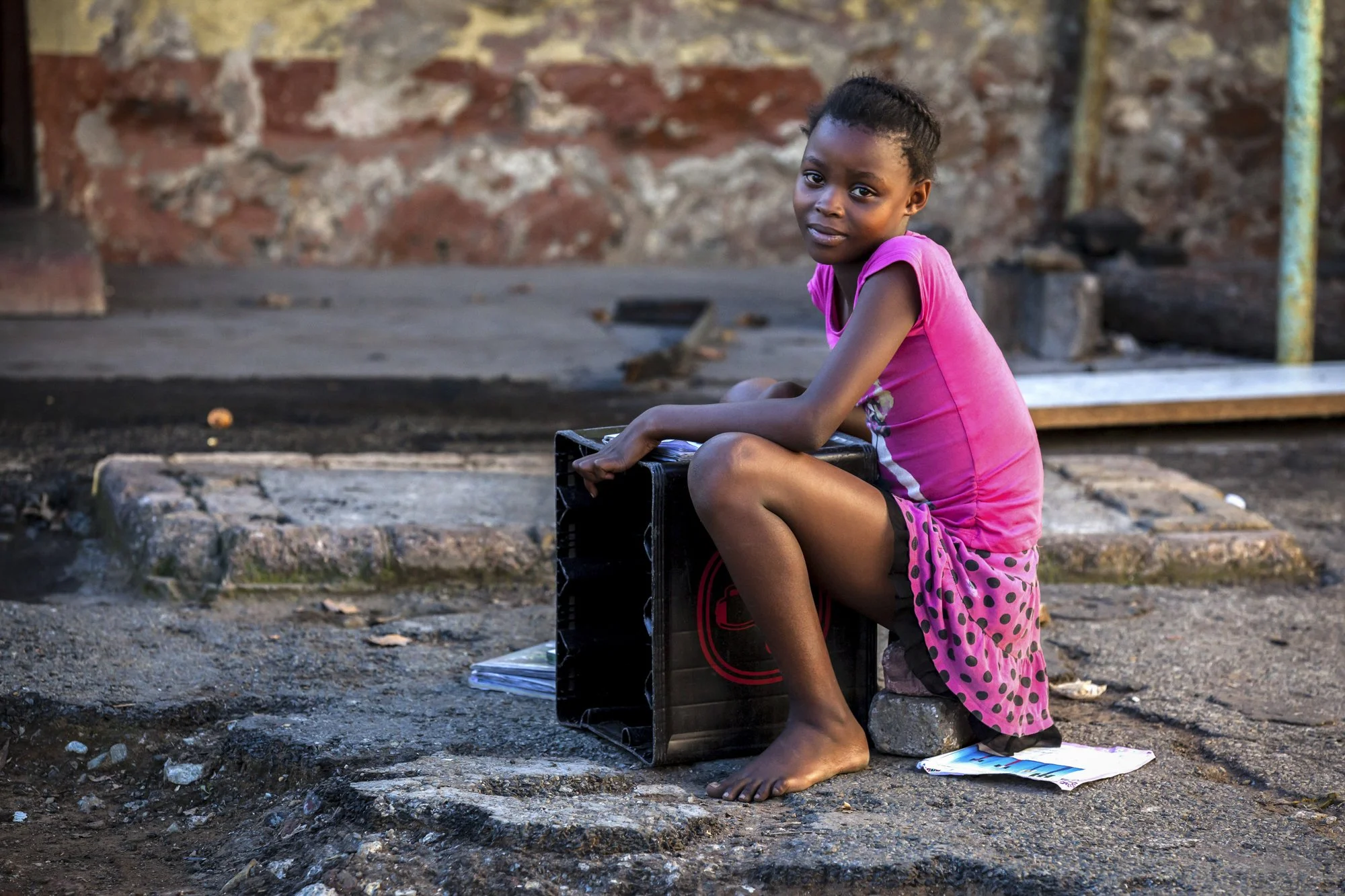
A young girl does her homework in the shadow of the abandoned Durban Deep mine, using a sideways crate as a makeshift desk and a pair of concrete blocks as her chair. For the migrant families now squatting in these derelict buildings, basic resources are scarce, yet children carve out small spaces of determination and routine—acts of normalcy and hope amid the uncertainty of life after the mine.
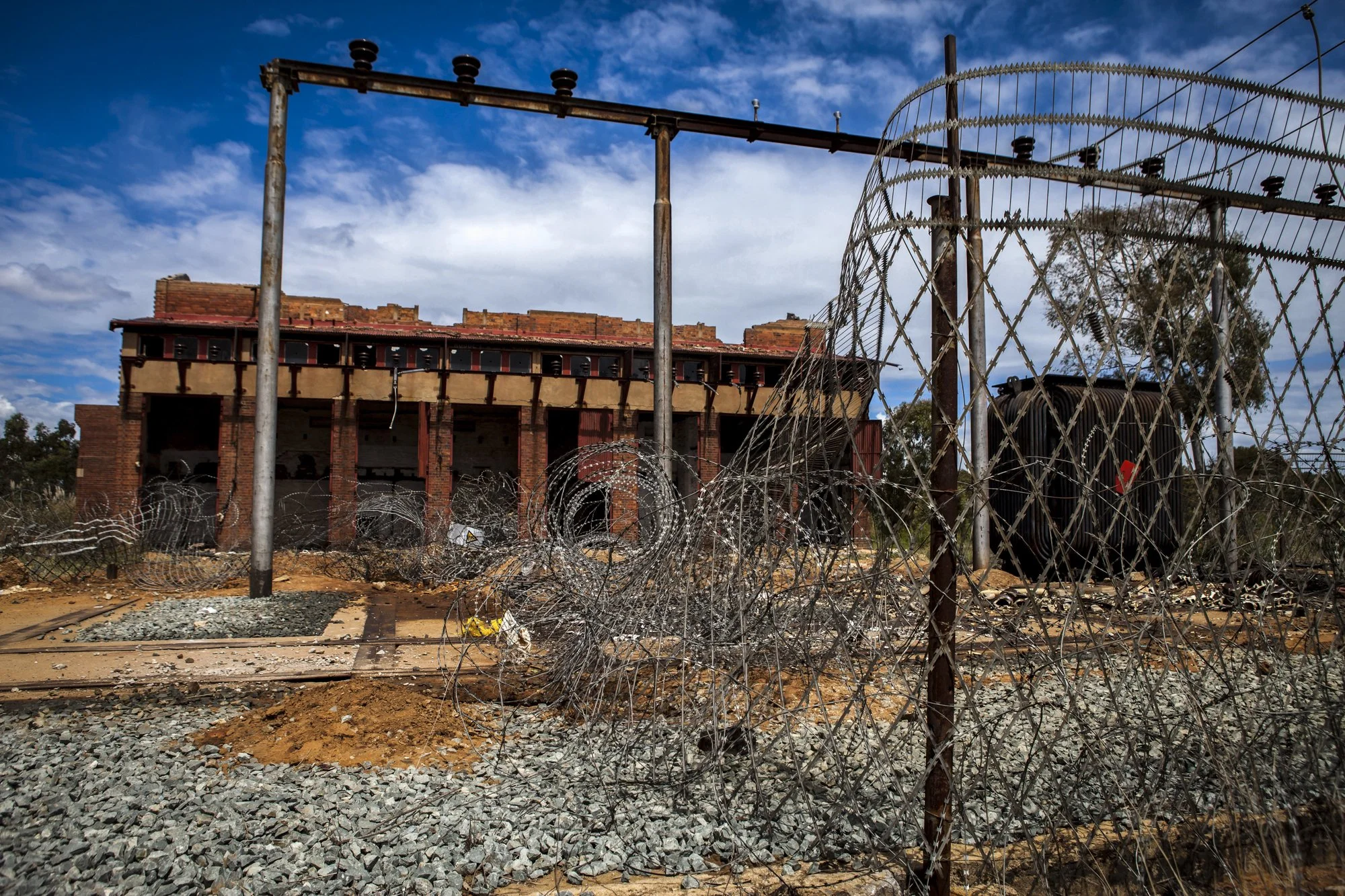
Durban Deep’s gutted substation sits in ruins just days after being stripped for its valuable copper and metal. Like many of South Africa’s abandoned gold mines, the site is a stark relic of the apartheid-era industry that once powered Johannesburg’s growth. Perched on the West Rand, the mine is framed by glimmering hills of tailings and its rusting headgear rising like a monument to another time. Although mining operations ceased almost 15 years before this photograph was taken, the surrounding property never emptied out; instead, it evolved into a community for low-income residents who moved in after miners and management left, creating homes amid the industrial skeletons left behind.
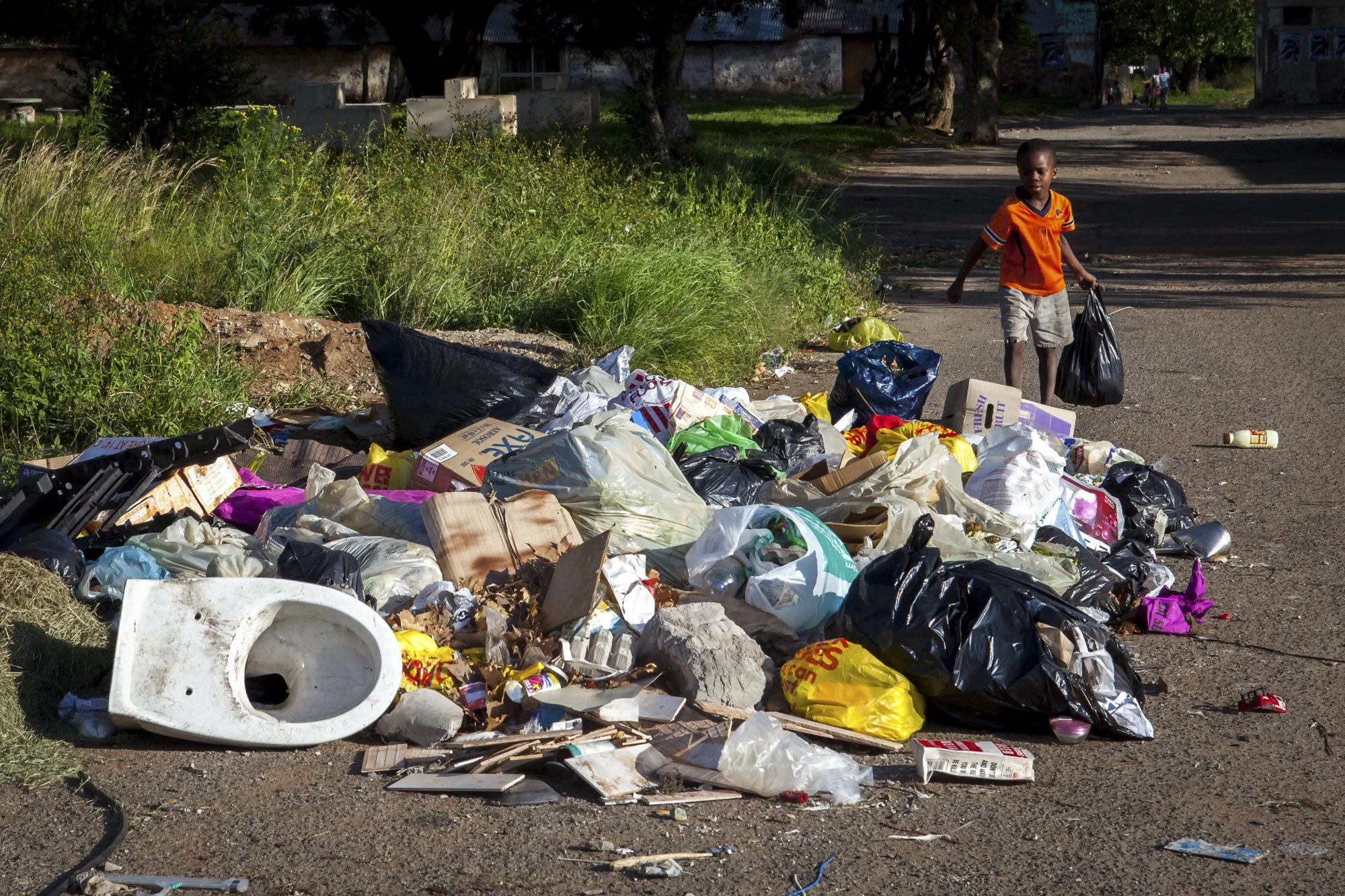
Caption (expanded) A young boy carries a bag of household trash to a makeshift dumping site outside Skomplaas hostel on the outskirts of Johannesburg, South Africa. With no formal waste removal in the abandoned mining settlement, residents—many of them migrant families living in the former mine hostels—have little choice but to create informal dump sites. The growing piles of refuse speak both to the absence of basic municipal services and to the everyday improvisation required to survive in a community left behind after the gold economy moved on.
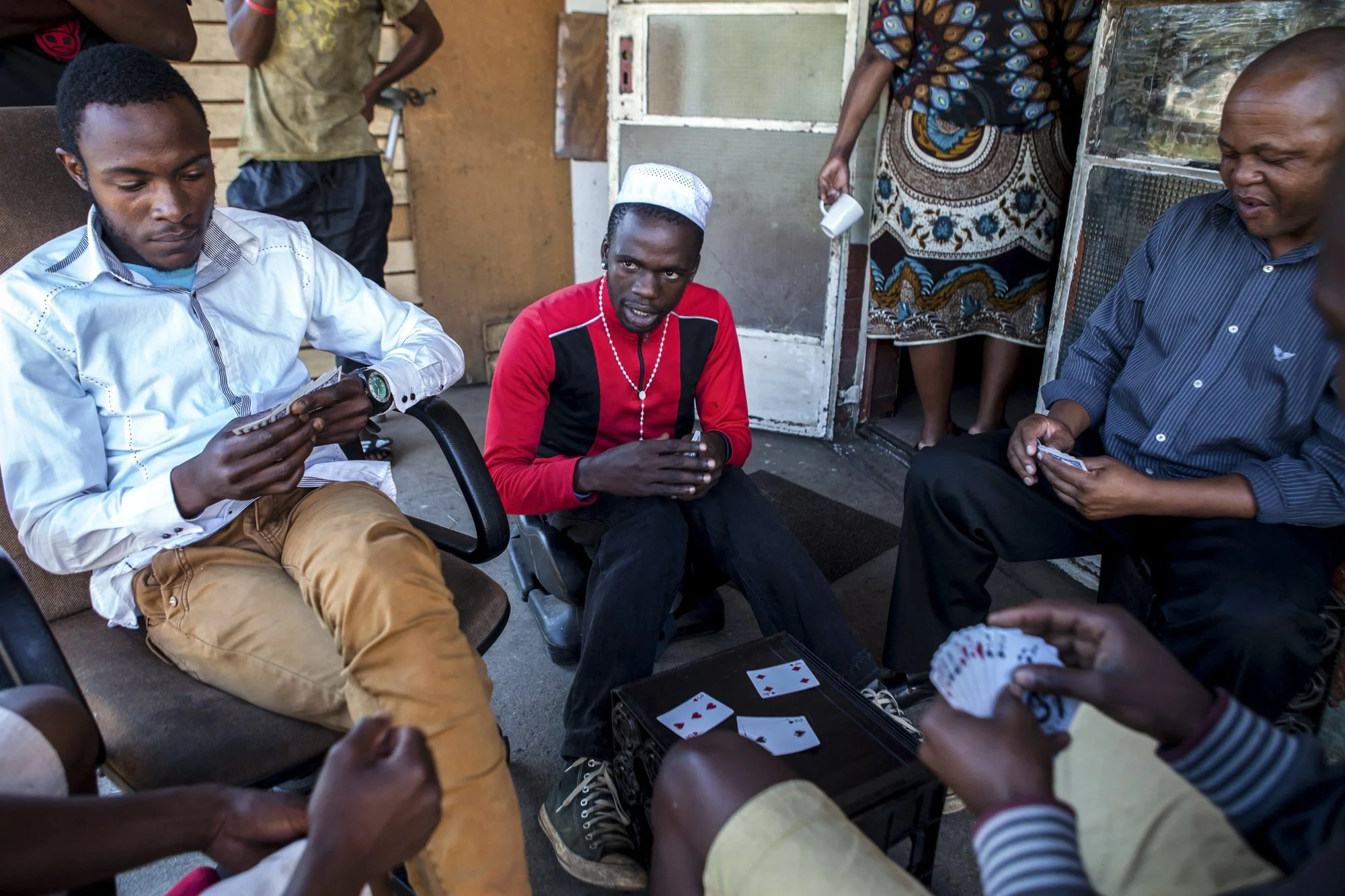
A group of men play casino outside one of the old hostels at “Skomplaas,” a former Durban Deep Gold Mine residence on Johannesburg’s West Rand. Once built to house migrant laborers during the gold boom, these hostels now shelter a new generation of migrants, many of whom face extremely high unemployment and few economic opportunities. With steady work scarce, long afternoons often spill into communal games, conversation, and improvised routines that help pass the time in a landscape where the promise of gold has long since evaporated.
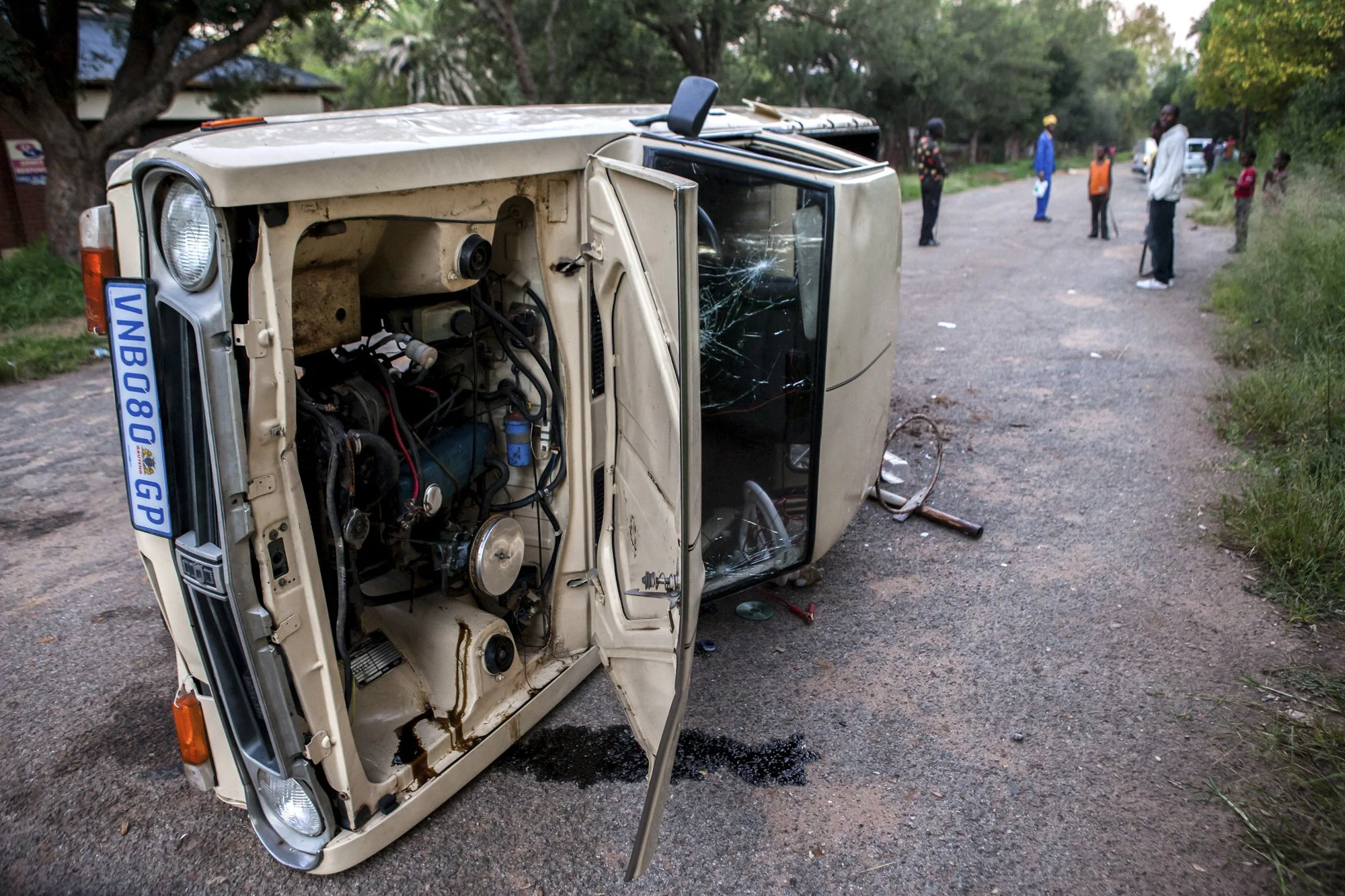
A truck used by copper-cable thieves lies overturned on a road in Durban Deep, on the outskirts of Johannesburg, after local residents—exasperated by repeated attacks on their neighborhood and a lack of police response—formed a vigilante group to confront the problem themselves. The thieves abandoned the vehicle and fled, leaving residents to drag it aside. This confrontation marked the beginning of a cycle of community-driven reprisals that would eventually result in the deaths of six men at the hands of the vigilante group.
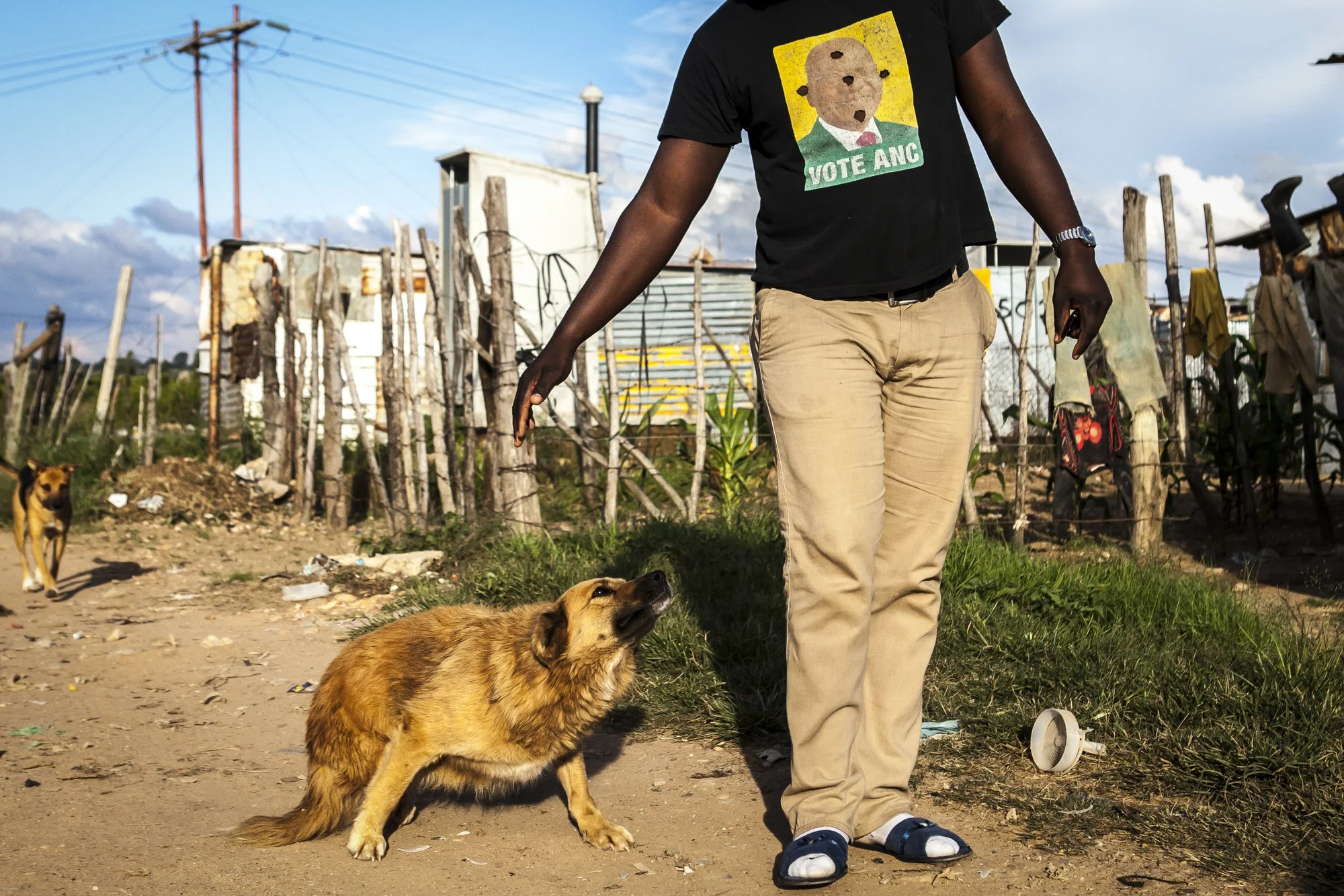
A resident walks through the informal settlement that has grown up around the abandoned Durban Deep mine, his shirt bearing the face of an ANC politician punctured by mysterious bullet-like holes — a stark, improvised commentary on the political disillusionment and violence that continue to ripple through South Africa in the post-apartheid era. Around him, stray dogs weave through the settlement’s makeshift fences and unpaved paths, a reminder of how communities here navigate daily life amid instability, neglect, and the long shadow of the mine’s collapse.
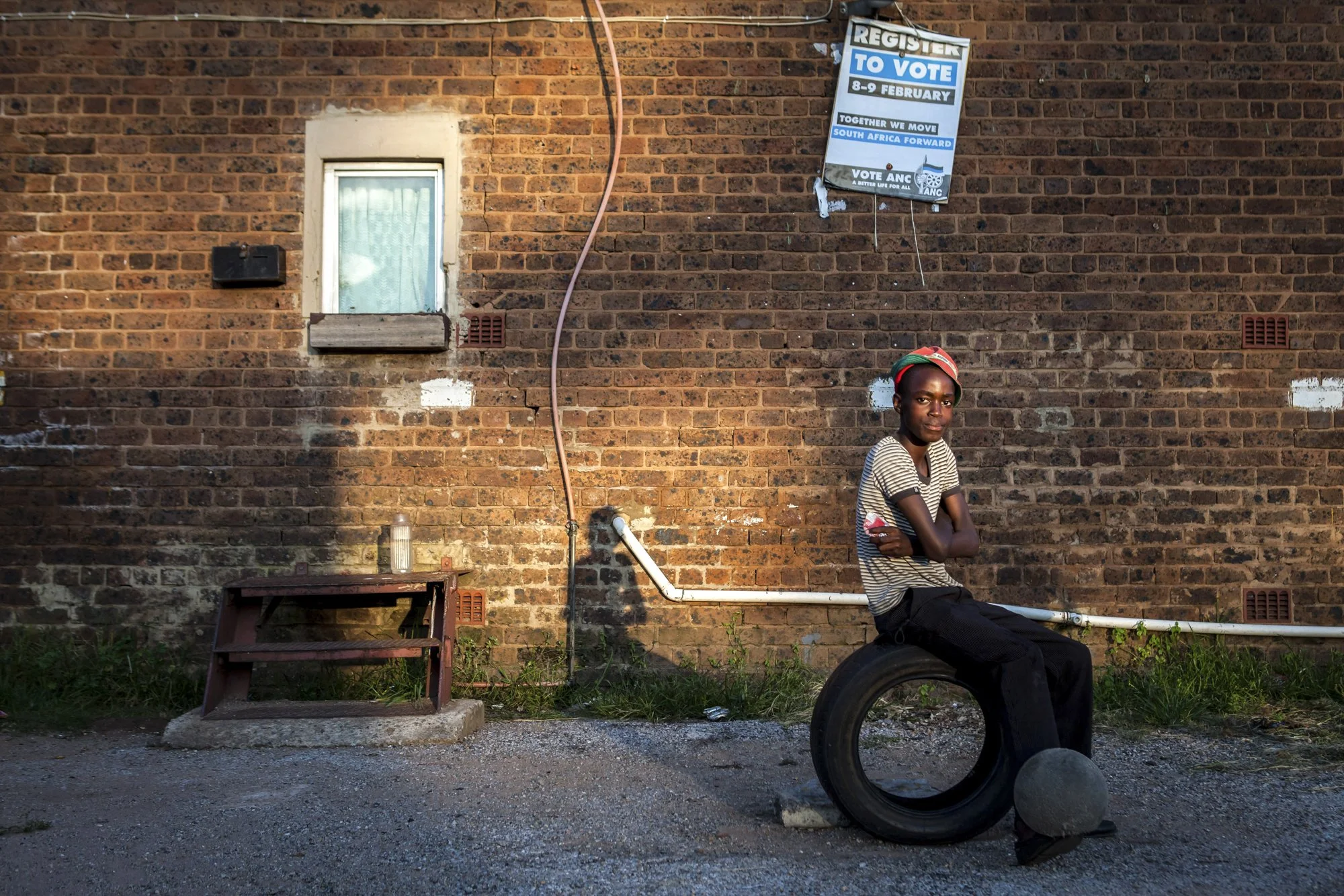
A teenaged boy sits on a tire and taps a soccer ball against his feet outside one of Durban Deep’s old hostels on the outskirts of Johannesburg, South Africa. Above him, a weathered ANC voter-registration poster hangs from the brick wall—an echo of the political tensions and fractured trust left in apartheid’s wake. Many of the families living here are migrants with few housing options, carving out community in the abandoned structures once built to serve the mine.