

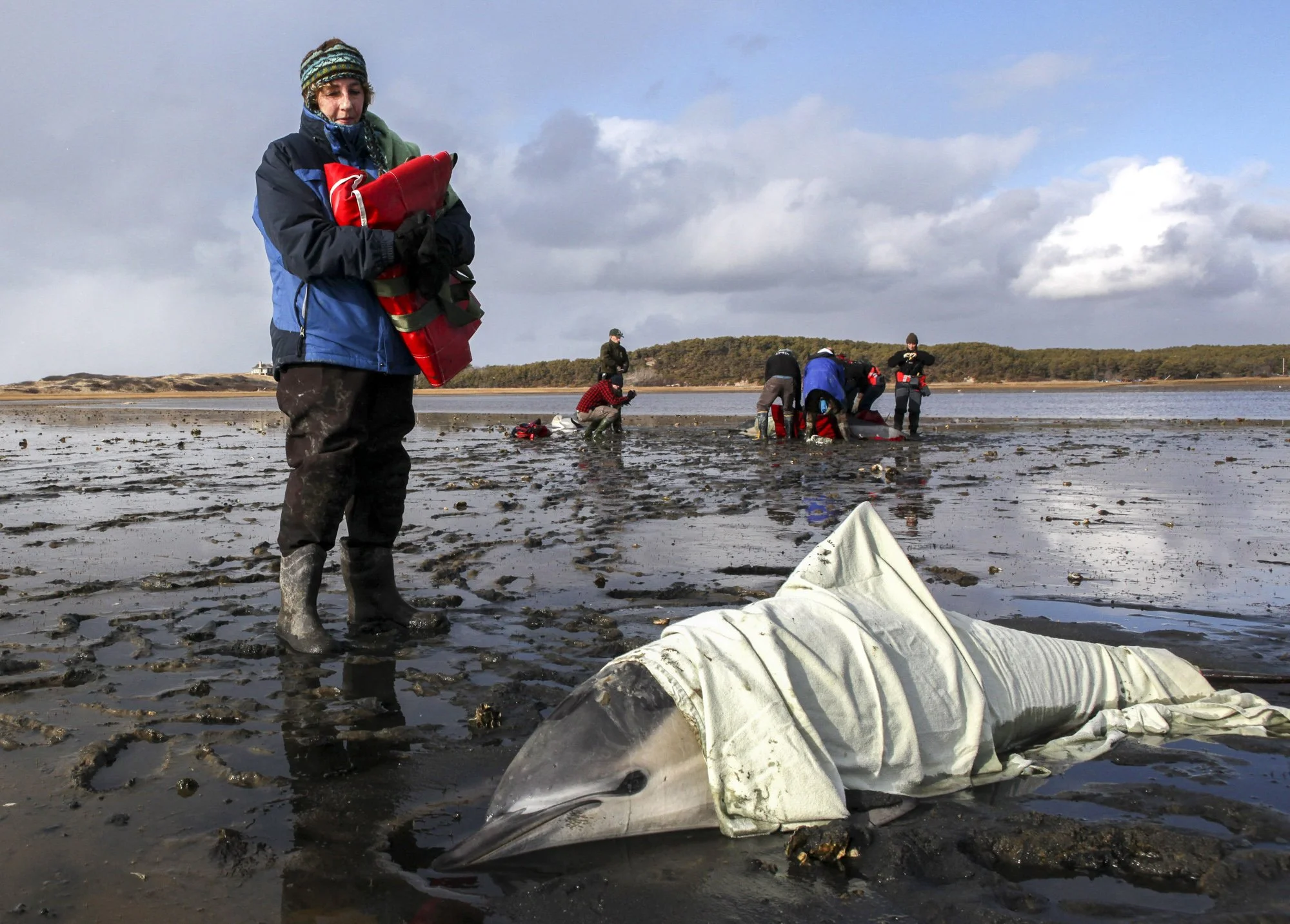
At low tide on Wellfleet’s Herring River, IFAW volunteer Patty Walsh counts the breaths of a stranded common dolphin while nearby teammates prepare another for transport. On Cape Cod—where shallow bays and a hook-shaped shoreline create natural trap zones—moments like this unfold with urgent regularity, and survival hinges on speed, skill, and care.
Stranded: The Fight to Save Cape Cod’s Dolphins
Cape Cod is one of the most dangerous places in the world to be a dolphin. Its dramatic tides, shallow bays, and sweeping hook-shaped shoreline create natural “trap zones” where pods can become disoriented and pushed into narrowing channels with no clear route back to open water. What draws dolphins close to shore in search of food can just as easily strand them there—turning the Cape into the global epicenter of live dolphin strandings.
When dolphins become stuck out of water, time becomes everything. Without the buoyancy of the ocean, a dolphin’s own weight presses against its organs, stress levels spike, and survival depends on how quickly trained responders can reach them. Each rescue unfolds under urgent conditions, often across miles of exposed mudflats, in cold, wind, and rapidly changing tides.
Yet amid the urgency, there is also hope. With rapid intervention, 70–80 percent of stranded dolphins on Cape Cod are successfully rescued and released—a remarkable outcome made possible by the coordinated efforts of the International Fund for Animal Welfare (IFAW) and its network of trained staff and volunteers. Their work demands speed, strength, and precision: stabilizing animals where they lie, carefully loading them onto stretchers and carts, and transporting them to deeper waters where they have the best chance of survival.
This series follows those moments—when a call comes in and the race begins; when breaths are counted and decisions are made; when dolphins are lifted from the mud and carried back toward the sea. It is a story of crisis and care, of a coastline that endangers these animals, and of the people who return to the flats, tide after tide, determined to send them home.
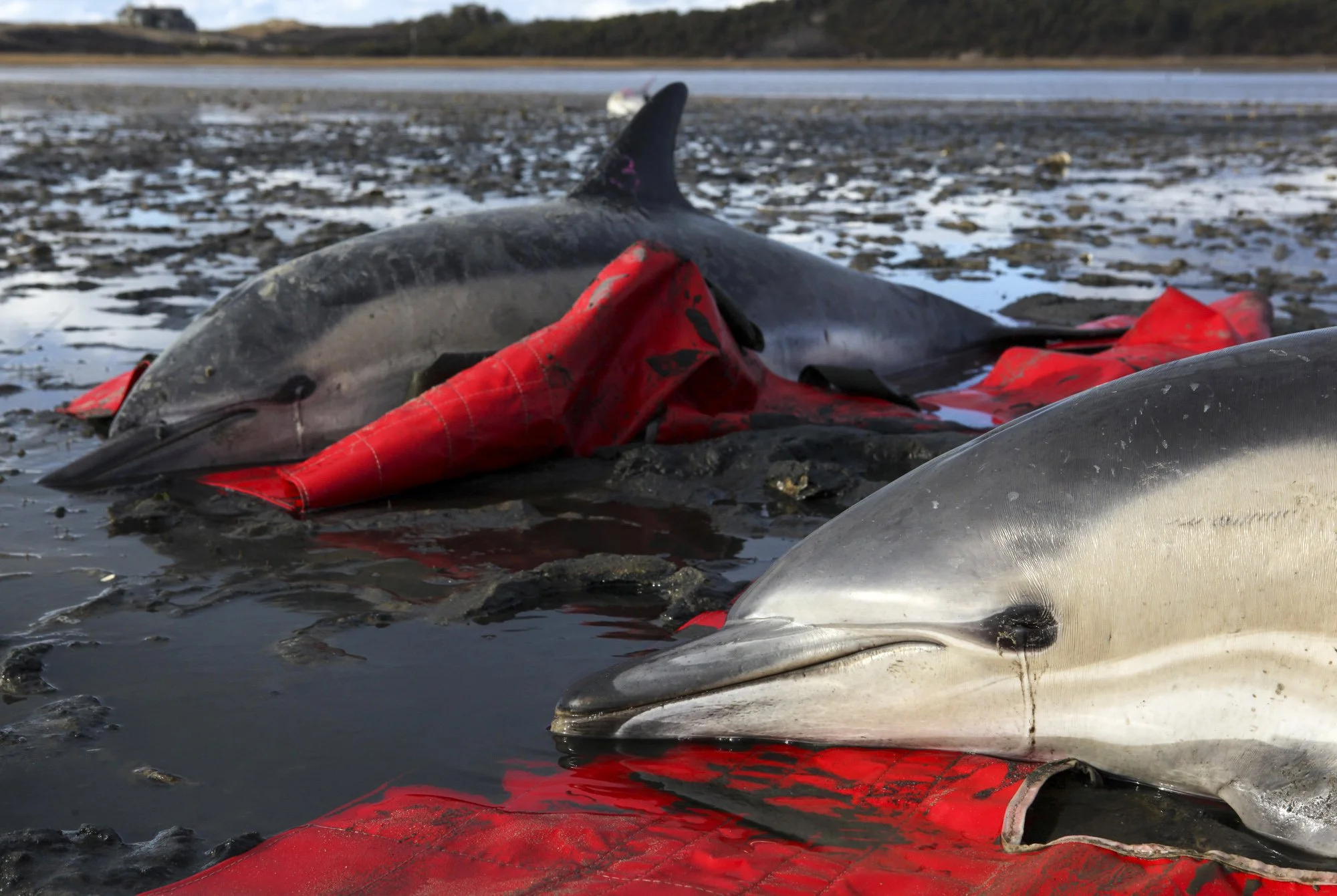
Two stranded common dolphins lie on rescue mats as responders work nearby on the tidal flats of Wellfleet. The tear-like streak beneath their eye resemble tears, but dolphins don’t cry like humans; this fluid is mucus from the eye’s protective gland, often released when the animal is stressed or has been exposed to air for too long. Without the buoyancy of water, their own body weight compresses their organs, making swift rescue essential on these rapidly draining flats.
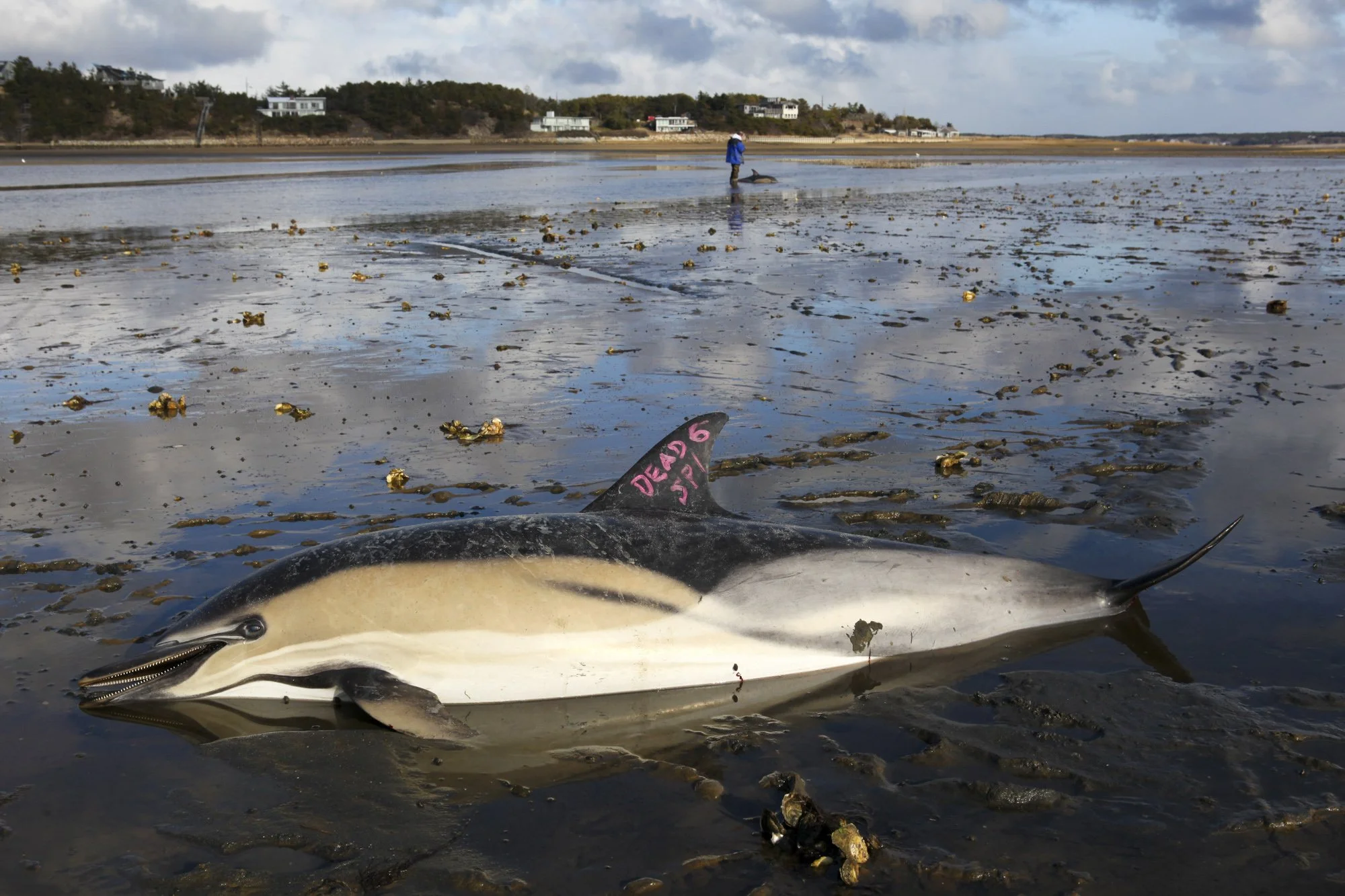
A deceased common dolphin is marked as such at Herring River in Wellfleet. When dolphins strand, they often succumb not to external injuries but to the intense physiological stress of being out of the water. Their own body weight presses on their organs, compromising circulation and breathing, and prolonged stress can trigger shock—factors that together can quickly become fatal.
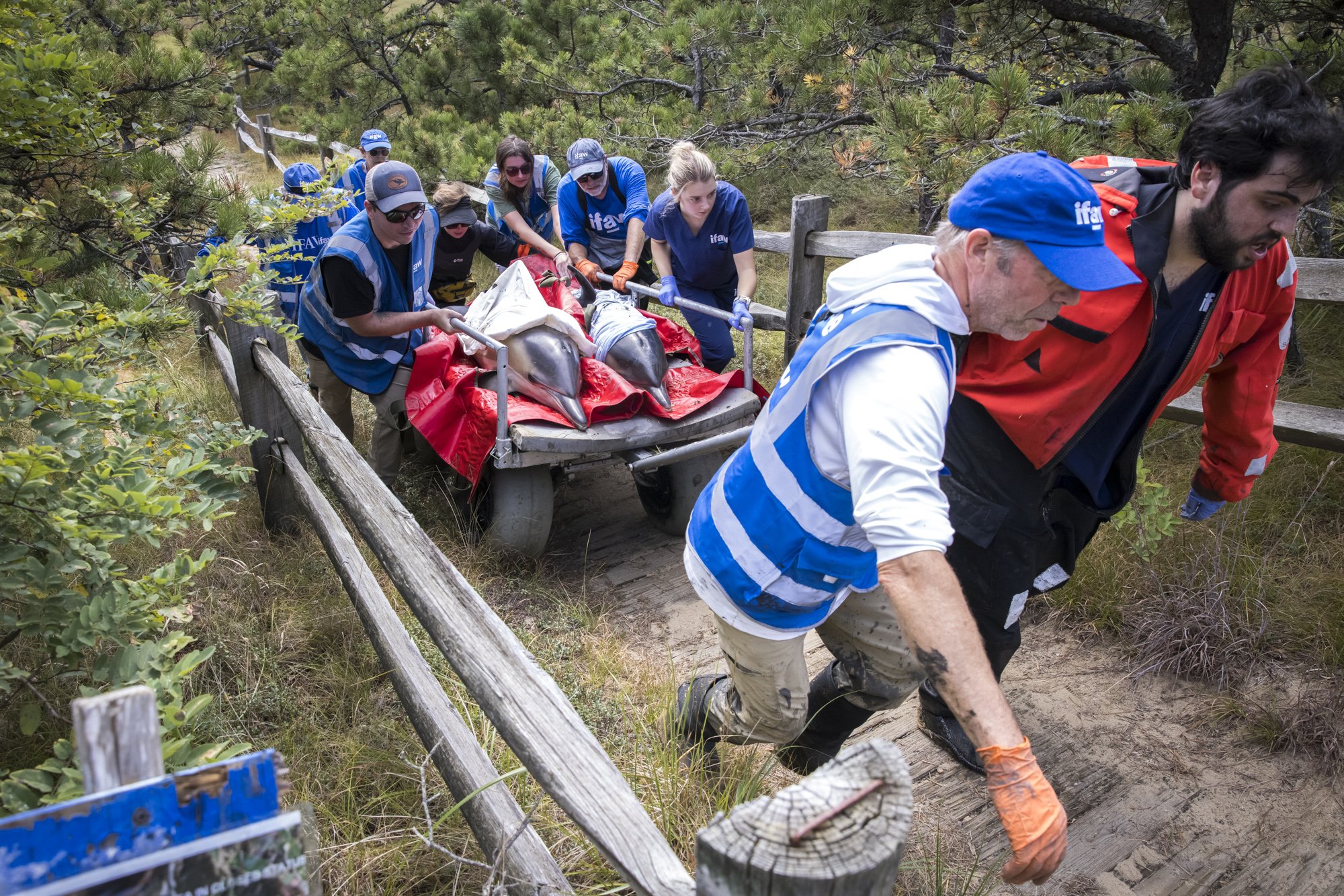
The team carries a stranded dolphin up a steep incline to a waiting vehicle using a specially designed transport cart and support system. IFAW’s field-rescue operation uses custom-built equipment—including stretchers and wheeled carts adapted for marine mammals—to safely move dolphins from the stranding site to their mobile clinic vehicle.
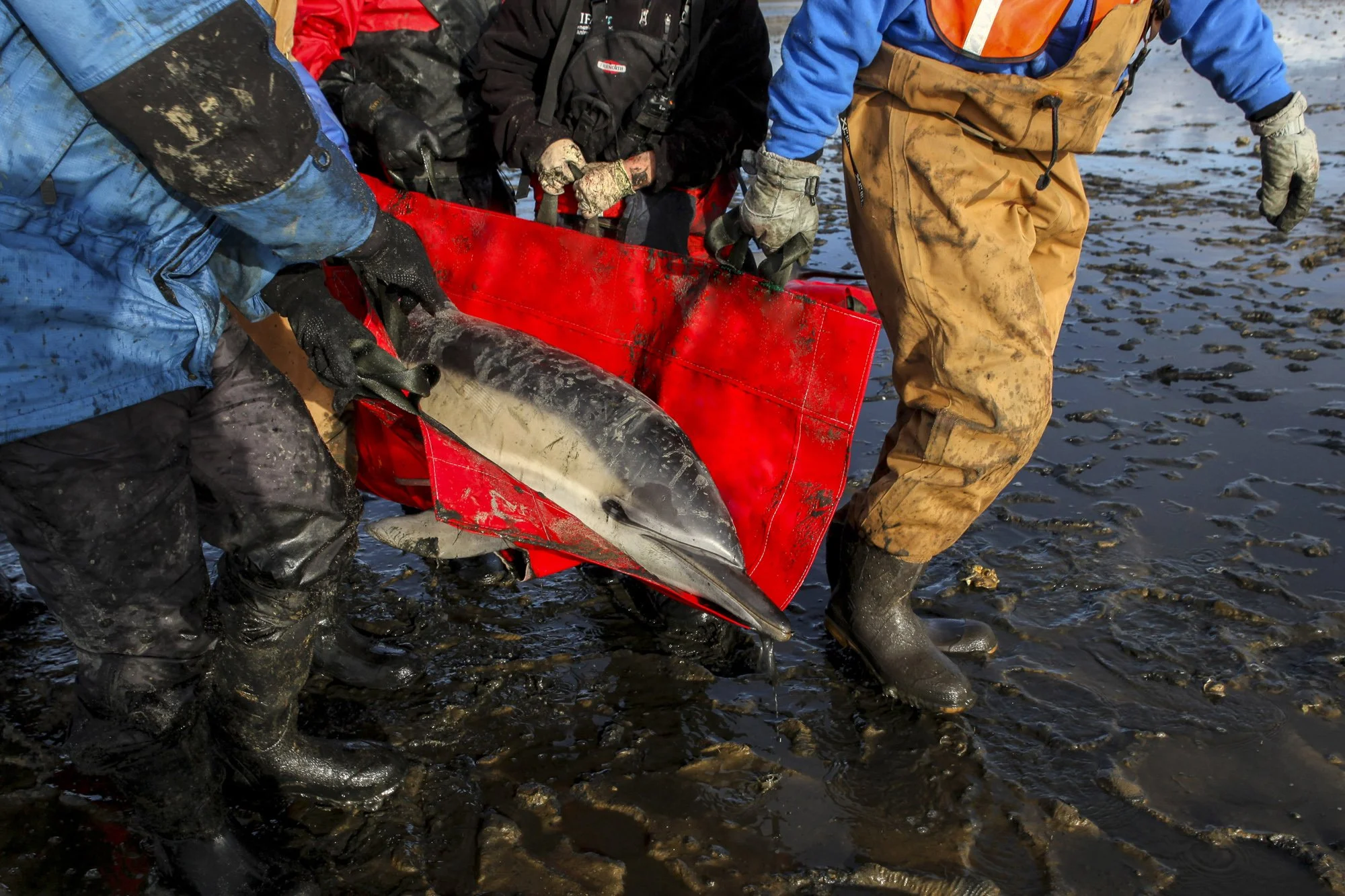
Responders carry a stranded common dolphin across deep, boot-sucking mud on a heavy-duty stretcher after determining that the rescue cart would sink in the terrain. In many parts of Cape Cod’s tidal flats, mud can be knee-deep and unstable, forcing teams to transport dolphins entirely by hand. The reinforced stretcher keeps the animal supported and upright, reducing pressure on its organs during the move to firmer ground.
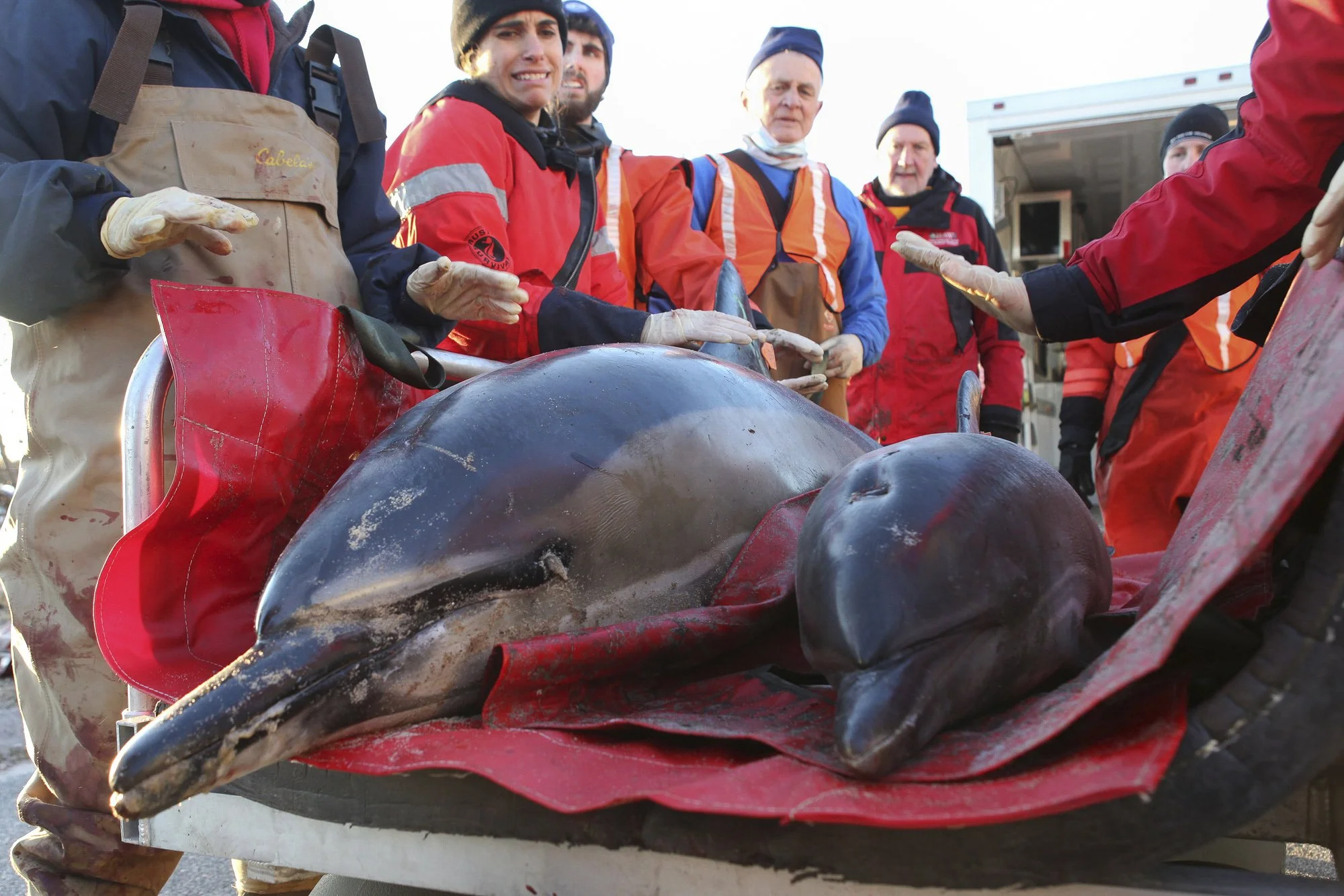
Rescue responders carefully transfer a stranded mother dolphin and her calf from a transport cart into IFAW’s mobile rescue vehicle in Wellfleet, MA. Working quickly and in coordinated teams, rescuers keep the pair stabilized and supported—an especially delicate process when calves are involved, as mothers and young often strand together and rely on one another for survival.
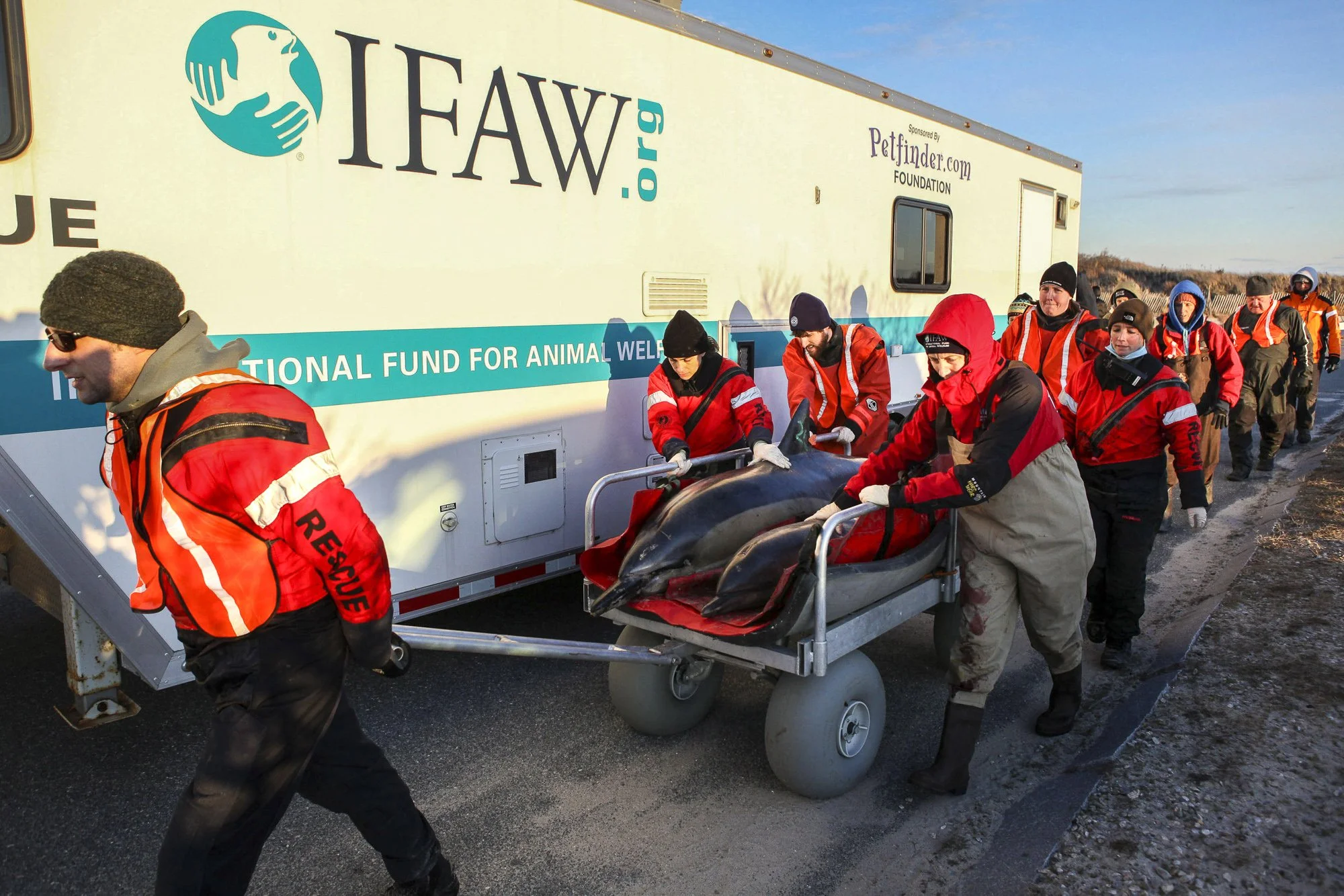
Dolphin rescues require an extraordinary amount of human power—often dozens of trained volunteers working in unison to move the animals safely using a heavy, wide-wheeled marine-mammal cart. In the freezing winter conditions common on Cape Cod, responders wear insulated drysuits to stay warm and protected during long hours in wet, tidal terrain. The collective effort underscores just how much coordination, strength, and dedication each successful rescue demands.
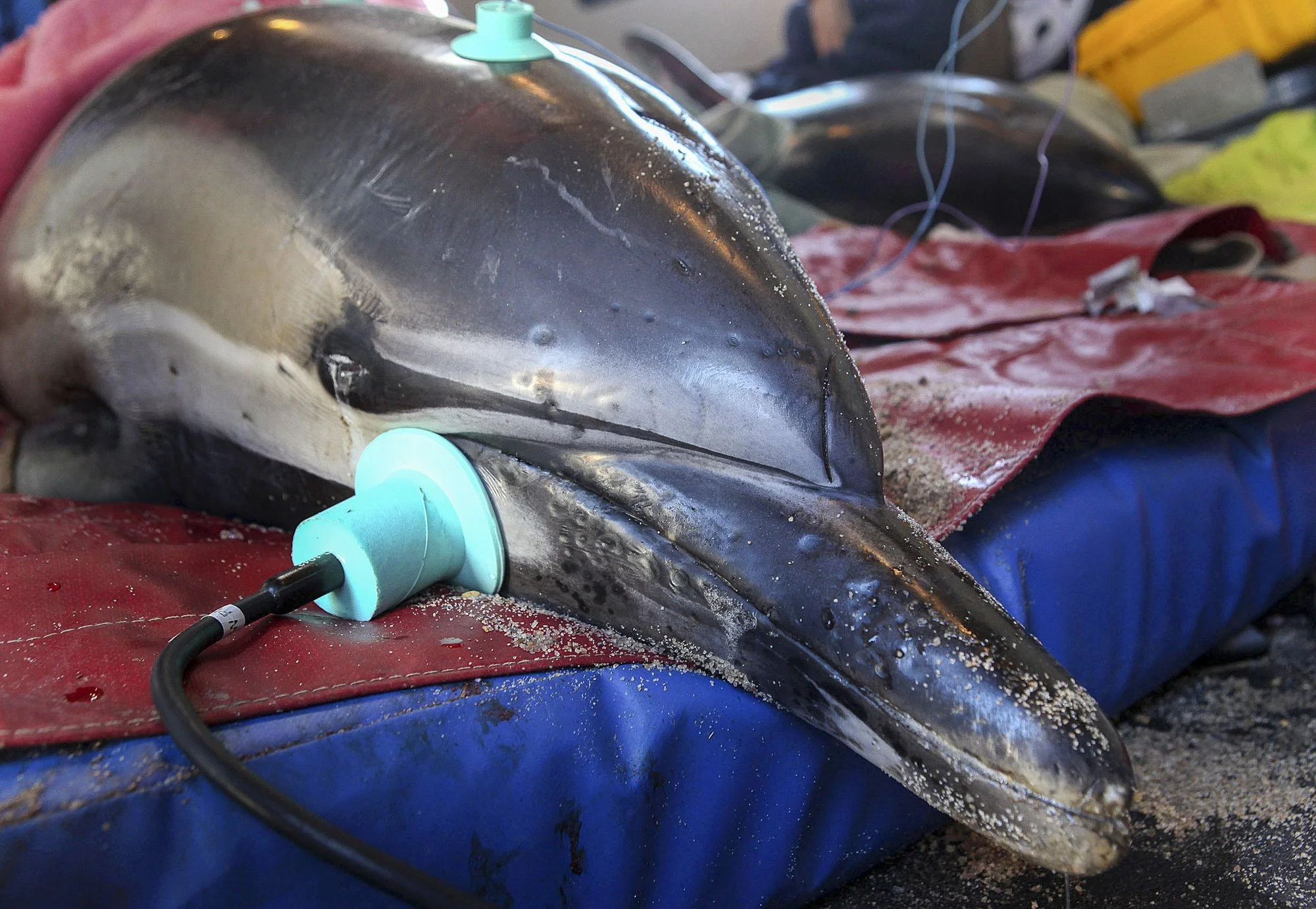
Inside IFAW’s mobile dolphin rescue unit, a stranded common dolphin is monitored using suction-cup sensors that track heart rate and respiration while responders stabilize the animal. The padded floor of the truck and the dolphin’s careful positioning help reduce pressure on its internal organs—one of the greatest dangers during a stranding, as a dolphin’s own body weight can compromise breathing and circulation when no longer supported by water.
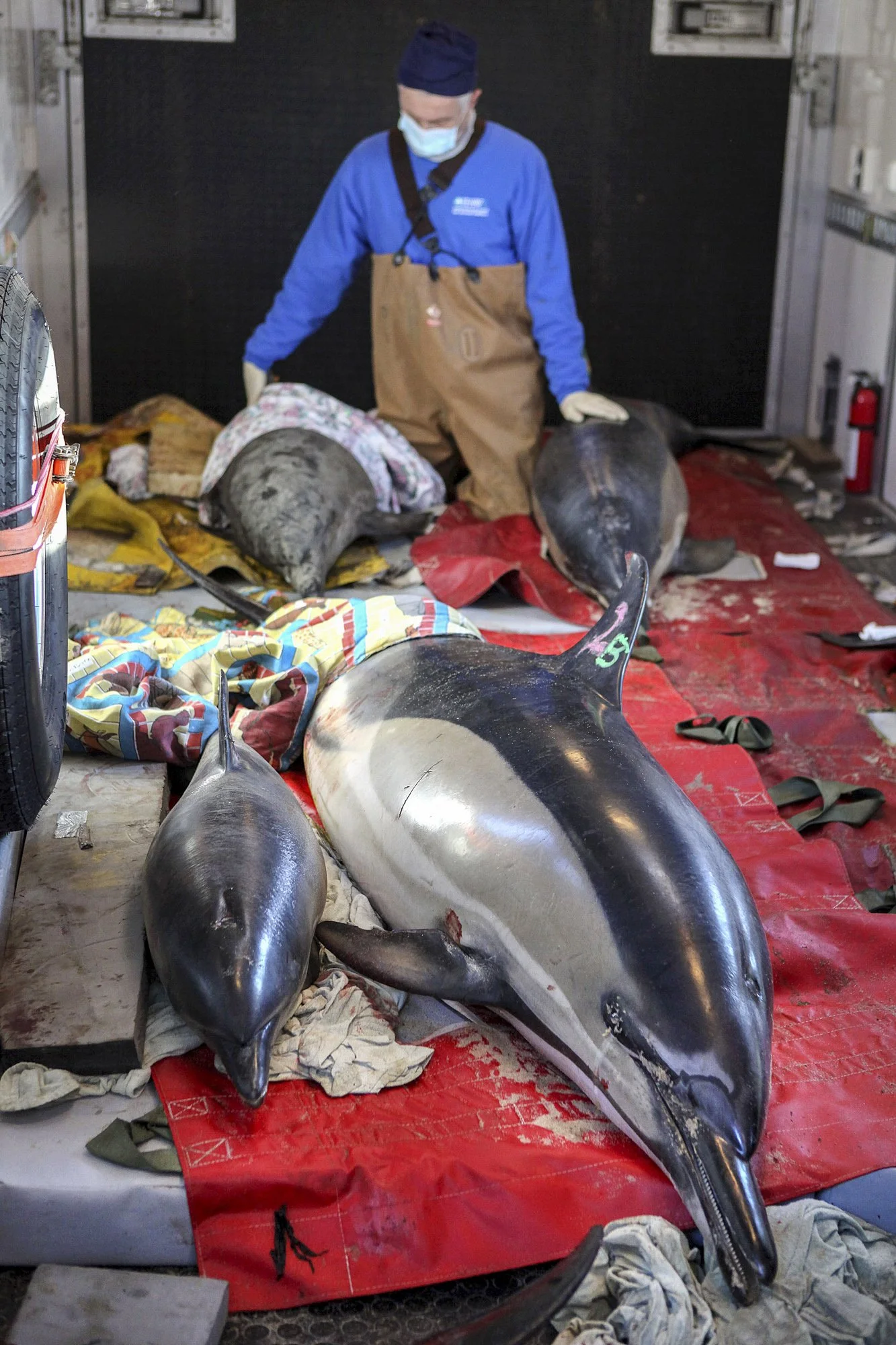
Inside the mobile rescue unit, an IFAW responder stands over a stranded common dolphin while a mother and her calf lie side-by-side in the foreground. He wears a protective mask—not for his own safety, but to prevent transmitting any human-borne illness to the already-stressed dolphins as the team prepares them for transport and release
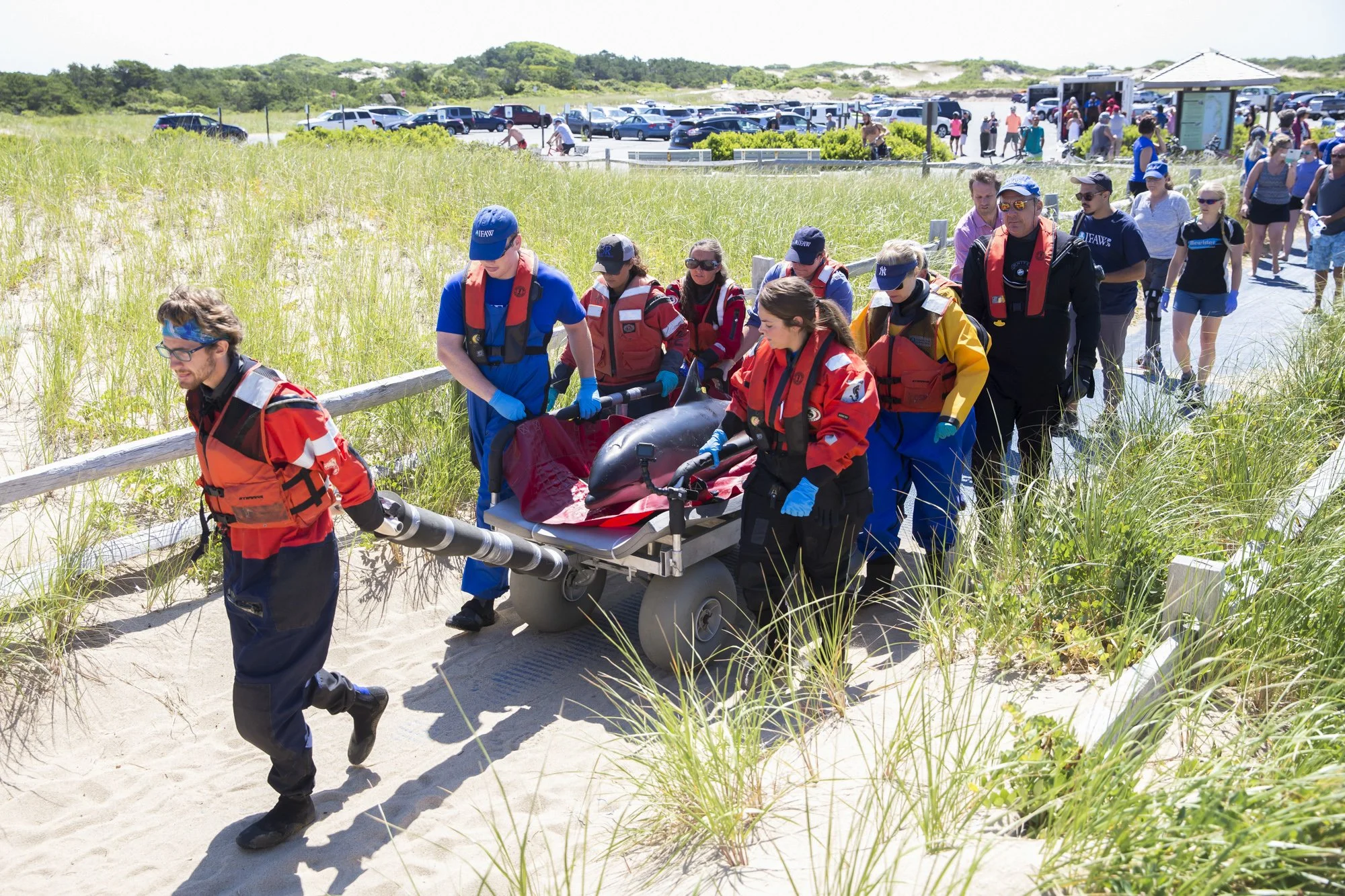
IFAW responders transport a dolphin across the sandy path at Provincetown’s Herring Cove Beach, where deeper offshore waters reduce the risk of re-stranding. Dolphins are only moved for release when they’re in strong enough condition to survive; animals that need further care are transported instead to IFAW’s Dolphin Rescue Center in Orleans for evaluation and rehabilitation.
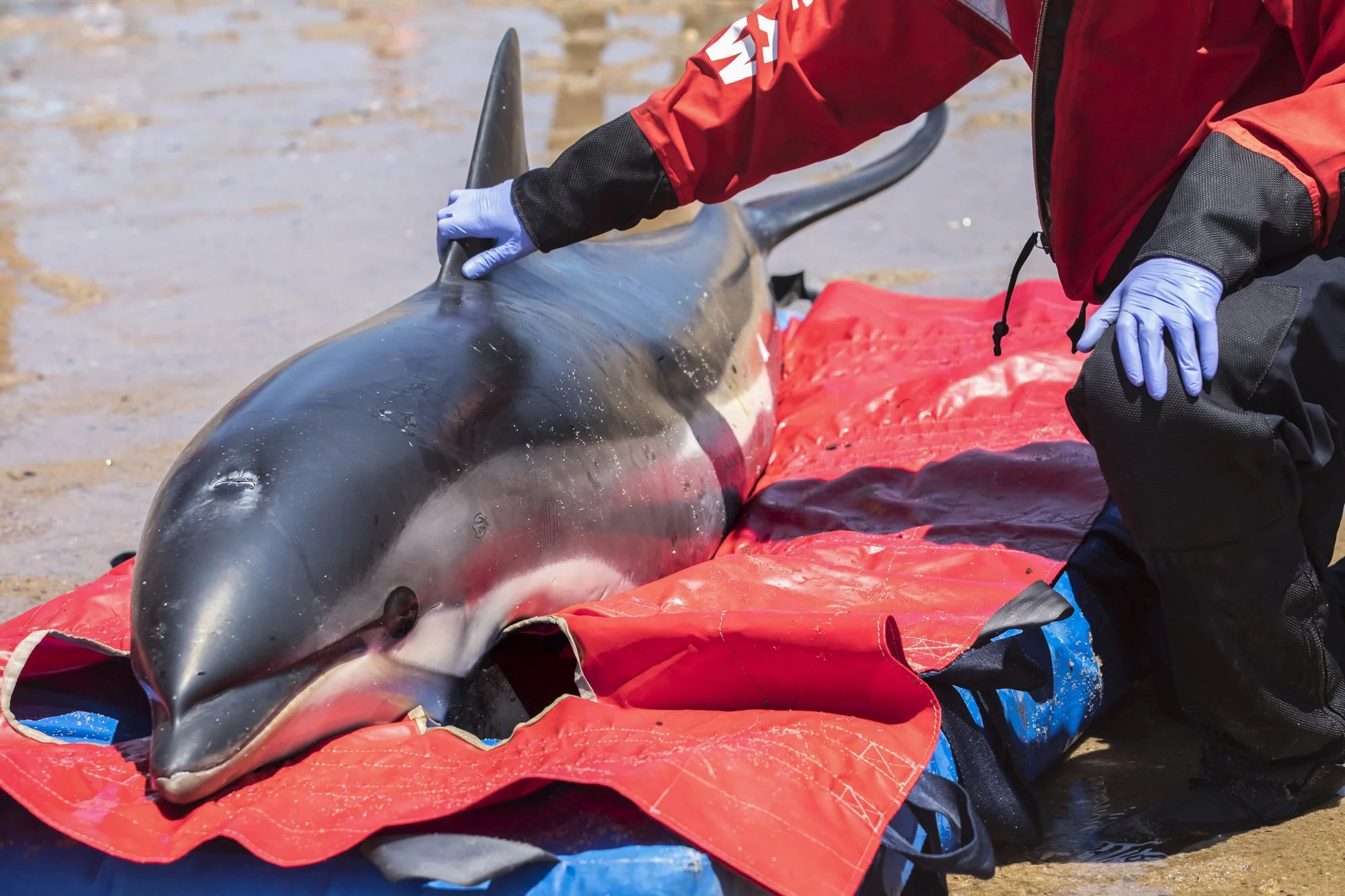
A common dolphin lies on a rescue mat at Provincetown’s Herring Cove Beach just moments before release as an IFAW responder steadies its dorsal fin. After responders confirmed its breathing, hydration, and overall condition were strong enough for return to the wild, the animal was positioned at the water’s edge for a coordinated group release with the rest of its pod.
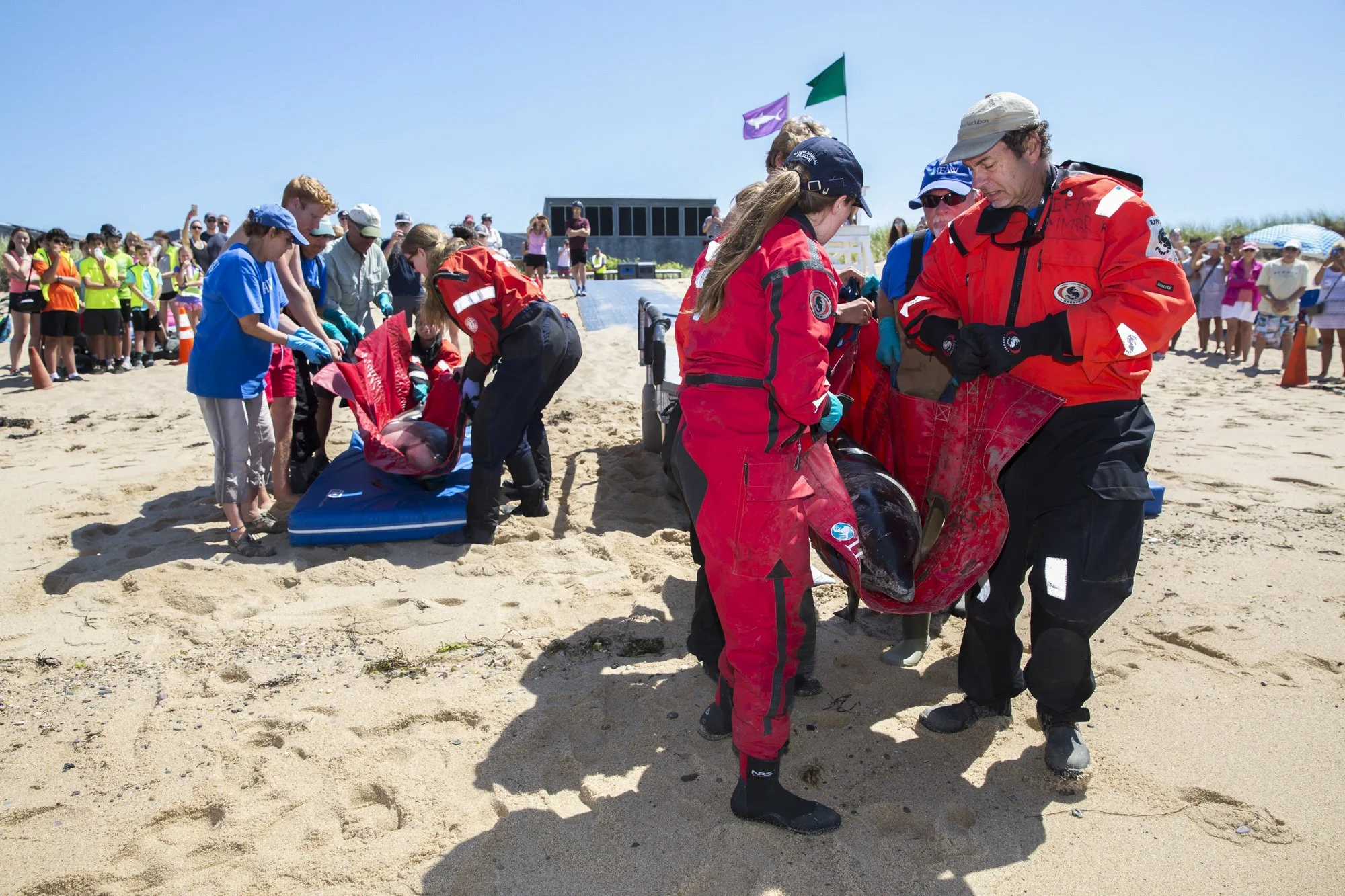
At Herring Cove Beach in Provincetown, IFAW responders place the first dolphins onto the sand, drawing the attention of beachgoers as they wait for the remaining animals to be carried over. Whenever possible, dolphins are released together to reduce stress and increase their chances of reuniting and navigating safely back into deeper water.
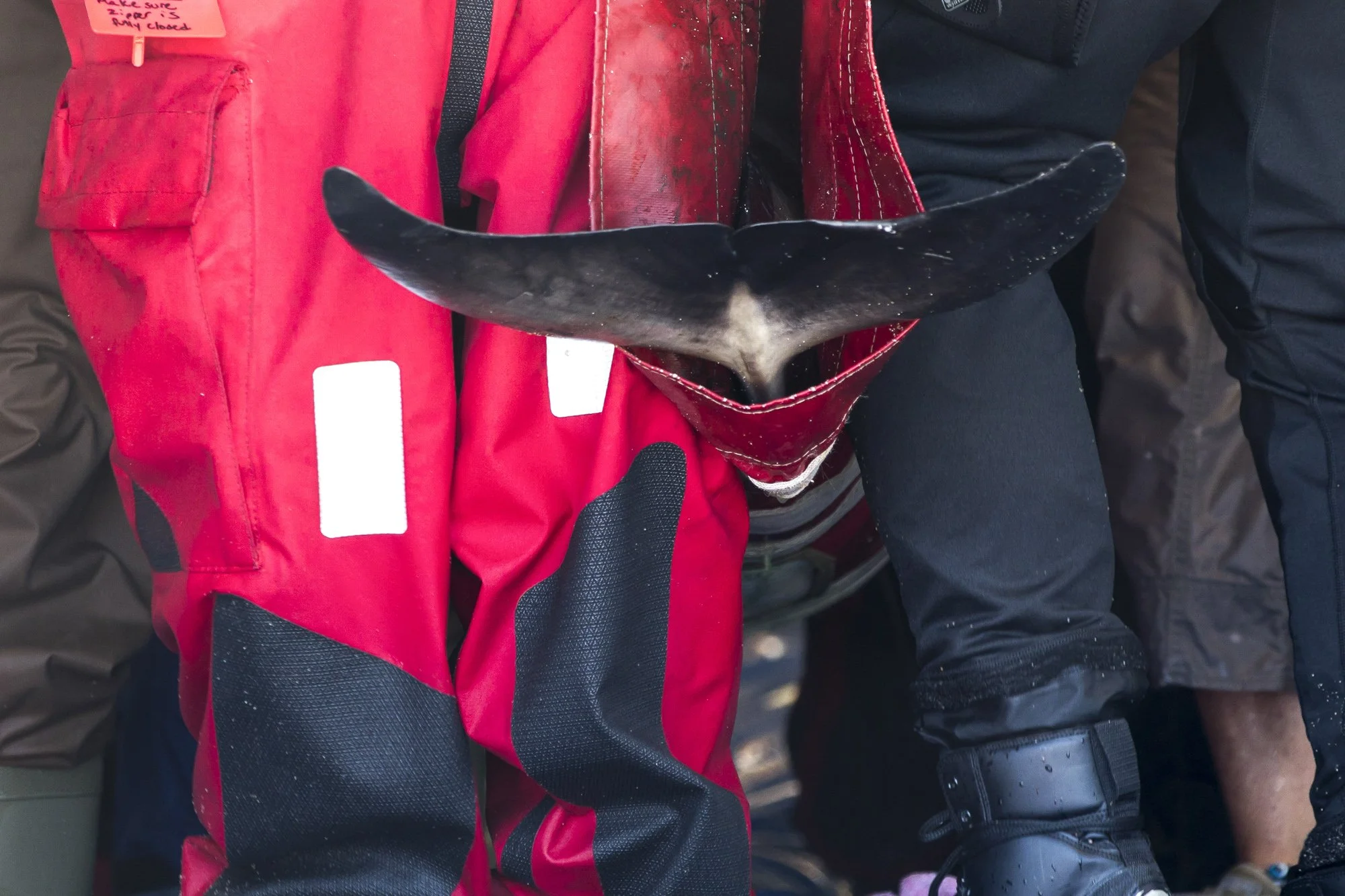
The powerful sweep of a dolphin’s tail peeks out from the rescue sling as volunteers crowd close, ready for the final carry to the water. It’s a fleeting, intimate moment—just the curve of a fluke against a field of red drysuits—yet it holds all the urgency and tenderness of the rescue: human hands doing everything they can to give a wild animal another chance at the sea.
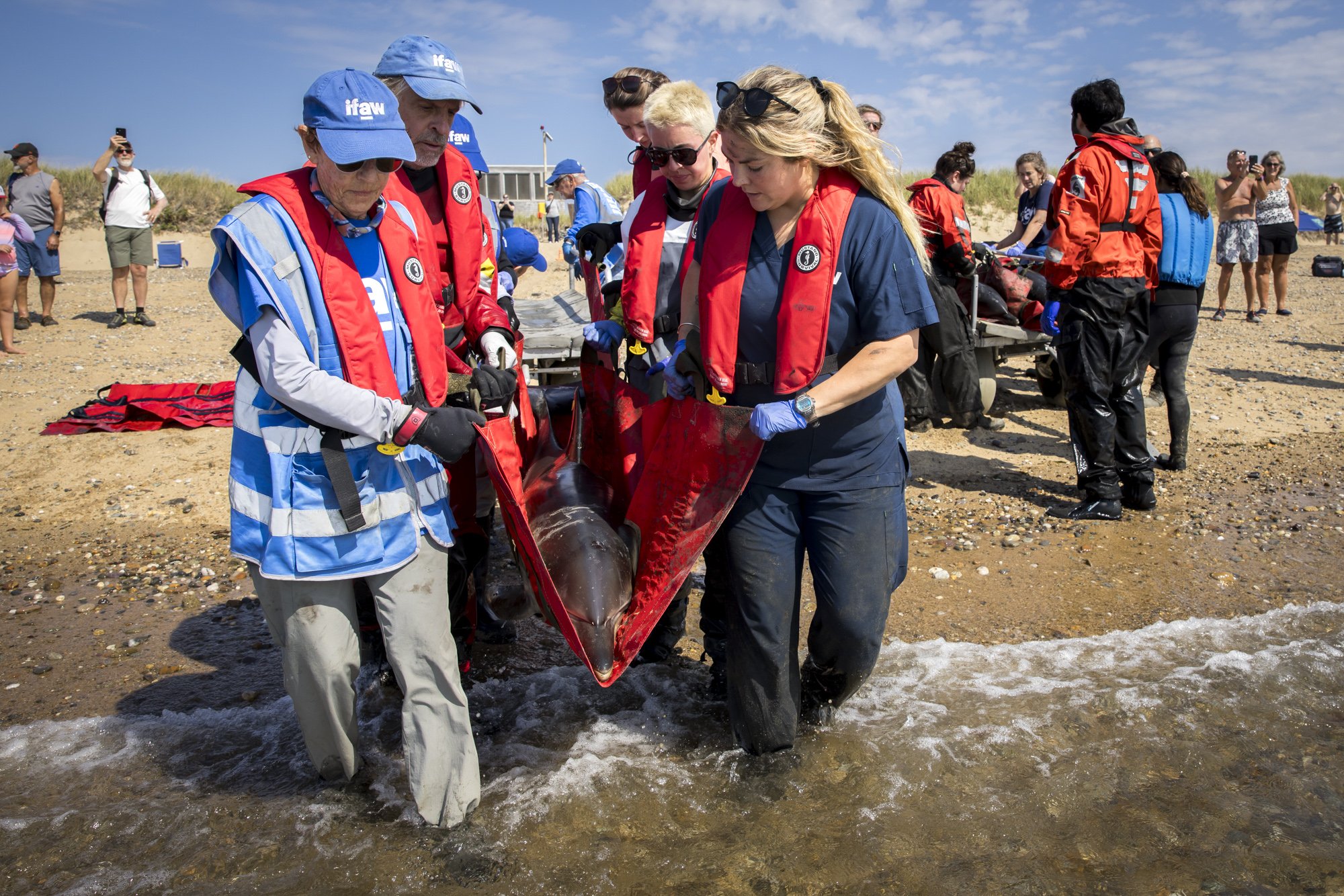
With the crowd watching from a distance, IFAW responders carry a common dolphin into the shallows at Herring Cove Beach. The release is brief but carefully choreographed: the dolphin is held steady until it catches its bearings, then gently released as the surf lifts its body and it begins to move under its own power.
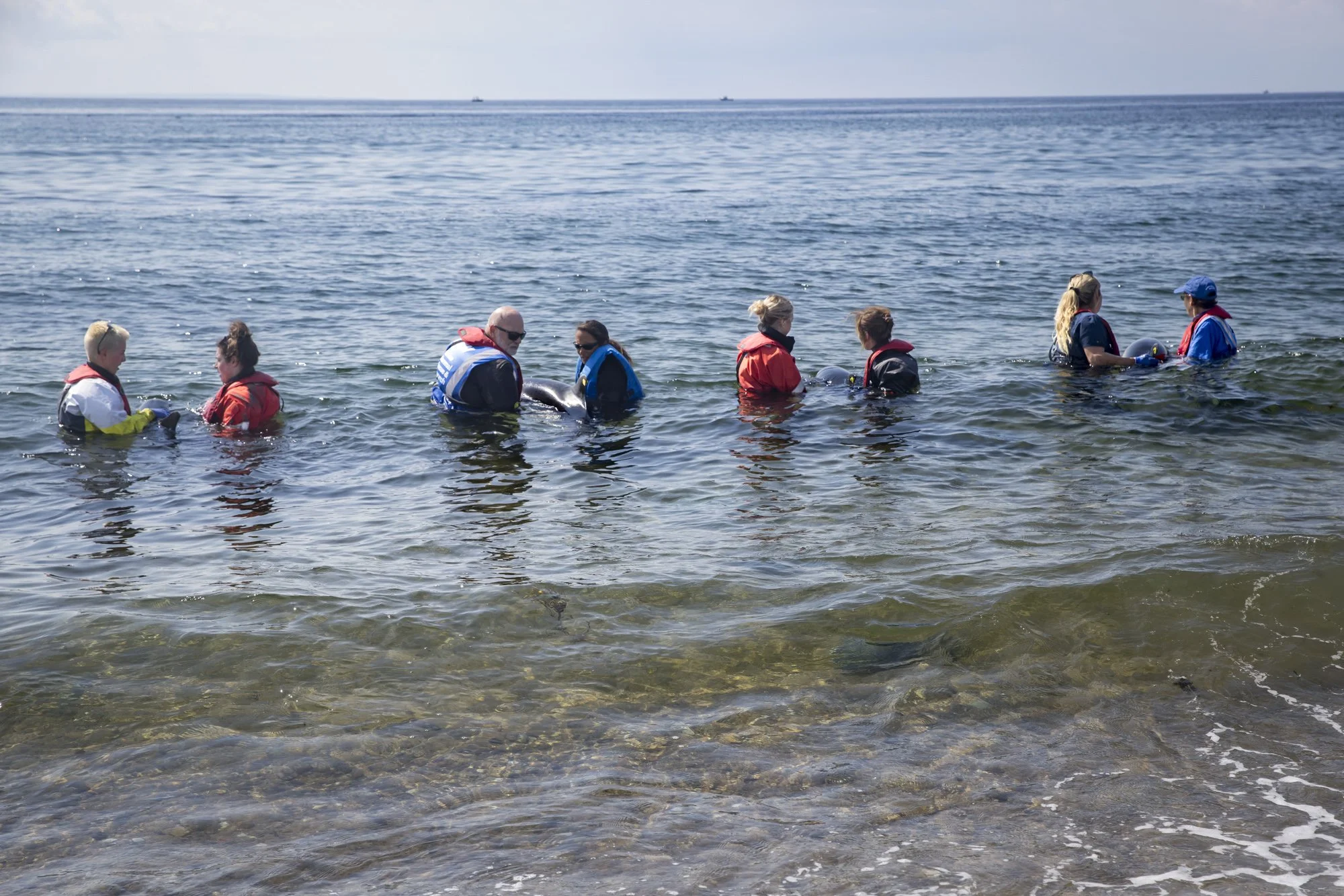
IFAW responders stand in a loose line at Herring Cove Beach in Provincetown, holding and steadying the dolphins in deeper water so the animals can reorient themselves before release. This quiet pause allows rescuers to watch for strong breathing, coordinated movement, and signs the dolphins are ready to swim off on their own.
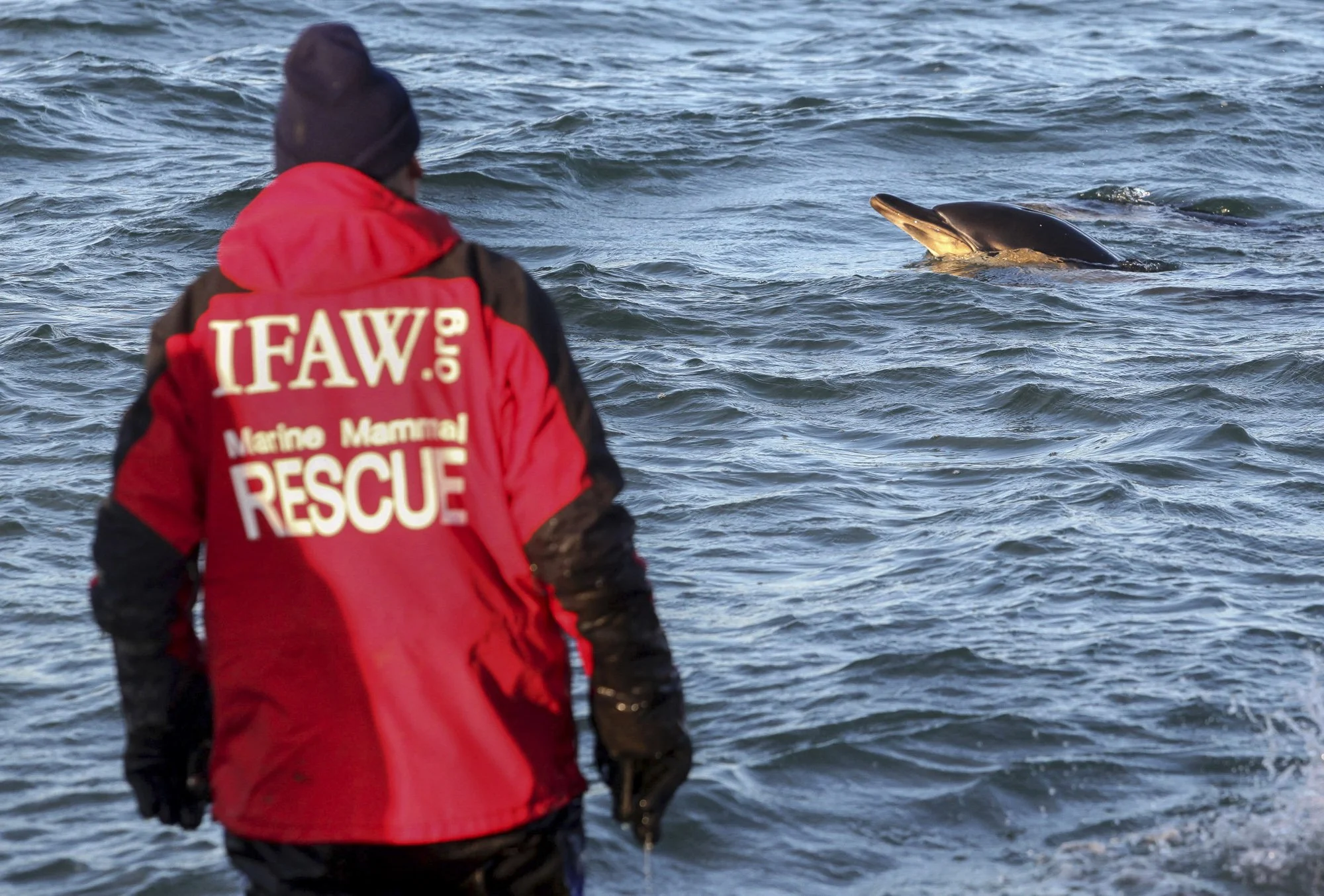
An IFAW marine mammal responder watches with relief as a successfully released common dolphin heads back into deeper water—a hopeful end to a long, exhausting rescue. Moments like this are the triumph everyone works for.