

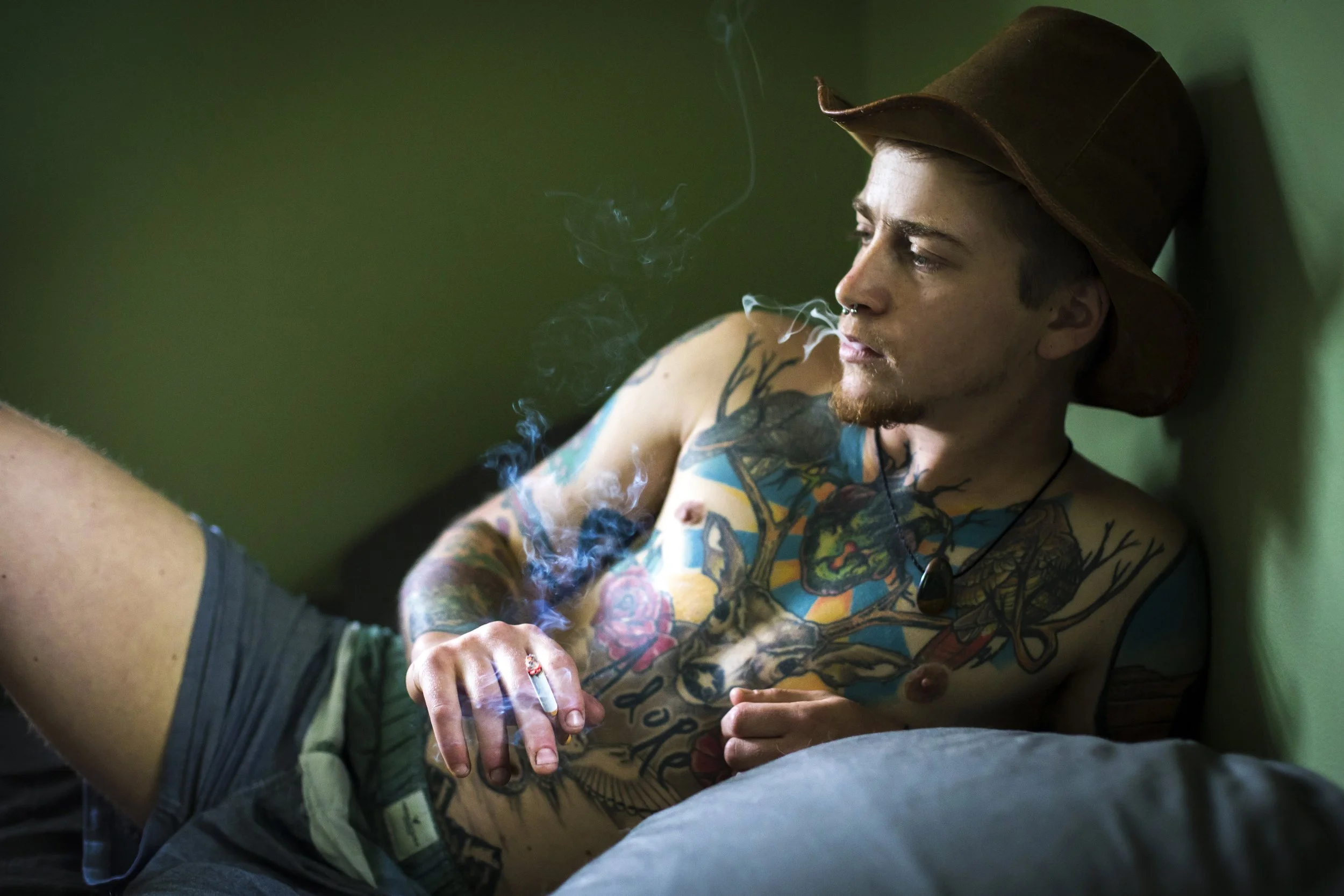
In his portrait, Xander references the masculine icons he idolized growing up—Indiana Jones, James Bond, Elvis—even as he knew he’d never quite be them. “Becoming a man made me appreciate the woman in me, and the women around me,” he said.
He began transitioning at 21, after years of being seen as a butch lesbian. “As a lesbian, I got a lot of respect. As a man, I’m often seen as inadequate. But I like the way I look now. I feel more boy than girl, but more woman than man.”
A few years ago, Xander traveled the country in a camper with his rescue dog, Cedar. “It was scary at times, especially in the South, but it made me stronger.” He now owns a home and recently started a residential services business.
Xander’s portrait is part of a larger collaborative series exploring the deeply personal lives and experiences of transgender people on Cape Cod.
Trans(formation): A Collaborative Portrait Series Exploring Gender Identity on Cape Cod
Trans(formation) began as a deeply personal response to something I hadn’t seen—literally. Though I live and work on Cape Cod, I realized how few visible, humanizing representations there were of the trans community here. My nephew Charley (a nickname), who is trans, opened my eyes not only to the realities of trans lives, but to how much the world still needs to see and understand.
One of the first people I photographed for this series was Nick (see photo below) who told me that statistically, more people believe they’ve seen a ghost than a transgender person. That comment stayed with me. It underscored how invisibility shapes perception—and how urgently we need to tell these stories.
Each portrait in Trans(formation) was created through a collaborative process between photographer and subject. Together, we worked to craft images and narratives that reflect not only each person’s gender journey, but also their full humanity—their strength, vulnerability, humor, resilience, and pride. Through this collection, we invite viewers to confront the expressive power and diversity of gender identity and to reexamine long-held assumptions.
Above all, Trans(formation) is a celebration—of lives lived authentically, of voices rising, and of a community that deserves to be seen.
Trans(formation) is an ongoing project. If you—or someone you know—would like to be part of this series, please feel free to reach out. Privacy, consent, and self-representation are central to every step of the process.
-
Nick
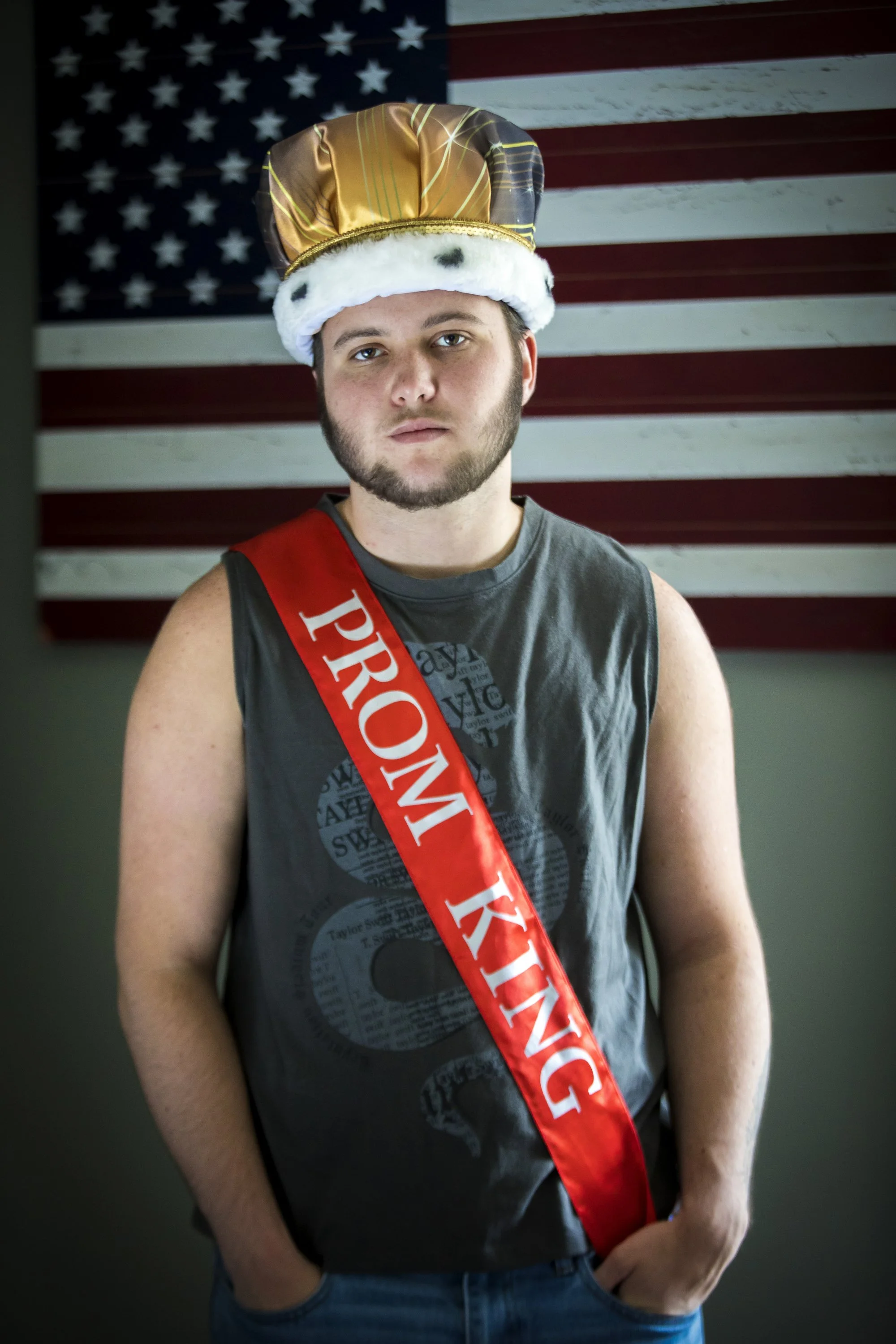
I photographed Nick shortly after he was crowned Cape Cod’s first transgender prom king in 2019. He told me he’d always felt different, and began understanding gender identity in his early teens after Katelyn Jenner came out. “My brother actually said, ‘you’re a boy’ before I even had awareness myself,” he said.
Transferring to Barnstable High and finding LGBTQ support helped him begin his medical transition before senior year. “The best part was how much more comfortable I became—and how selflessly people showed up for me.”
Nick told me that statistically, more people think they’ve seen a ghost than a transgender person, which is why he chooses to be open. Today, he lives in Vermont with his dog and close friends. “I’m working a job I enjoy, and figuring out my next steps.”
-
Joa
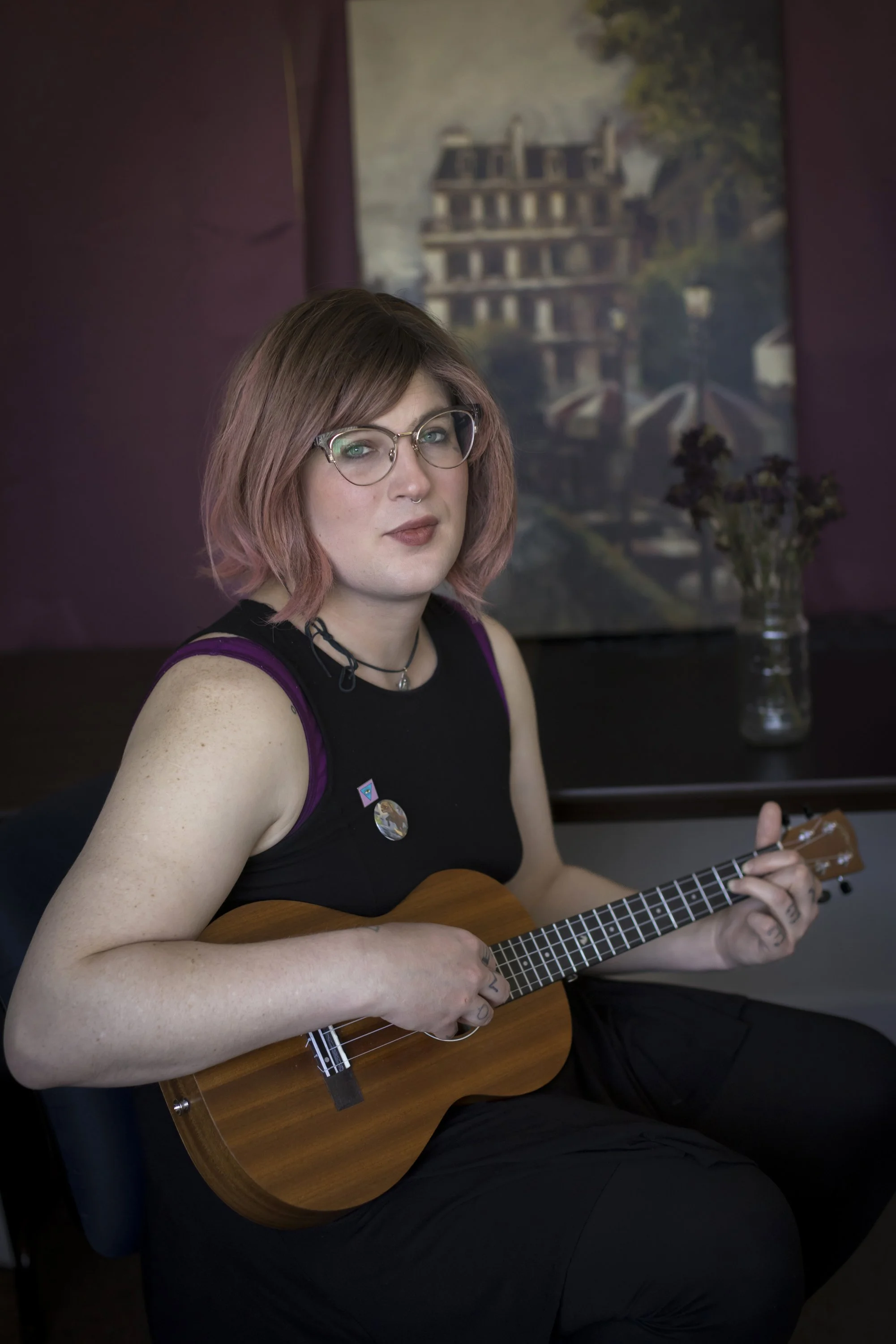
For her portrait, Joa chose to be photographed in her writing space at the Cordial Eye artists’ studios in Hyannis, holding the ukulele she once busked with while traveling through Europe. Born and raised on Cape Cod, Joa’s early life was marked by instability, economic struggle, and complex family dynamics. “My mom had me young and did her best,” she says. “The man who adopted me was mean and sexist, and my biological father sometimes sleeps in the doorway downstairs. They were all shaped by oppressive systems.”
At 30, Joa came out as transgender. “I didn’t know what was wrong—I just couldn’t fit the mold I was expected to be in,” she says. Her transition came after years of addiction and self-doubt, and ultimately led to the end of a long-term relationship. “The hardest part was recognizing that transitioning was even an option—and giving myself permission. The best part? Realizing it was a legitimate path for me.”
Now in a loving relationship and working on her debut novel, Joa says, “My life feels like one magical thing after another. Even the hard parts are magical.”
-
Rikki
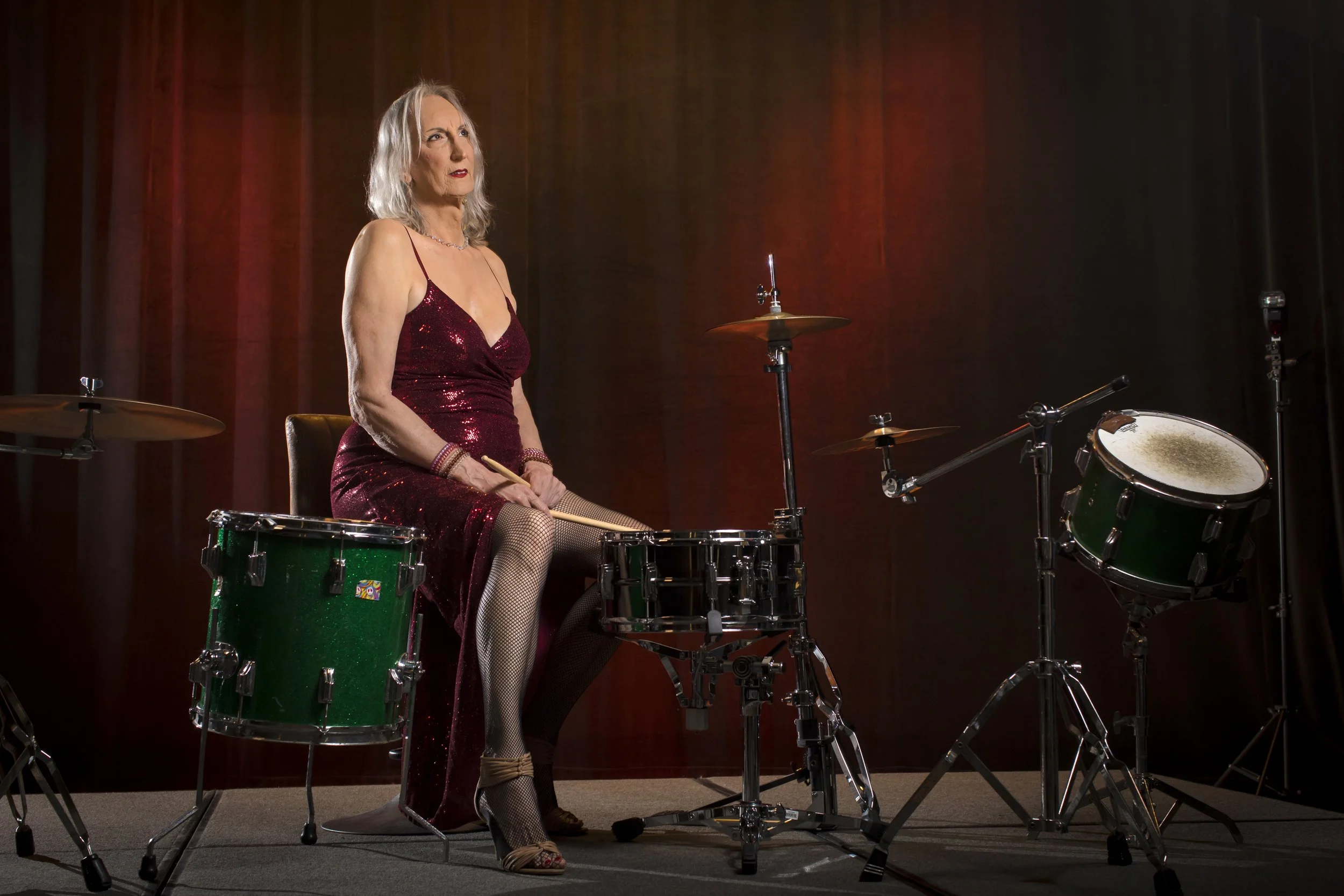
For her collaborative portrait, Rikki chose to be photographed with the drum set that’s anchored her since childhood. Inspired by Ringo Starr, she began drumming at 11, later studied at Berklee, and went on to perform with George Carlin, the Incredible Casuals, and other bands. “As a kid, I was mild-mannered and bullied,” she says. “By puberty, I knew something didn’t feel right. I had crushes on girls but also felt like a girl—there wasn’t even language for that then.”
Rikki married in 1984 but later realized she needed to live as her authentic self. Her band, the Incredible Casuals, let her go when she began transitioning. “I couldn’t get out of bed. All I could do was cry.” But she found her way back—eventually rejoining the band and continuing to perform. Rikki also won a precedent-setting case against MassHealth, which led the state to cover her hormone therapy and later her surgery.
“The hardest part of transitioning was overcoming my fear and the rejection,” she says. “But even as my life fell apart, there was a sense of triumph.” Today, she’s recording again and embracing life with a renewed sense of wholeness.
-
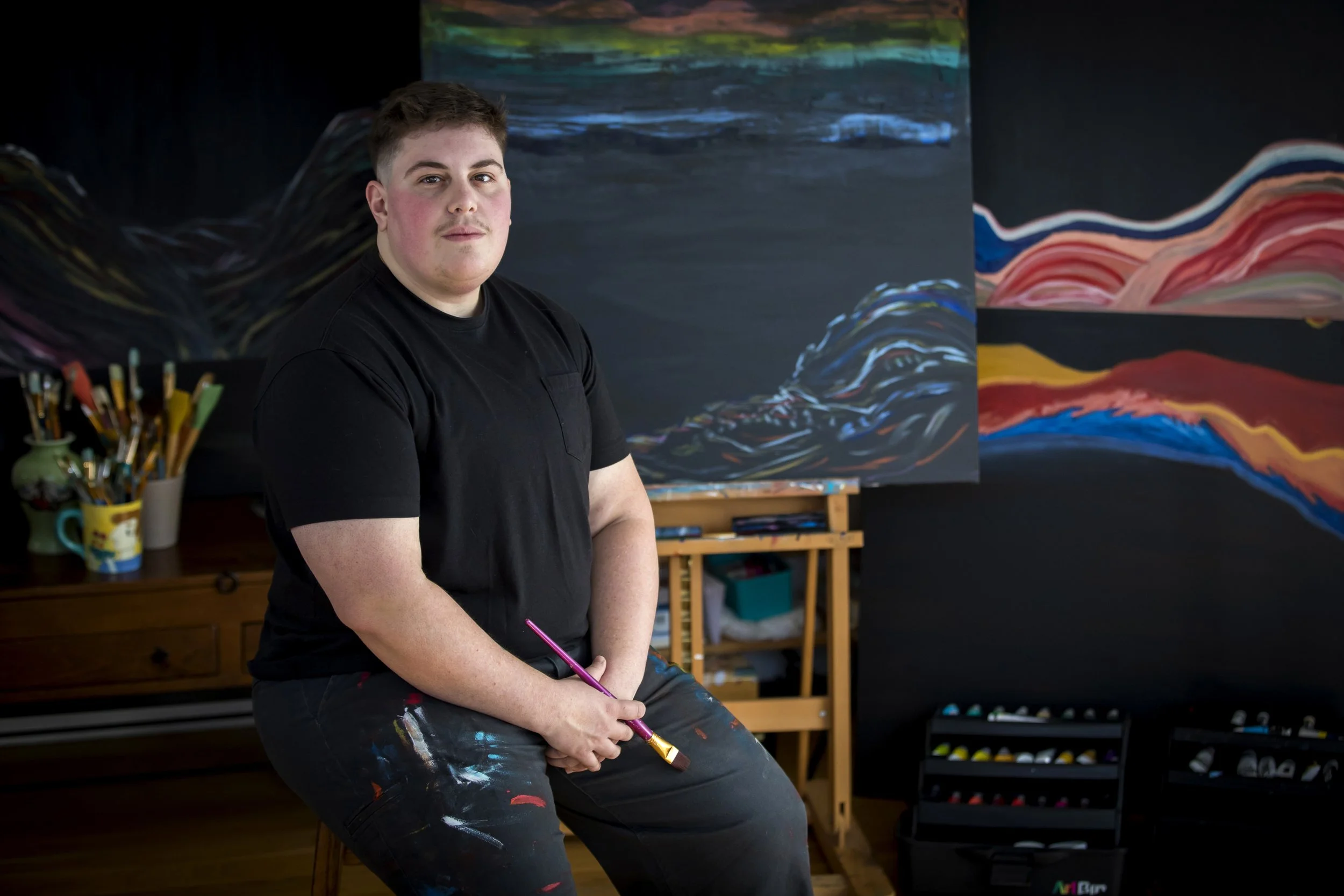
Lio
For his portrait, Lio chose to be photographed with his abstract expressionist paintings—works inspired by landscapes and our human relationship to place. Raised by artist parents on Cape Cod, art was always where he felt most like himself. From a young age, Lio presented more masculinely and came out as a lesbian at 11. “People often thought I was a boy. I didn’t realize the excitement I felt was because I was trans,” he says.
For years, Lio identified as a butch lesbian, but it wasn’t until being in a supportive relationship and in therapy that clarity struck. “I had a lightning bolt realization: I’m trans.” After coming out socially, he began transitioning medically. “One of the hardest parts has been navigating health insurance. Trans people have always existed, yet the system still hasn’t caught up.”
Lio now teaches art at the Museum of Fine Arts in Boston, where he lives with his partner. “She used to say she’d never date a straight white man—now she’s with one, and she’s never been happier,” he laughs. Looking ahead, he’s excited about his upcoming top surgery, gallery exhibitions, and the dream of starting a family.
-
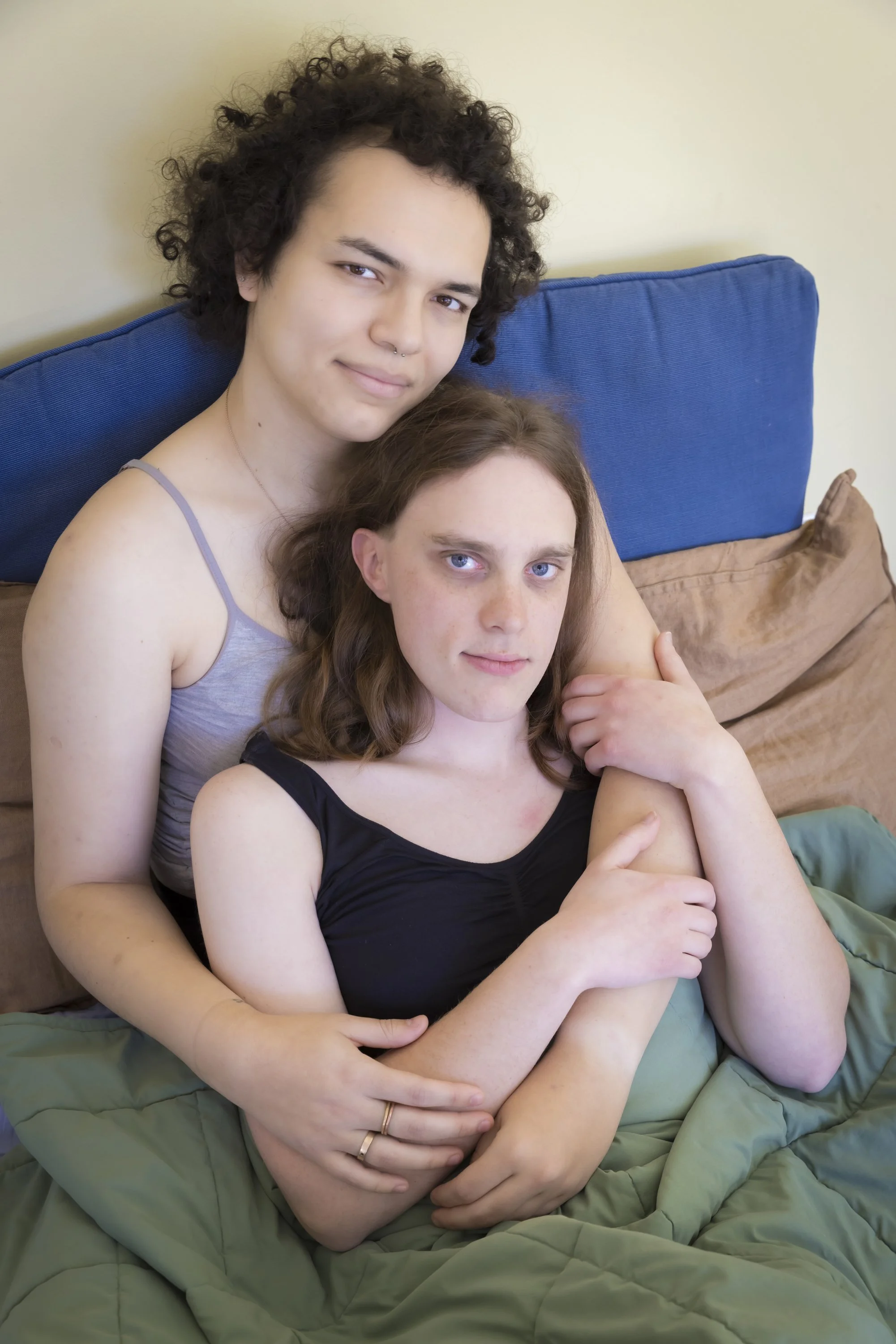
Jynn and Moss
I photographed Jynn (left) with her fiancée, Moss—also trans—in Moss’ childhood home in Falmouth. “Can a person be your home? Moss is my home,” Jynn told me, a sentiment that shaped this intimate portrait.
Born in Recife, Brazil, Jynn always felt “weird about [her] gender and sexuality.” She came out as gay at 17, but deeper self-awareness came with realizing she was trans. “It started with thinking I was gender fluid,” she says. “Eventually I realized I didn’t feel comfortable being addressed as masculine.”
With support from Moss and organizations like Thrive, she began transitioning. “The hardest part? Coming out all over again and explaining that gender and sexuality aren’t the same.” While her father’s side has not accepted her, hormone therapy brought a powerful shift: “My body started looking more like how I feel.”
Jynn has a degree in IT and currently works as an assistant manager at Avis, but hopes to become a software engineer. Mostly, she’s looking ahead to a future with Moss. “After Moss graduates, we plan to move in together, get married—and maybe even have kids,” she says, smiling.
-
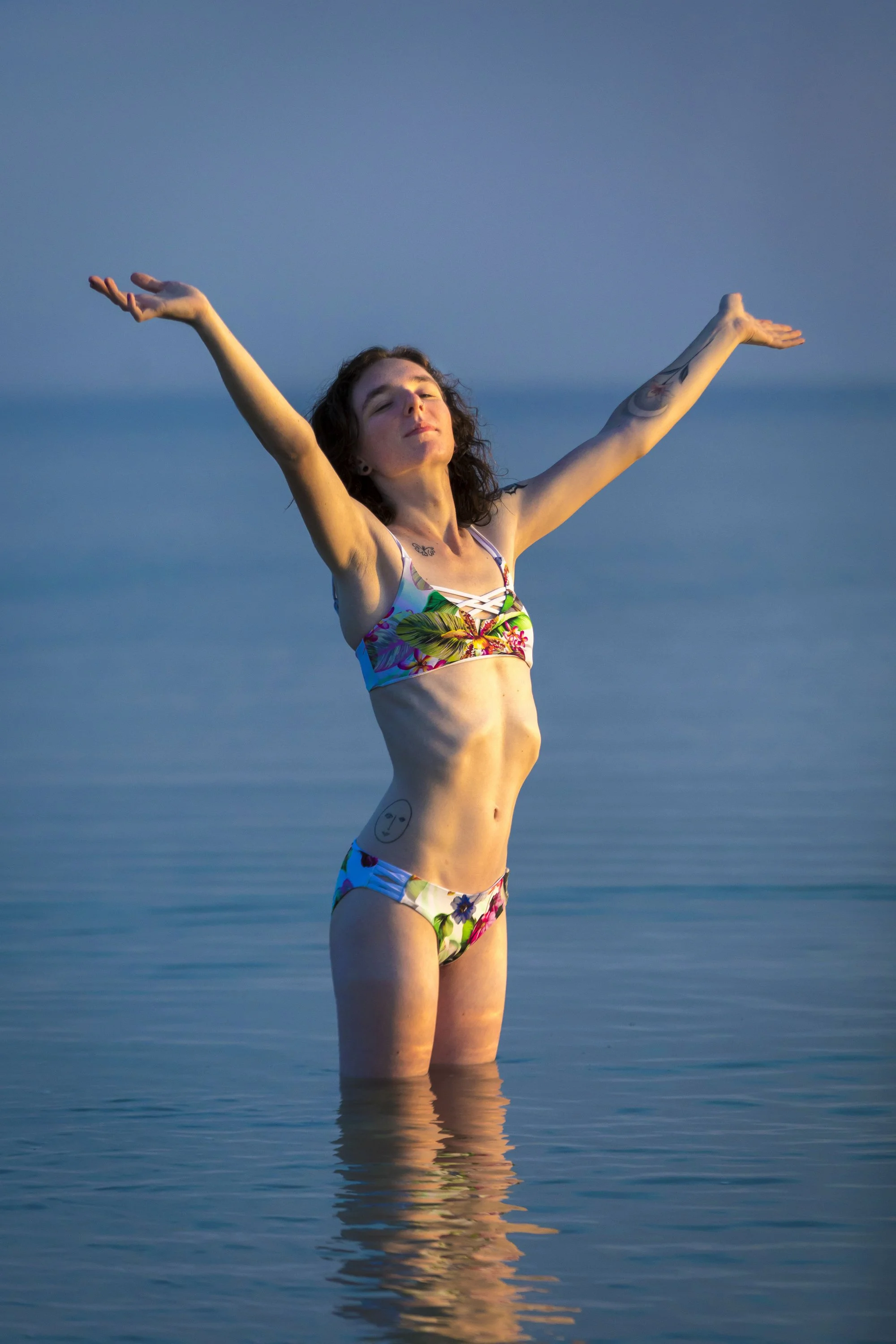
Ariel
I photographed Ariel at sunrise in Cape Cod Bay just two months after her gender-affirming surgery—the first time she’d worn a bikini, and, as she told me, “the first time I’ve been photographed as my true self.”
Ariel began her transition at 16 with the support of her family and friends. “Now that I’m not using all my energy to deal with a body I don’t like, I can put it into other things,” she said. A student at Purchase College, she loved lighting design, tattooing, drawing, exotic teas, Phish concerts, and deep existential questions.
Shortly before her death, Ariel had been interviewed for a feature in Oprah Magazine in an “Inspiring Women” column alongside this portrait. “The more I accept myself, the more others accept me,” she told me in our last conversation. Less than a month later, Ariel took her life.
Her loss is immeasurable—a reminder of the profound vulnerability trans youth continue to face. I knew her only briefly, but was struck by her intelligence, humor, self-awareness, and creative spirit. She left behind light, and questions that still echo.
If you or someone you know needs support:
The Trevor Project – www.thetrevorproject.org -
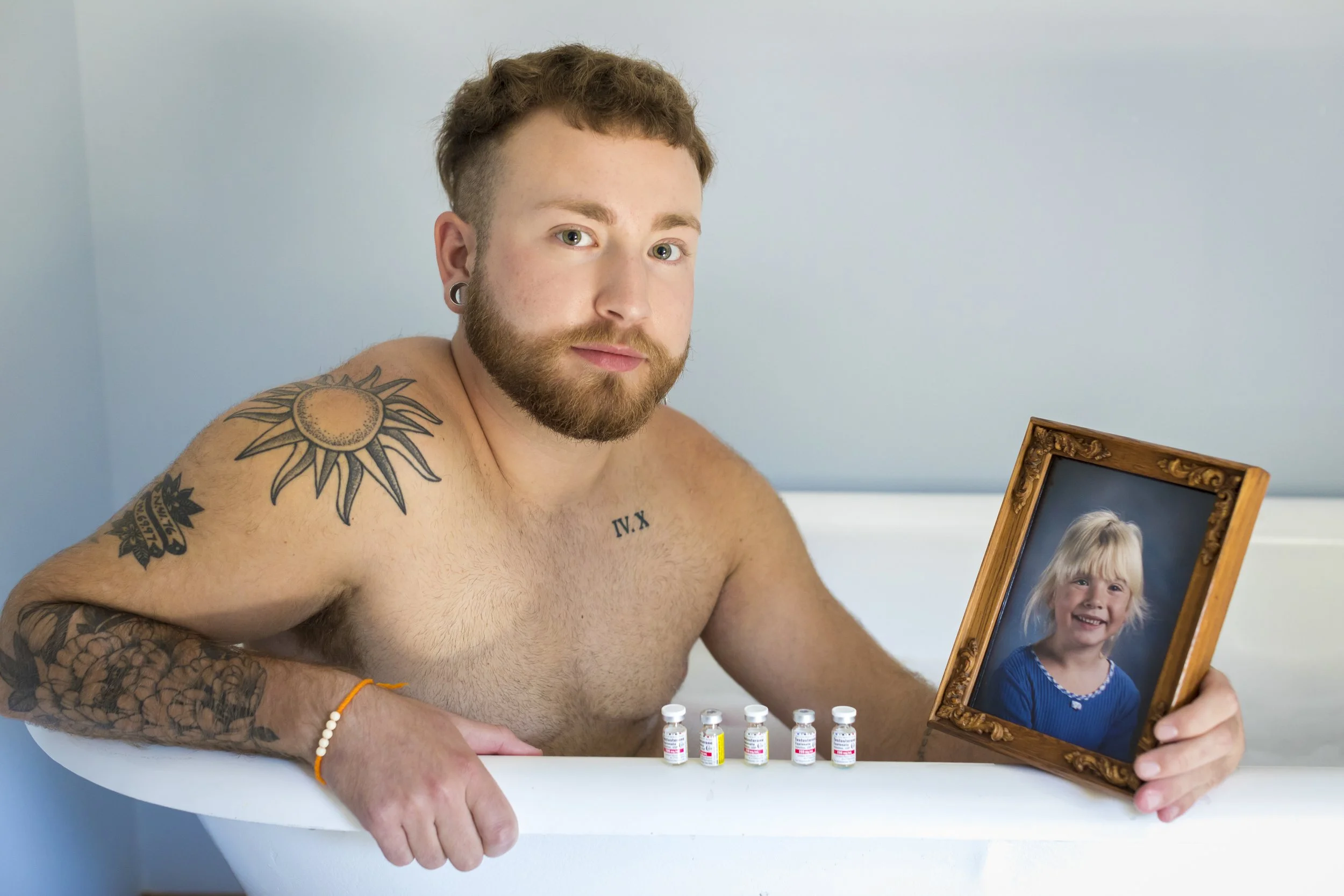
Hayden
n their collaborative portrait, Hayden chose to be photographed with testosterone vials—each one marking a year of transition—and a childhood photo to reflect how far they’ve come. They came out as trans at 19 and began transitioning soon after, with strong support from their mother and brother. “The best thing about transitioning was finding my true self—and continuing to find more layers underneath,” they said. “Being unapologetic, visible, outspoken... words I never thought I’d use to describe myself.”
In the beginning, Hayden thought they had to present as masculine 24/7 to feel valid. “I’ve learned that masculinity can include softness. Now I define it for myself—in coexistence with my femininity.”
Hayden has worked as a school pride club adviser, equity advocate, and summer camp counselor for gender-variant youth. Looking forward, they hope to build an organization supporting trans youth and imagine a future where trans people no longer have to fight for basic rights. “Most of all,” they add, “I hope my future is filled with true inner peace and happiness.”
-
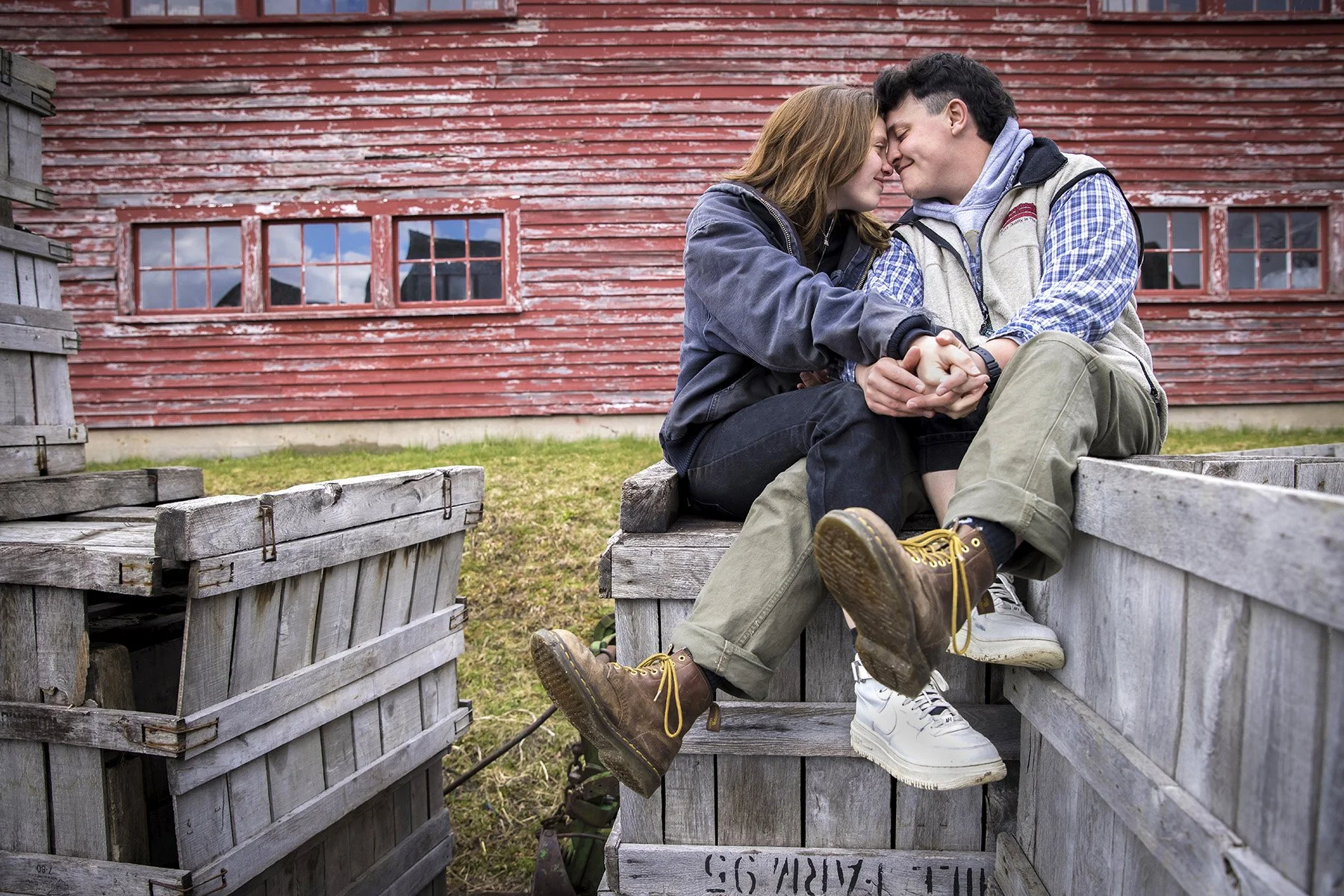
Charlie
photographed Charlie with his partner, Seanna, at her family’s apple farm. “This is one of our happy places,” he said. “Seanna’s family has always been so accepting of me.” Masculine since childhood, Charlie wore his brother’s clothes and had mostly male friends. “I was even nicknamed ‘Scout,’” he laughs.
He was already dating Seanna when he realized he was trans. “I’d been binding since 2017 and hated it. One night I broke down sobbing and said, ‘I just wish I wasn’t born in this body.’” With Seanna’s support, Charlie began transitioning shortly after.
He came out to his family—and to his students and coworkers at the middle school where he works. “I wanted to be open for the kids’ sake.” Joining a trans support group became a turning point. “The first time my mom called me ‘Charlie,’ my housemates didn’t get how big that was—but my group did.”
“Being trans has forced me to reflect, read, write, and grow. It would’ve been easier to be born in a different body, but I think I’m a better person because I’m trans.”
-
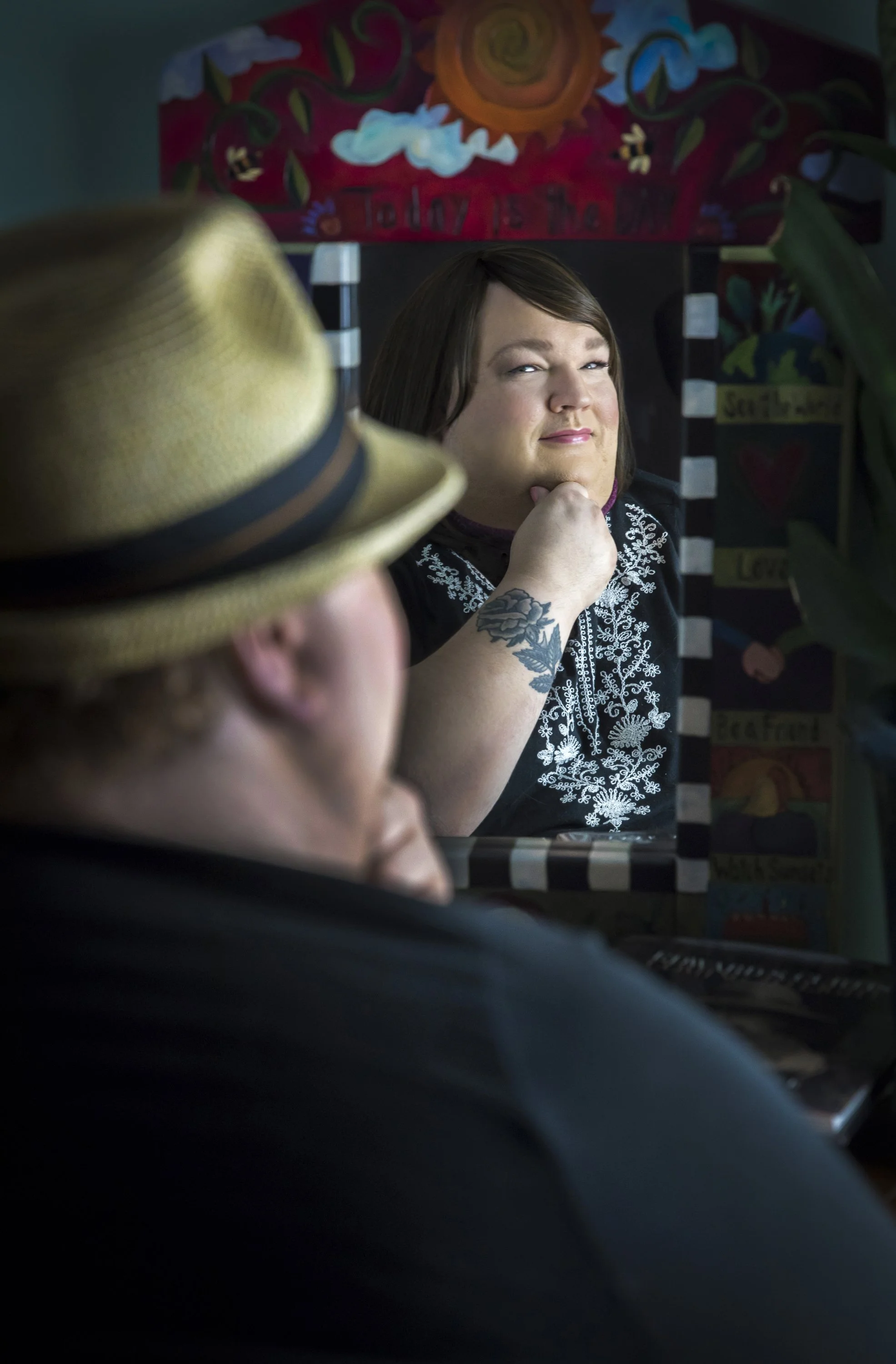
Raelynn
For their collaborative portrait, RaeLynn wanted to reflect both their masculine and feminine sides. “As a non-binary person, there are days I feel more masculine than feminine. It’s a tribute to my history—I lived 39 years presenting as male before coming out as trans,” they explain.
Raised as a Jehovah’s Witness, RaeLynn says they didn’t realize they were different until others began pointing it out. “Approaching puberty, I felt like what I was experiencing was an abomination.” After coming out as gay at 18, they explored drag and later joined the Mormon church, hoping to “find truth and not be anything bad.” But it wasn’t until befriending a trans woman in a choir that RaeLynn recognized their own identity. “That weekend, I started living as my real self.”
“When you live queer, every day you walk out the door, you’re risking your life,” they say. “But nothing is going to hold me back from being true to who I am.”
Though unable to take estrogen due to health issues, RaeLynn hopes to resume treatment. “When I’m on estrogen, my brain works differently. I feel peace.”
Their dream: a safer world for all trans people.
-
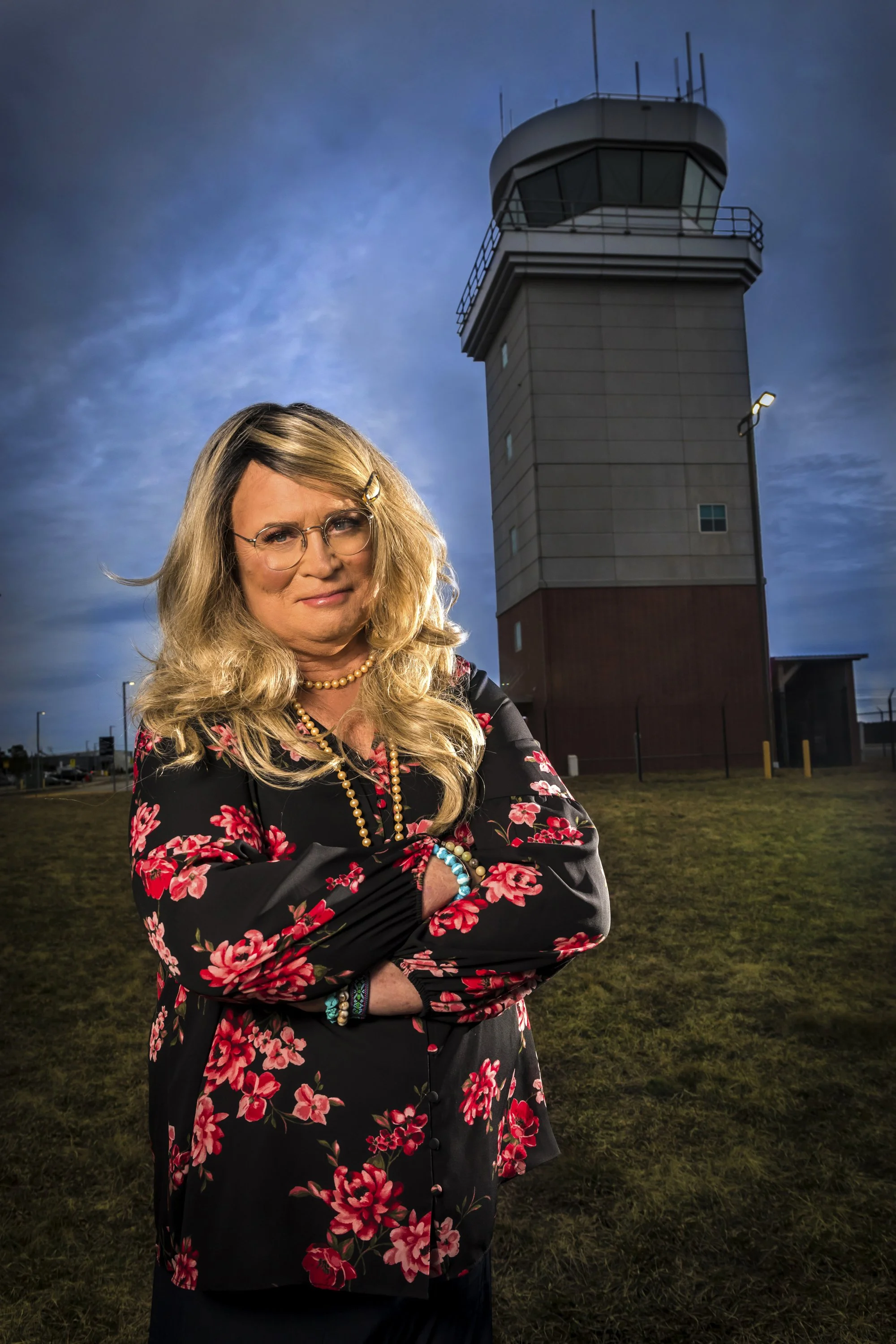
Michelle
Michelle chose to be photographed in front of Hyannis Tower at the airport where she’s worked as an air traffic controller. “I had a loving, supportive family,” she says. “But I always felt different and tried hard to prove how tough I was. I even played rugby to hide the strong feminine side I knew was there.”
In college, she pursued both athletics and the arts, and most people assumed she was gay. “I was always attracted to women—I just didn’t yet understand that I wasn’t male.” Michelle went on to marry and have three daughters. In her late fifties, she attended a trans conference in Boston. “The floodgates opened. I knew I needed to transition.”
The hardest part, she says, was explaining it to others. “People ask, ‘why are you choosing this?’ But it’s not a choice.” The best part has been the community she’s found. “There’s no judgment. I’ve become more empathetic—and a total crybaby,” she laughs.
While two of her three daughters have been supportive, her dream was always full acceptance—especially from her church. Recently, that dream came true: “I was part of rewriting our mission statement to welcome LGBTQ people and acknowledge the harm done in the past.”
-
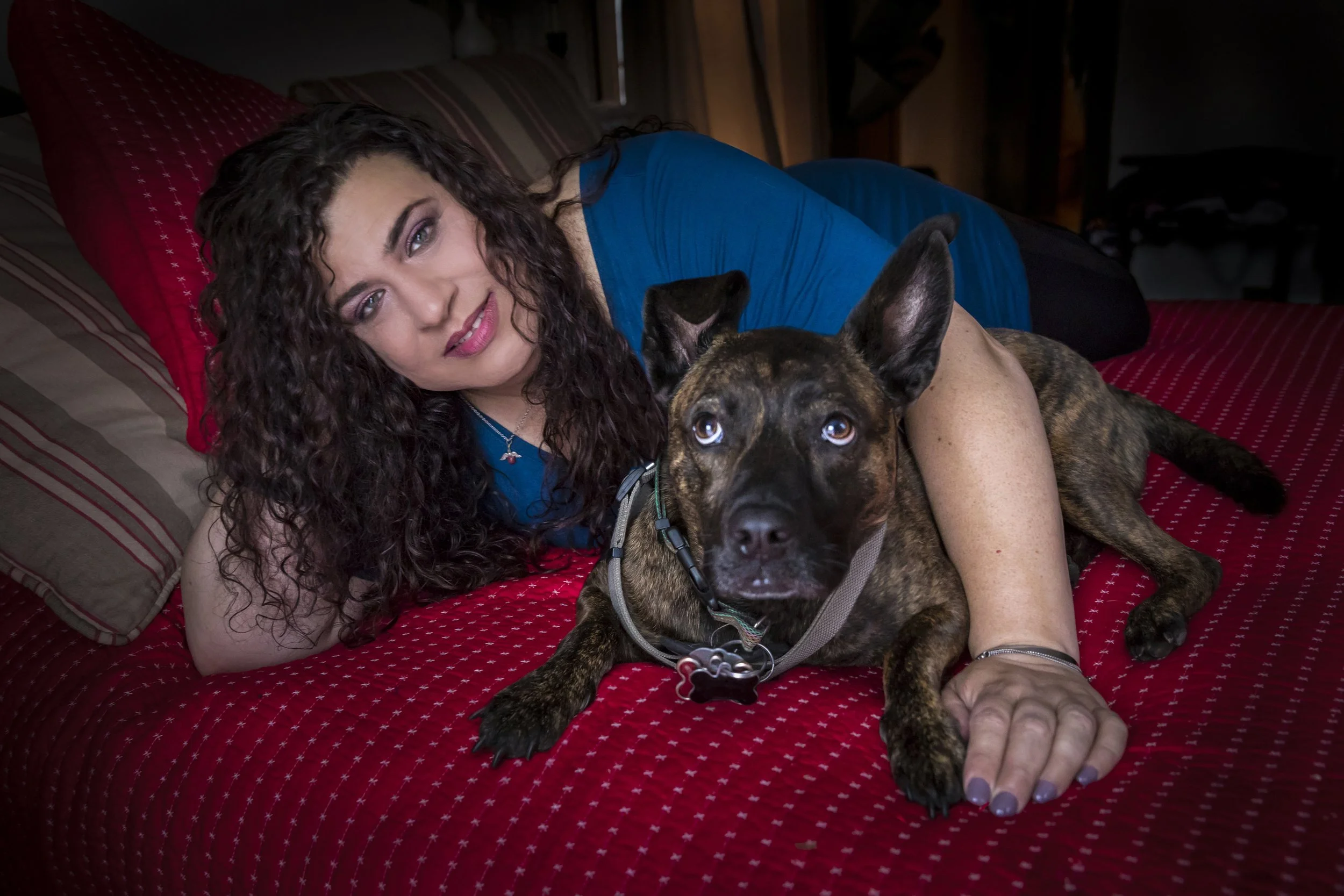
Mara
For her portrait, Mara chose to be photographed with her dog, Rocco—as the version of herself she says “has been taking shape in the dark for many years.” Like many trans people, Mara knew from a young age that something felt different. She secretly tried on her grandmother’s and sister’s clothes but kept those feelings hidden. “I played football, wrestled, ran track. No one knew what was going on inside.”
In college, she met Tina, her partner of 30 years. “Three weeks in, I told her I was trans. She supported me experimenting with gender, but I don’t think either of us imagined I’d eventually need to fully transition.” They married, raised two children, and Mara became an architect—but gender dysphoria continued to consume her. After a final suicide attempt two years ago, she was hospitalized. “I went in to get mentally well, but it was there I realized I needed to transition. I haven’t presented male since.”
“The best thing about transitioning? Feeling whole. I wake up and don’t think about gender. I feel everything more deeply. I’m rebuilding my future—and finally living life in full color.”
-
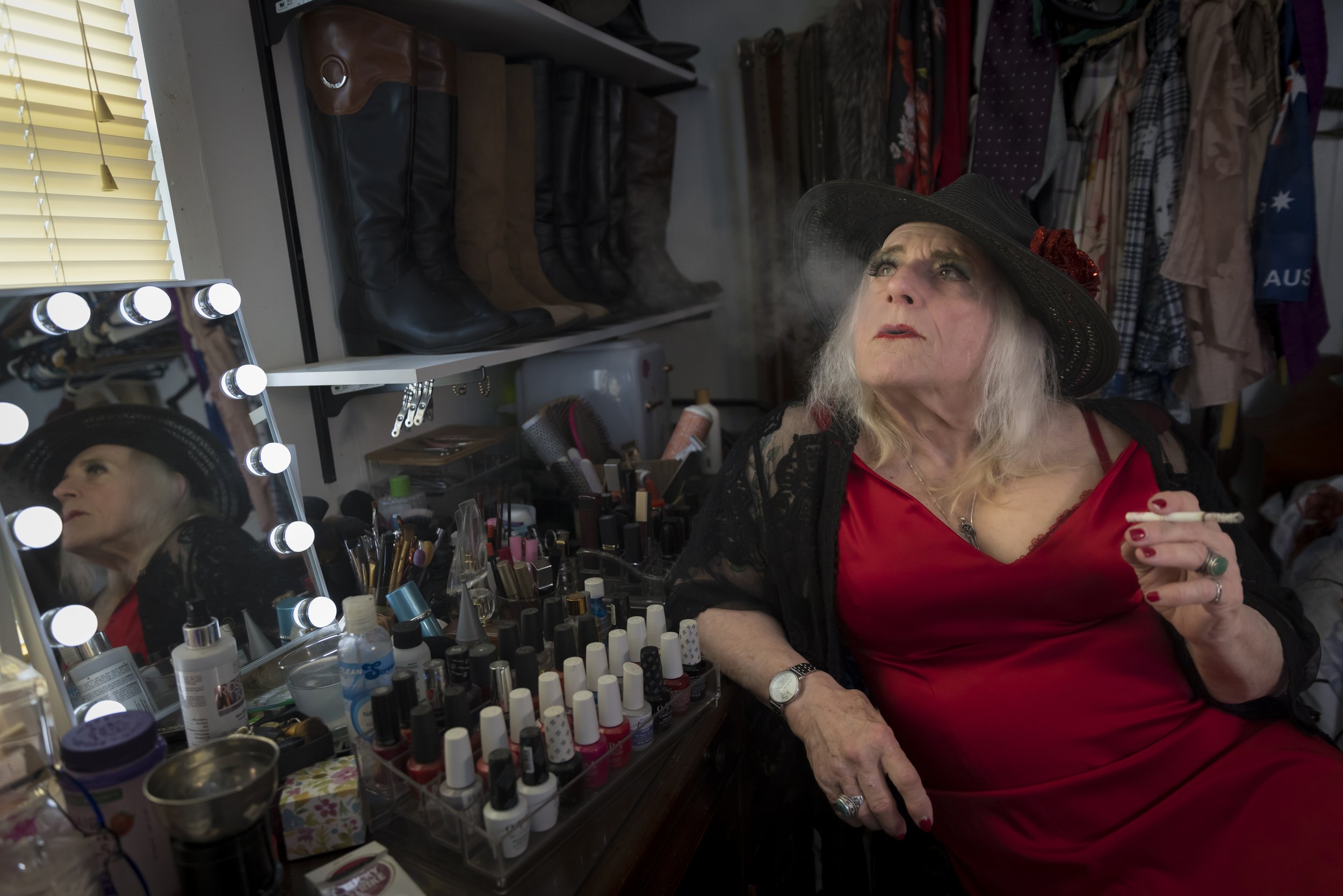
Abigale
I photographed Abigale Grey at home in Orleans, surrounded by clothes, makeup, and shoes—symbols of the self she’s finally embraced. “I hope I appear as a sexy granny within whom the juices of life rage like an Alaskan river at peak snow melt,” she said, smiling.
Born in Newcastle, Australia, Abigale always felt like an outsider. She explored many identities—surfer, stock broker, construction worker, even a Hell’s Angel—but struggled with what she called “Olympic-class alcoholism” and repressed her true self for decades. A turning point came in 2013 during a Christmas with her wife’s family. “That’s when I decided I needed to go to rehab.”
After facing sobriety, a coma, and deep questions of identity, Abigale began transitioning at 60. “The first day I went out as myself, I was terrified. But the best part is simply being who I am.”
Now living openly, Abigale hopes to find love again. “I’ve been a husband twice—I'd like to be a wife. I’ve had wild adventures. But the best one has been becoming me.”
-
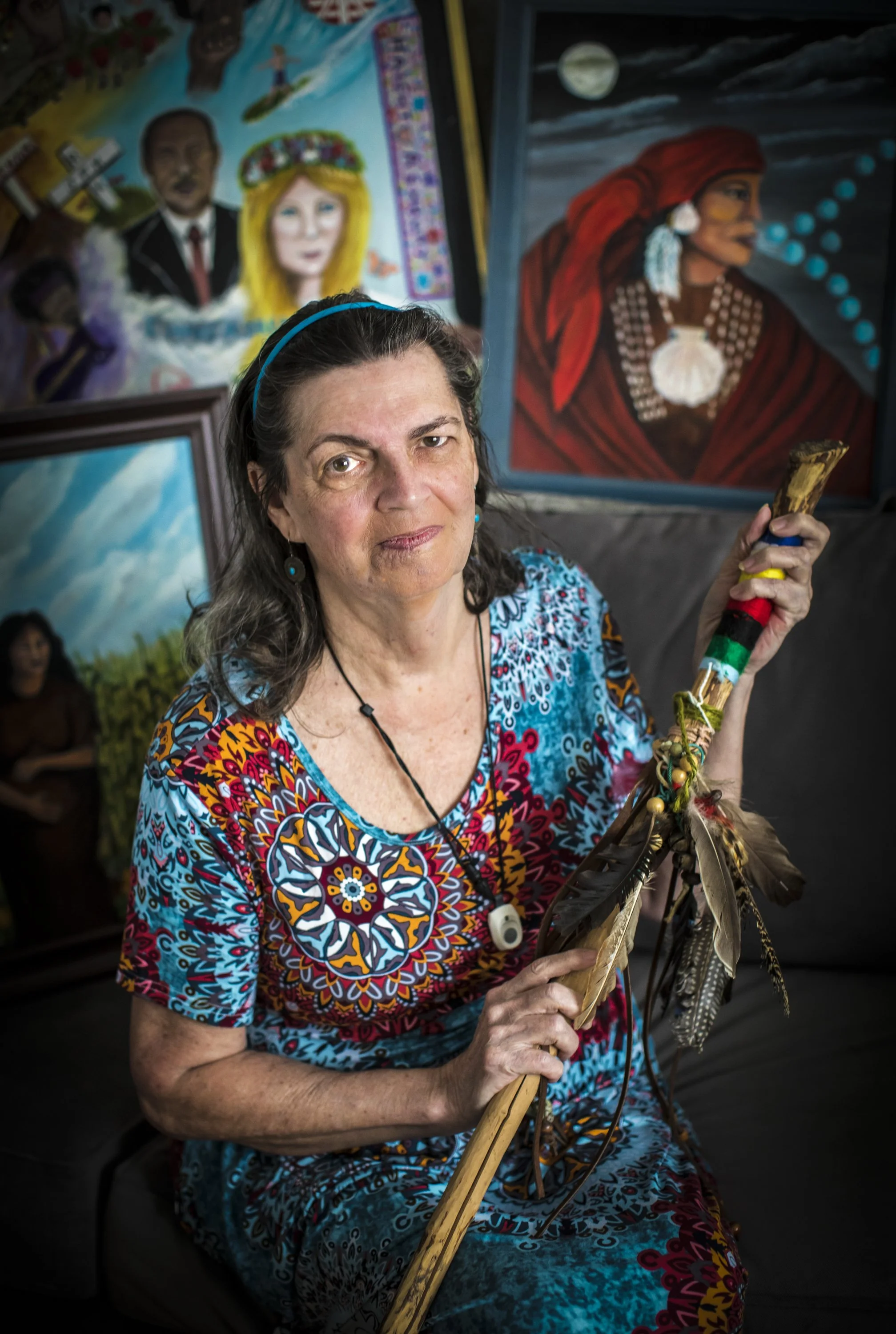
Alycia
photographed Alycia—part Native American and in hospice care for cancer—at home, surrounded by her paintings. “I didn’t know transgender people existed until I read about Christine Jorgensen at age 12,” she said. “A few weeks earlier, I’d stood on a rooftop ready to jump. Her story gave me a sliver of hope.”
After surviving a second suicide attempt, Alycia made a plan to stay alive by helping others. She came out at 42, with the support of a close friend and a pivotal visit to a trans conference in Provincetown. Soon after, she told her parents she needed to transition.
While most of her family accepted her, Alycia lost her business when a bank foreclosed on her for being trans. “There were no protections in the ’90s. Finding work was hard, but for the first time, I was simply being myself.”
Now, in the final stage of her life, Alycia remains outspoken. “There are over 250 anti-trans bills in motion. I pray that people begin to listen, ask questions, and understand we’re just trying to live a good life like anyone else. I’m grateful to be part of this project.”
-
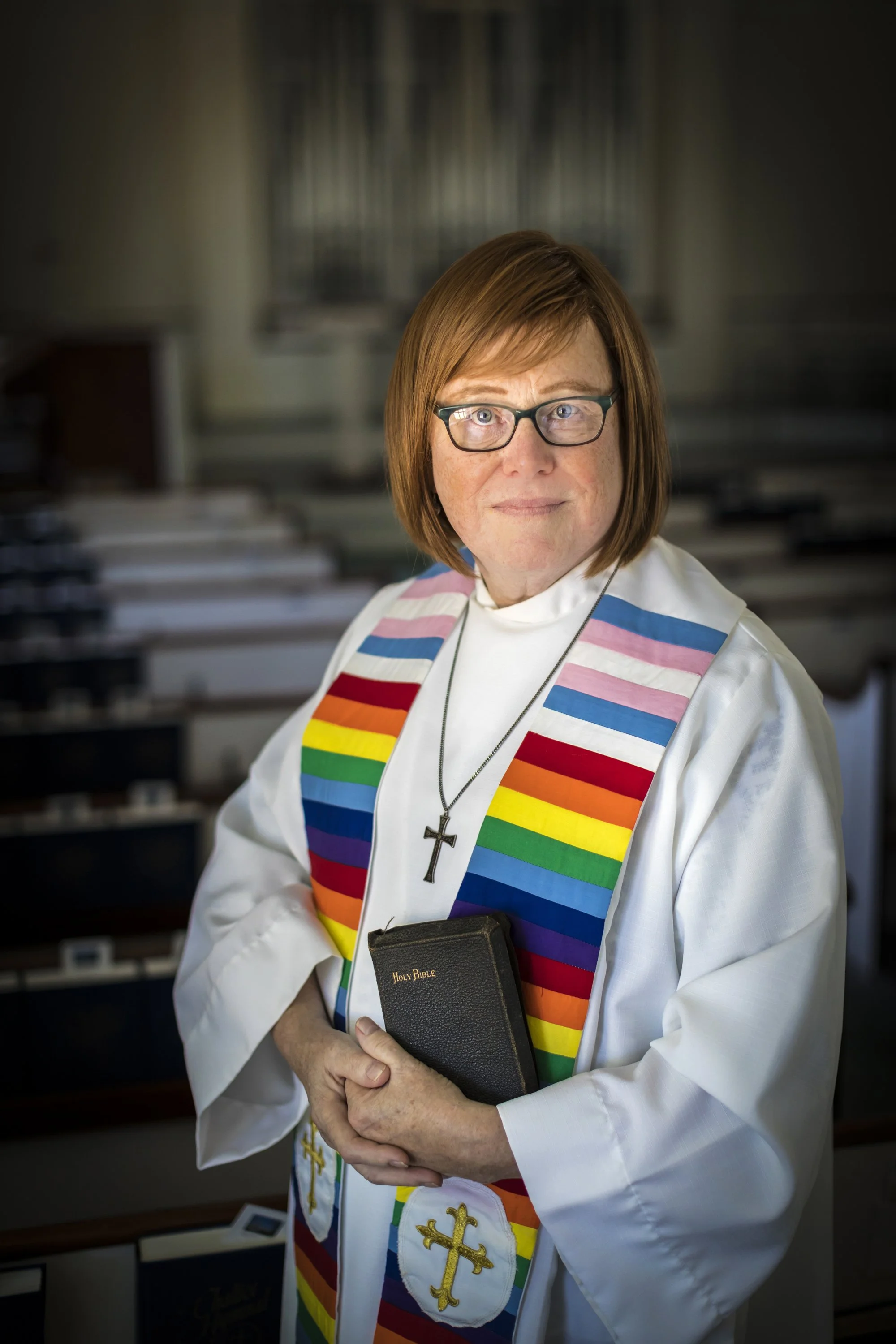
Paula
For her portrait, Paula chose to be photographed in ministerial robes at her church on Cape Cod. Though she lost her ministry job in another state after coming out as trans, she has found new purpose through advocacy and education. “I love my church community,” she says. “I now chair the ‘Open and Affirming’ committee and have led Transgender Day of Remembrance services.”
Raised in a time when gender diversity was unacceptable, Paula suppressed her identity for decades. It wasn’t until 2014—in her late sixties—that she realized she was transgender. “I’d been cross-dressing for years, but it took five years of therapy before I could say the words. When I finally did, I cried in my car out of happiness.”
A former math teacher and ordained minister, Paula lost her job, home, and two of her three children after coming out. Still, she says, “Ironically, I’m happier than I’ve ever been.”
-
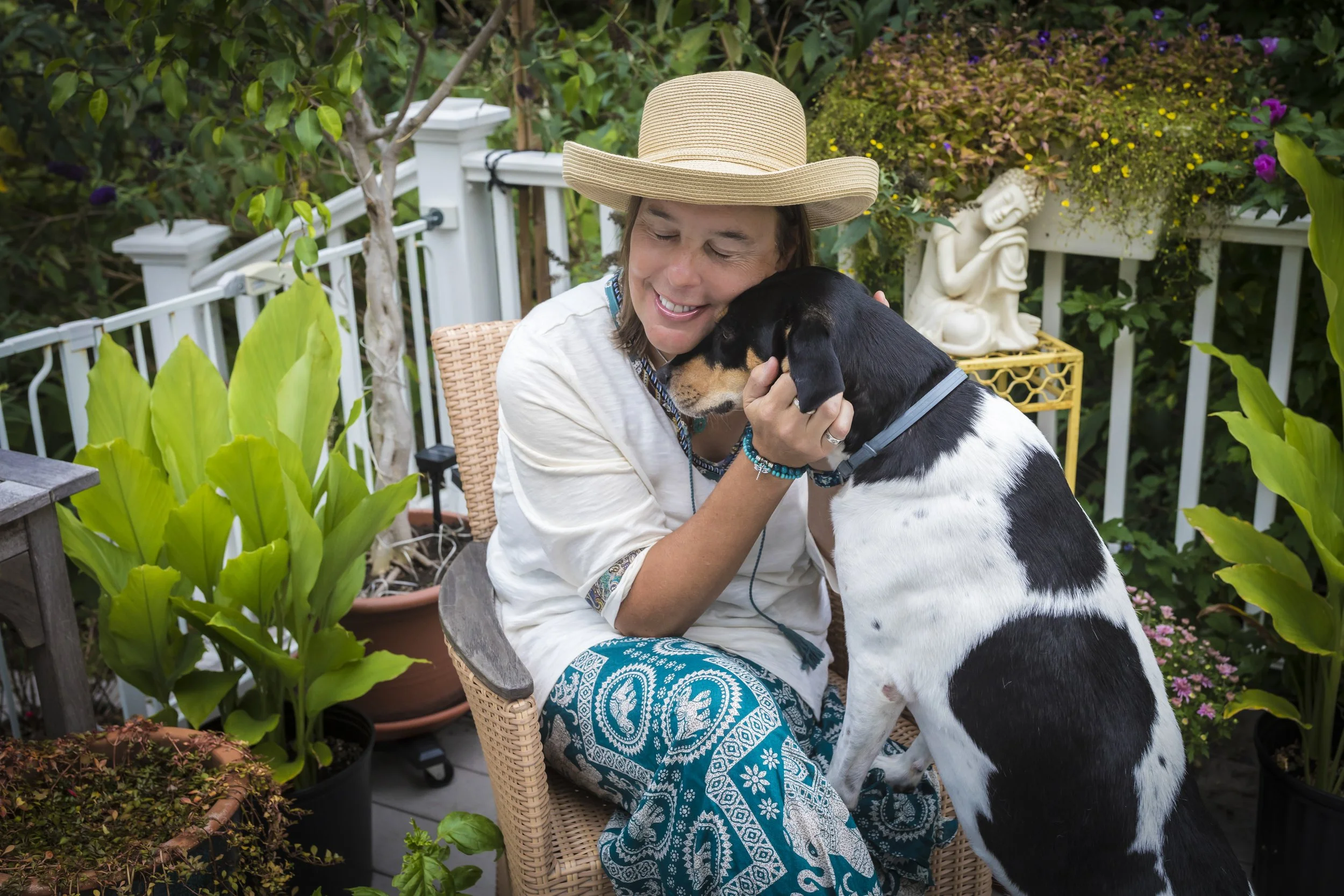
Lauren
I photographed Lauren with their rescue dog, Trixie, at home among beloved plants, with their partner, Patti, nearby. “Like most trans people, I knew early on I was different,” Lauren says. “I felt more comfortable with girls, but got the message I needed to act like a guy to avoid being bullied.”
Lauren met Patti while working as an engineer and came out in their late forties. “It was tough for her, but she’s been the most supportive person in my life. Many trans people lose their partners—Patti adapted.” Now in a gradual, evolving transition, Lauren is out to some family and friends. “The best part is the freedom of being my authentic self. It’s improved all my relationships.”
Lauren identifies as transfeminine non-binary and dreams of becoming “a garden lady in a wide-brimmed hat, living an artful life with my wife and dog.” They are active in local climate change advocacy and grounded in their Buddhist faith.
-
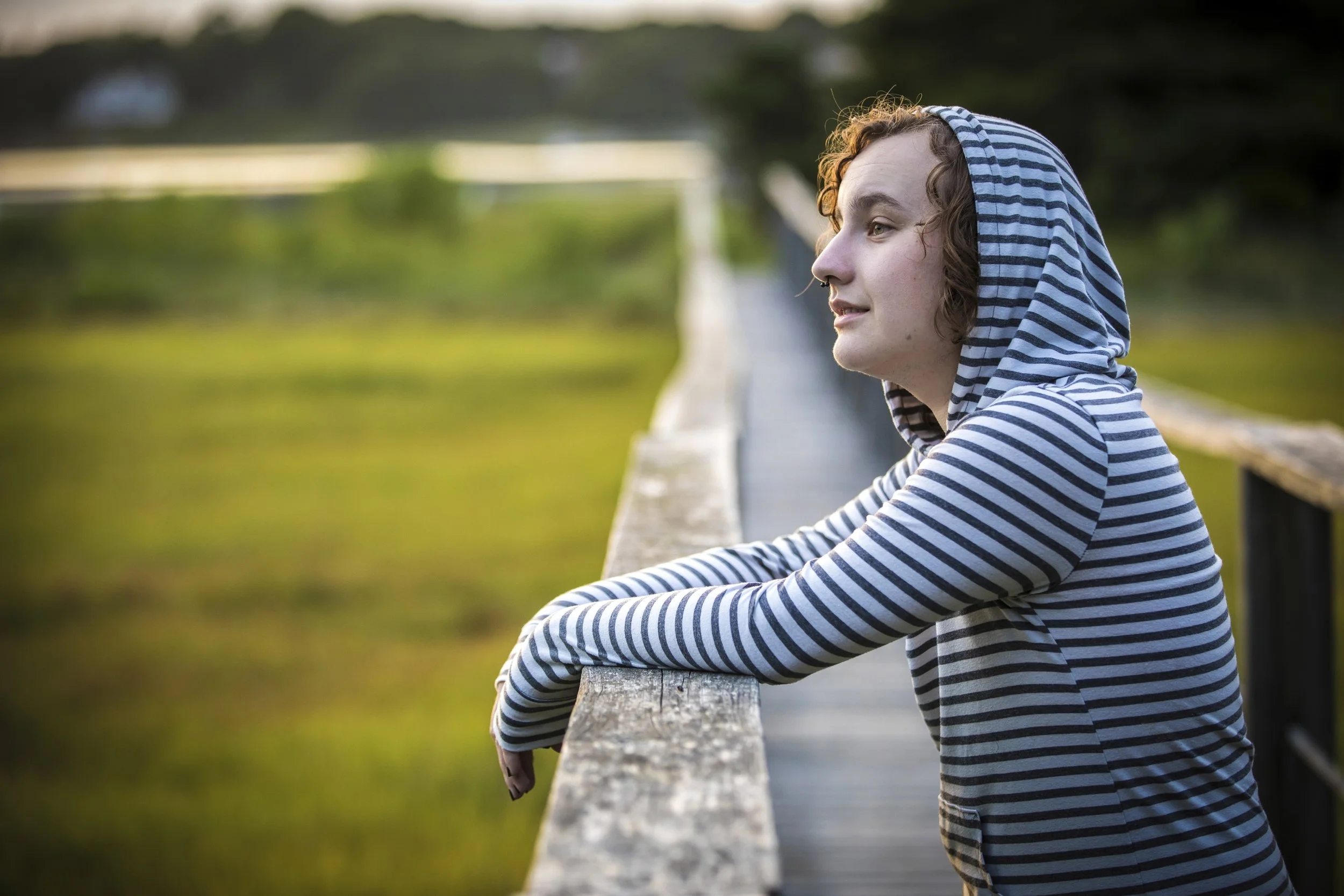
Dirk
For his portrait, Dirk chose to be photographed in nature on Cape Cod—a place that has always felt like refuge. “Growing up in Bourne, I felt awkward. I thought it was a body image issue and tried to compensate by being hyper-feminine, but I was so uncomfortable,” he says. At 14, an online friend introduced him to the idea of being trans. “I thought, wow—you can do that?”
Dirk came out to his parents during his first year of college by reading them a letter. “It was actually beautiful. My dad asked, ‘Are you sure?’—and something clicked. He’s embraced me ever since.” After legally changing his name and having top surgery, Dirk began testosterone following a doctor’s recommendation for hormone-related health issues.
A religious person, Dirk says one of the hardest parts was feeling like he had to leave church behind. “It felt like a door closed. But I’ve found a community filled with love, art, and support.” He now runs his own DEI business and looks to the future with hope. “I think I can finally see myself happy.”
-
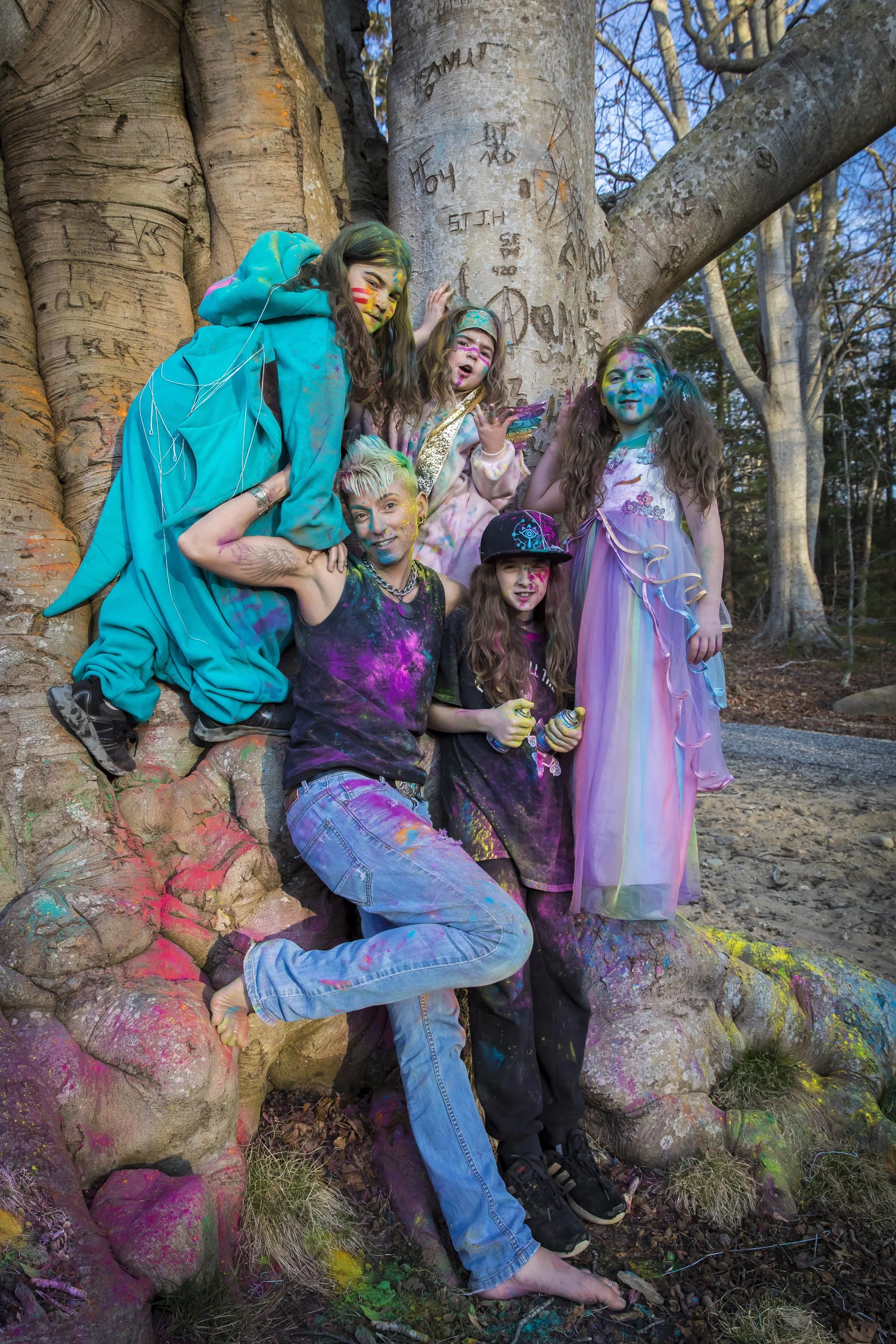
Karls
In their collaborative portrait, Karls is pictured with their four children, each dressed in a costume of their choosing. “I want to be free to be me—and help others feel free too, by modeling that,” they said.
From a young age, Karls imagined themselves as male characters—dragons, wolves, lions—never the princess. “I didn’t want to grow up if it meant becoming a woman,” they explain. After marrying young and becoming a parent by 23, Karls spent nearly a decade pregnant or nursing. “I was in a deeply gendered role and constantly felt pressure to be feminine and beautiful.”
After divorcing at 31, Karls began to explore their identity and now identifies as non-binary. “The hardest part hasn’t been explaining who I am, but asking others to use the right pronouns. At first, it feels like trying to stop people from projecting their version of you. Then it becomes about staying open—regardless of how you’re seen.”
Karls is now raising their children with the kind of awareness they wish they’d had growing up.