

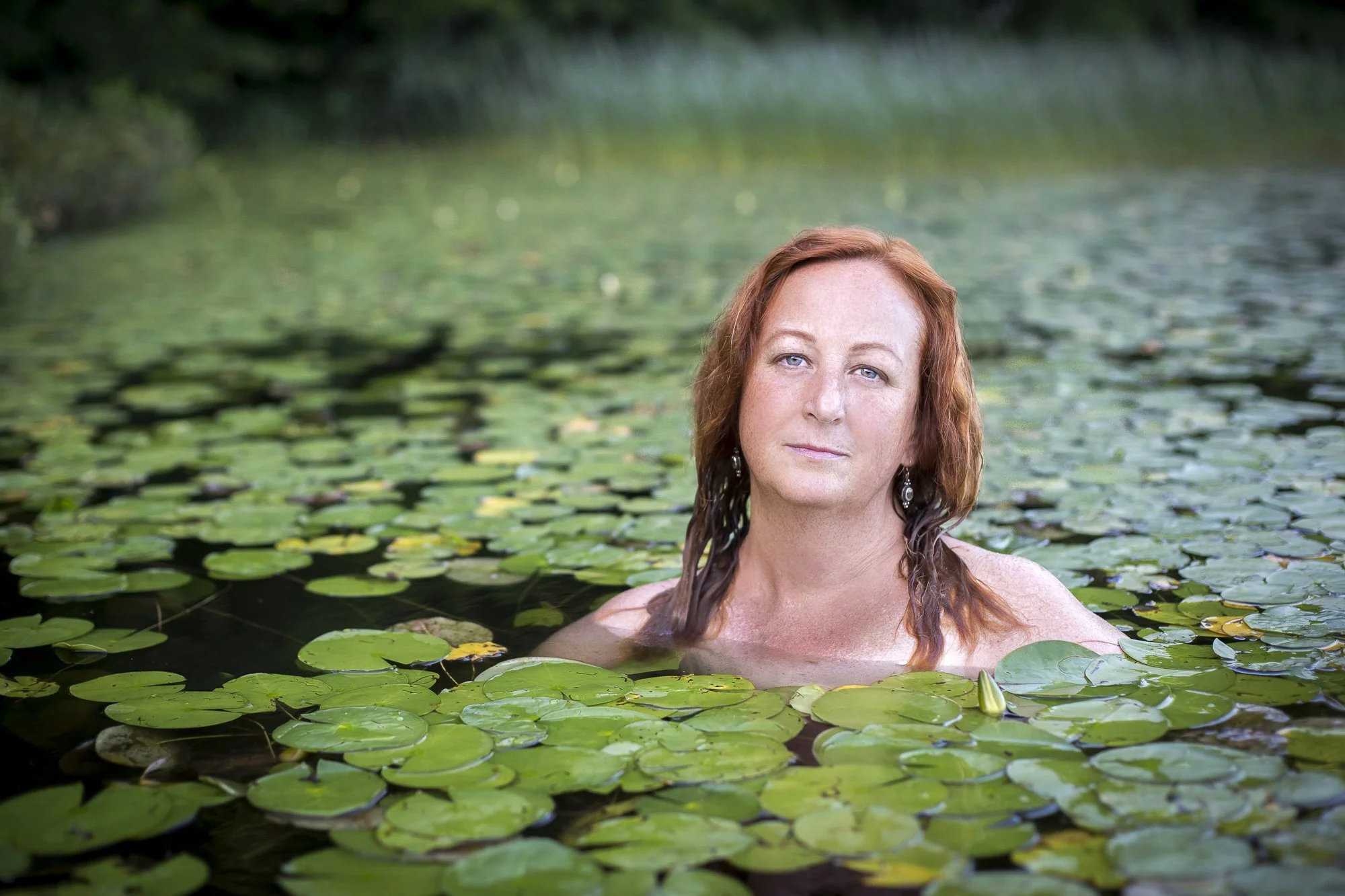
I photographed Lauren Elliott-Grunes among the waterlilies of Greenland Pond near her home on Cape Cod. Diagnosed with two separate stage IIIB triple-negative breast cancers—first at 34, then again ten years later—Lauren’s portrait is part of a collaborative series telling the deeply personal stories of women living with, through, and beyond breast cancer.
Her first diagnosis came during her first pregnancy, when she was told she would need to terminate in order to survive. Lauren refused, found a doctor willing to treat her while pregnant, and after chemotherapy and a mastectomy, gave birth to her daughter, Katie. Supported by more than twenty women—her “milk mamas”—who donated breast milk, Lauren was able to nourish her child during Katie’s first two years.
After a second diagnosis, Lauren underwent additional chemotherapy, a second mastectomy, and radiation, choosing not to pursue reconstruction. “These are scars I’m proud of,” she said. Drawn to water as a place of healing, Lauren now teaches swimming and returns to the pond each year with her daughter and mother, swimming a mile on the anniversary of her first diagnosis to raise funds for the Massachusetts Breast Cancer Coalition.
Rise Above: Exploring the Many Faces of Breast Cancer on Cape Cod
Rise Above is a collaborative portrait series exploring the many ways breast cancer shapes women’s lives on Cape Cod. Living and working in this community, I have known countless women whose lives have been affected by a breast cancer diagnosis. What began as personal observation became more urgent through research, revealing that women on Cape Cod are diagnosed with breast cancer at rates significantly higher than the national average.
The project was inspired by an early portrait I made of local artist Coco Larraín on the day before her mastectomy—an experience that revealed the power of portraiture as a shared act of trust, vulnerability, and strength. That collaboration became the foundation for Rise Above.
Each portrait in this series is created in close collaboration with the women photographed and is paired with their own words. Together, the images and stories reflect the individuality of each experience—there is no single narrative of breast cancer, only deeply personal ones.
Rise Above seeks to create space for visibility, connection, and conversation—honoring resilience while acknowledging the complexity of living with, through, and beyond cancer in our Cape Cod community.
-
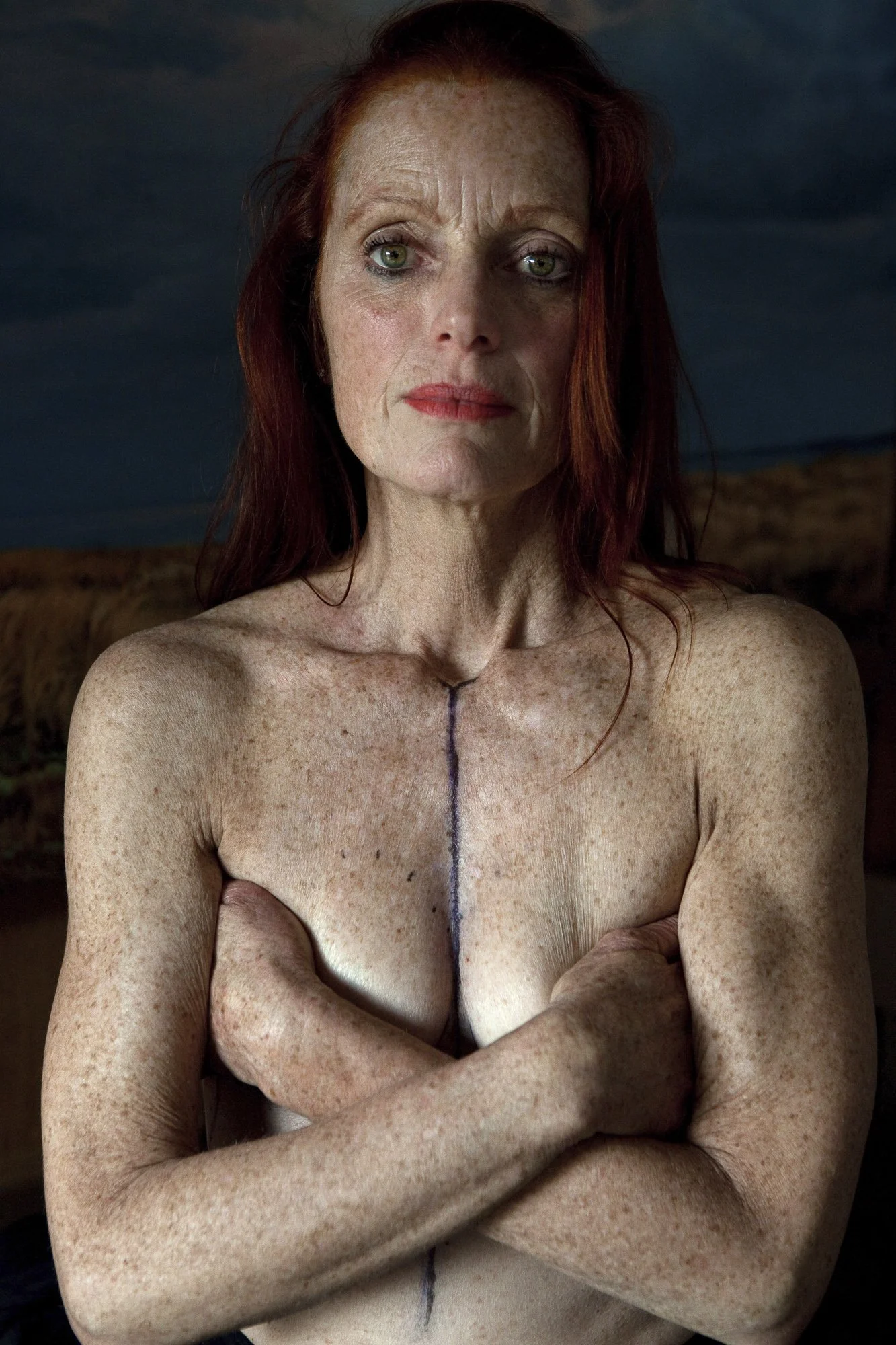
Coco
I photographed artist Coco Larraín in 2015 at her home in Brewster, Massachusetts, the day before she underwent a mastectomy. A surgical line drawn down the center of her body marked what was to come—a clear, unflinching acknowledgment of the surgery ahead.
Coco had long used her art to document her life, including her first experience with breast cancer. Creating self-portraits during treatment, she said, helped her focus on making rather than illness. After a second diagnosis a decade later, she continued to document her surgeries and recovery, hoping her work might help others facing similar decisions.
Coco passed away in 2021 after a third encounter with breast cancer. She was deeply loved and inspired many in her community.
-
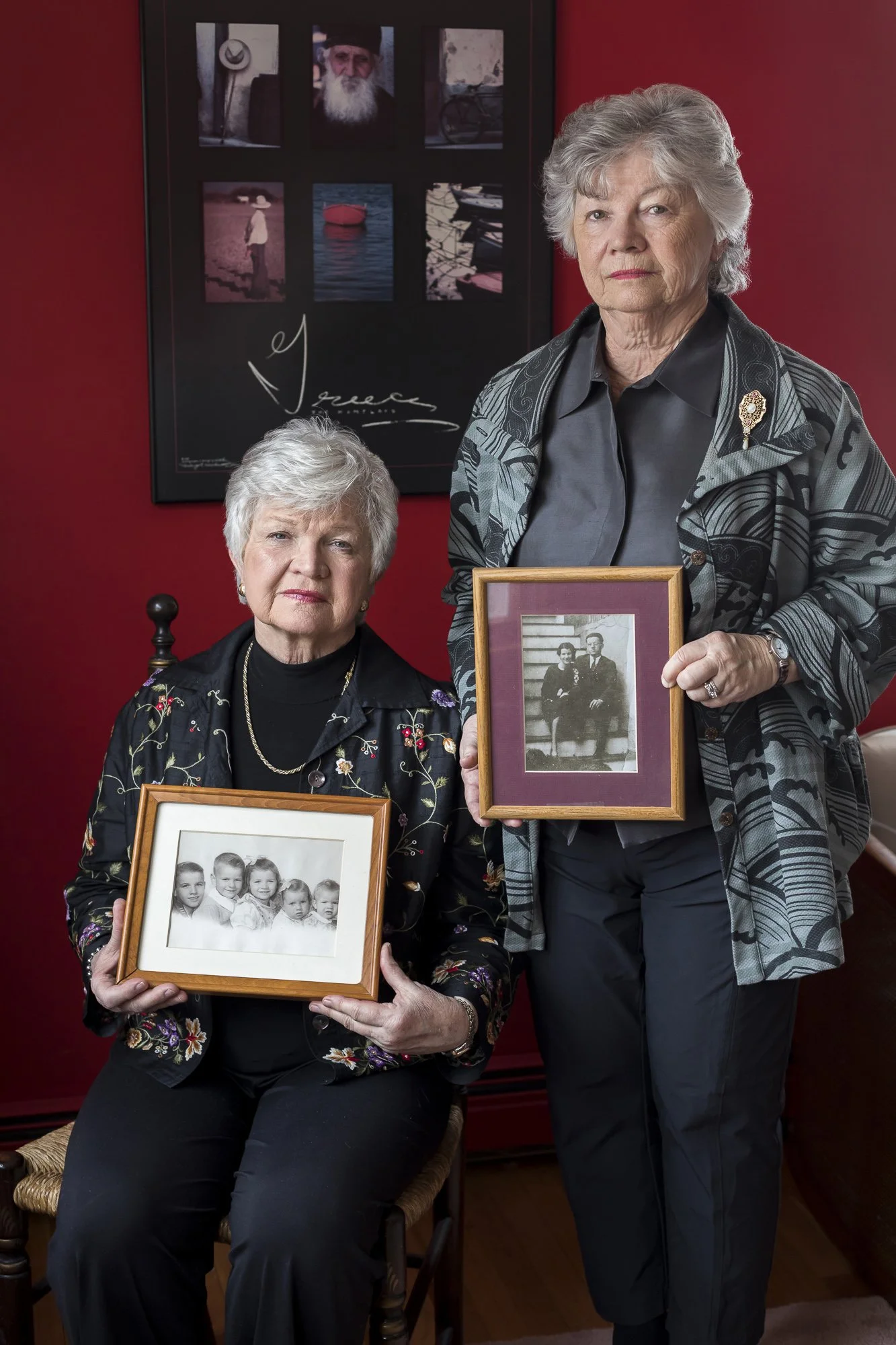
Marilyn & Carol
I photographed sisters Marilyn DiLillo and Carol DePalma at Marilyn’s home in Yarmouth Port, Massachusetts. Raised together in East Walpole, both women have faced serious cancer diagnoses—Marilyn with breast cancer decades apart, and Carol with sarcoma. They are now the only surviving members of their immediate family.
Genetic testing ruled out a hereditary cause, leading the sisters to believe environmental exposure played a role. Marilyn recalls living near an asbestos shingle factory and a park where DDT was sprayed during their childhood. “We all played there,” she said.
Though they now live in different states, the sisters remain close and visit often. Marilyn recently completed treatment for her second breast cancer diagnosis. “It’s comforting to spend time together,” she said.
-
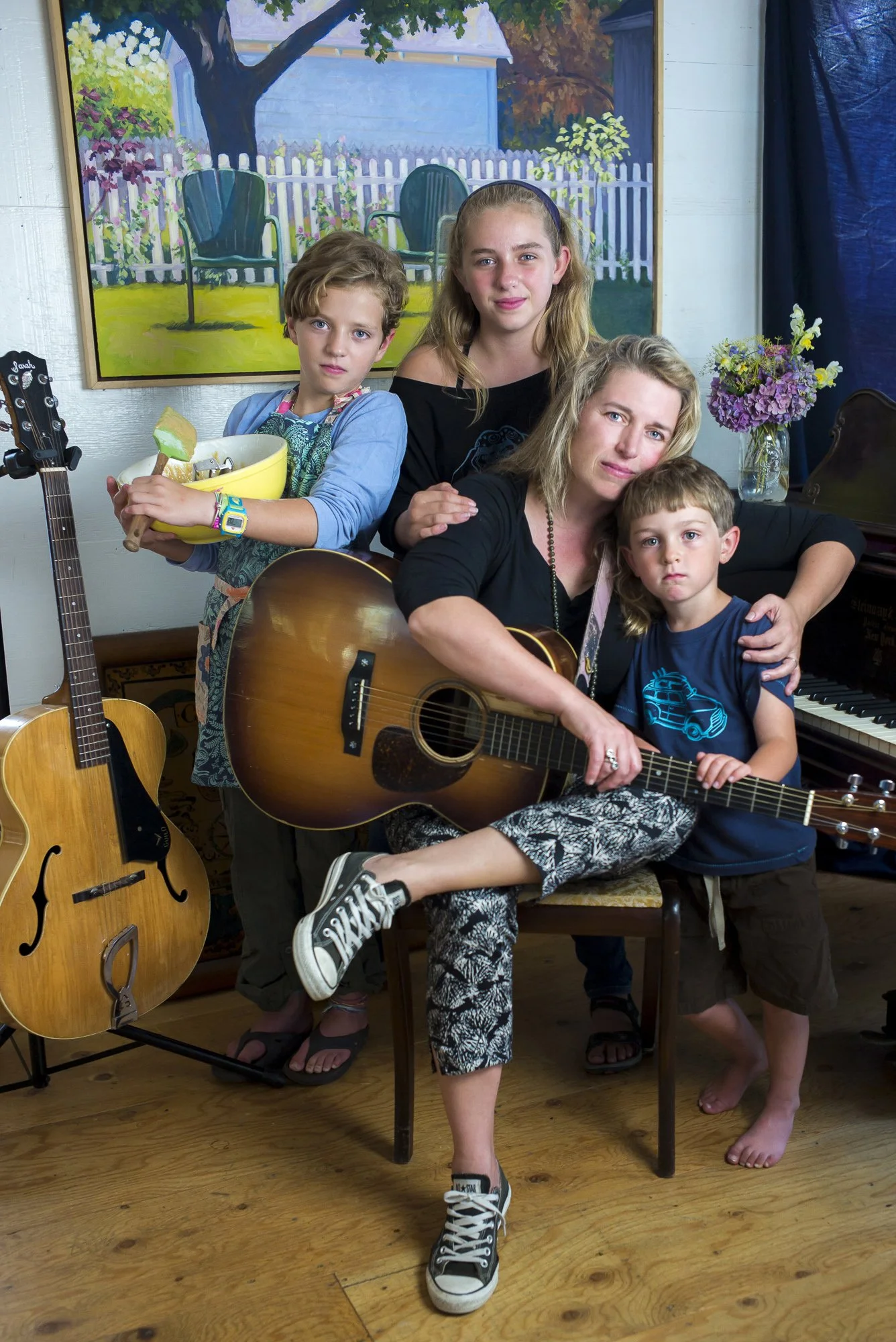
Sarah S.
I photographed musician and Cape Wellness Collaborative founder Sarah Swain at her home in Harwich with her three children, Jessie, Lucy, and Stanley. Cancer had already shaped her life—her mother, grandmother, and uncle all died from the disease—leading her to help found Cape Wellness Collaborative, which provides integrative wellness support for people on the Cape and Islands facing cancer.
After finally getting a mammogram, Sarah learned she carries a rare genetic mutation with cancer risks similar to BRCA2. While her screening showed no signs of cancer, she chose preventative surgery—decisions guided by the loss of her mother and a deep desire to be present for her children. “What you do with this information is deeply personal,” she said.
Around the same time, Sarah’s husband suffered a heart attack linked to a genetic condition, making it an intense and fragile period for their family. In response, they chose to step away together, spending six months sailing and homeschooling their children. “It changed everything,” she said. “It reminded us what we hold most precious.”
-
Sarah B.
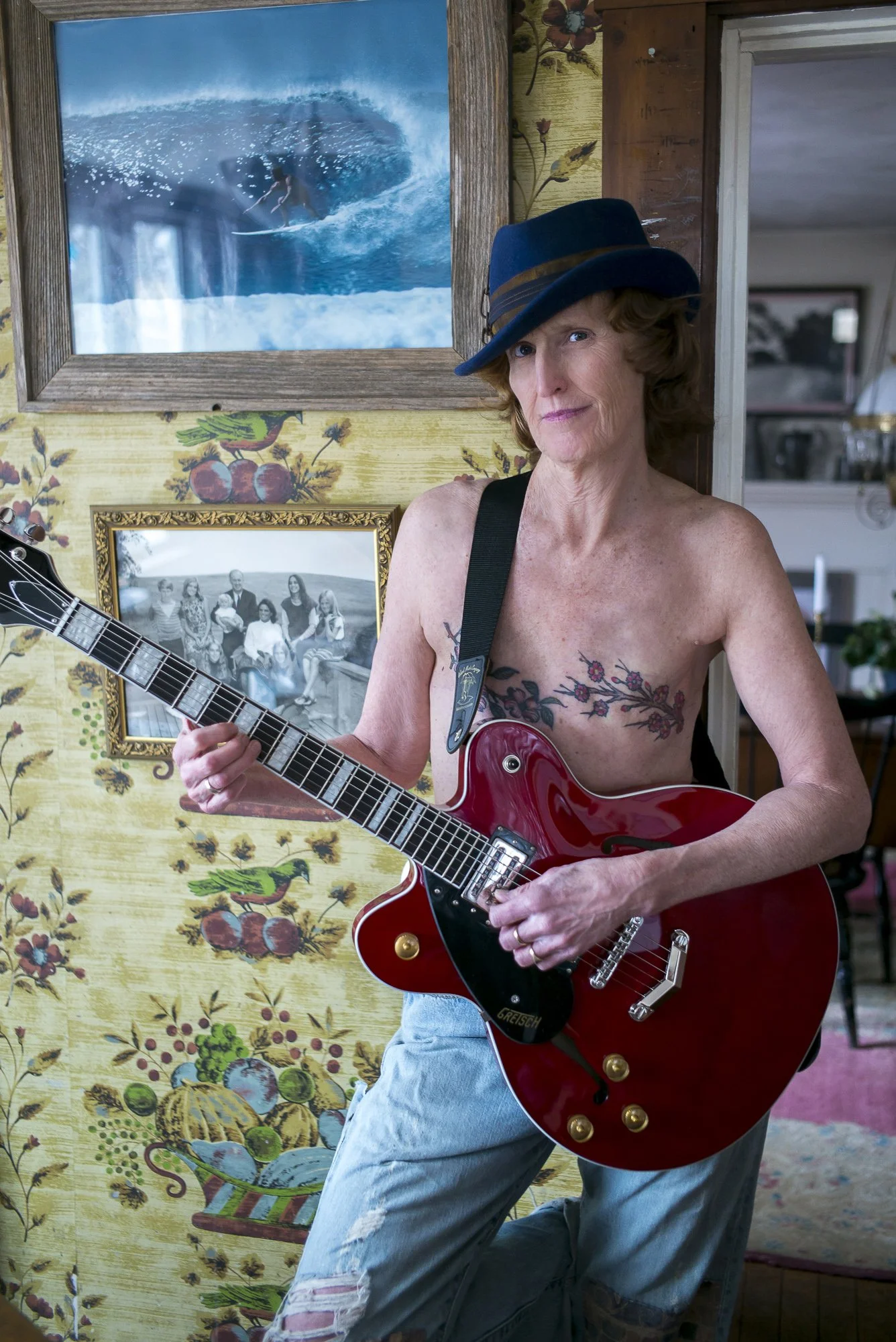
I photographed musician Sarah Burrill at her home in Eastham, Massachusetts. Diagnosed with stage IV inflammatory breast cancer at age 40, she pursued every possible form of treatment—from high-dose chemotherapy and mastectomy to alternative and holistic approaches. “I was in shock and tried everything,” she said.
Sarah was carried through that time by music and by her community, which organized multiple fundraisers in her support. Even when treatment left her visibly changed, she sought connection. “I’d go out just for hugs,” she recalled.
Years later, she chose not to pursue reconstruction and now wears tattoos across her chest that honor her mother and sister, whose ashes rest beneath trees in her yard. Music sustained her throughout treatment—she brought her guitar to the hospital—and it continues to be a source of strength. Sarah wrote the song Rise Above for the Cape Cod Women’s Music Festival; its lyrics became a local anthem for women living with breast cancer.
-
Kim
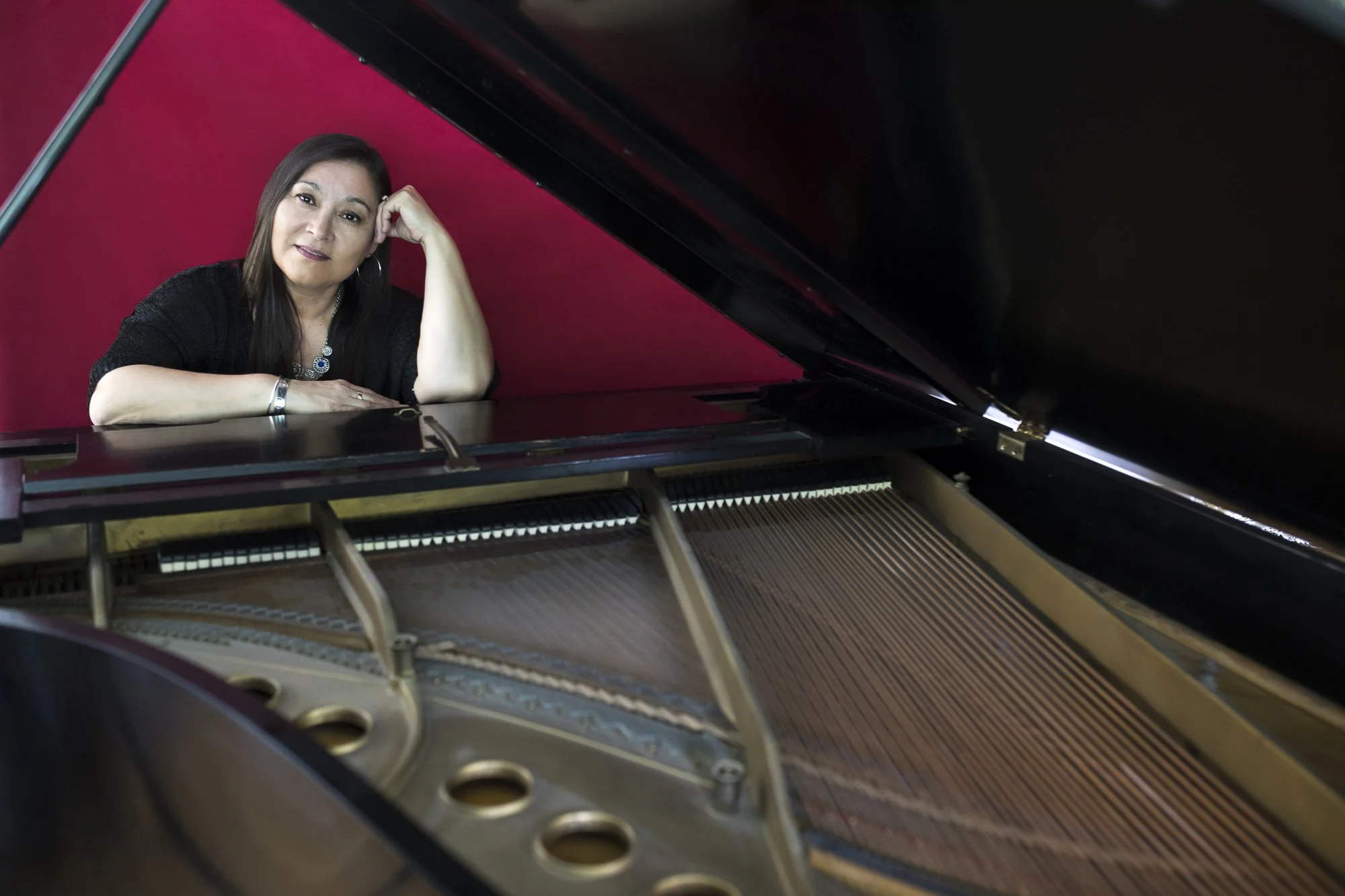
I photographed singer-songwriter Kim Moberg at her home in Centerville, Massachusetts, framed by her 102-year-old Steinway grand piano. Years ago, while trying to conceive a second child, Kim discovered a lump and underwent treatment she believed had resolved the issue.
Soon after, breast cancer claimed the lives of her mother and younger sister. Genetic testing later revealed Kim carries the BRCA2 mutation, leading her to choose a preventative double mastectomy and ovary removal. “My husband was my rock,” she said. “He carried everything so I could focus on healing.”
Born in Alaska and raised in a musical home—her mother was a classical pianist—music has long been Kim’s anchor. Drawn to stories of heartbreak and healing, she continues to make music alongside her daughters, even as she remains mindful of the health choices her family may one day face.
-
Kay
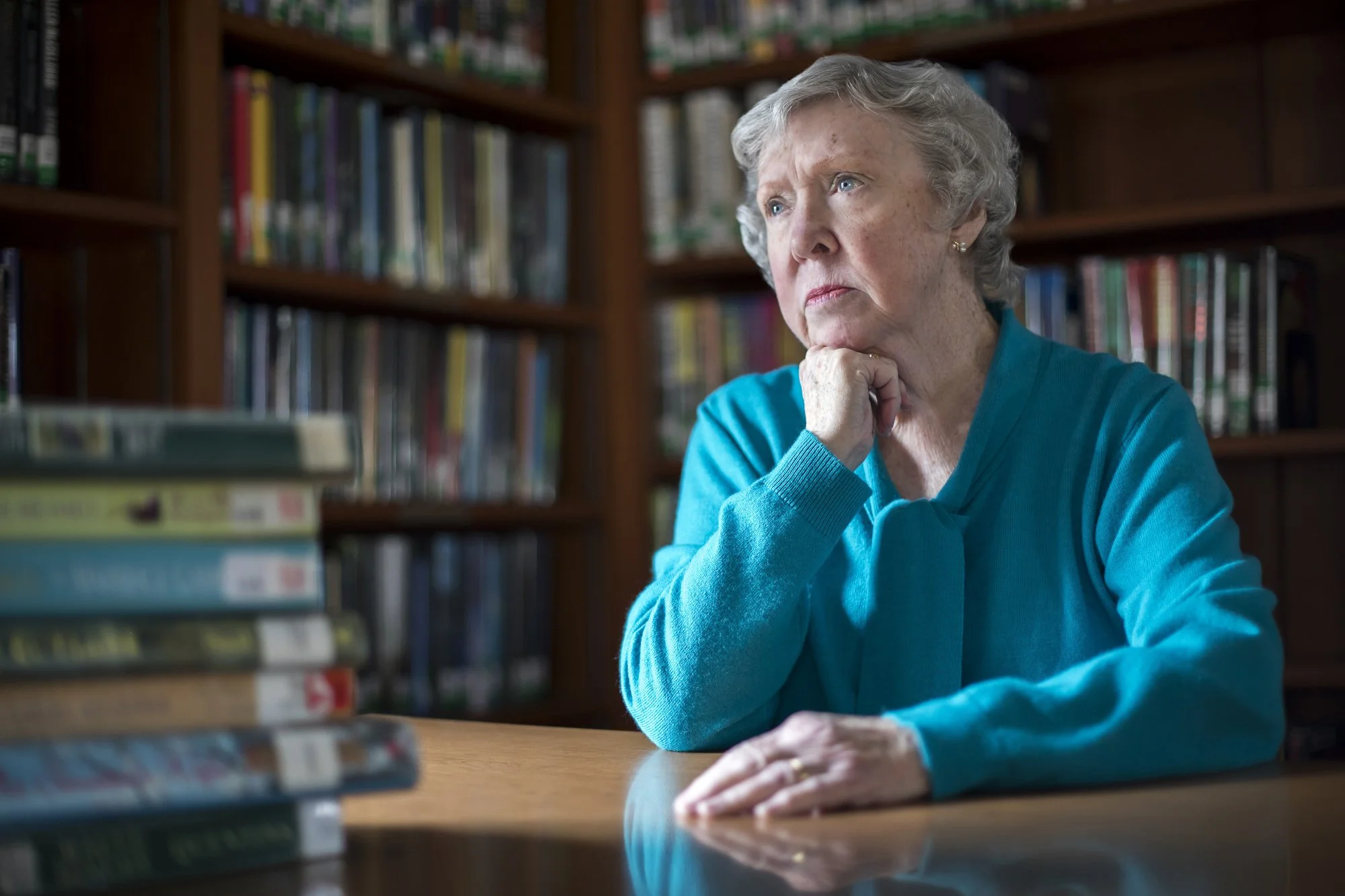
I photographed Kay Delaney at the West Yarmouth Library, where she volunteers and feels most at home. Diagnosed with stage II invasive lobular breast cancer in 2017—on a Friday the 13th—Kay says she was not entirely surprised, having lost her mother to the disease at a young age.
A nurse herself, Kay approached treatment with both knowledge and resolve. She underwent a mastectomy, lymph node removal, and chemotherapy, and chose not to pursue reconstructive surgery. “At my age, body image wasn’t what mattered,” she said. “I just wanted to heal.”
Throughout treatment, the library remained her anchor. Even after losing her hair, Kay continued to return to the space she loved. “It was my grip on normalcy,” she said. “It gave me hope—and the feeling that I was getting back to where I’m happiest, contributing to my community.”
-
Uelia
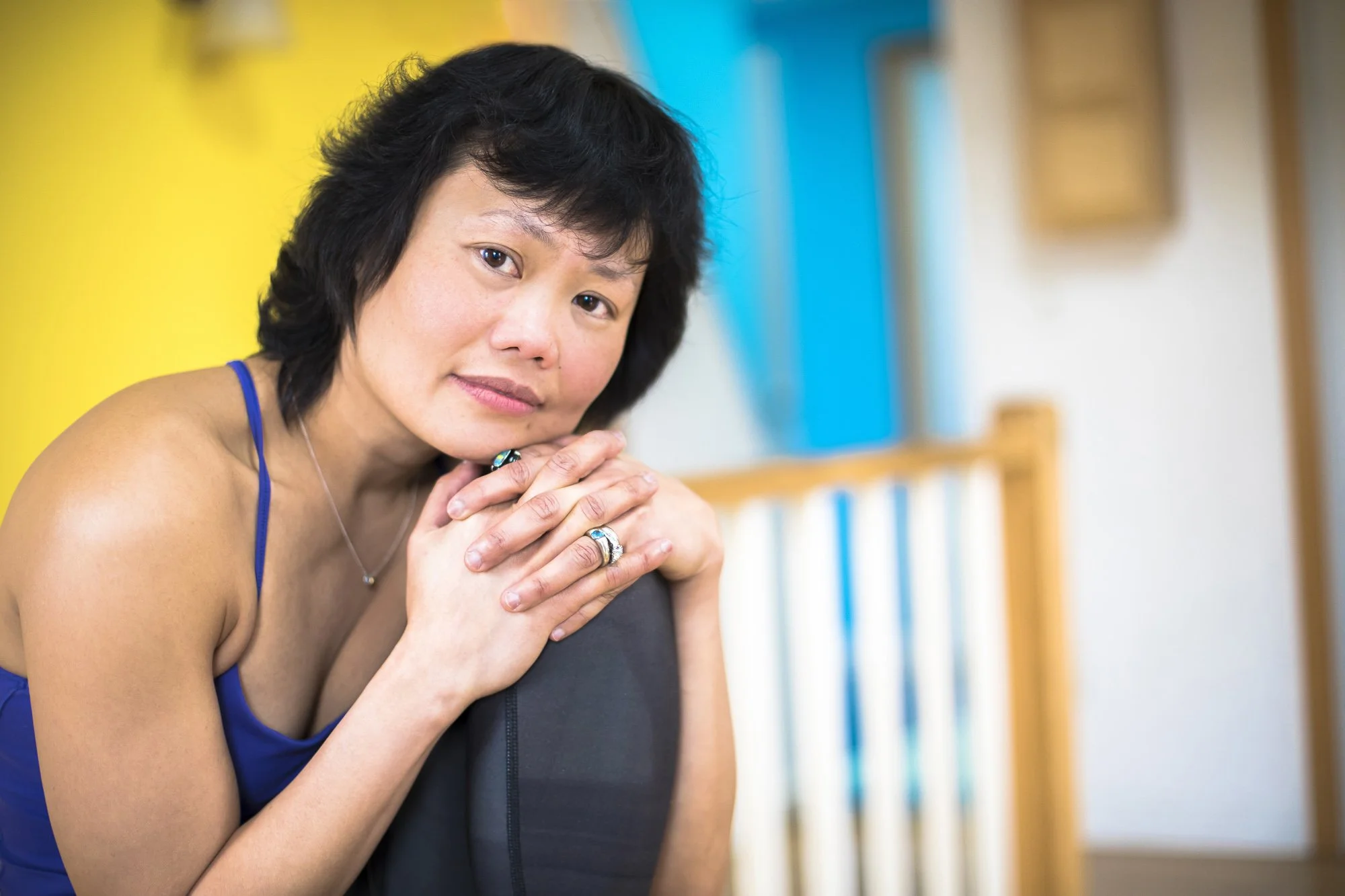
I photographed Uelia Hayward in the Eastham home she shares with her husband, John. Raised in the Philippines, Uelia moved to the United States in 2001. At age 40, her very first routine mammogram revealed a tumor. “I never drank or smoked and lived a very active life,” she said. “My OB-GYN insisted her patients start screening at 40. I truly believe that decision saved my life.”
Uelia was diagnosed with stage IIB triple-negative breast cancer, an aggressive and complex form of the disease. She experienced a severe reaction to chemotherapy after her first infusion and was rushed to the emergency room. “That night, my husband was wondering how we would get through one more session, let alone the fifteen ahead,” she recalled.
What carried her through treatment was the steady support of her husband and mother, along with yoga and long walks. “Having strong support is critical to surviving this disease,” she said. “I will be eternally grateful for the people who held me up when I couldn’t do it myself.”
-
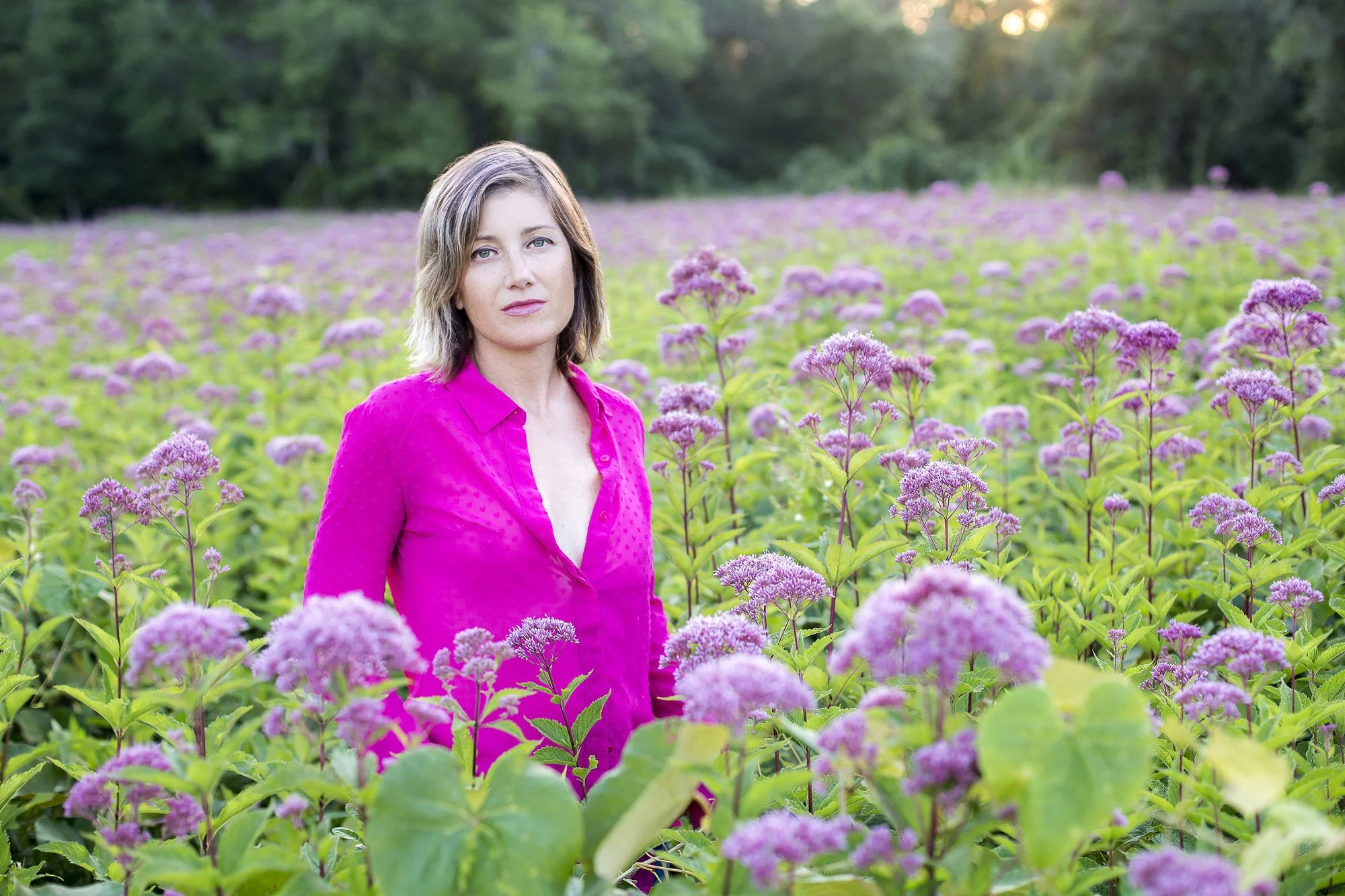
Meadow
Meadow Hilley was diagnosed with stage III invasive ductal carcinoma at age 41. Over the next eighteen months, her two young daughters—then just three and five—watched their mother move through chemotherapy, radiation, surgery, and targeted treatment. “When my hair grew back differently, they asked how long it would be before I looked like ‘old Mommy’ again,” Meadow recalled.
As time passed, her daughters came to understand that some changes would be permanent. Meadow believes the experience altered her in lasting ways. “Encountering my own mortality brought a kind of clarity,” she said. “It made it easier to chart a course forward, knowing that at any moment the wind and waves could carry us off course. Navigating cancer taught me how to right the ship.”
Meadow is photographed in the Brewster meadow she considers her primal place—a landscape that shaped her childhood and continues to ground her. “This was the nexus of my universe,” she said. Told her cancer was likely environmental, Meadow now asks, “What have we done to this place, and to ourselves?” For her, healing is not only personal—it is collective.
-
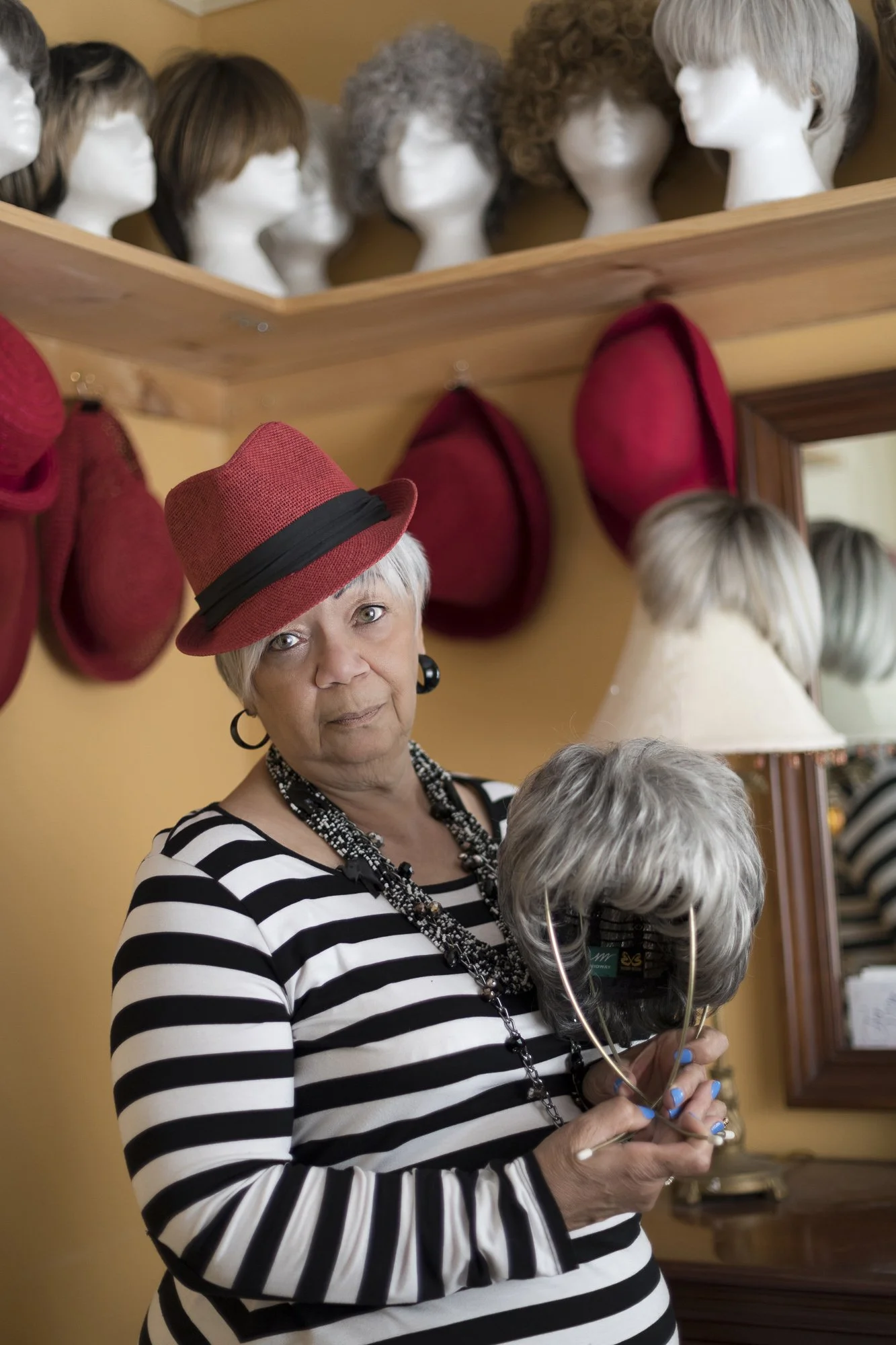
Gigi
I photographed Gigi Ridgley at her home in Sagamore, Massachusetts. Diagnosed with stage I breast cancer two years ago after a routine mammogram, Gigi credits her doctor’s thoroughness for catching it early. With a family history that includes her mother, aunt, and grandmother, the diagnosis, while difficult, was not entirely unexpected.
Gigi moved to Cape Cod in the 1980s after marrying her late husband, Alda, and still lives in the house they shared. Originally a boarding house, it was the only home Alda was able to purchase at the time, as discrimination limited where he was allowed to buy. “He spoiled me every day,” Gigi said. “I still miss him terribly.”
Known for her collection of wigs and red hats, Gigi approaches aging with humor and style. A member of the Red Hat Society, she embraces the joy of connection and community. “I’ve always loved wigs,” she said, laughing. “It’s nice to choose what hair to wear.”
-
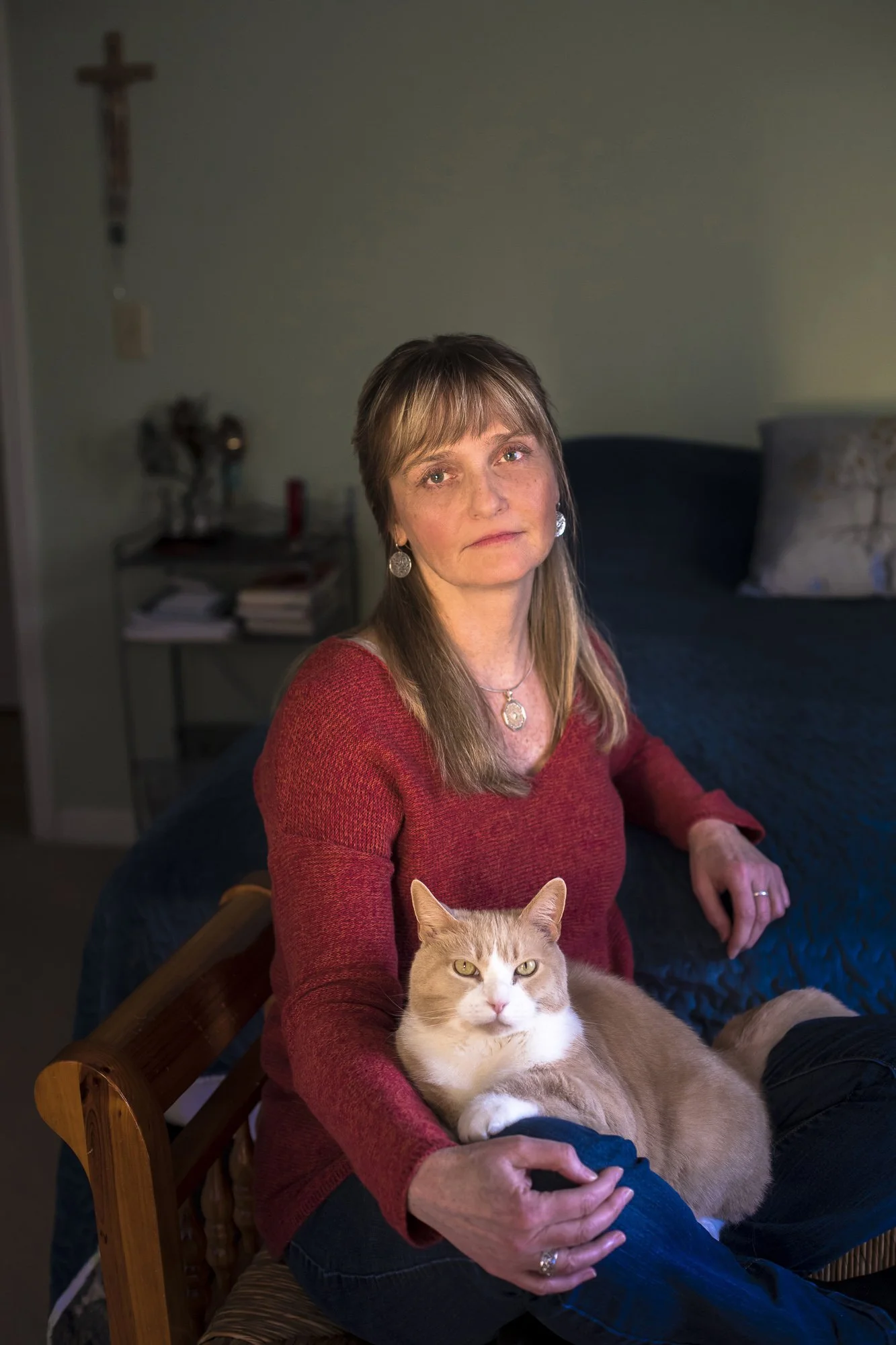
Sally
I photographed Sally Largey in the Eastham home she shares with her sixteen-year-old son, John Patrick, and their cat, Sly. With no family history of breast cancer and no genetic markers, Sally was diagnosed in 2017 with early-stage, multifocal invasive breast cancer, with cancer found in three lymph nodes.
She underwent a mastectomy and radiation treatments, leaning heavily on her role as a mother. “My son was my motivation to keep it together,” she said. When it came time to explain her diagnosis, she used humor—referencing a zombie movie they had watched together. “I told him that sick people wouldn’t be attacked, so at least I’d survive a zombie apocalypse,” she laughed.
Returning to her job at a senior center, Sally was struck by how many women quietly shared similar stories. The hardest part, she said, was fearing she wouldn’t be there for her son—and grieving the loss of part of her body. “I just try to keep swimming,” she said. “When a dark cloud appears, suddenly all my blessings shine through.”
-
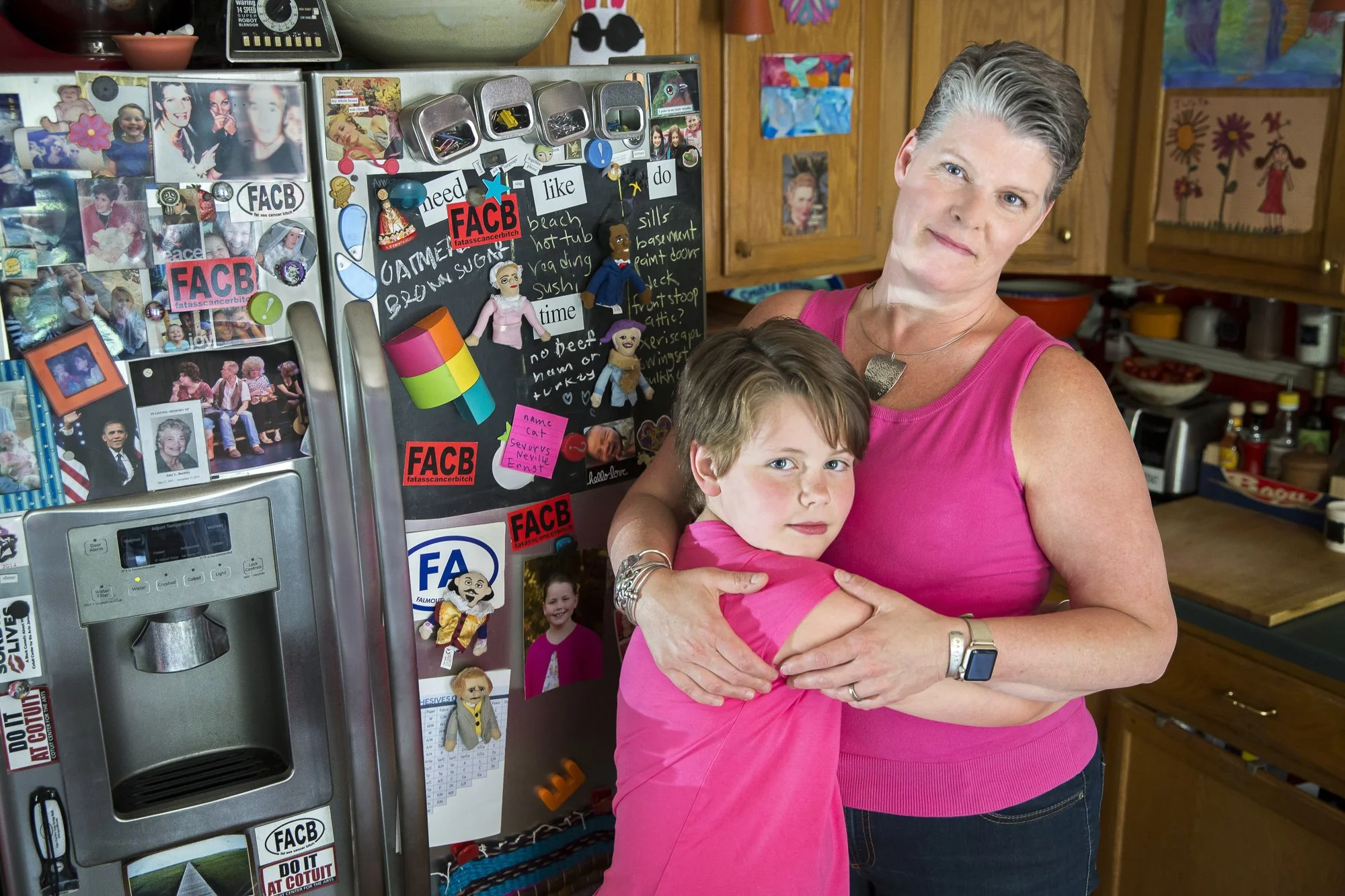
Christine
I photographed Christine Ernst at her home in Sandwich, Massachusetts with her nine-year-old daughter, Julia. Christine was diagnosed with stage II breast cancer at age 34 and chose not to pursue reconstructive surgery after her mastectomy. At the time, she was a single mother to her older daughter, Marney, then six, and prioritized being present over a long and difficult recovery.
“I didn’t feel disfigured,” Christine said. “I thought of it as a badge of honor.” Fueled by anger and a desire to be honest, she wanted other women to understand that cancer could happen to them, too. Two years later, she wrote and performed a play with her daughter titled Reconstruction, or How I Learned to Pay Attention, touring it throughout New England.
Christine has since created numerous one-woman shows and is widely known as the “Fat Ass Cancer Bitch”—a name she reclaimed after a neighbor hurled it at her during a dispute. Describing her work as “part stand-up, part rant, part sermon,” Christine believes deeply in storytelling. “The story will save us all,” she said.
-
Kelly
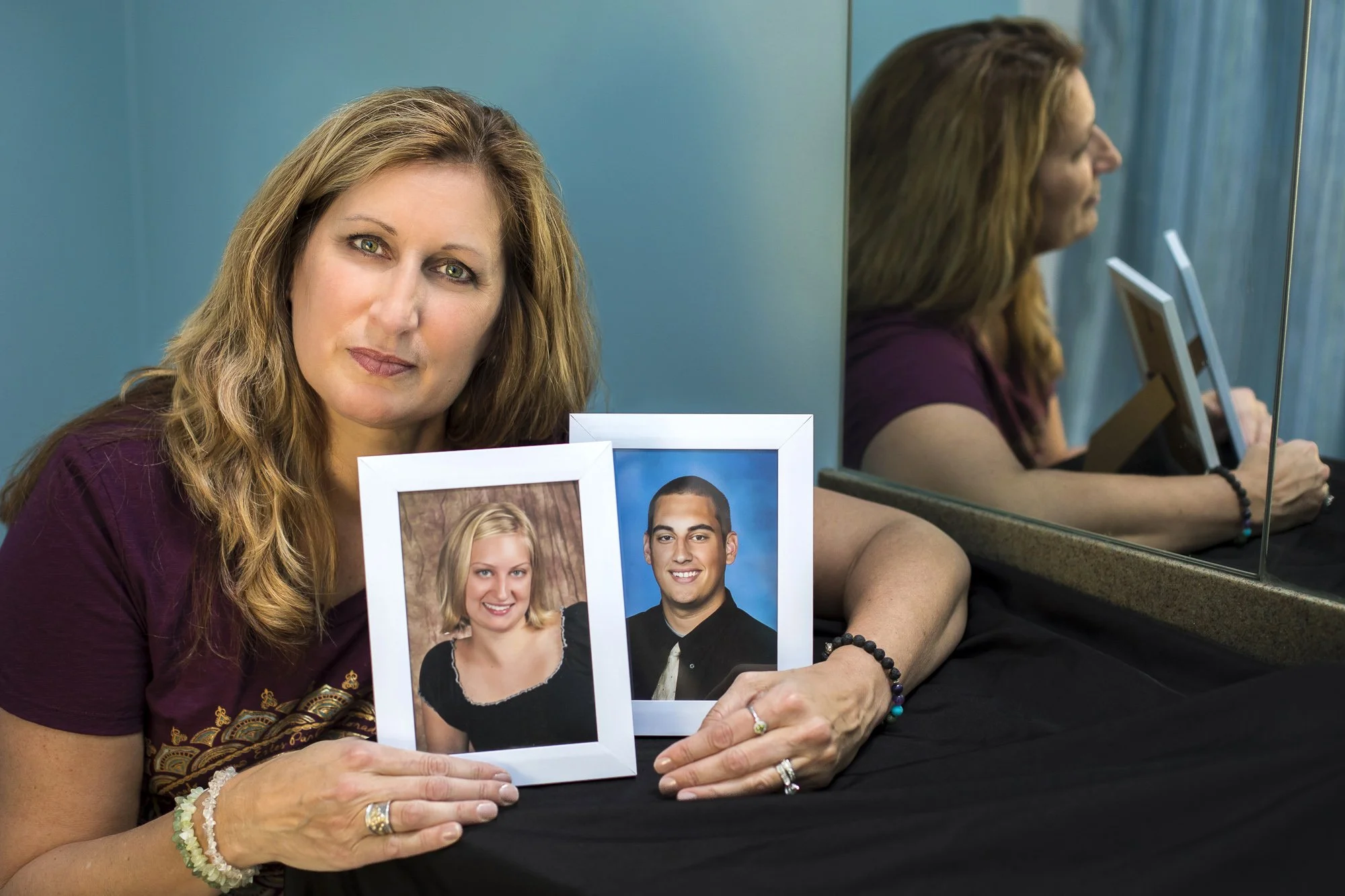
I photographed Kelly Bohl at her home in Brewster, Massachusetts, surrounded by photographs of her two children, Kierstyn and Jared. Diagnosed with early-stage breast cancer at age 49, Kelly underwent a lumpectomy, lymph node removal, radiation, and chemotherapy.
“The hardest part was telling my children and worrying I wouldn’t be there for them,” she said. A third-grade teacher, as well as a dance instructor, yoga teacher, meditation guide, and reiki practitioner, Kelly chose to return to teaching before her hair had even grown back. “I wanted my life to move forward,” she said.
Kelly describes her diagnosis as a turning point—an opportunity to reevaluate what mattered most. Supported by family, friends, and community throughout treatment, she credits that collective care with giving her the strength to heal.