

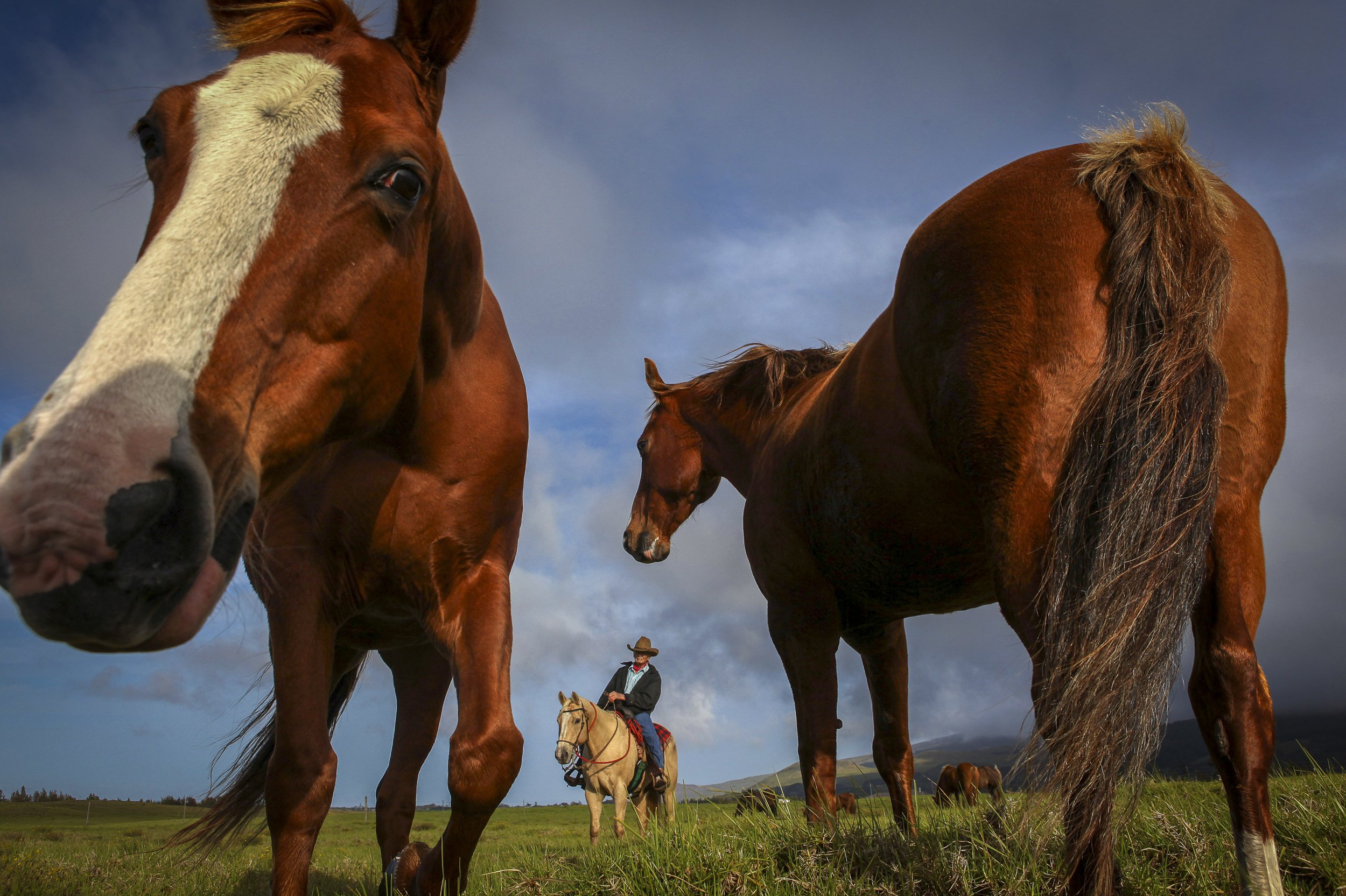
Jamie Dowsett, 85, rides near his home in Waimea, Hawai‘i, where he’s spent a lifetime on horseback. “I still think cows and horses are the best things that ever walked the earth,” he says. “I’d give anything to be a cowboy again… out on the land where nobody bothers you, where it’s quiet, and the horses carry you through the beauty.” Dowsett is one of the last of a fading generation of Hawaiian cowboys, or paniolo, whose stories—and way of life—are at the heart of this project.
The Last of the Hawaiian Cowboys
High in the uplands of Hawai‘i’s Big Island, far from the coastlines and clichés that define the islands for most visitors, a cowboy culture has endured for more than two centuries. Hawaiian cowboys—known as paniolos—work the land on horseback, carrying a tradition that predates the American West.
The roots of paniolo culture trace back to 1793, when British Captain George Vancouver gifted four cows and a bull to King Kamehameha I. Seeking to protect the animals, the king placed a kapu—a sacred law—on their killing. With no natural predators, the cattle multiplied rapidly, becoming feral longhorns that destroyed crops, trampled native forests, and threatened local communities.
In 1812, a sailor named John Parker jumped ship and settled on the Big Island. Granted permission by the king to manage the growing herds, Parker laid the groundwork for what would become Hawai‘i’s ranching industry. By the 1830s, King Kamehameha III recognized its economic potential and invited three Mexican vaqueros from California to teach Hawaiians the skills of roping, riding, and herding. Locals called them paniolos—a Hawaiian adaptation of Español—and from their saddles, lariats, boots, and guitars, a distinctly Hawaiian cowboy culture emerged.
Today, that culture is increasingly fragile. Rising land taxes, climate change, prolonged drought, and shifting economic pressures have made ranching difficult to sustain. Vast tracts of pastureland have been sold for development. Horses are replaced by ATVs. Jobs disappear. The paniolo community has grown smaller and more insular, holding tightly to traditions passed down through generations. No one knows how long this way of life will endure.
Determined to help preserve what remains, I spent over two years photographing and recording the lives of two multigenerational paniolo families—the Ho‘opais and the Keakealanis. I rode horseback on cattle drives, photographed from a 1955 Piper Cub, and rose before dawn countless times to witness the daily rhythms of ranch life. Through images, interviews, music, and ambient sound, I created a multimedia portrait of a culture rooted in resilience and deep connection to land—while acknowledging the uncertainty that defines its future.
It was an extraordinary privilege to be welcomed into this world and to document a living history that still endures, even as its survival grows increasingly fragile.
A companion multimedia documentary—combining film, interviews, music, and ambient sound—can be viewed here.
-
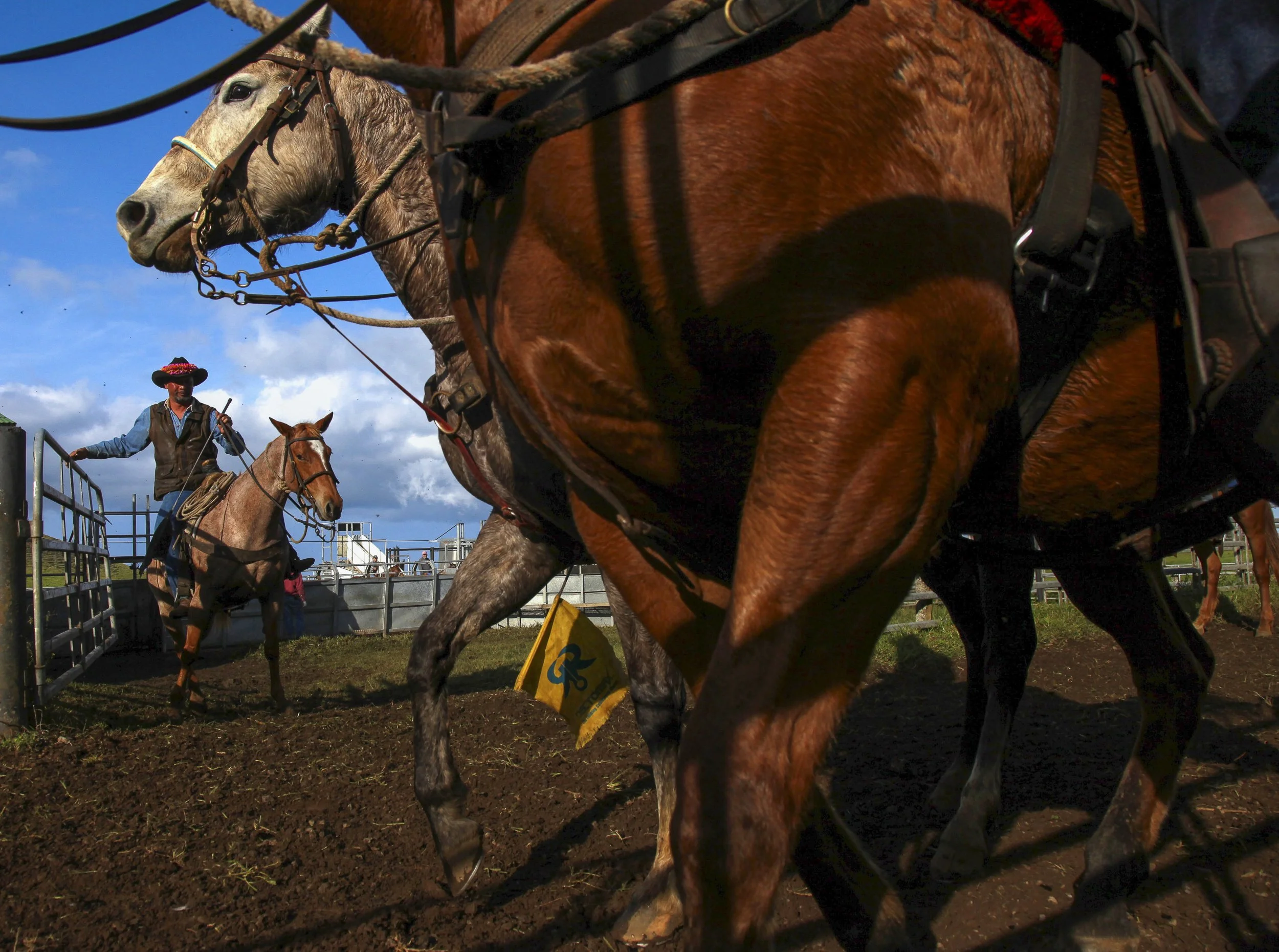
Wearing a flower lei made by his mother, Hawaiian cowboy Bernard Ho‘opai guides his horse through a gate while separating calves from their mothers during branding at Ponoholo Ranch in North Kohala, Hawai‘i. Though ATVs are now used on many ranches, horses remain essential for the precise, nuanced work required in the close quarters of a corral. Ho‘opai is part of a four-generation lineage of Hawaiian cowboys.
-

At Parker Ranch in Waimea, Hawai‘i, cowboys herd more than 800 cattle into a corral in preparation for weaning calves from their mothers. While each cowboy is responsible for a different section of the 135,000-acre property, they come together to manage large herds like this one. Founded in the early 1800s, Parker Ranch is the oldest in Hawai‘i and the largest privately owned ranch in the United States—its history deeply intertwined with the legacy of the Hawaiian cowboy, or paniolo.
-
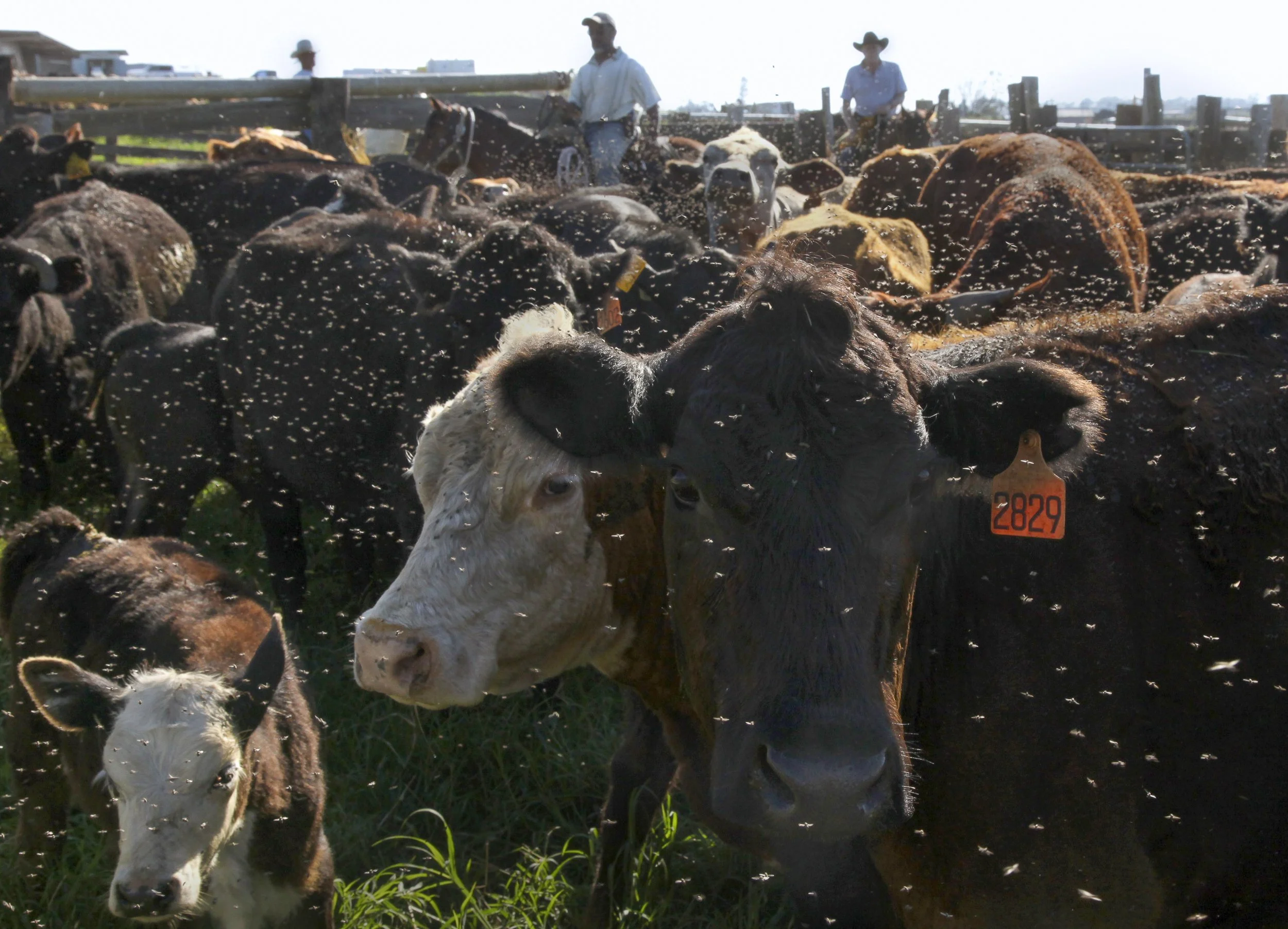
Flies buzz around a herd of cows while cowboys separate calves from mothers during the weaning process at Freddie Rice's Ranch in Waimea, Hawaii. Like on the mainland, the cowboy lifestyle in Hawaii, despite its exotic setting, is rough and dirty.
-
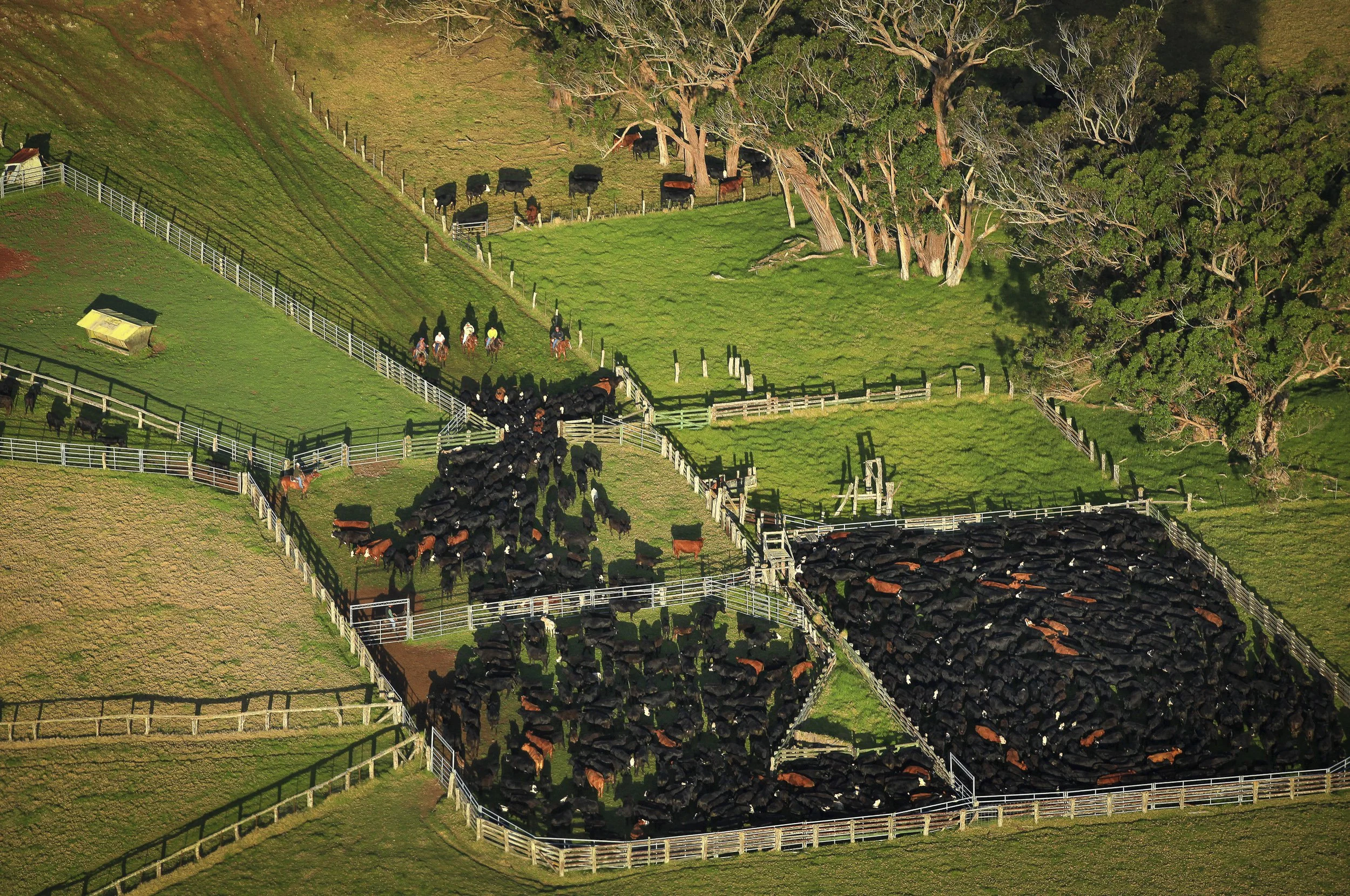
Parker Ranch cowboys herd more than 800 cattle into a corral to begin the process of weaning calves from their mothers in Waimea, Hawai‘i. Each cowboy oversees a different section of the 135,000-acre ranch, but they work together when managing large herds like this.
-
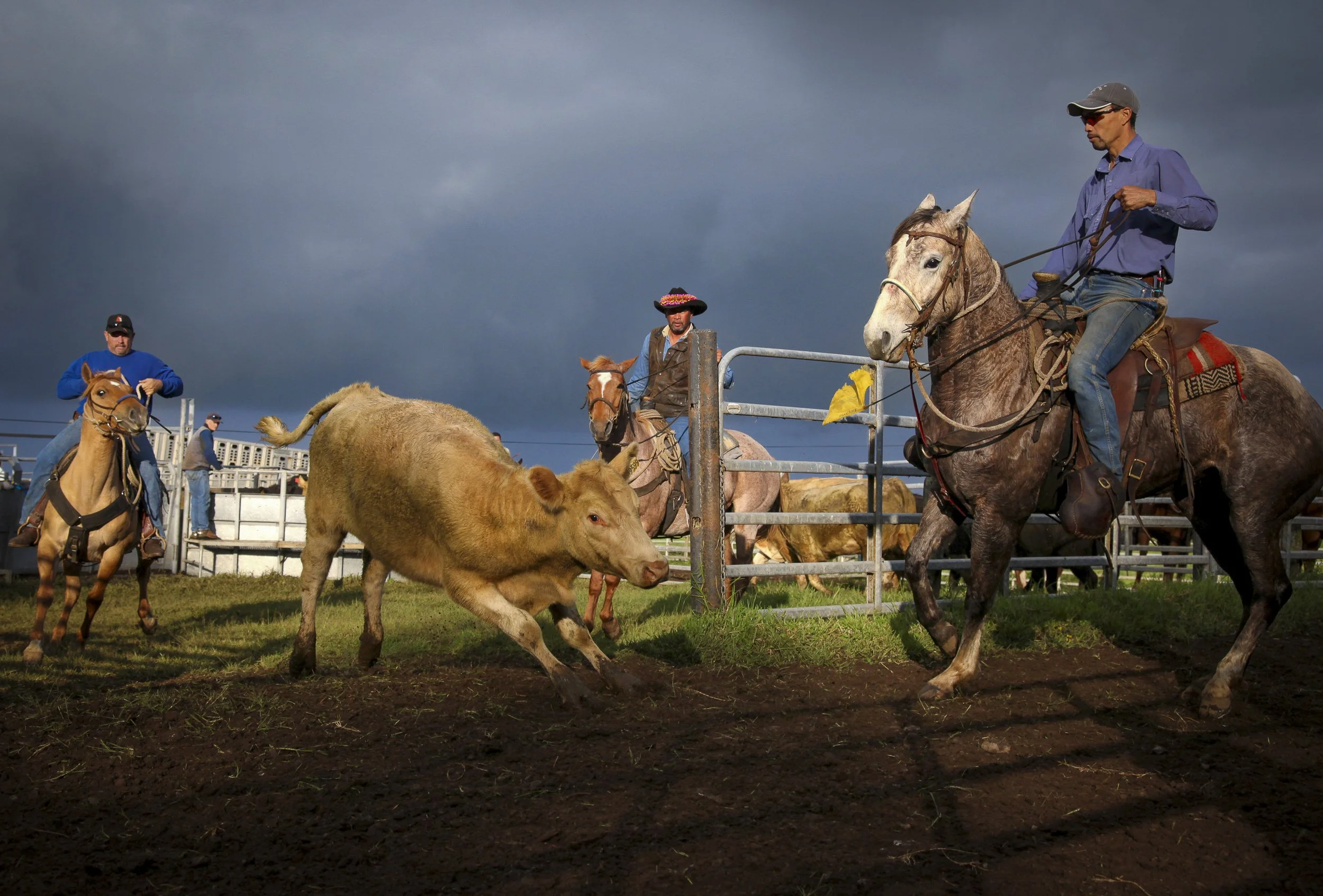
From left, Timmy Farrera, Bernard Ho‘opai, and Wayne Tachera—cowboys from different ranches—work together to separate calves from their mothers before branding, vaccinating, tagging, and, in the case of males, castrating them at Ponoholo Ranch on Hawai‘i Island. The cowboys gather before sunrise and often communicate in Hawaiian. During a time when missionaries sought to suppress the language, the paniolo culture helped keep it alive. Cowboy crews, though predominantly Hawaiian, also included men of Chinese, Filipino, Portuguese, Puerto Rican, Korean, and Caucasian descent—making Hawaiian a unifying language across cultures.
-
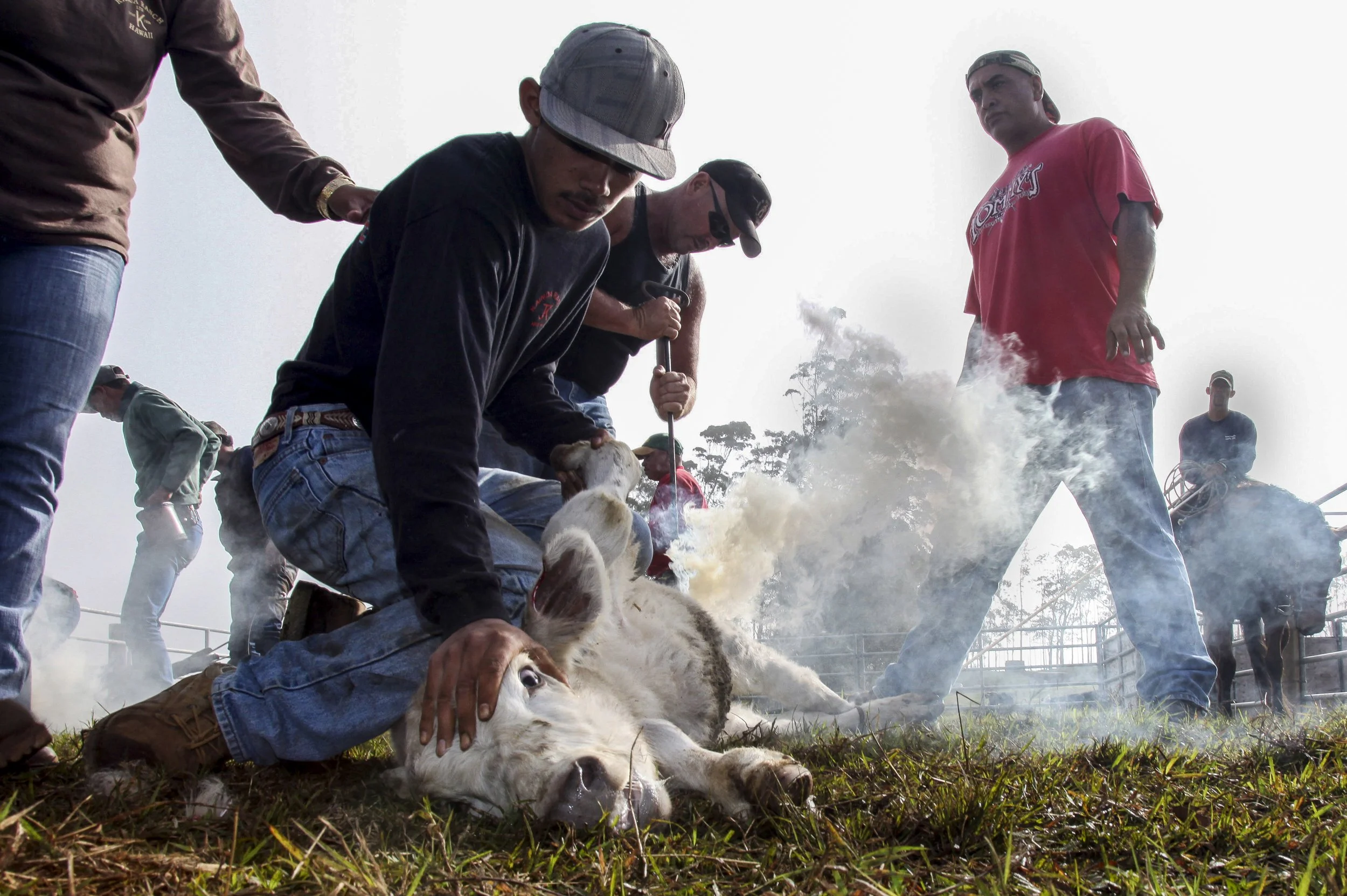
Brandings require many hands, so the paniolo community comes together during branding season. While the cowboys handle most of the roping and separating, family and friends pitch in with tasks like holding calves or applying iodine after castration. “Everyone knows their role,” says Goddfrey Kainoa, whose calf is being branded here. Kainoa leases land through the Hawaiian Homelands Commission Act to raise a small herd in Waimea and is a direct descendant of the Mexican vaqueros who first taught Hawaiians their cowboy skills.
-
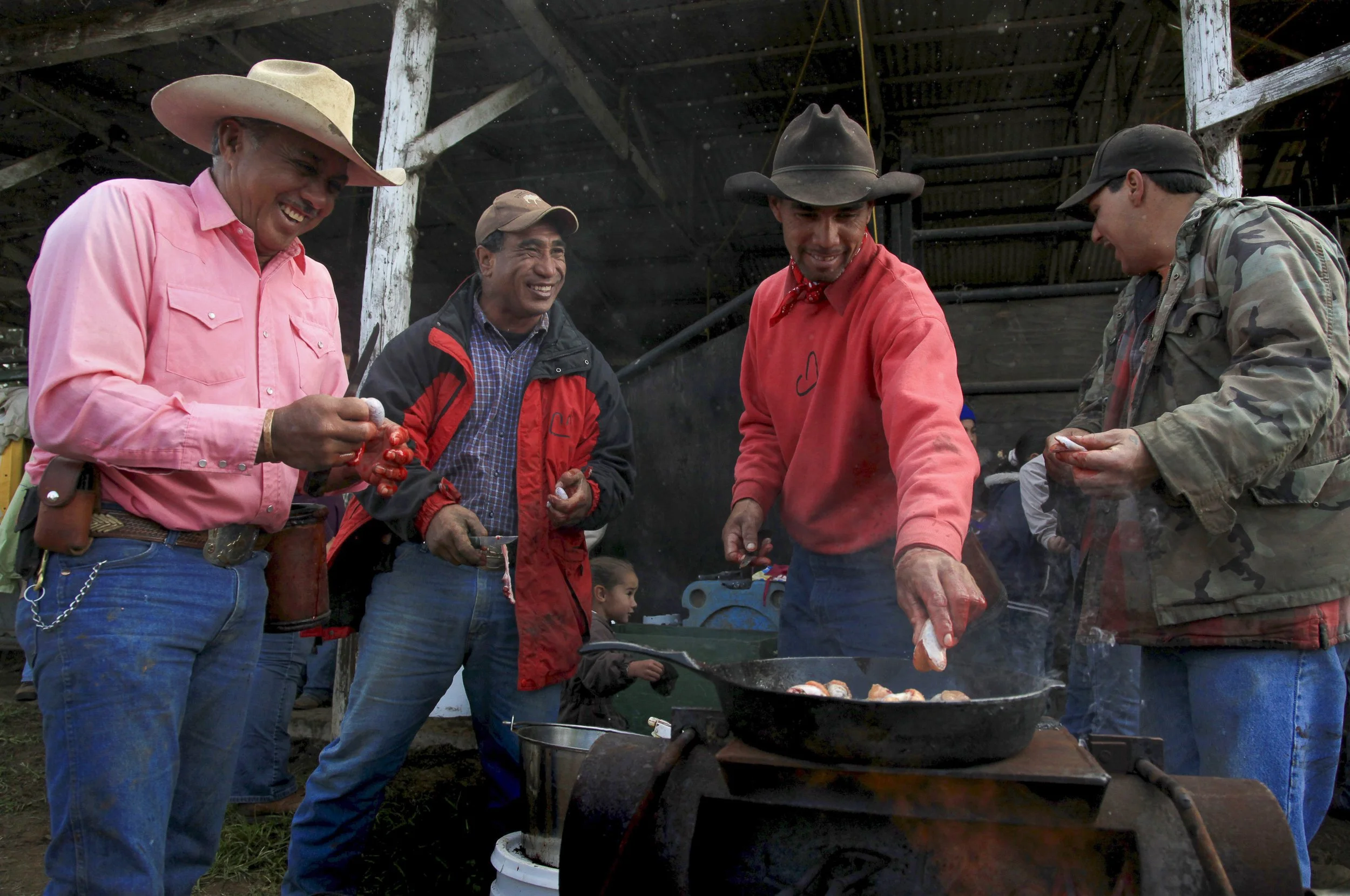
Taking a break from branding, vaccinating, tagging, and castrating calves at Kahua Ranch in North Kohala, Hawai‘i, Godfrey Kainoa, Kimo Ho‘opai, Wayne Tachera, and Keoki Kainoa (from left) clean and prepare laho—calf testicles—for breakfast. Seasoned with garlic salt and cooked in oil directly over the branding fire, the dish is a traditional part of the day’s work.
-
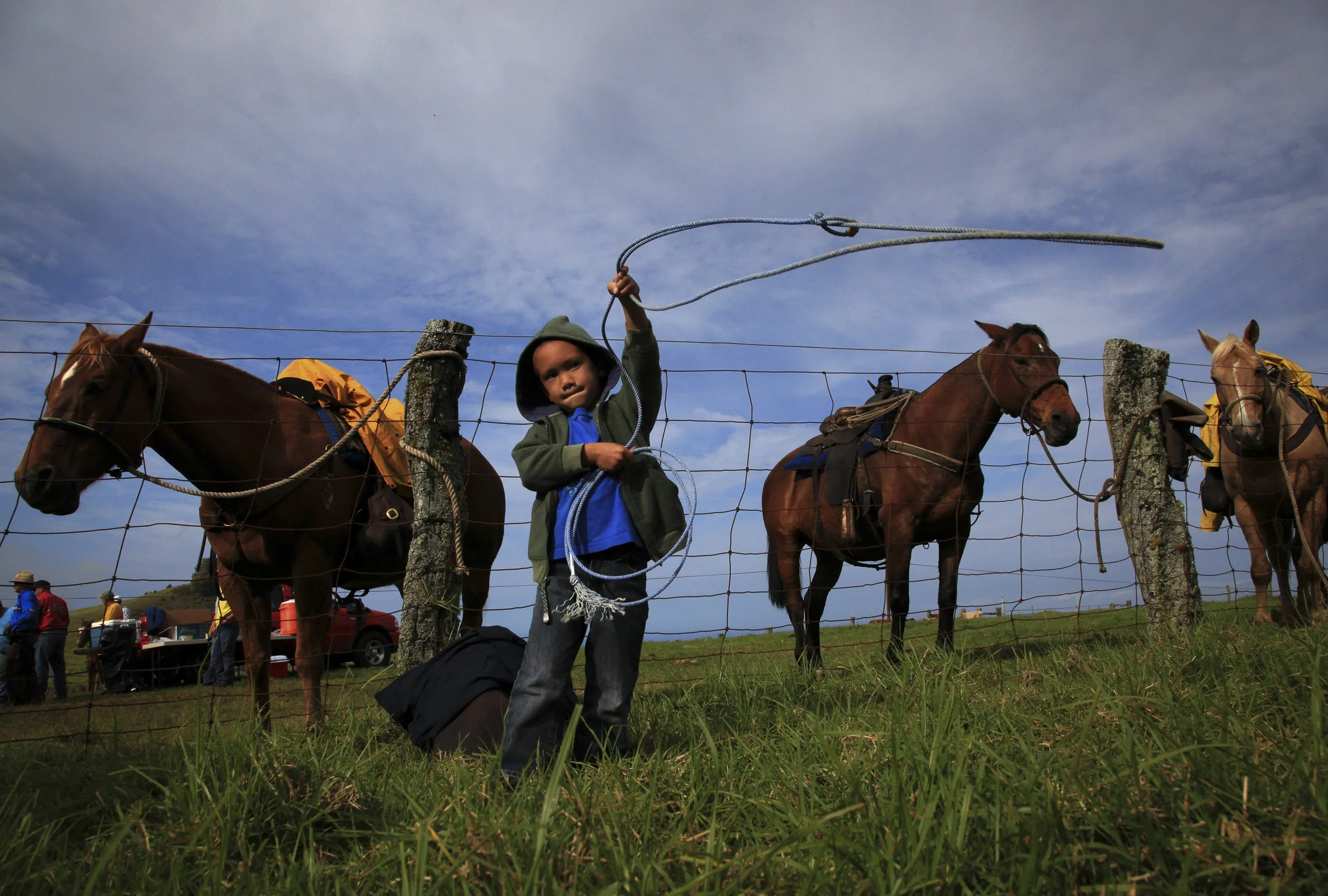
Four-year-old Elijah Tabiolo practices his roping skills at the Ponoholo Ranch branding in North Kohala, Hawai‘i. While mainland children often learn to hit a baseball or throw a football, in the paniolo community, roping and riding take top priority. Kids hone their skills by roping each other, calf dummies—even the family dog.
-
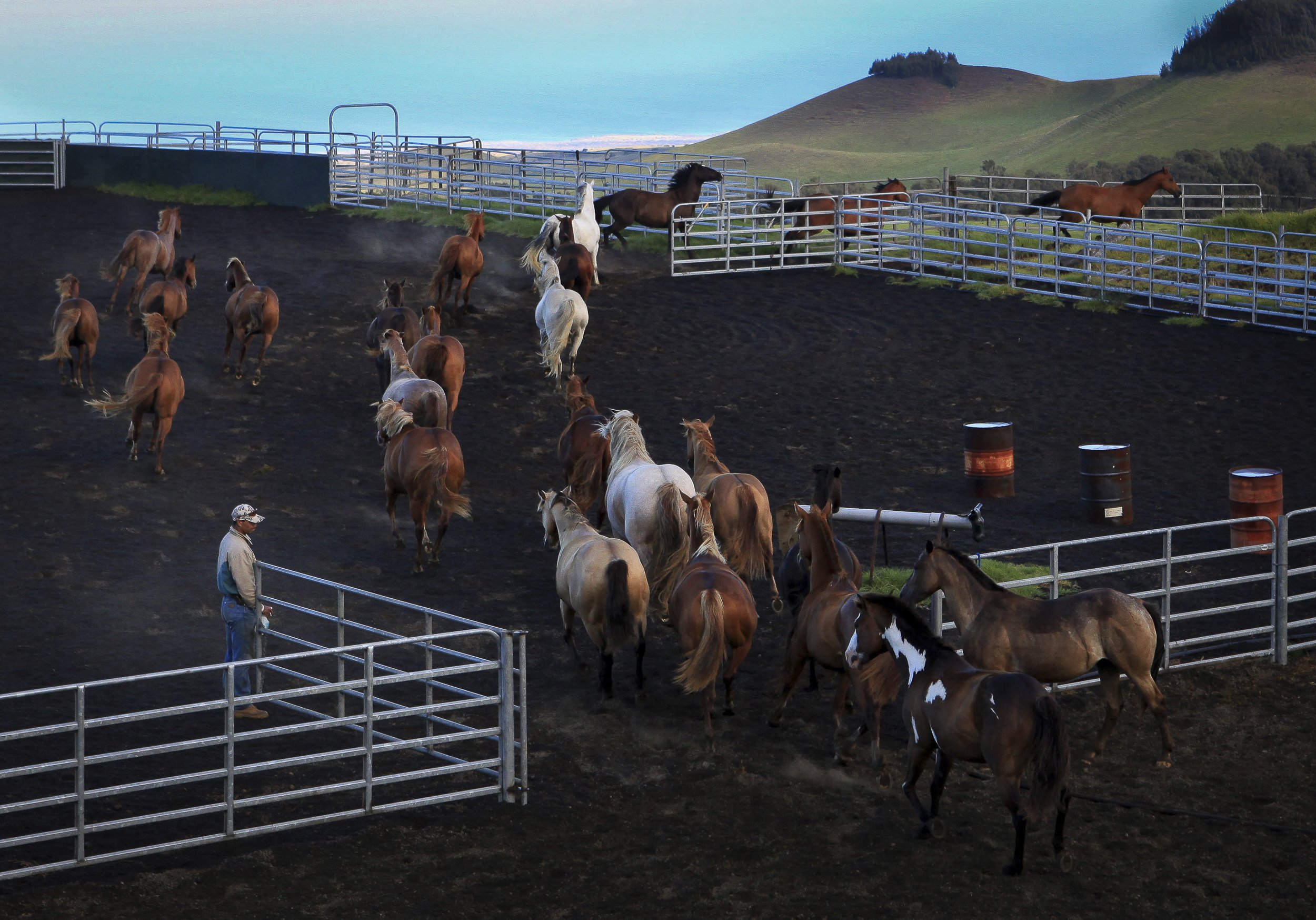
Wayne Tachera, a cowboy at Kahua Ranch, releases the herd of horses from the corral after spraying them with fly repellent. In the distance, the ocean shimmers beyond the rolling hills. Situated at 3,000 feet above sea level, the ranch boasts some of Hawai‘i’s best grazing land.
-
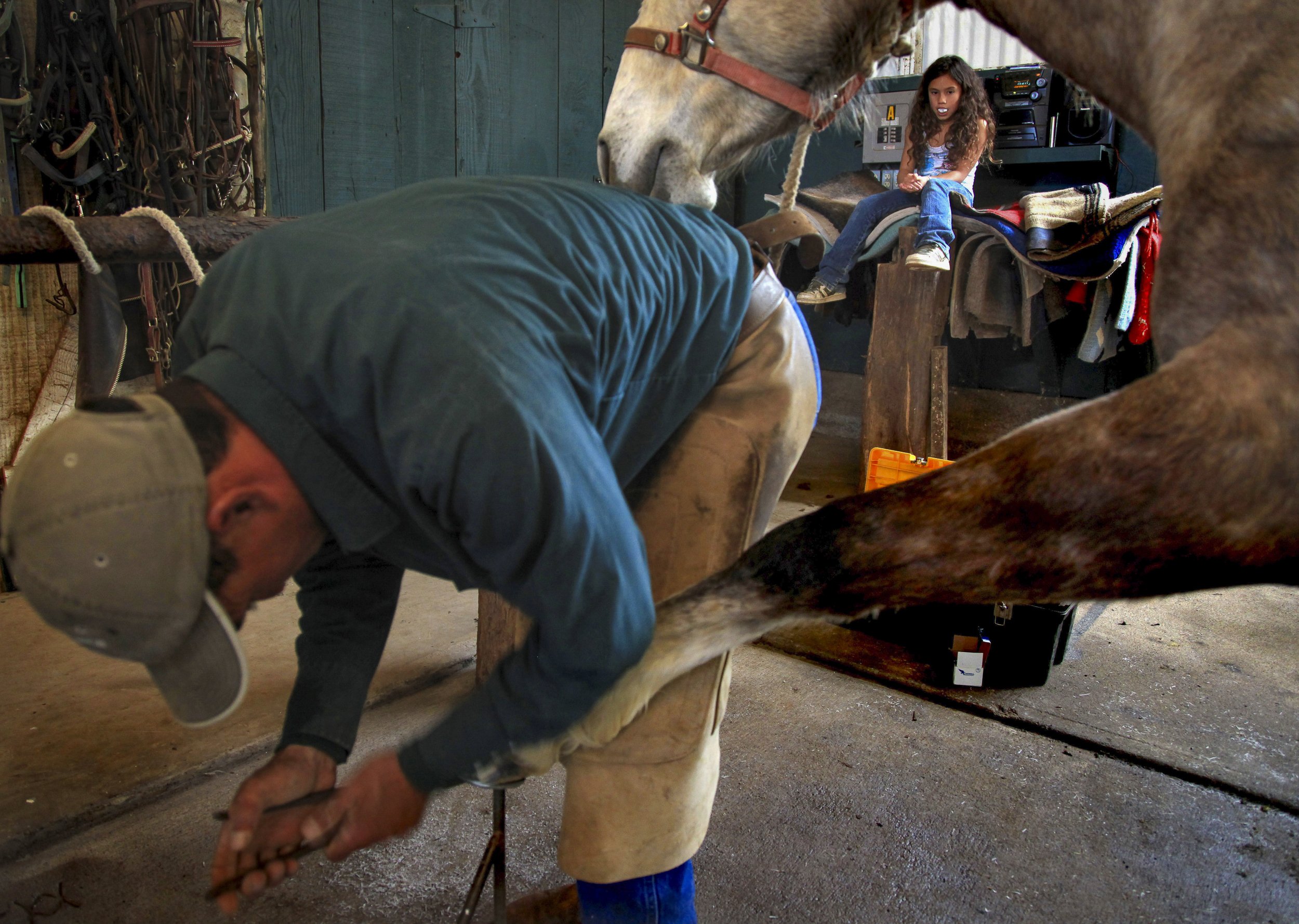
Nine-year-old Nahe Tachera pops gum in the Kahua Ranch barn while her father, Wayne, shoes a horse nearby. Nahe comes from a long line of paniolo—her great-grandfather, grandfather, and father have all worked as cowboys. She and her sister, Kamehana, learned to ride as toddlers and have grown up with the ranch as their playground. “My dad’s work is great,” Nahe says. “When he goes to work, we can play around the ranch and he doesn’t have to worry about us—there are so many people to watch us.”
-
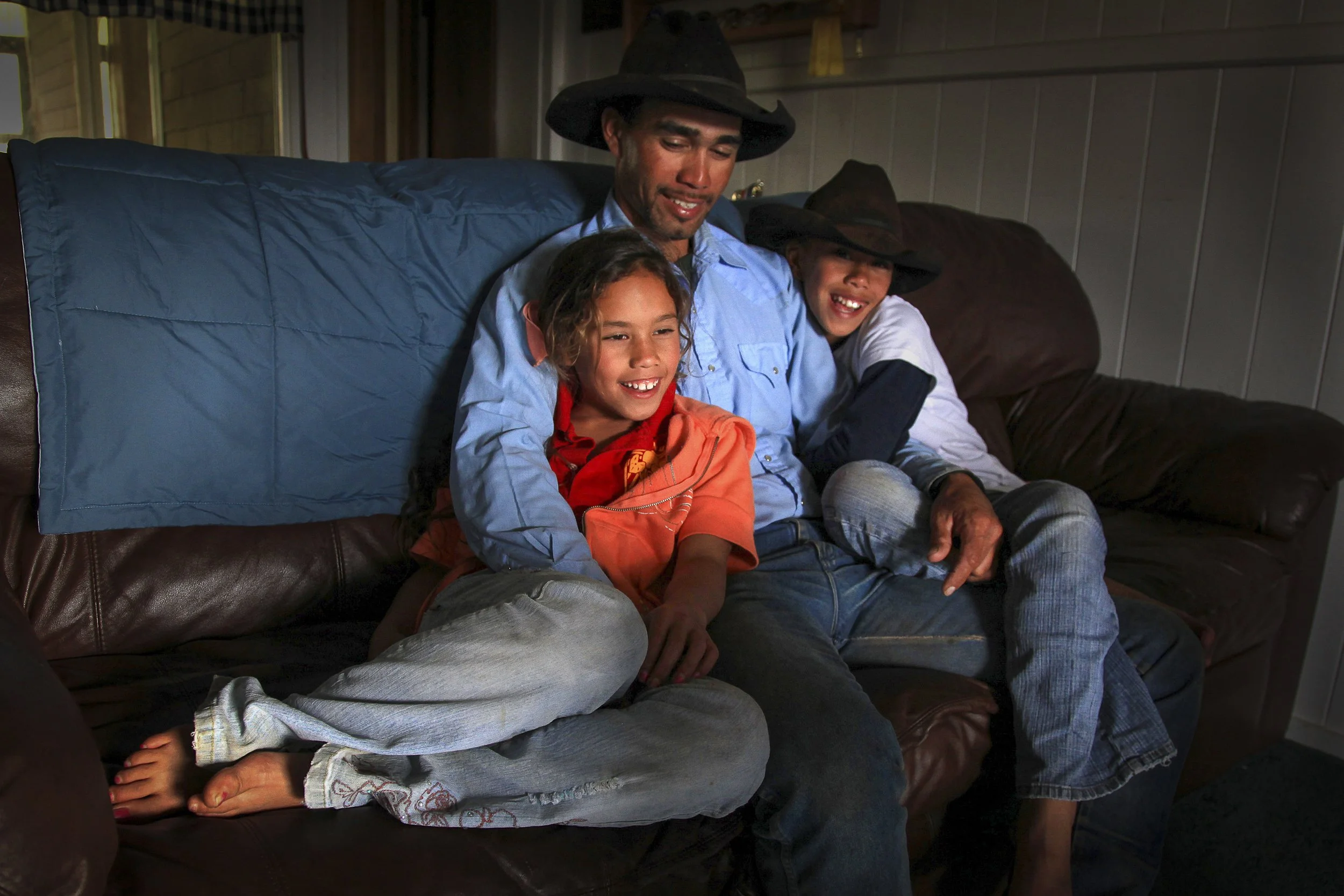
Wayne Tachera and his daughters, Nahe (9) and Kamehana (11), are photographed at their home on Kahua Ranch in North Kohala, Hawai‘i. Their house is part of the ranch’s subsidized “cowboy housing,” included as part of a paniolo’s benefit package. “We get free housing, free electricity, free water—it makes up for cowboy pay, because cowboy pay isn’t much at all,” says Tachera. Deeply close to their father, Nahe and Kamehana learned to ride horses as toddlers and often accompanied him to work when childcare wasn’t available.
-
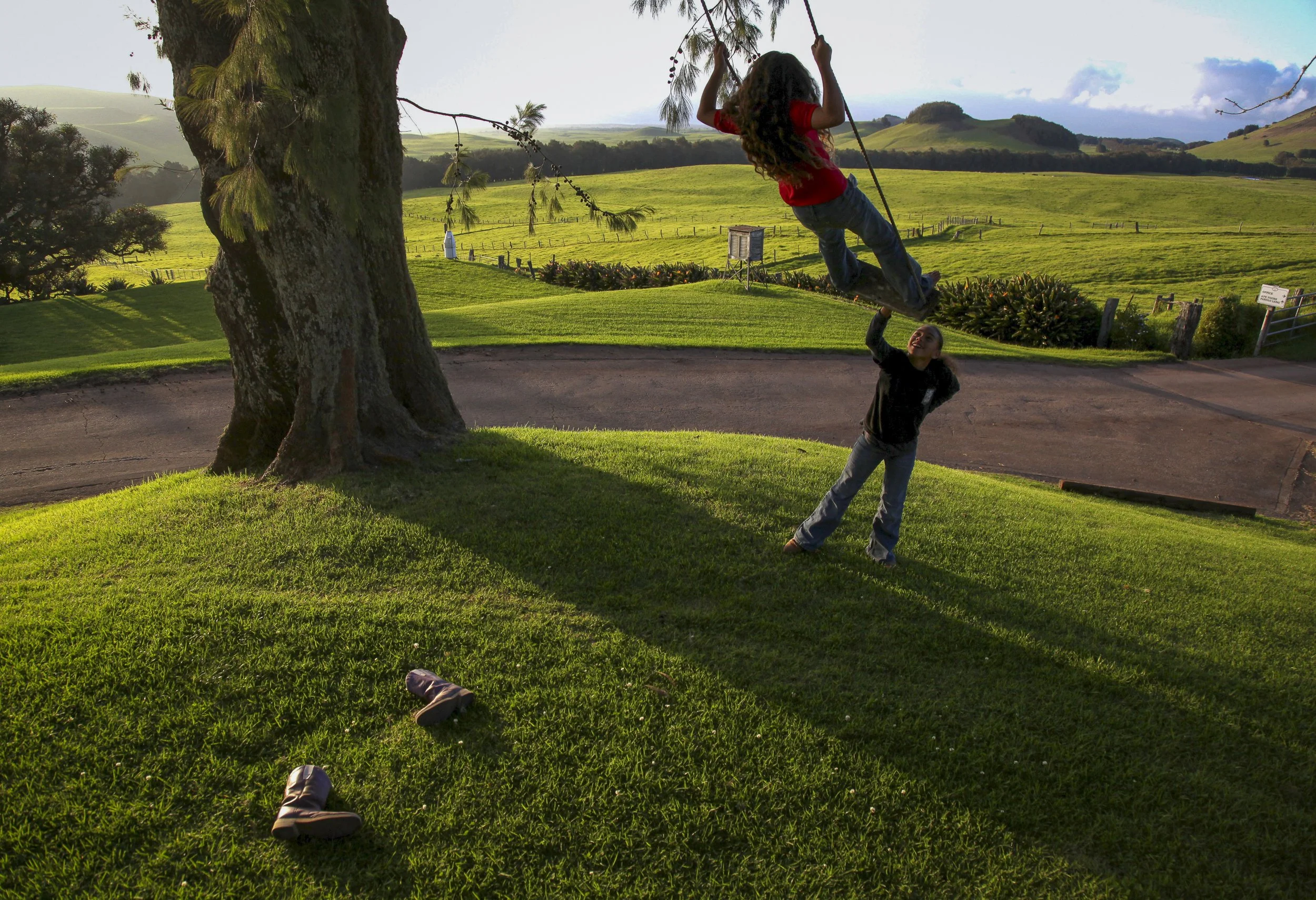
Kamehana Tachera, 11, pushes her sister Nahe, 9, on a swing at Kahua Ranch in North Kohala, Hawai‘i, where their father, Wayne, works as a cowboy. The girls come from a long line of paniolo—their great-grandfather, grandfather, and father have all worked on ranches—and they live in “cowboy housing” provided by the ranch. They learned to ride as toddlers and have grown up with the ranch as their playground. “It’s beautiful up here. Not many children get to see this lifestyle,” says Kamehana.
-
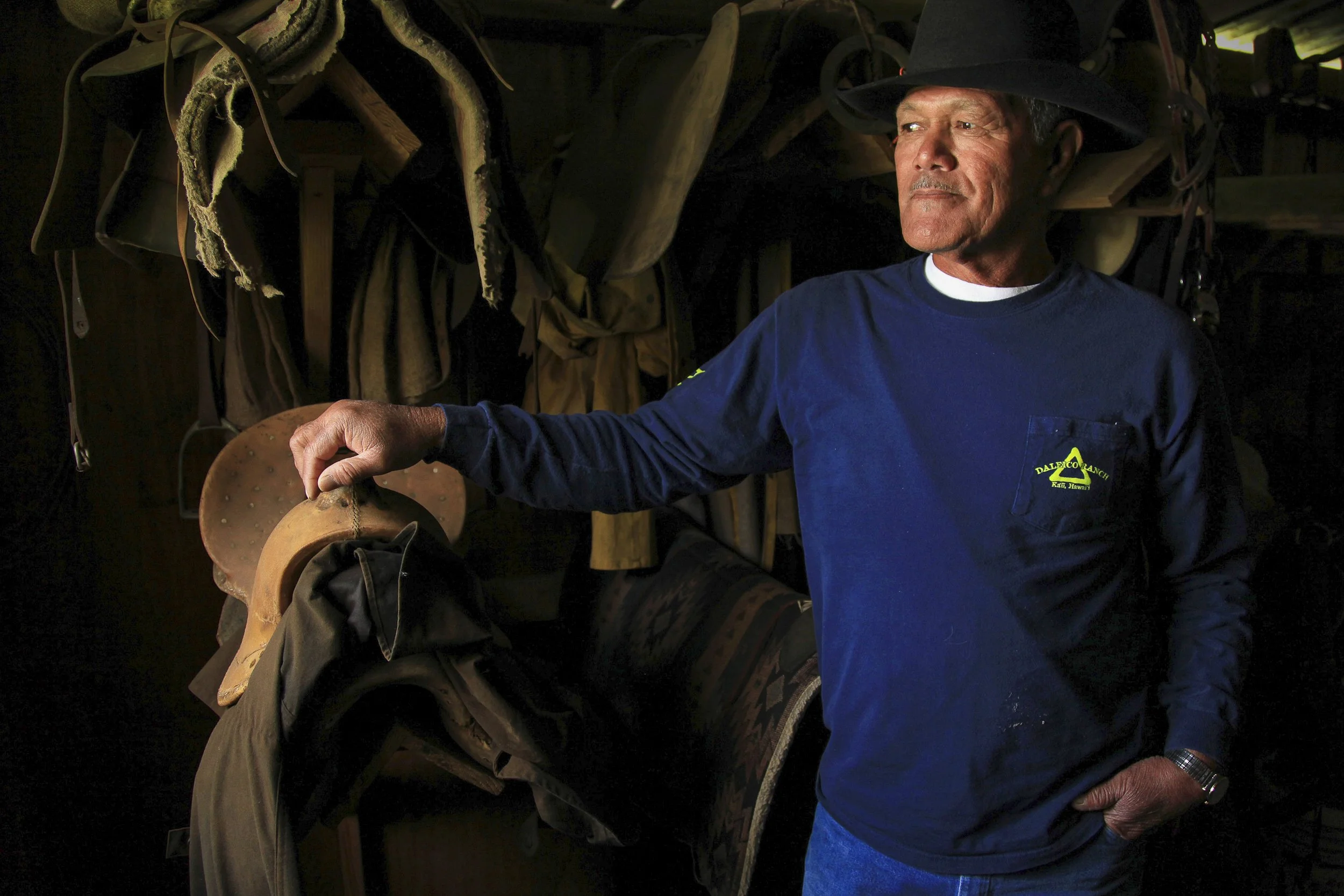
Sonny Keakealani, one of the most respected cowboys in the community and patriarch of the Keakealani family, is photographed in his saddle and tack shed at his house in Waimea, HI. Sonny has mentored many younger cowboys over the years and while now offiially retired from Parker Ranch, still works a few days a week for a ranch and is often called on by old friends and ranch owners to help out with branding, weaning and moving cattle. "We loved the lifestyle. Money didn't mean nothing. We just enjoyed going out. Even if you got wet, you got scolded, that was part of our love, our life!" says Keakealani reflecting back on his years working at Parker Ranch.
-
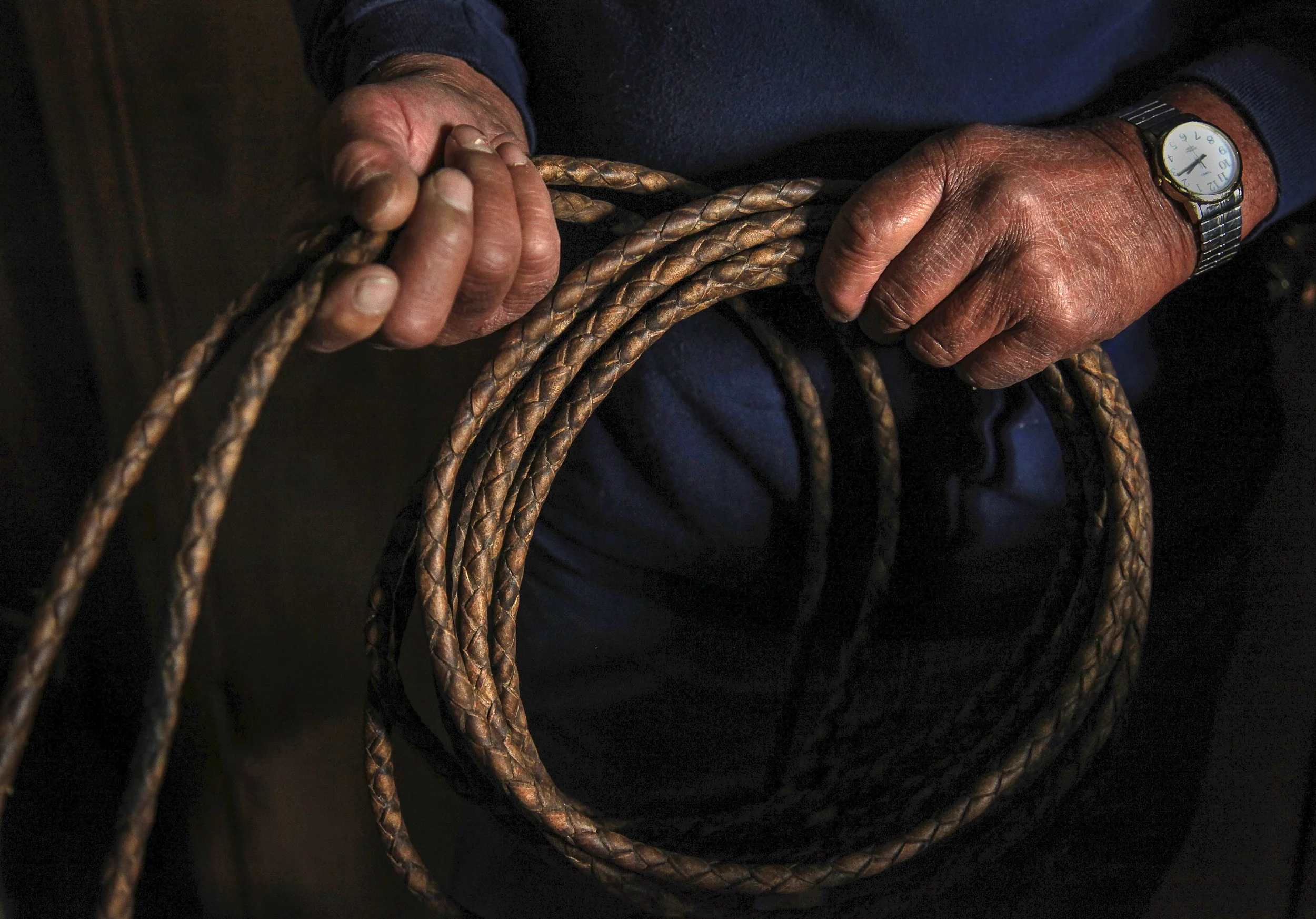
Sonny Keakealani, one of the most respected cowboys in the community and patriarch of the Keakealani family, holds his favorite hand-braided rawhide rope. . Though officially retired from Parker Ranch, Sonny still works a few days a week and is often called on by friends and ranch owners to help with branding, weaning, and moving cattle.
-
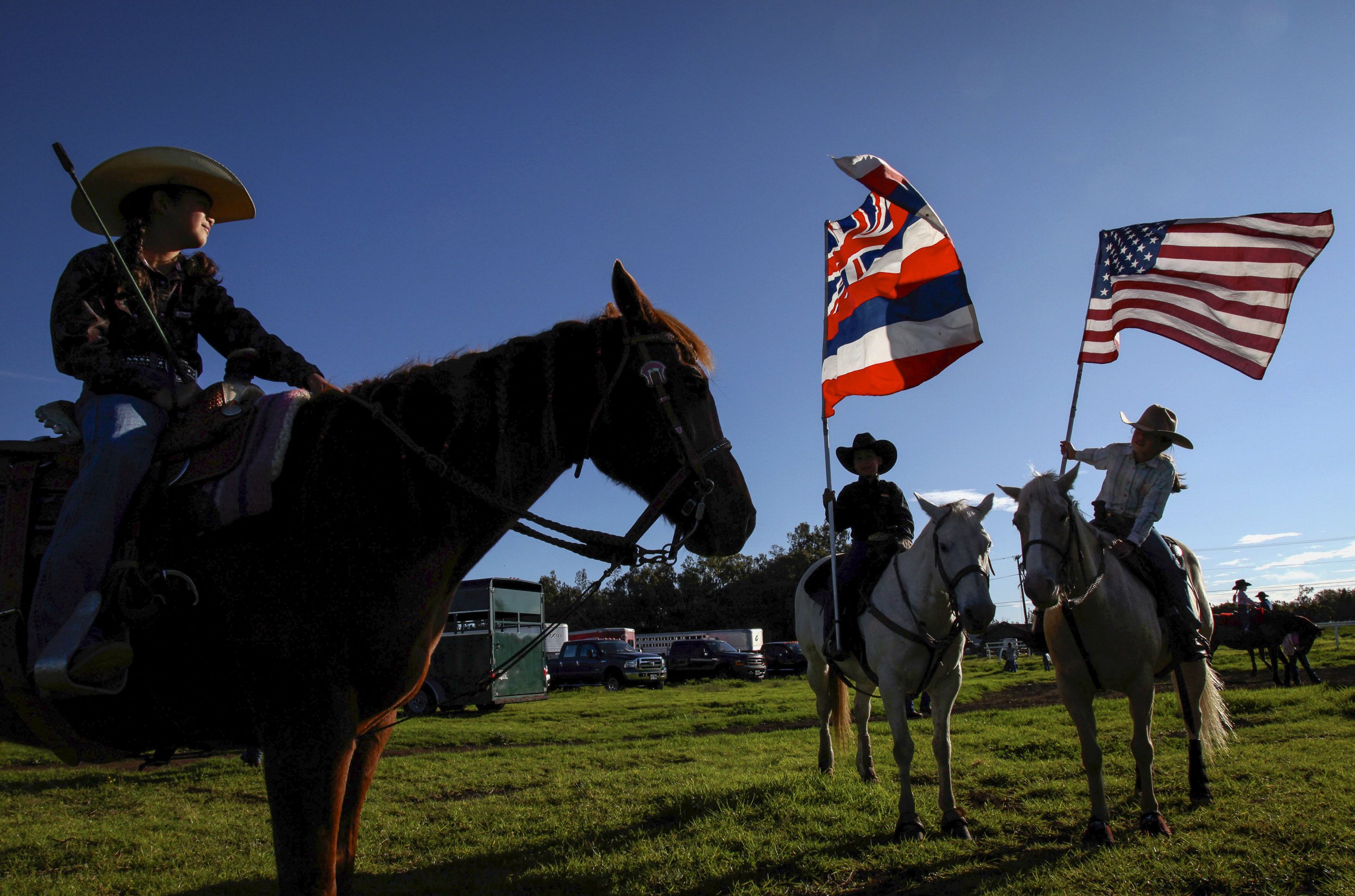
Participants in the Keiki Rodeo (Children’s Rodeo) line up before parading around the Parker Ranch arena at the start of the Big Island Keiki Rodeo Competition in Waimea, Hawai‘i. The Hawaiian flag, at left, is proudly displayed alongside the U.S. flag, reflecting the deep cultural pride woven into paniolo tradition.
-
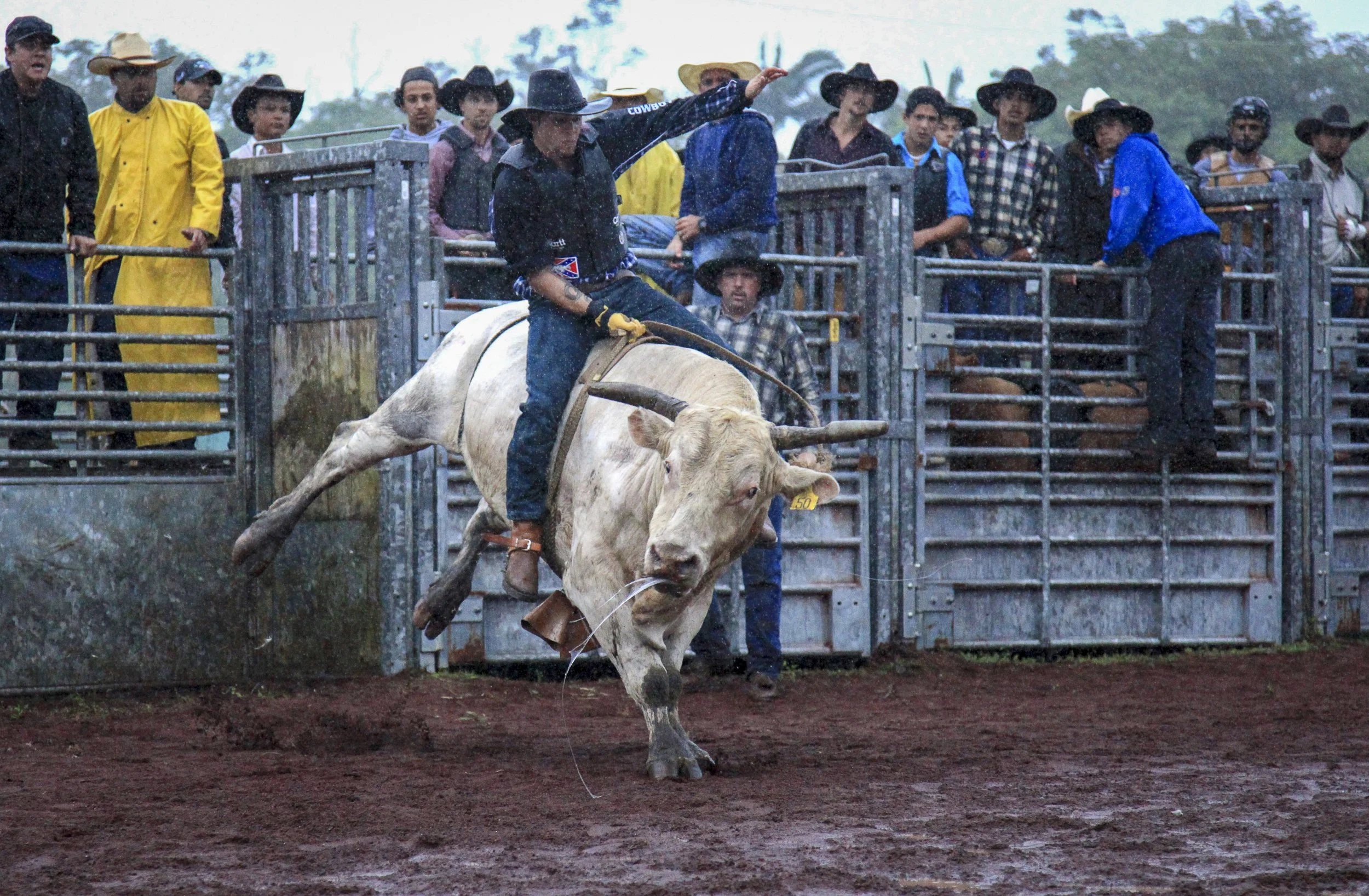
A bull rider competes in the bull riding event at the Pana‘ewa Stampede Rodeo at the Pana‘ewa Equestrian Center in Hilo, Hawai‘i. Rodeos have long been a cornerstone of Hawaiian cowboy culture, offering a way for paniolo to come together outside of work to compete, celebrate, and bond. “There were Japanese cowboys, Filipino cowboys, Hawaiian cowboys, Portuguese cowboys, Chinese cowboys… We all ate together, played together, rode horses together, rodeoed together. It was all family,” recalls Sonny Keakealani of his younger years in the paniolo community.
-
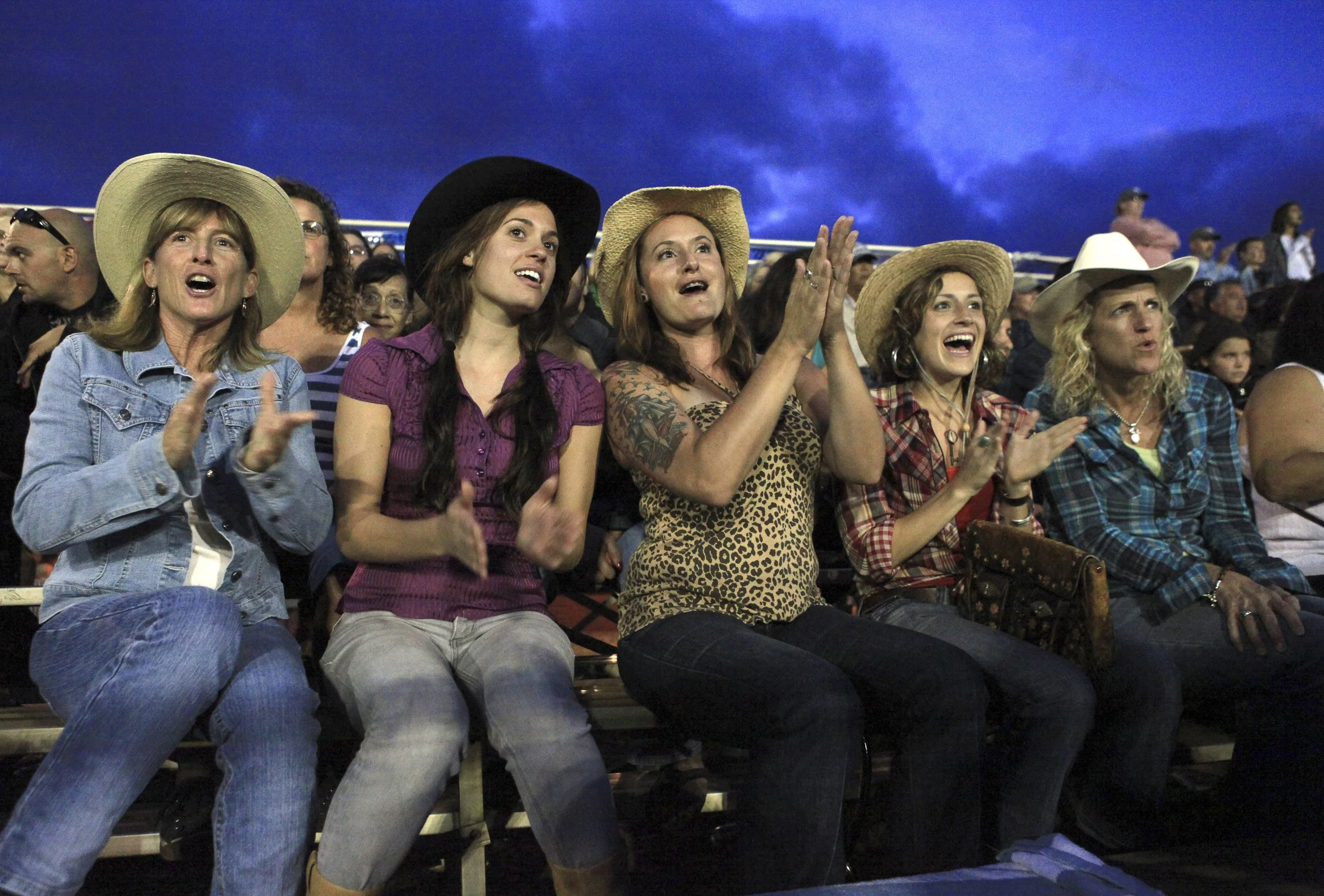
Rodeo fans Hannah Robertson, Briana Scott, Leah Robertson, Mika Boday, and Patty Boday— all from Maui—cheer during the bull riding event at the annual 4th of July Makawao Rodeo, held at the Oskie Rice Arena in Olinda, upcountry Maui. The Makawao Rodeo is the largest in Hawaii, typically drawing more than 4,000 spectators.
-
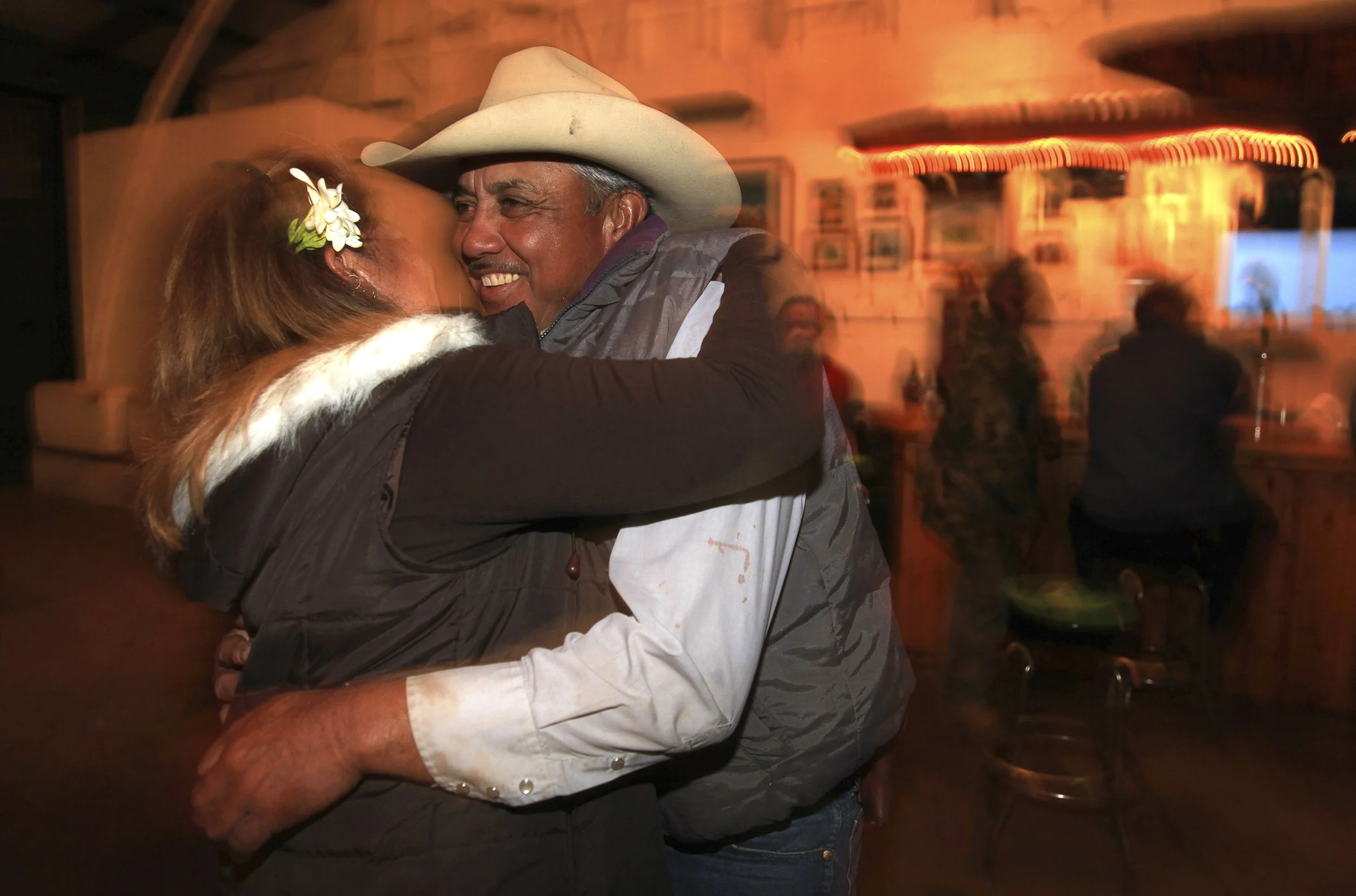
Geoffrey Kainoa and his girlfriend share a dance in the Kahua Ranch barn after a branding. Kainoa is a descendant of one of the original vaqueros who came to Hawaii to teach cattle-handling skills to the native Hawaiians, laying the foundation for the paniolo tradition.
-
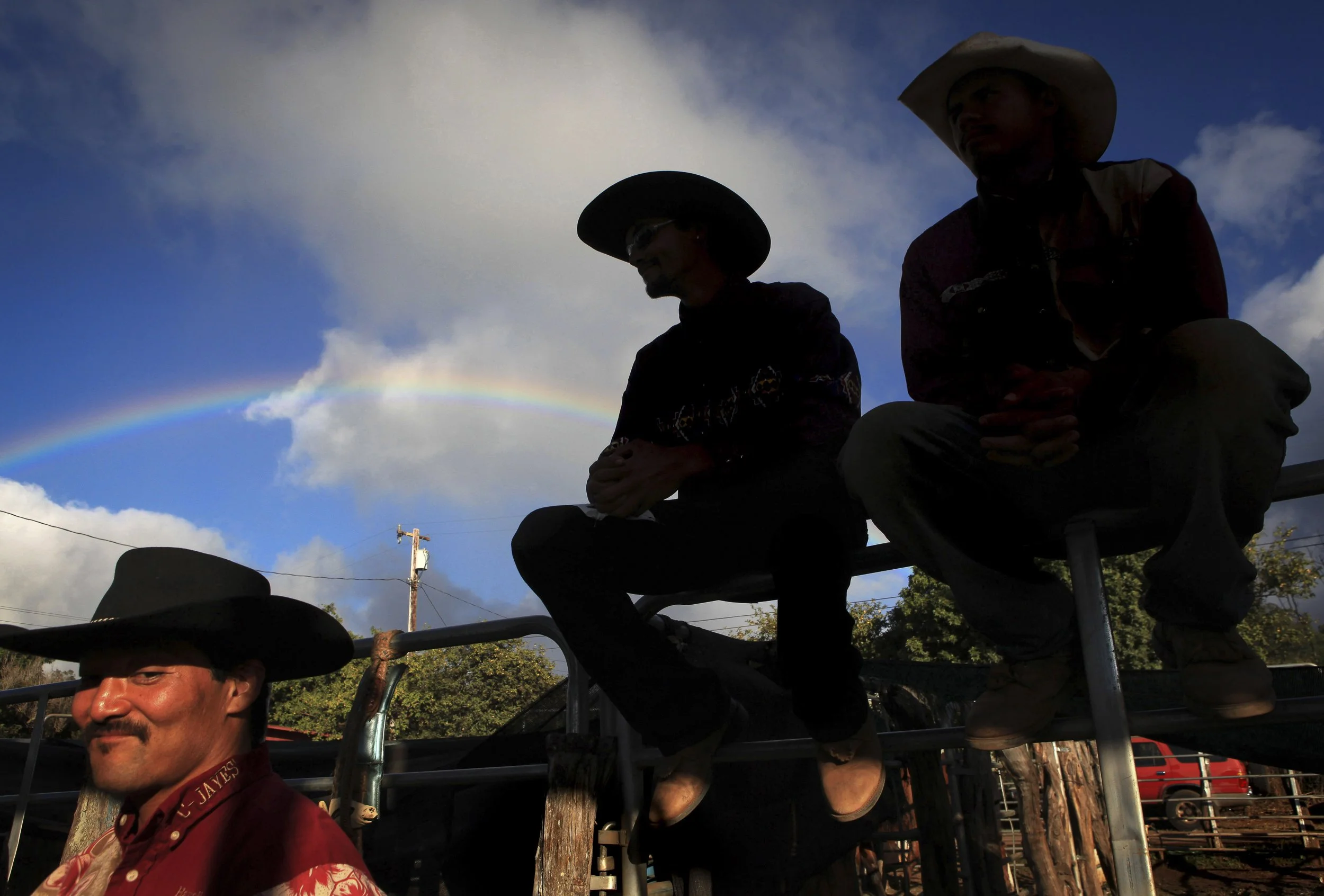
Bull riders wait their turn to compete in the bull riding event at the annual 4th of July Makawao Rodeo, held at the Oskie Rice Arena in Olinda, upcountry Maui. Overhead, a rainbow stretches across the sky—a fleeting moment of calm before the ride.
-
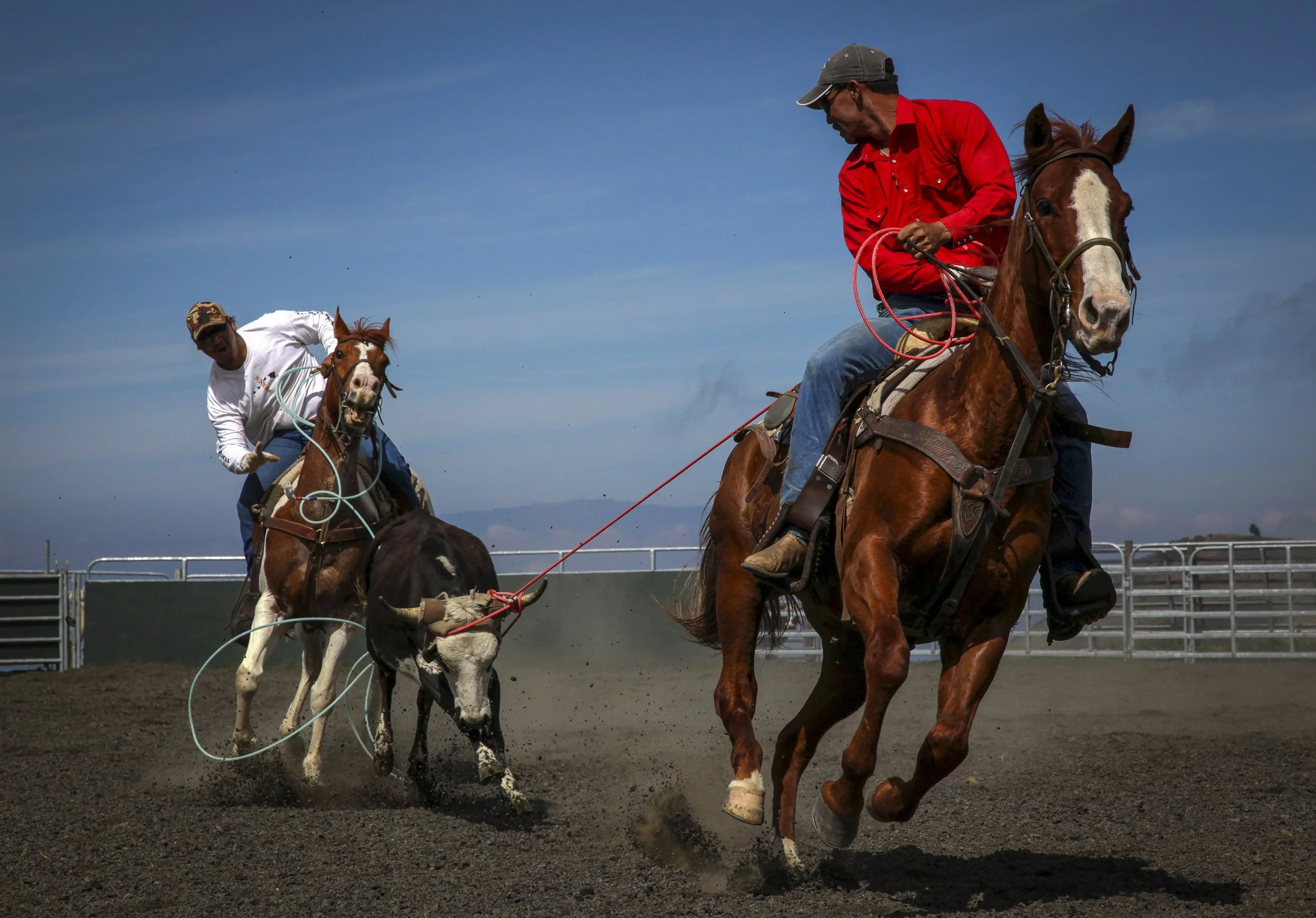
Wayne Tachera (front) and Jesse Ho'opai practice their roping and riding skills during a weekly Sunday gathering with friends and family at Kahua Ranch in North Kohala, Hawai‘i. Despite long workdays during the week, many cowboys come together on Sundays to sharpen their skills and keep traditions alive.
-
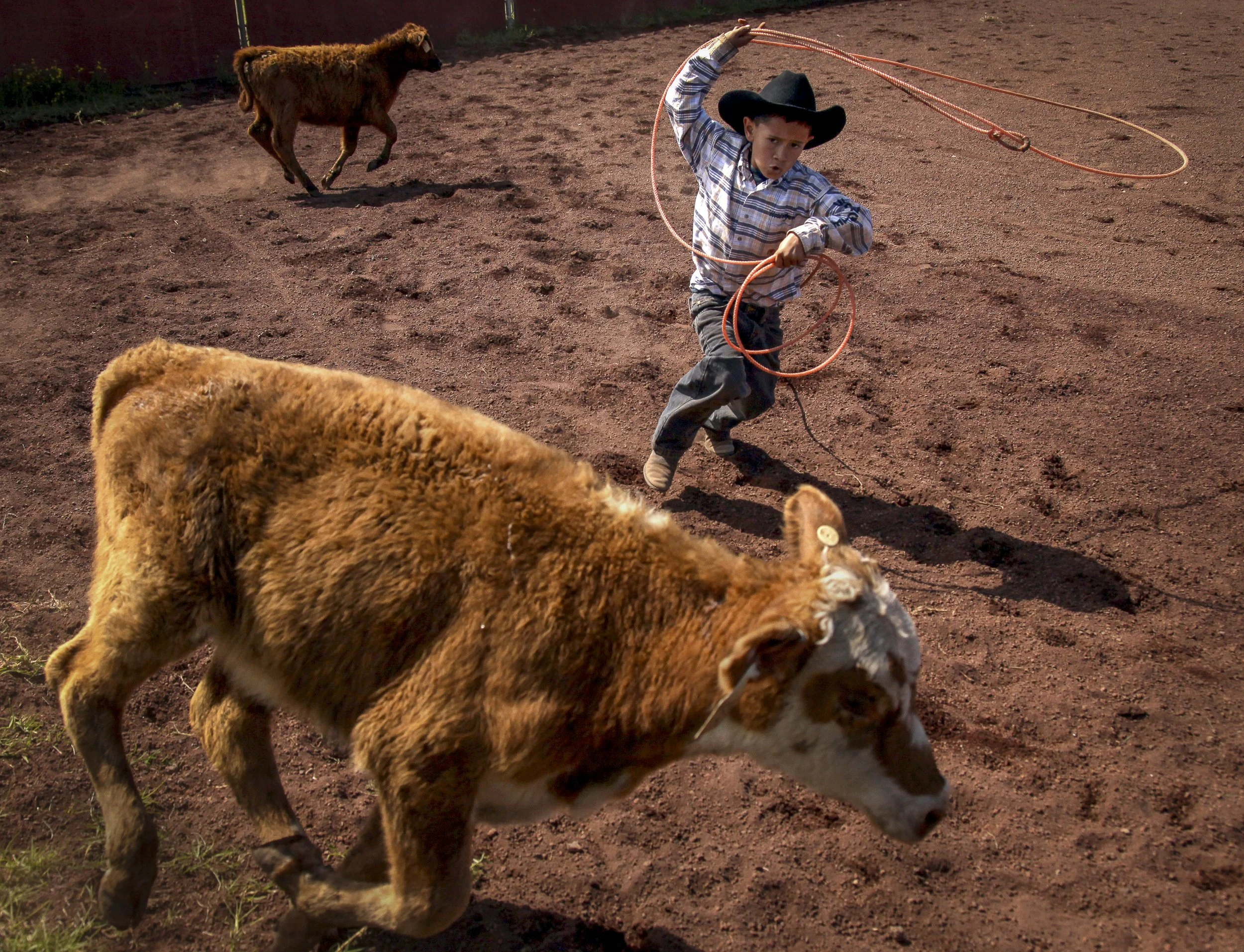
A young participant competes in the calf roping event at the “Keiki Rodeo” (Children’s Rodeo) at Parker Ranch Arena in Waimea, Hawai‘i. Many of the cowboys’ children grow up roping and riding from an early age. “Kamehana was one year and one month old when she first rode a horse around the barrels. I had to tie her down with a rope so she wouldn’t fall off,” says Wayne Tachera, recalling his oldest daughter’s first ride.
-
At 85, Jamie Dowsett rides one of his horses near his home in Waimea, Hawai‘i—a life spent in the saddle reflected in every gesture. “I’m 85 years old and I still think that cows and horses are the best things that ever walked on earth,” he says. “I would give anything if I could still be a cowboy… being out there on the land where nobody bothers you, out in the open where it’s quiet… the horses are giving you a wonderful ride in the beautiful countryside… that is a feeling not many people have the opportunity to experience.”
-
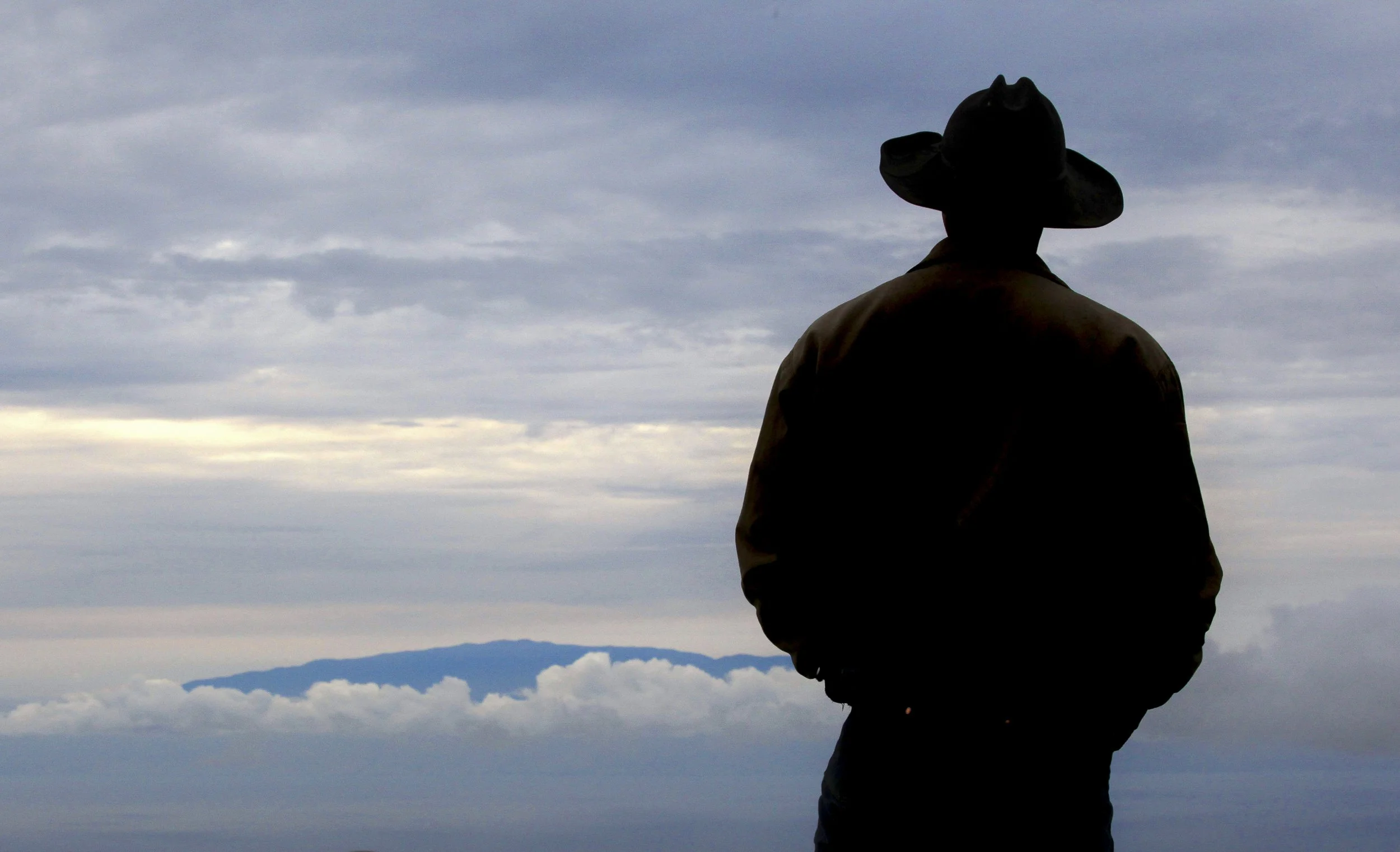
Hawaiian cowboy Wayne Tachera stands at the top of Kahua Ranch, where he works, gazing out over the sweeping North Kohala landscape after a long day’s work. He lives on the ranch with his daughters, Kamehana, 10, and Nahe, 8, in subsidized “cowboy housing” provided as part of the ranch’s benefit package. “We get free housing, free electricity, free water—it makes up for cowboy pay, because cowboy pay is not much at all,” Tachera says.
-
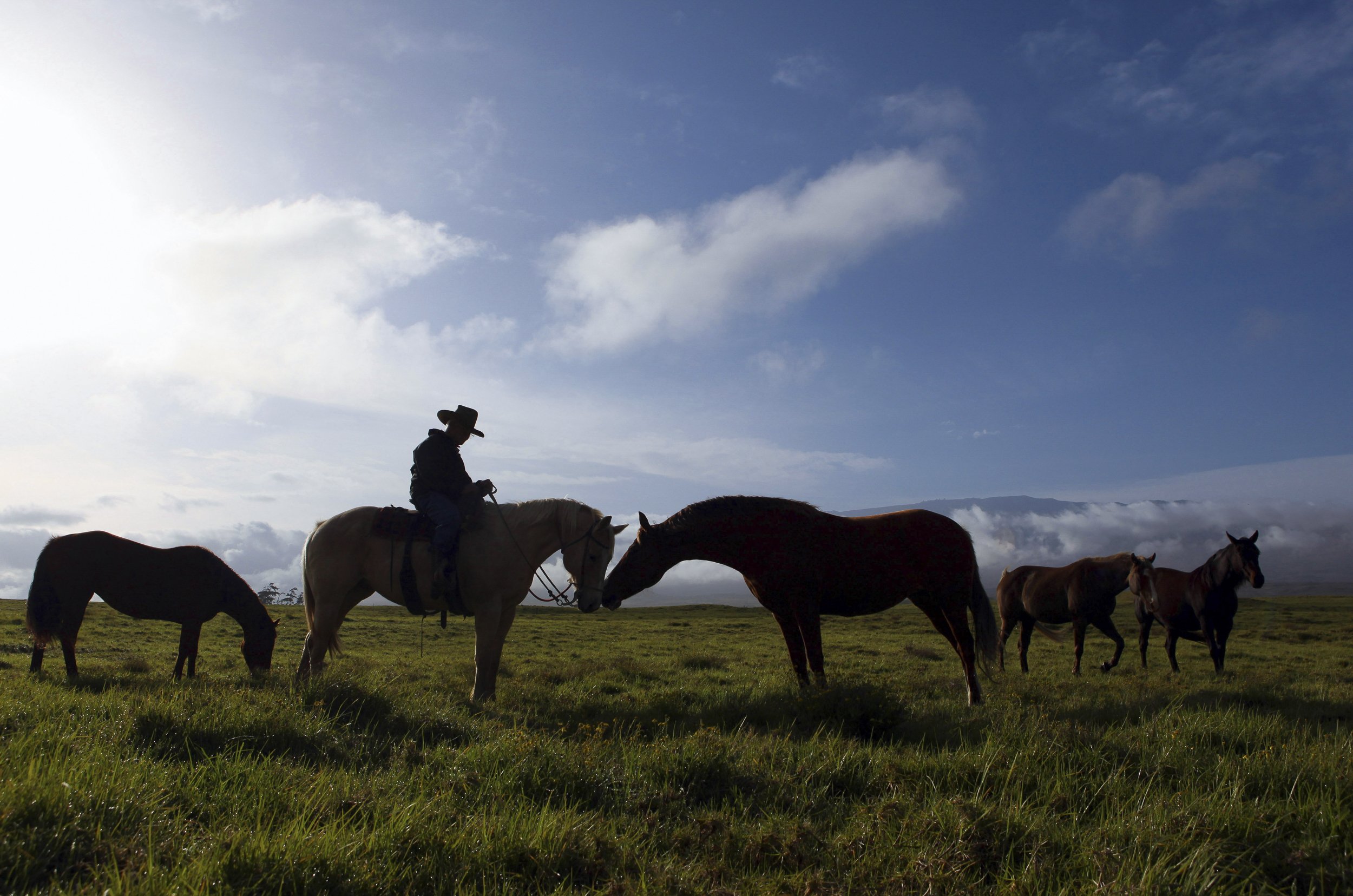
Jamie Dowsett, 85, rides one of his horses near his home in Waimea, Hawai‘i—a lifetime spent in the saddle etched into his posture and presence. “I’m 85 years old and I still think that cows and horses are the best things that ever walked on earth,” he says. “I’d give anything to still be a cowboy… out on the land where nobody bothers you, in the quiet, open country… the horses giving you a wonderful ride through the beautiful landscape. That’s a feeling not many people ever get to experience.” As the viability of ranching declines and technology replaces traditional ways, voices like Dowsett’s echo a fading era—one where the paniolo way of life, once central to Hawai‘i’s identity, grows ever more endangered.