

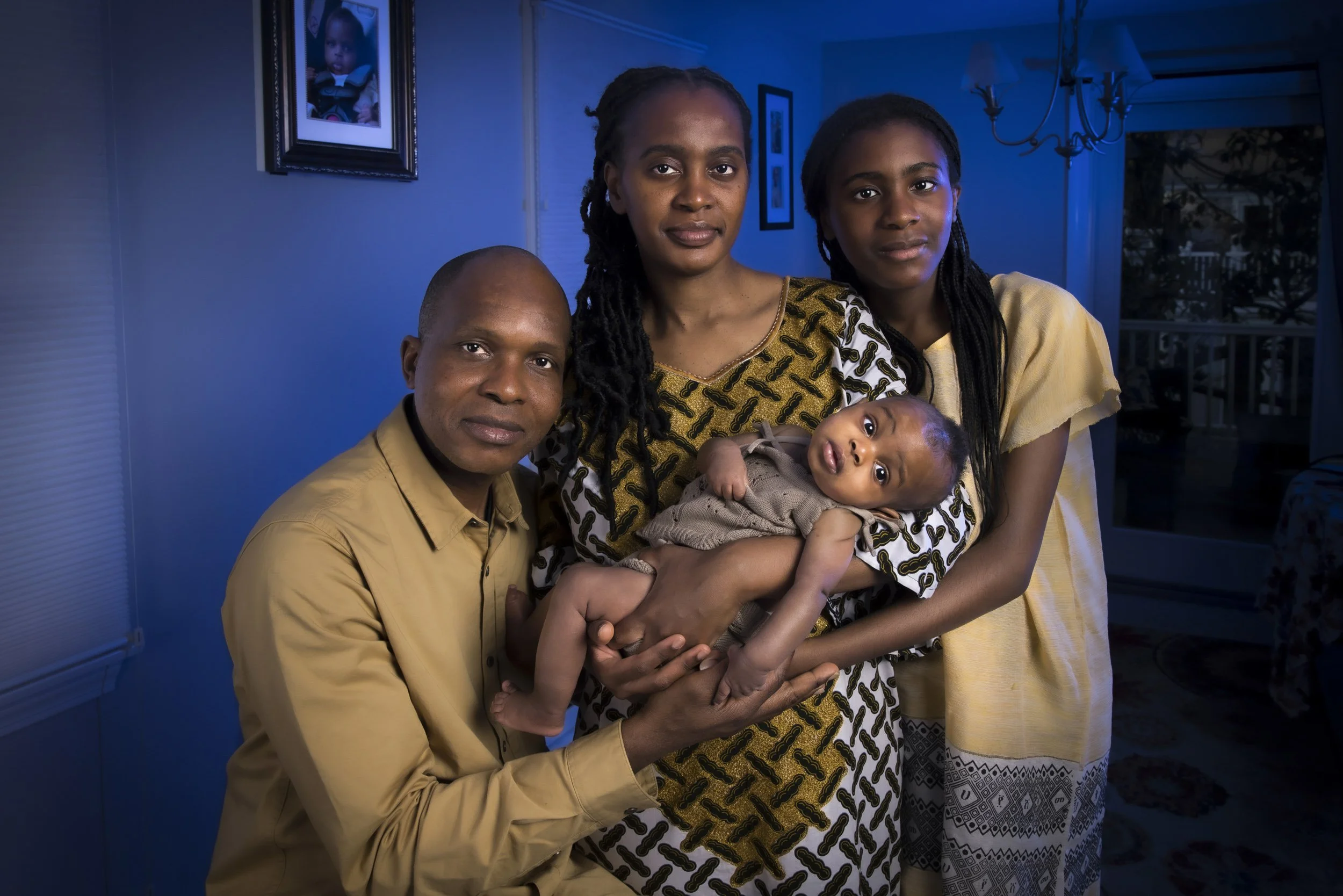
Tony sits with his wife, Joelle, and their daughters, Pearl-Hope and baby Faith, in their Cape Cod home—a place of safety after years of danger. A former UN photojournalist in the Democratic Republic of Congo, Tony fled in 2014 after being kidnapped and tortured for documenting mass killings. He arrived in the U.S. alone to seek asylum, while Joelle remained behind, praying daily for his safety. Years passed before the family was reunited, with their daughter Pearl arriving as an unaccompanied minor at age six.
Life on Cape Cod has been both grounding and uncertain. Tony has worked stocking beverages and now drives for income while slowly returning to freelance photography. Joelle recently began a job as a community resource navigator. Their American-born daughter, Faith, symbolizes the resilience that carried them through years of separation. “I miss photojournalism—that’s who I am,” Tony says. “But Cape Cod feels safe, especially for my family. We named her Faith because we believe there is always a way forward.”
Invisible Threads: Portraits and Stories of our Global Neighbors
By Photographer Julia Cumes in Collaboration with Lipe Borges
Invisible Threads is a series of collaboratively constructed portraits exploring the interior lives of immigrants who have made their homes on Cape Cod.
Often associated with summer nostalgia and retreat, the region is also the site of one of America’s earliest immigration narratives: the Pilgrims first landed in Provincetown in 1620, beginning a long and complicated history of arrival, displacement, and reinvention—one that continues to shape the nation. Today, as immigration once again occupies a charged and highly visible place in public discourse, Cape Cod remains a quieter, less examined setting where the consequences of those debates are lived daily, largely out of view.
Working as a creative team, Lipe Borges and I build each portrait through close collaboration with the person or family, shaping the image together. Through conversation, memory, light, narrative detail, and environment, each work is intentionally constructed to reflect how subjects wish to be seen—holding both personal history and imagined future. The photographs occupy a space between documentary and portraiture, favoring relationship and agency over immediacy, and revealing emotional truths that persist beyond moments of crisis: resilience, longing, humor, tenderness, and joy.
The individuals and families pictured here come from Afghanistan, Haiti, Malaysia, Somalia, Jamaica, the Democratic Republic of Congo, Brazil and beyond. Their stories form a mosaic of paths shaped by separation and rebuilding, by the ache of distance and the creative labor of making home in a new place.
As creators who have also crossed borders and forged lives far from where we began, this work is personal. But above all, Invisible Threads is a tribute to those who opened their homes and histories to us. At a moment when immigrant lives are often reduced to abstraction or urgency, the project invites viewers to slow down and look closely—to consider the dignity, complexity, and continuity that underlie each journey, and to recognize these lives as part of the American story, ongoing and unfinished.
-
Aqela - Afghanistan
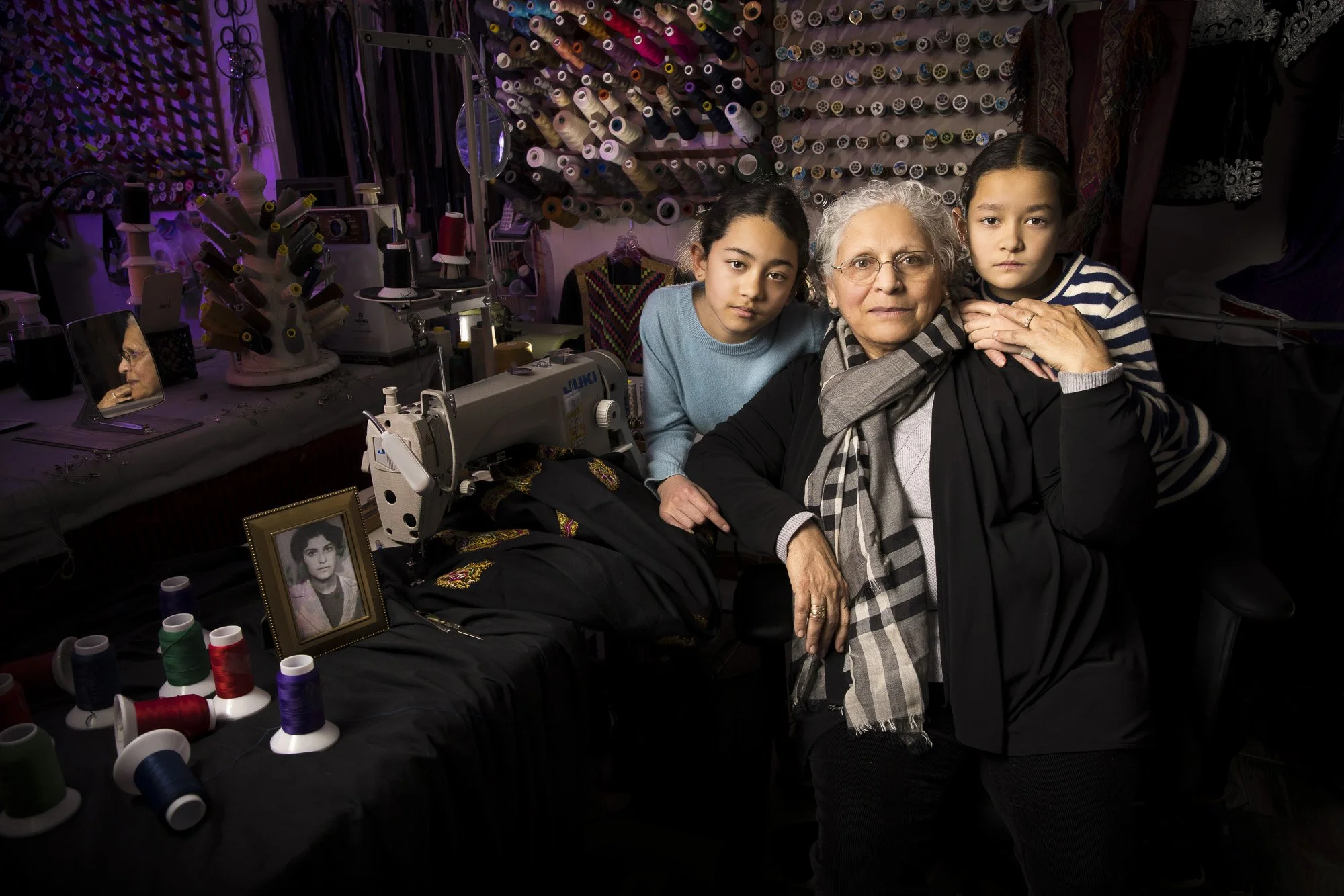
Aqela, 68, sits in her alterations shop, A Perfect Fit, surrounded by her granddaughters, the tools of her trade and a photo of her younger self. A mirror on the left—one she uses to watch TV while she sews—reflects the quiet, industrious world she has built here. Born in Kabul, Afghanistan, she fled in 1984 with her daughters to escape war, enduring a dangerous journey through mountains to reach Pakistan before being sponsored to the U.S. by her husband’s Cape Cod connections. Despite language barriers and isolation, Aqela opened her own shop in 2005. Today, her daughters are a doctor, a lawyer, and an educator. “The best thing about being here is knowing my kids are safe and educated,” she says, reflecting on the sacrifices that made their future possible.
-
Kenard - Jamaica
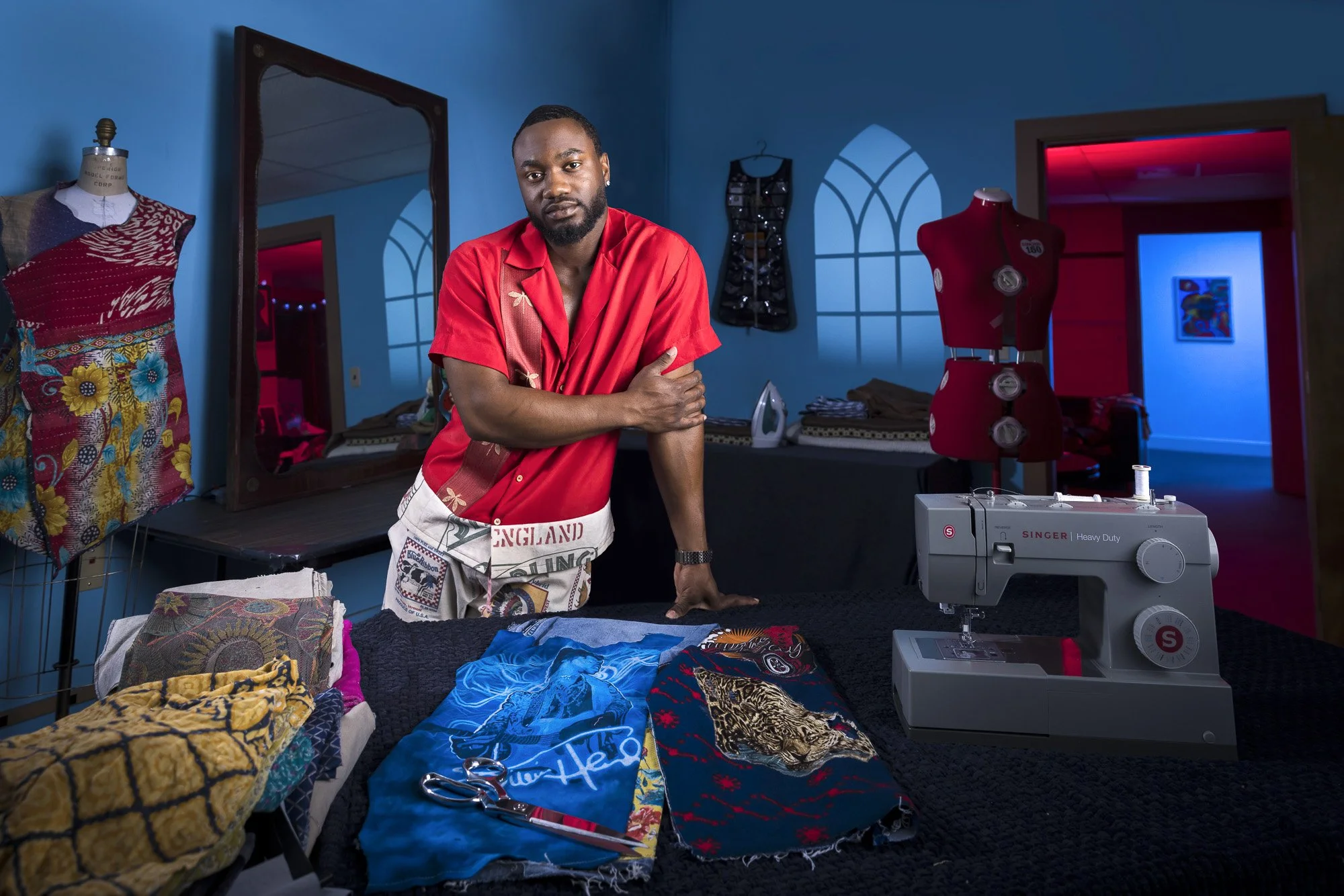
Kenard is photographed in his studio at The Cordial Eye in Hyannis, surrounded by mannequins, fabric, and a sewing machine. He creates bold, colorful fashion using upcycled fabrics. Born in Montego Bay and raised in Georgia, he faced challenges adjusting to life in the U.S. But after moving to Cape Cod, he discovered a passion for tailoring during the pandemic. In 2023, he launched Ken Tailor, and within a year, he showcased his designs at New York Fashion Week. “The opportunities here are endless,” he says, with dreams of building a global fashion brand and inspiring future designers.
-
Wilsie - Haiti
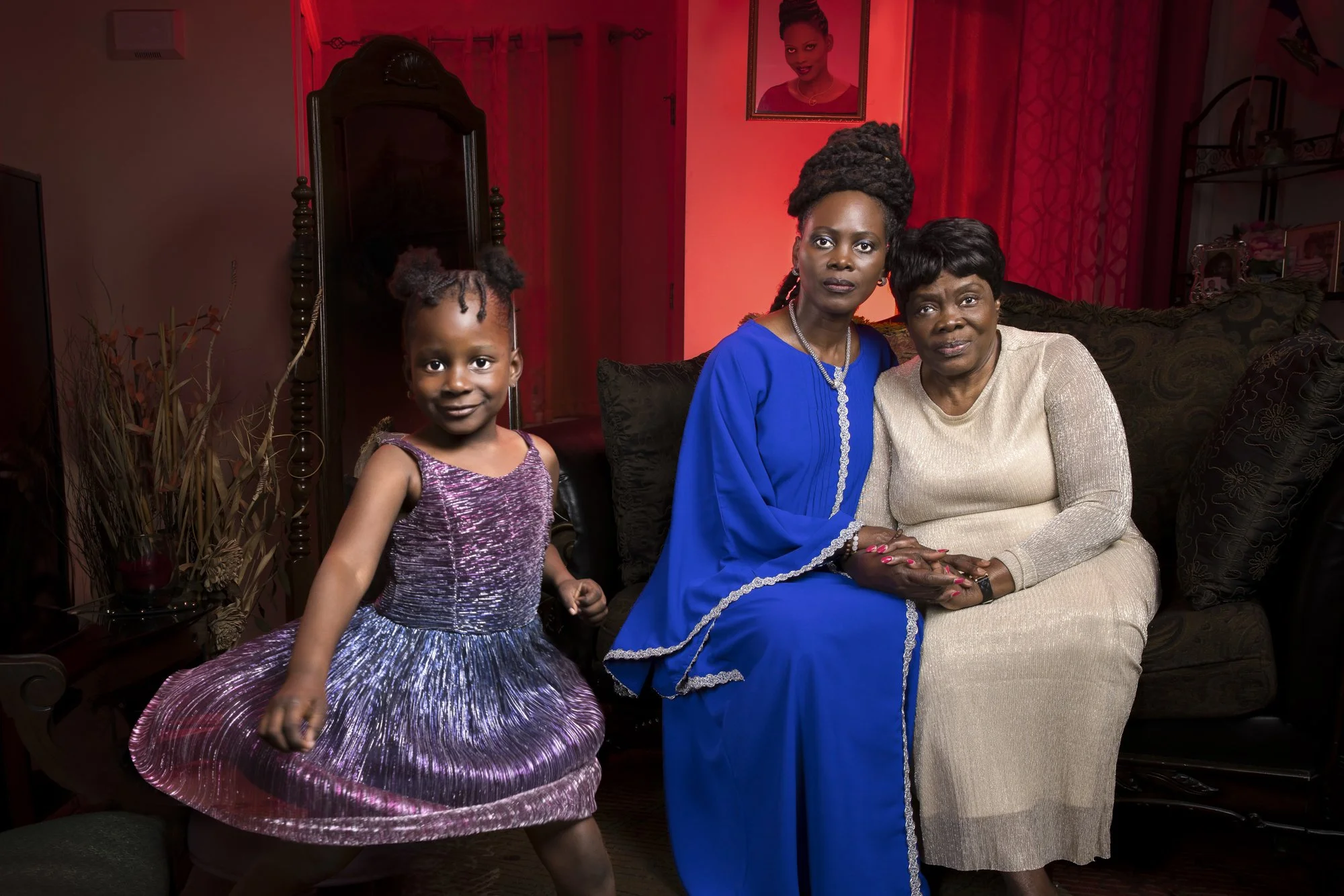
Wilsie sits with her mother, Matilde, in their Cape Cod home while her granddaughter, Janaila, twirls happily in her favorite dress. Originally from Cap-Haitien, Haiti, Wilsie moved to the U.S. to support her family, studying English and training as a nurse’s aide. Despite facing racism, she found peace in Cape Cod’s Haitian community and expanded her efforts to Rwanda, launching a farming project to support families in need. “With the little we have, we are trying to make an impact,” she says, dreaming of opening community centers in both countries.
-
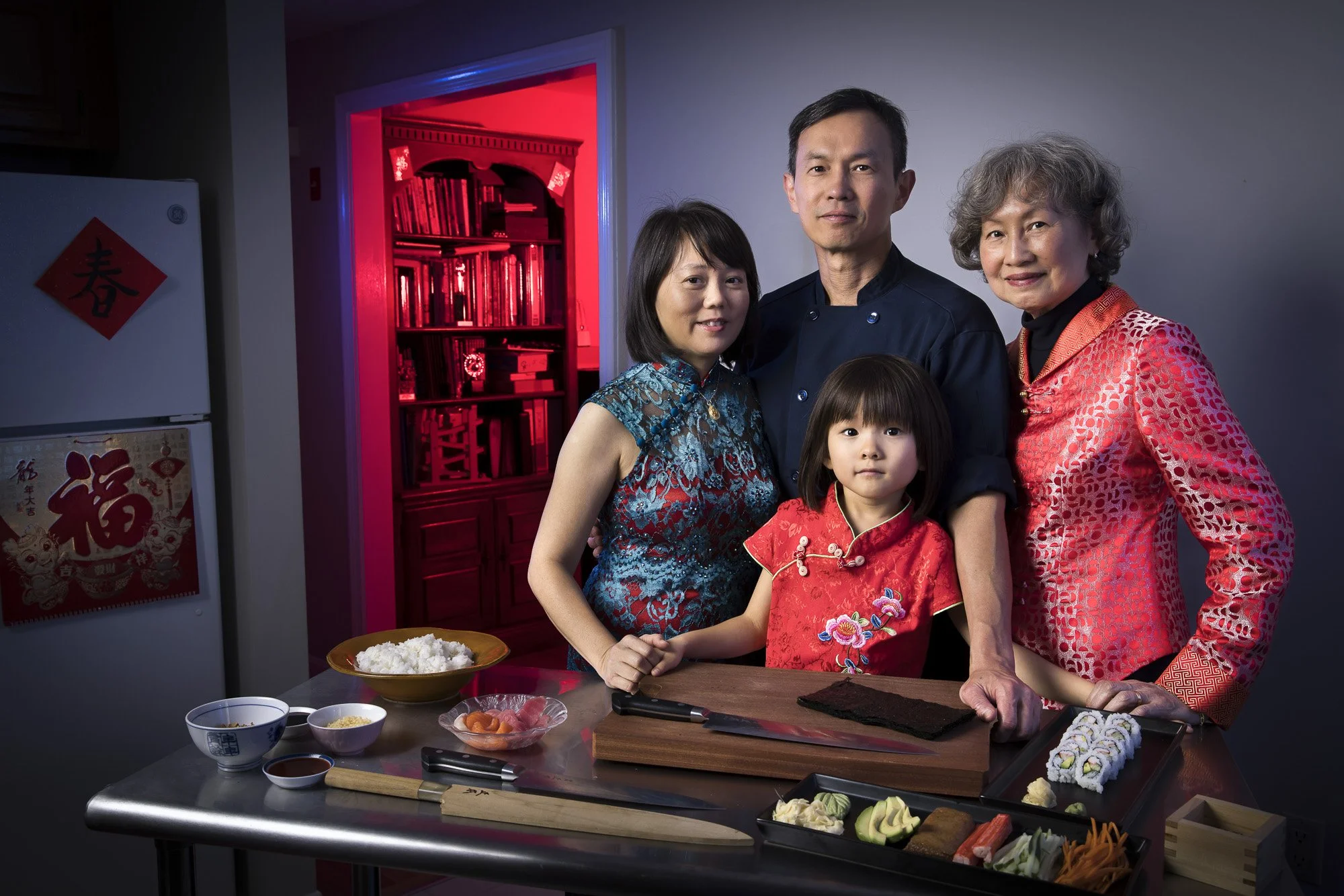
Ling Long - Malaysia
Photographed with his wife, Yin-Cheng, daughter, Chien-Rui, and mother, Ling Long reflects on years of struggle after leaving Malaysia in search of opportunity. After enduring long hours in restaurant kitchens across the United States, he reconnected with his childhood friend Yin-Cheng during a return home for his father’s funeral. They married and moved back to the U.S. hoping to build a more stable future for their daughter. In 2021, the family relocated to Cape Cod, where Ling Long started a sushi business with the help of a friend. With his mother now joining them, the family is together in the United States for the first time. “This place feels like a blessing—full of opportunities,” he says, grateful for their fresh start and the natural beauty of Cape Cod.
-
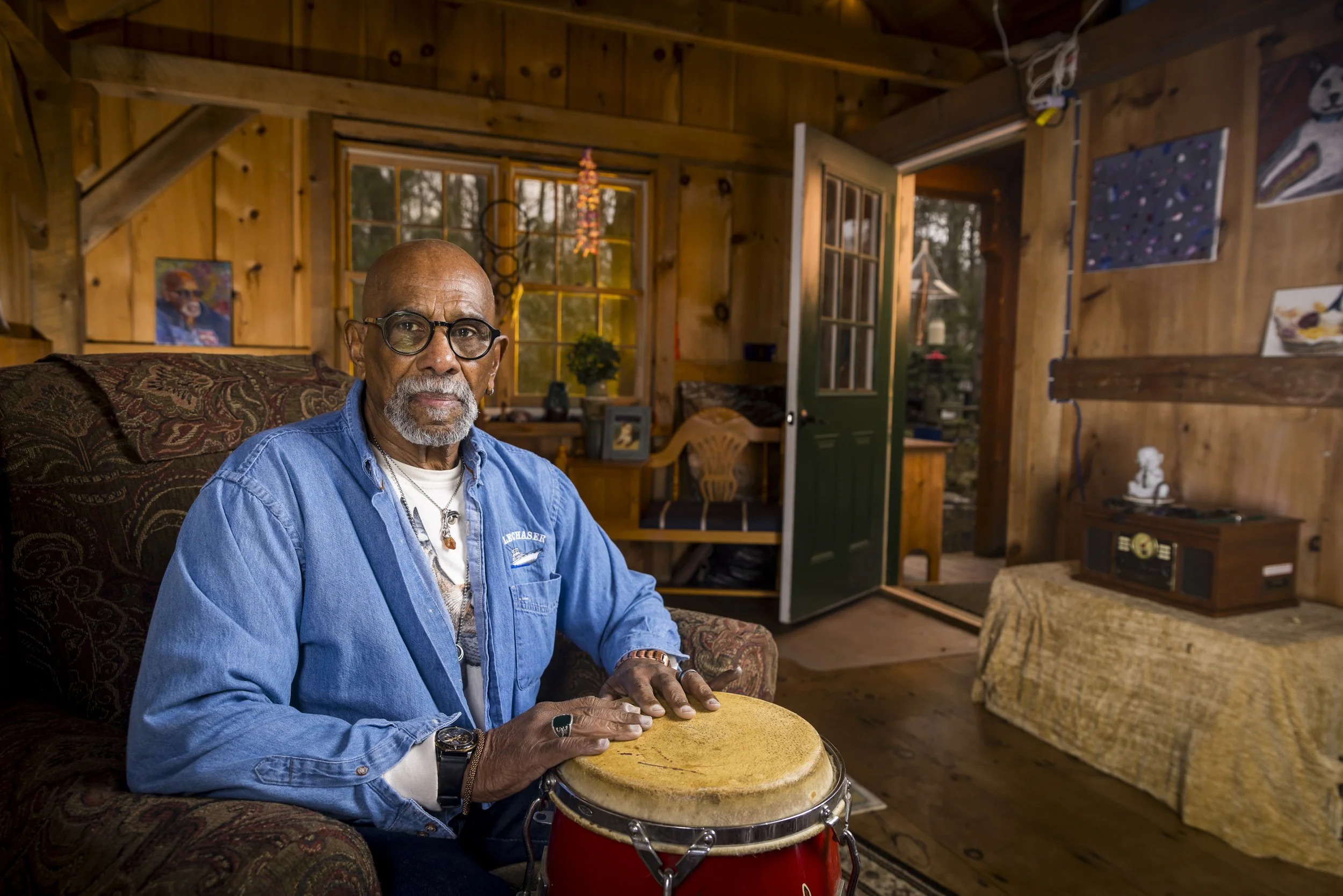
RaShaan - Trinidad and Tobego
In his small cabin in the woods, RaShaan rests his hands on the drum that has followed him through a lifetime of music. Born in Trinidad and Tobago in 1942, he grew up in a strict, British-influenced home before setting out on a path that took him from insurance jobs and chicken farming to singing in hotels, reconnecting with his son in New York, and performing in Boston.
He moved to Cape Cod at 66, where music, caregiving, and love shaped his later years, including a decade spent caring for a partner until her passing. Now in his 80s, he lives simply with a friend who offered him shelter, works as a caseworker for people with disabilities, and lives by four principles: love, openness, gratitude, and kindness. “The best thing about America is I get to be who I want to be,” he says. “I just try to be somebody’s angel every day.” -
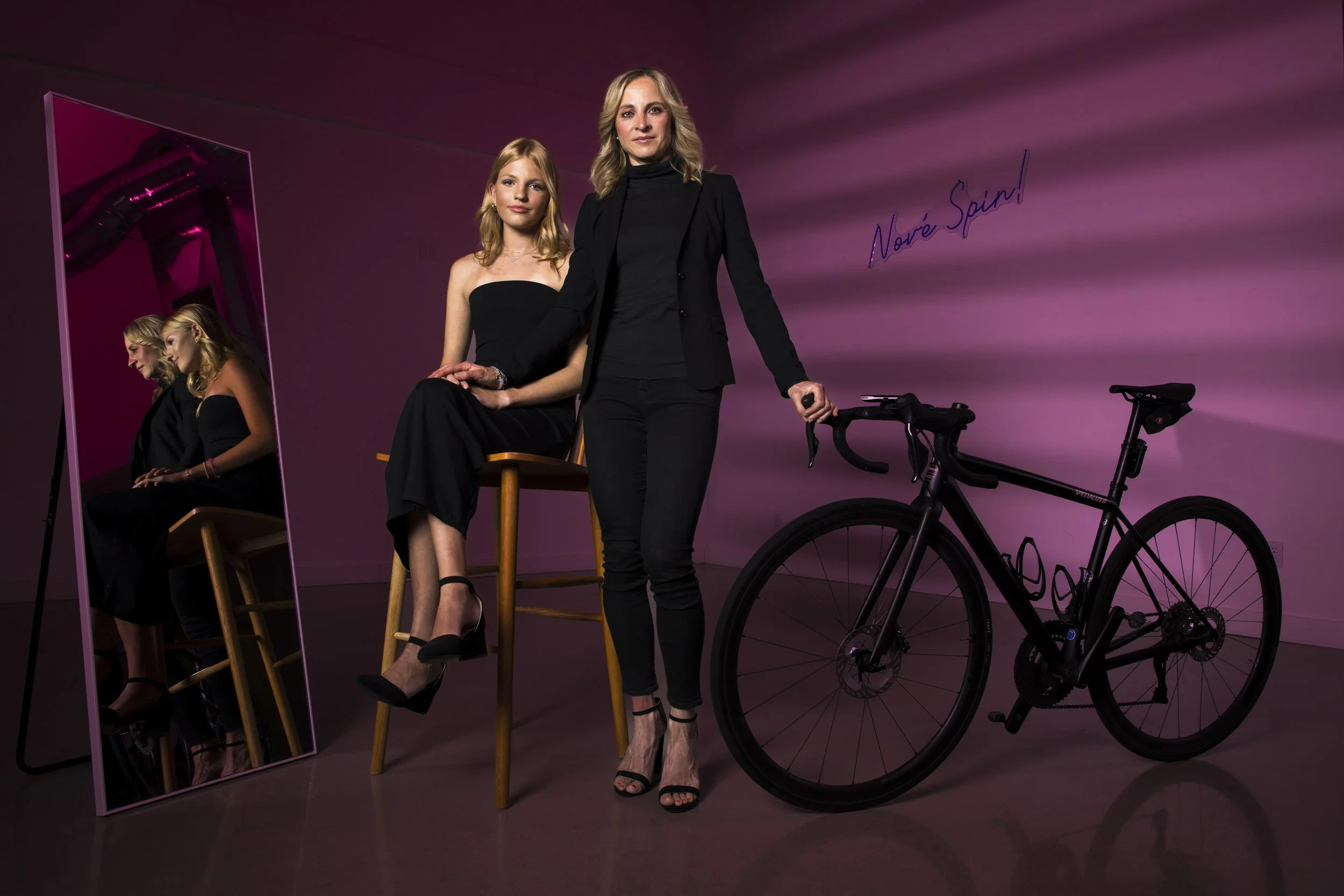
Jitka - Czech Republic
Jitka stands with her daughter Mischa inside Nove Yoga Studio, a reflection of the life she’s built on Cape Cod through resilience and community. Raised in a small Czech village during the last years of communism, she came to the U.S. in 2003 as an au pair with almost no English. Support from a Cape Cod Literacy Council tutor helped her find confidence and a sense of belonging.
She went on to earn her degree at Cape Cod Community College, launch Cleangreen—an eco-focused cleaning company employing more than 20 people—and later open Nove Yoga, a studio centered on inclusivity and wellness. In addition to competetive cycling, Jitka serves on multiple local boards and mentors women through WE CAN and other nonprofits. “The best thing about being here is the support. People show up because they want to see you succeed.” -
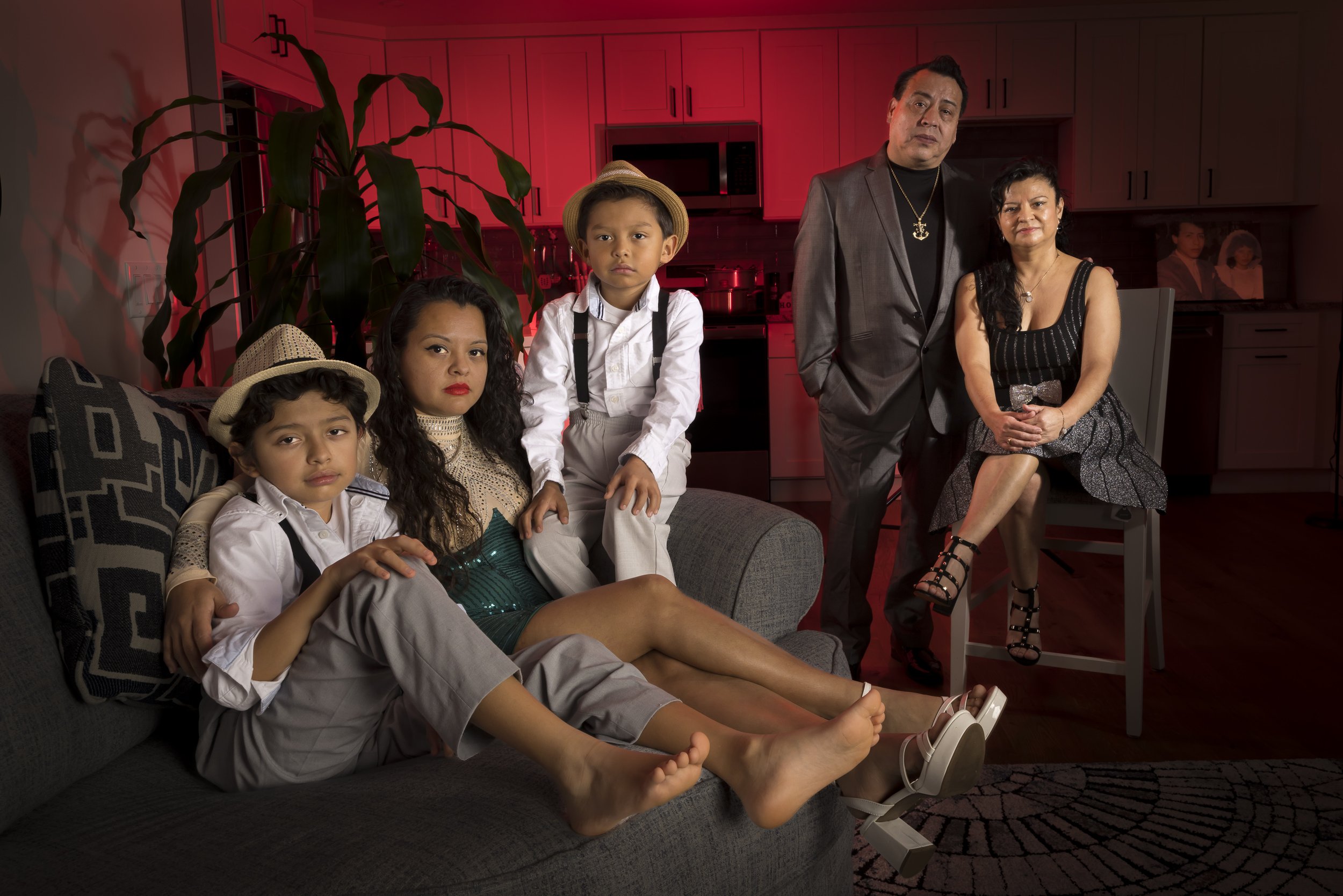
Patricia - Mexico
Patricia is photographed with her two sons, Jullian and Jozen, and her parents, Humberto and Irma, in her parents’ recently purchased home—a milestone shaped by decades of labor, migration, and perseverance. Born in Puebla, Mexico, Patricia grew up as her father moved back and forth to the U.S. for work, her parents doing whatever they could to survive. In 2000, the family settled in Provincetown, where stability came through constant work and shared responsibility.As an adult, Patricia survived an abusive relationship that left her in debt and fear, until she found the strength to leave with the unwavering support of her parents and community. Today, she has full custody of her sons and speaks of Provincetown as a place of safety and generosity. “I’ve been through hell,” she says. “Now I’m not scared of anything.”
-
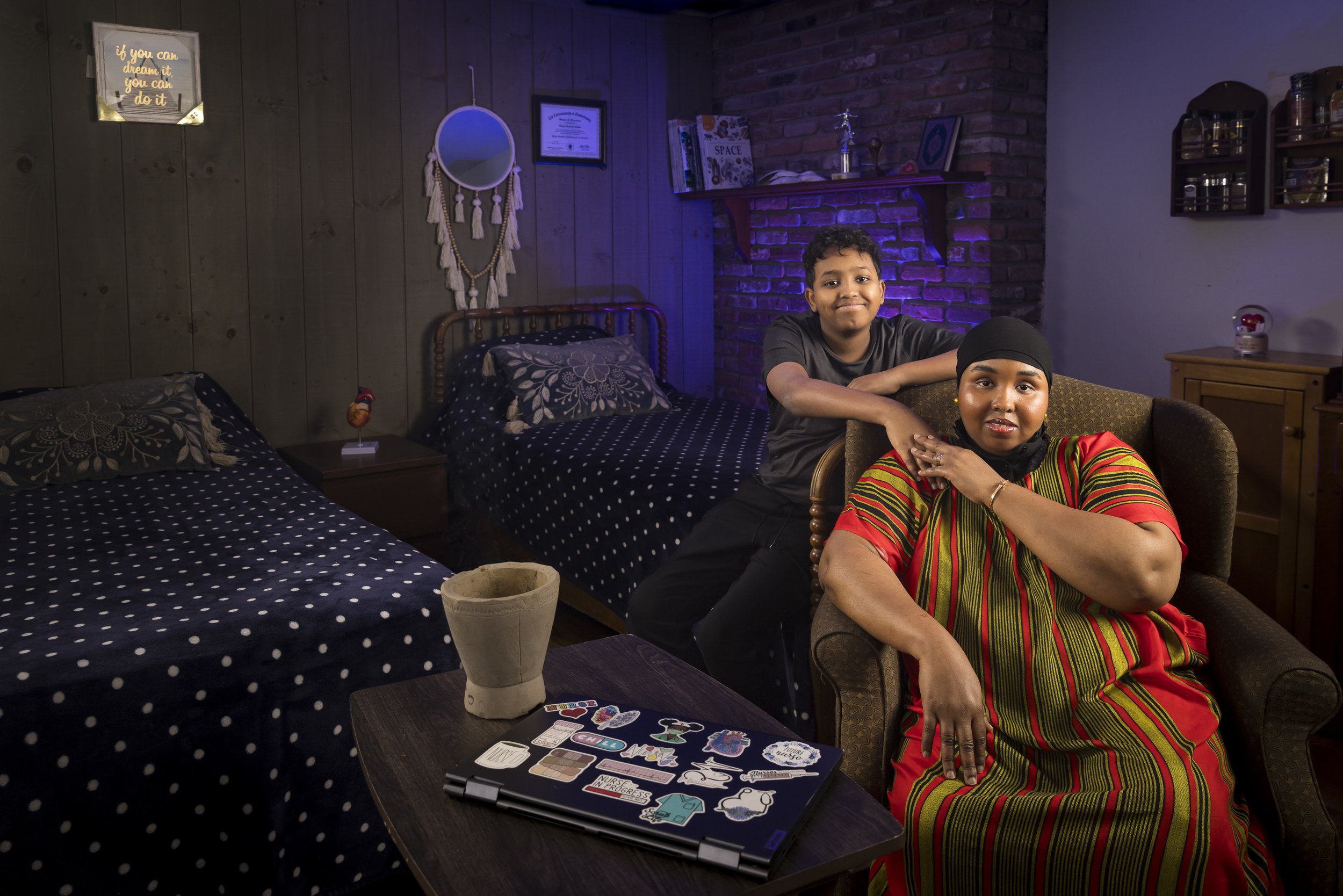
Deeqo - Somalia
Deeqo is photographed with her son, Msoud, in the bedroom they share—a private space shaped by necessity, tenderness, and determination. The image reflects a life rebuilt through displacement and a mother’s belief that education is the surest path forward. Born in Mogadishu, Somalia, Deeqo grew up amid post-civil war unrest and tribal violence. As a member of a minority clan, safety was never guaranteed. When kidnappings became common, especially for young girls, she stopped attending school in sixth grade. “I loved education,” she says, “but it was too dangerous.” In 2021, Deeqo and her son were resettled in Massachusetts through the United Nations refugee program. Within weeks, she enrolled in a GED program; without a car, local women drove her to school every day. She passed with top marks in record time and earned a place in nursing school.
Today, Deeqo is just semesters away from becoming a nurse—a profession she sees not only as a career, but as responsibility. “America gave me a second chance,” she says. “Now I want to give that love back.” -
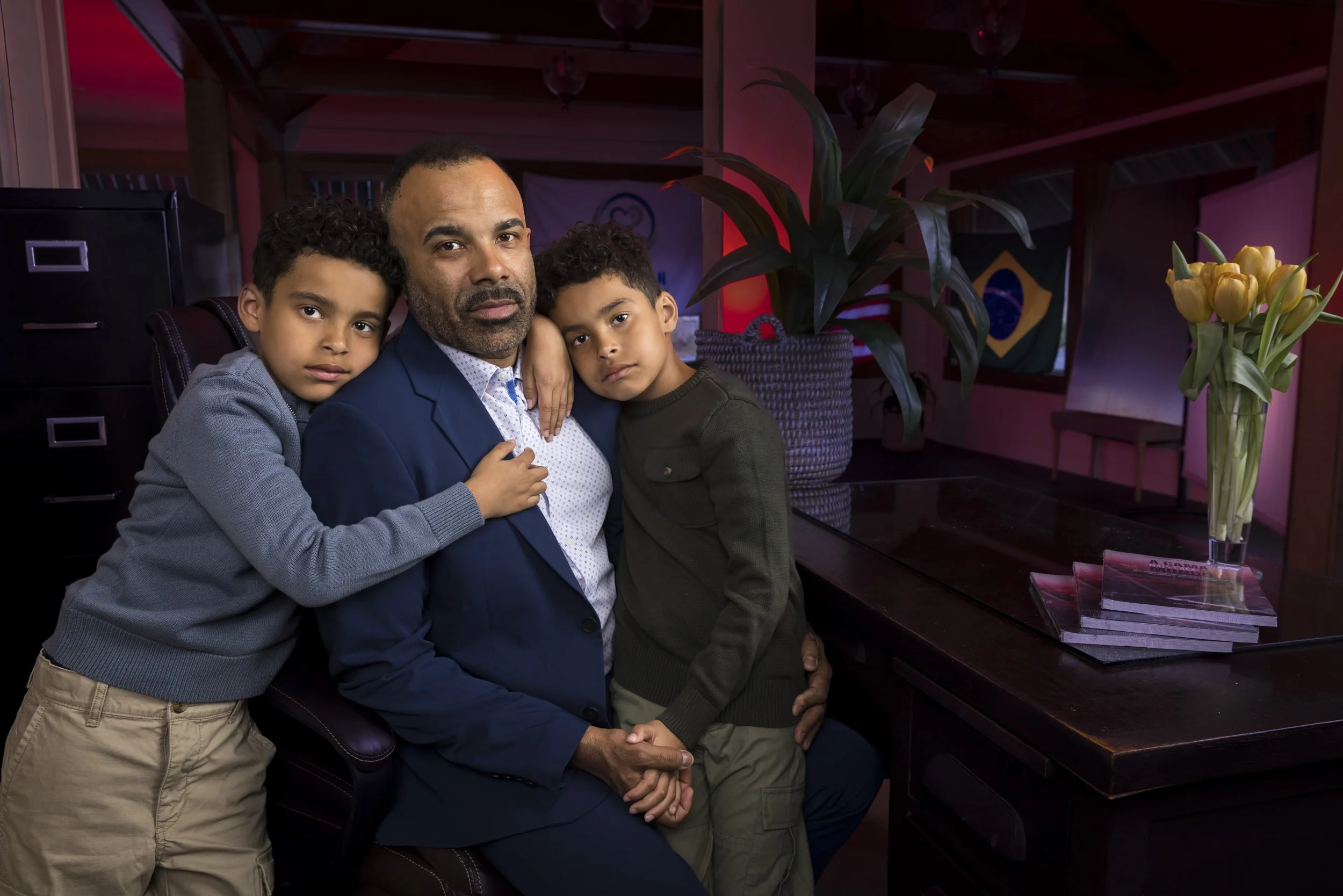
Michael - Brazil
Michael sits with his twin sons, Matthew and Gabriel, at the Brazilian Resource Center—a reminder of how far he’s come since arriving from Rio de Janeiro in 1998. The first in his family to attend college, he left Brazil after a year of law school hoping for a new path in medicine. On Cape Cod, he worked as a busboy, painter, and newspaper delivery driver, sometimes juggling three jobs while studying English at night.
Step by step, Michael built a future through education, earning a bachelor’s and then a master’s degree in psychology, later working at Cape Cod Hospital and Boston Medical Center as a medical interpreter. In 2023, he began leading the Brazilian Resource Center full-time, the nonprofit he founded to help immigrants access healthcare, mental health support, education, and basic necessities. “I know what it’s like to arrive with nothing,” he says. For his sons, he hopes to pass on both resilience and purpose. “I want them to know they can do anything—and that giving back is the most powerful thing we can do.”