

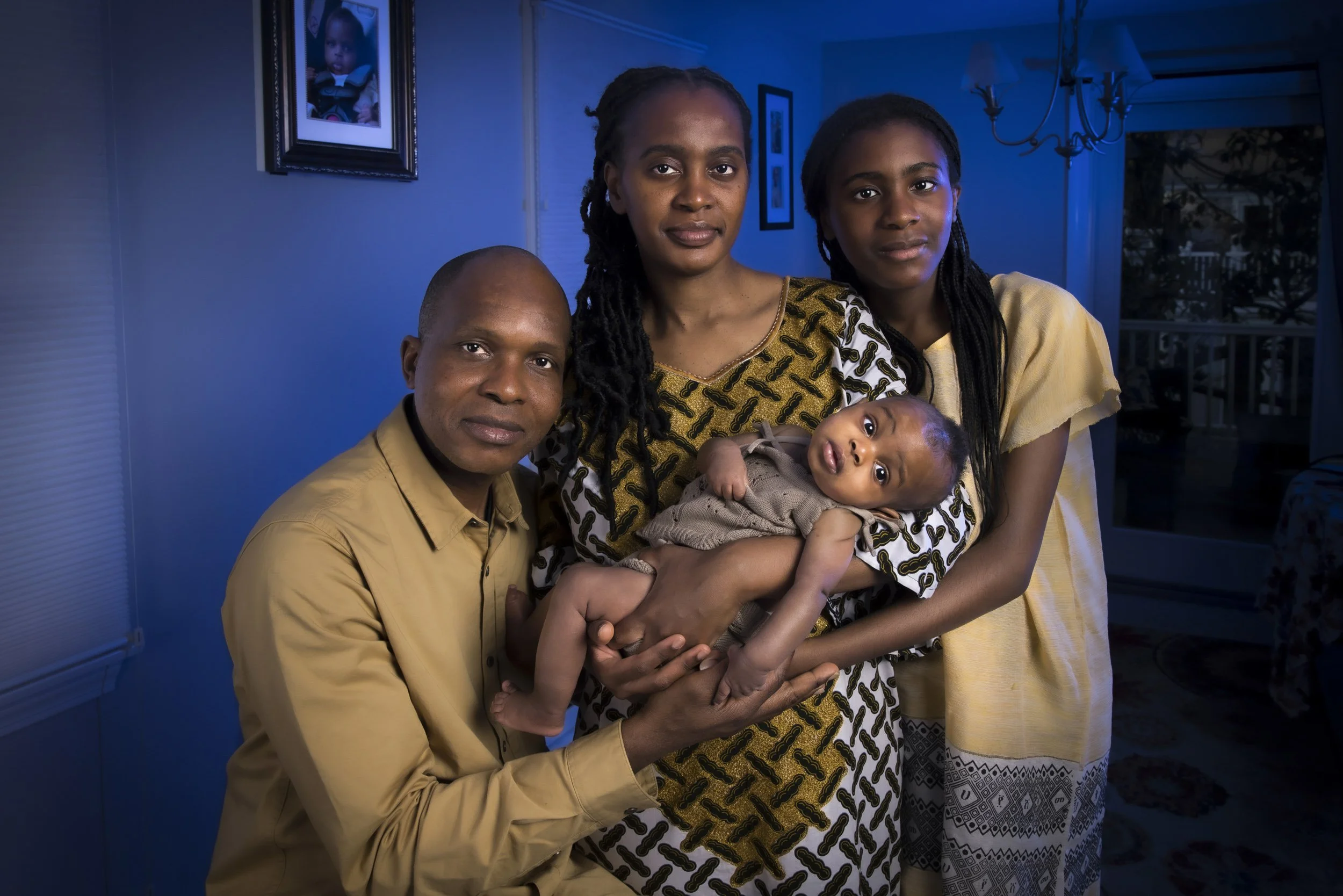
Tony, his wife Joelle, and their daughters, Pearl-Hope and baby Faith, are photographed in their new Cape Cod home. A former UN photojournalist from the Democratic Republic of Congo, Tony fled in 2014 after being kidnapped and tortured for documenting mass killings. His portrait is part of Invisible Threads, an ongoing series exploring the lives and stories of Cape Cod residents who have journeyed from around the world..
The series debuted at the Cape Cod Museum of Art in Dennis (August–November 2025) and an expanded version will be exhibited at the Cahoon Museum of American Art in September 2026. The complete collection of portraits and narratives will also be published in a forthcoming book with Daylight Books.
Invisible Threads: Portraits and Stories of our Global Neighbors
By Photographer Julia Cumes in Collaboration with Lipe Borges
Invisible Threads is an ongoing portrait and narrative series offering an intimate glimpse into the lives of people who have journeyed from around the world to build new lives on Cape Cod. Through collaborative portraits and personal storytelling, the project invites viewers to slow down, look closely, and truly listen.
Cape Cod is often imagined as a place of escape, yet it has long been a place of arrival. When the Pilgrims landed in Provincetown in 1620, they began one of the country’s earliest immigration stories. Today, contemporary migrations continue that legacy, though these stories are often overlooked or politicized. Invisible Threads reconnects us to the ongoing search for safety, opportunity, and belonging.
Photographed at home, at work, and with loved ones, the individuals in this series show the Cape as a place where people root themselves anew. Working as a creative team, Lipe Borges and I build each portrait through close collaboration with the person or family, shaping the image together. Through conversation, memory, light, narrative detail, and environment, each work is intentionally constructed to reflect how subjects wish to be seen—holding both personal history and imagined future. The photographs occupy a space between documentary and portraiture, favoring relationship and agency over immediacy, and revealing emotional truths that persist beyond moments of crisis: resilience, longing, humor, tenderness, and joy. The stories span Jamaica, Brazil, Afghanistan, the Democratic Republic of Congo, Ukraine, Malaysia, Costa Rica, South Africa, the Dominican Republic, El Salvador, and more.
The project is also being developed as a traveling exhibition and includes an educational program for high school students, inviting participants to create their own portraits and stories in response to the series—deepening understanding of identity, migration, and community.
“As immigrants ourselves, this work is deeply personal. That feeling of in-between—of leaving one home while learning to belong in another—is something we understand. This project is a tribute to those who trusted us with their stories.”
— Julia Cumes
In a time when migration is often framed through fear or division, Invisible Threads offers a space of empathy. It reminds us that while borders define geography, the unseen threads of hope, family, and shared humanity are what connect us.
The first series debuted at the Cape Cod Museum of Art, August 14–November 9, 2025 with 16 large scale aluminum prints and accompanying narratives. An expanded version of 30 final images will be published by Daylight Books in late 2026 and the new series will exhibited at the Cahoon Museum of American Art, Sept–Dec 2026, alongside the developing traveling exhibition and youth education program. Below is a selection of the final portraits and abbreviated versions of their accompanying narratives.
Support for this project provided by the Arts Foundation of Cape Cod through a National Endowment for the Arts Regional Partnership Grant. Additional support provided by the Brewster, Chatham, Orleans, Harwich, Dennis and Massachusetts Cultural Councils.
-
Aqela - Afghanistan
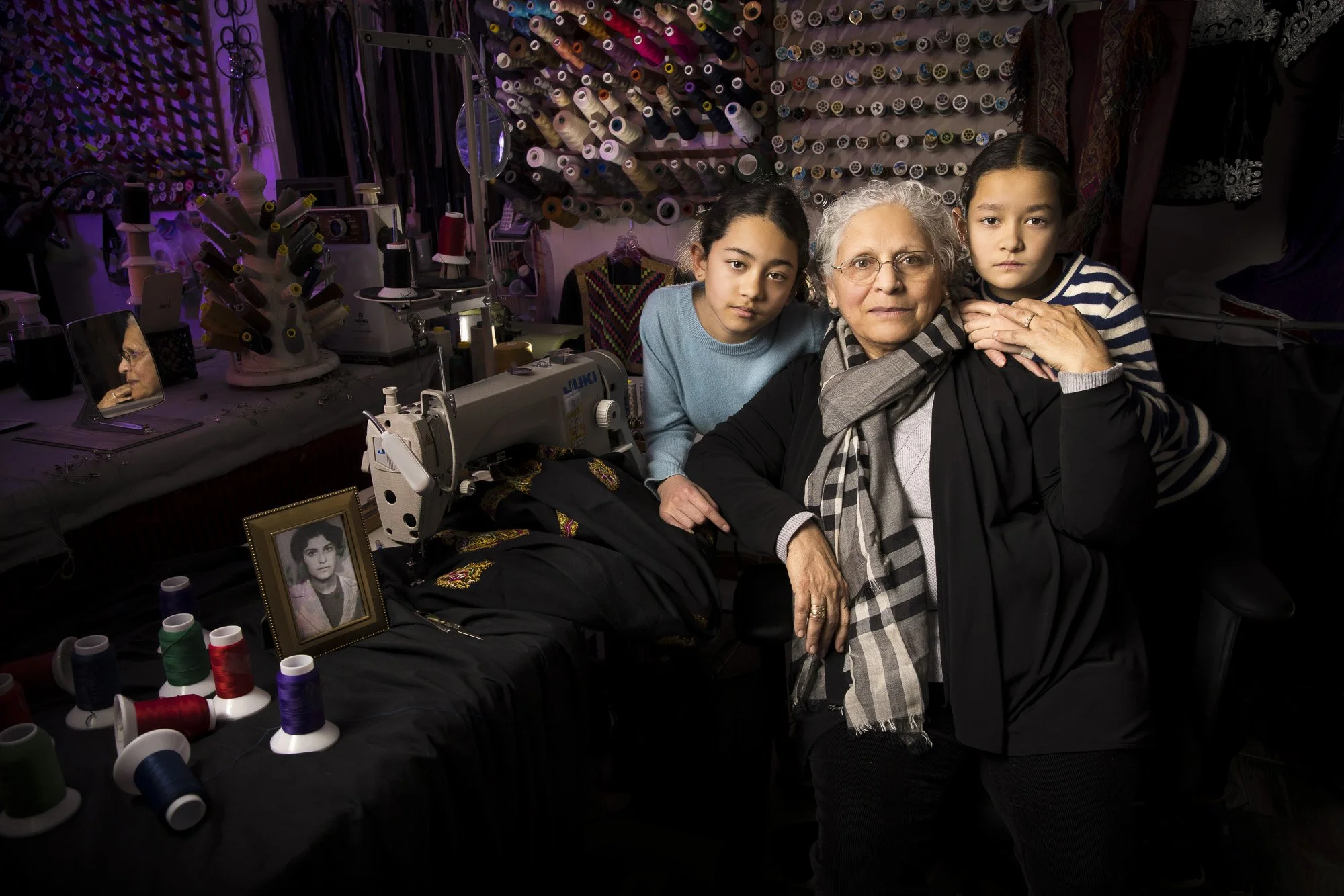
Aqela, 68, sits in her alterations shop, A Perfect Fit, surrounded by her granddaughters, the tools of her trade and a photo of her younger self. A mirror on the left—one she uses to watch TV while she sews—reflects the quiet, industrious world she has built here. Born in Kabul, Afghanistan, she fled in 1984 with her daughters to escape war, enduring a dangerous journey through mountains to reach Pakistan before being sponsored to the U.S. by her husband’s Cape Cod connections. Despite language barriers and isolation, Aqela opened her own shop in 2005. Today, her daughters are a doctor, a lawyer, and an educator. “The best thing about being here is knowing my kids are safe and educated,” she says, reflecting on the sacrifices that made their future possible.
-
Wilsie - Haiti
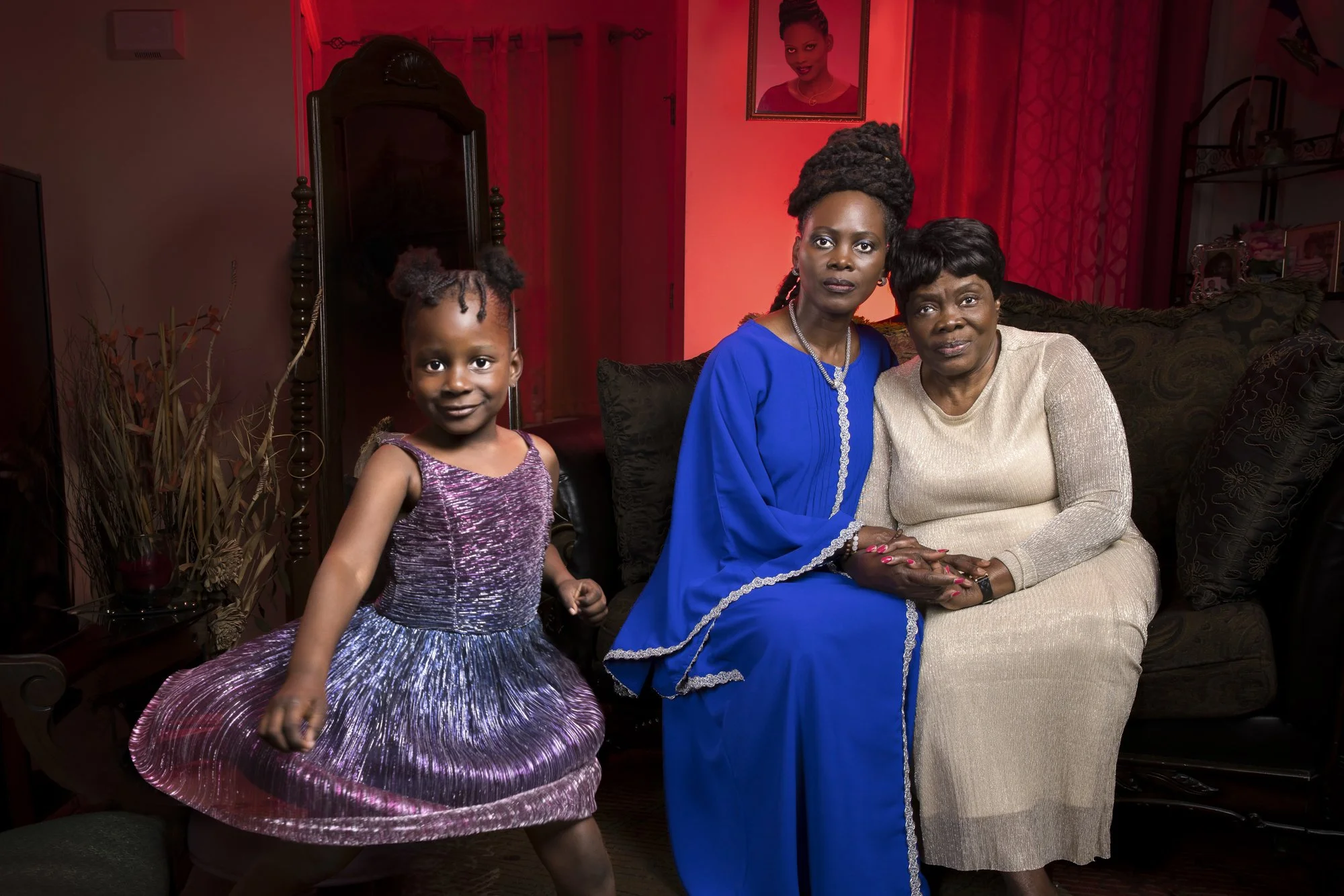
Wilsie sits with her mother, Matilde, in their Cape Cod home while her granddaughter, Janaila, twirls happily in her favorite dress. Originally from Cap-Haitien, Haiti, Wilsie moved to the U.S. to support her family, studying English and training as a nurse’s aide. Despite facing racism, she found peace in Cape Cod’s Haitian community and expanded her efforts to Rwanda, launching a farming project to support families in need. “With the little we have, we are trying to make an impact,” she says, dreaming of opening community centers in both countries.
-
Ling Long - Malaysia
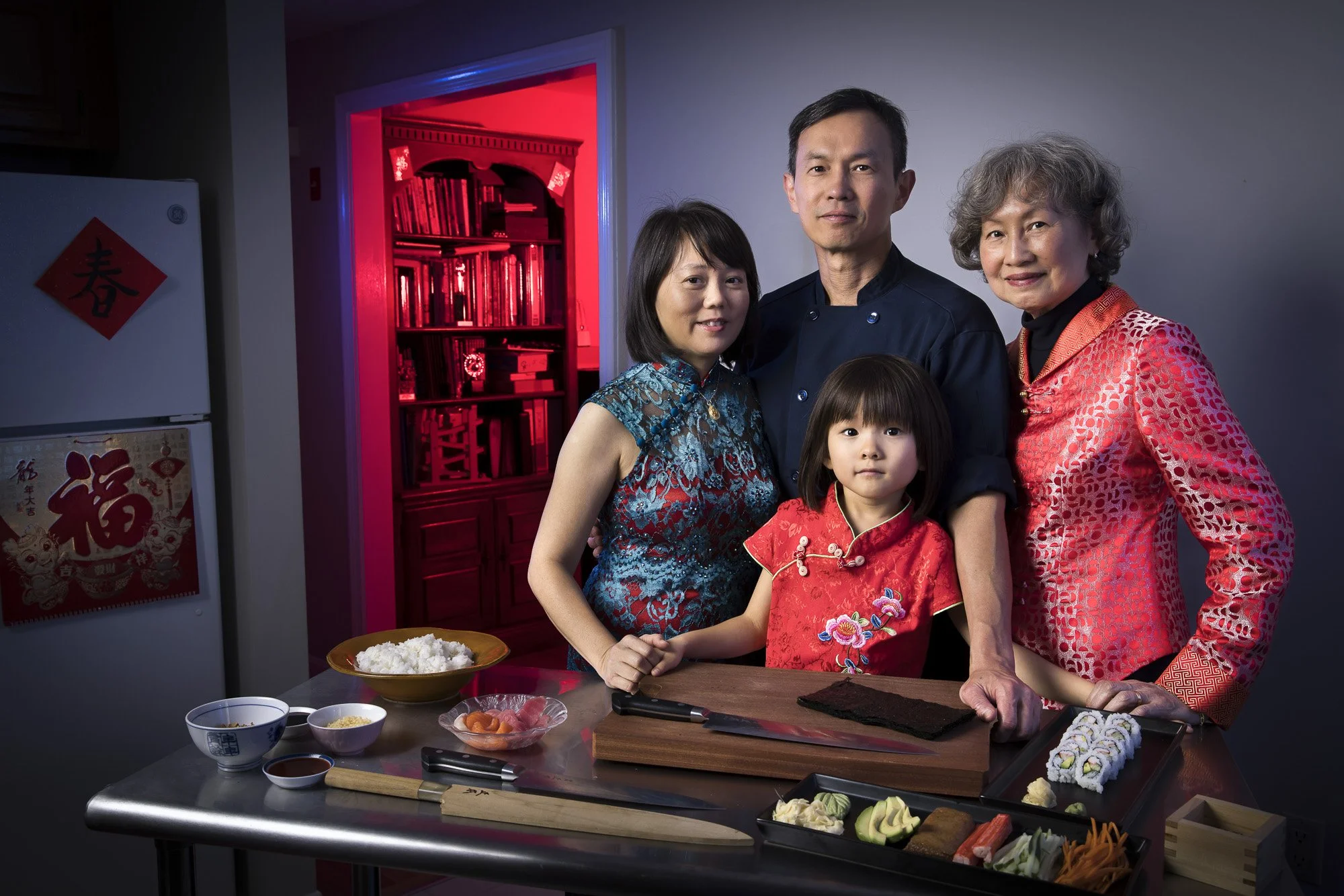
Photographed with his wife, Yin-Cheng, daughter, Chien-Rui, and mother, Ling Long reflects on years of struggle after leaving Malaysia in search of opportunity. After enduring long hours in restaurant kitchens across the United States, he reconnected with his childhood friend Yin-Cheng during a return home for his father’s funeral. They married and moved back to the U.S. hoping to build a more stable future for their daughter. In 2021, the family relocated to Cape Cod, where Ling Long started a sushi business with the help of a friend. With his mother now joining them, the family is together in the United States for the first time. “This place feels like a blessing—full of opportunities,” he says, grateful for their fresh start and the natural beauty of Cape Cod.
-
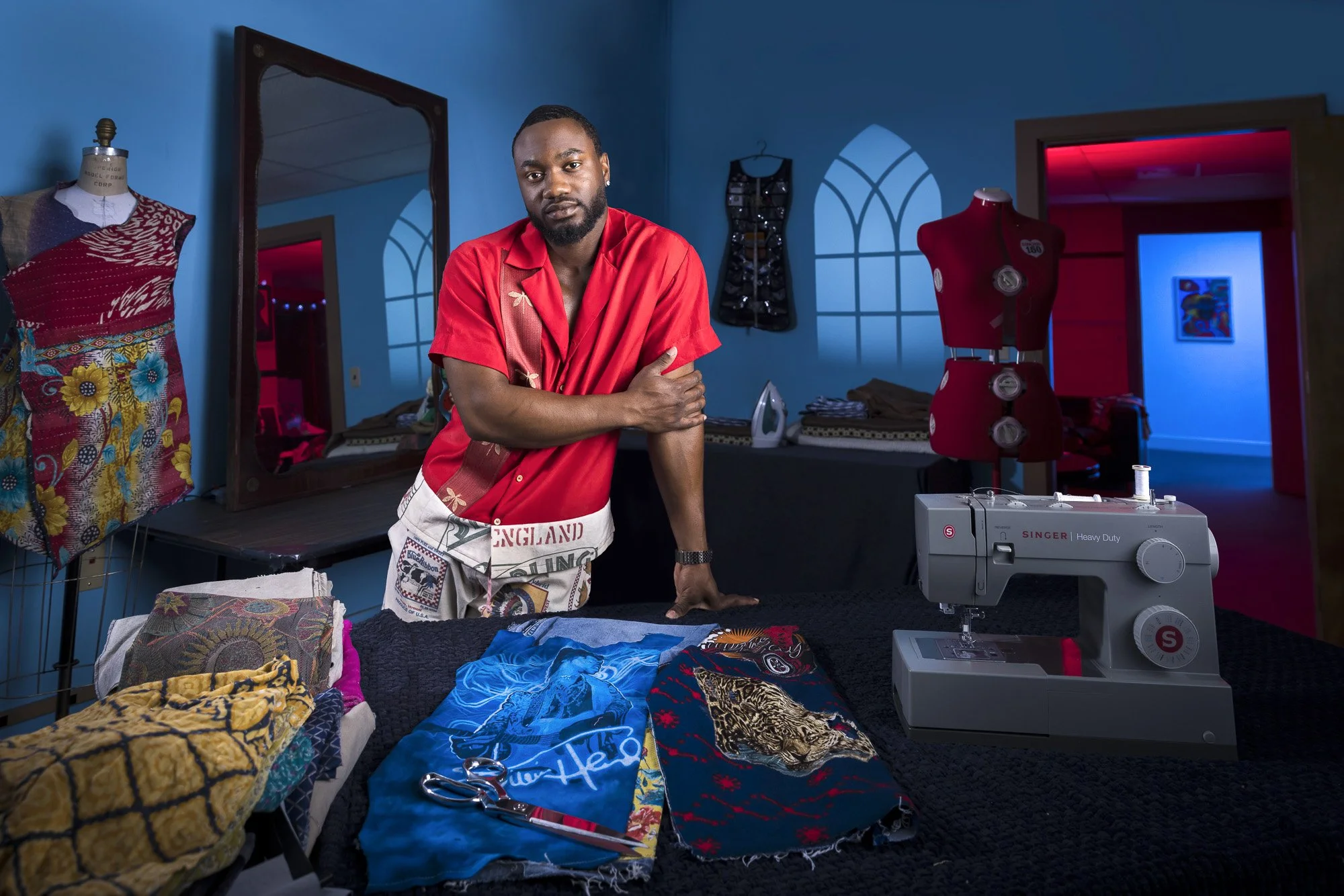
Kenard - Jamaica
Kenard is photographed in his studio at The Cordial Eye in Hyannis, surrounded by mannequins, fabric, and a sewing machine. He creates bold, colorful fashion using upcycled fabrics. Born in Montego Bay and raised in Georgia, he faced challenges adjusting to life in the U.S. But after moving to Cape Cod, he discovered a passion for tailoring during the pandemic. In 2023, he launched Ken Tailor, and within a year, he showcased his designs at New York Fashion Week. “The opportunities here are endless,” he says, with dreams of building a global fashion brand and inspiring future designers.
-
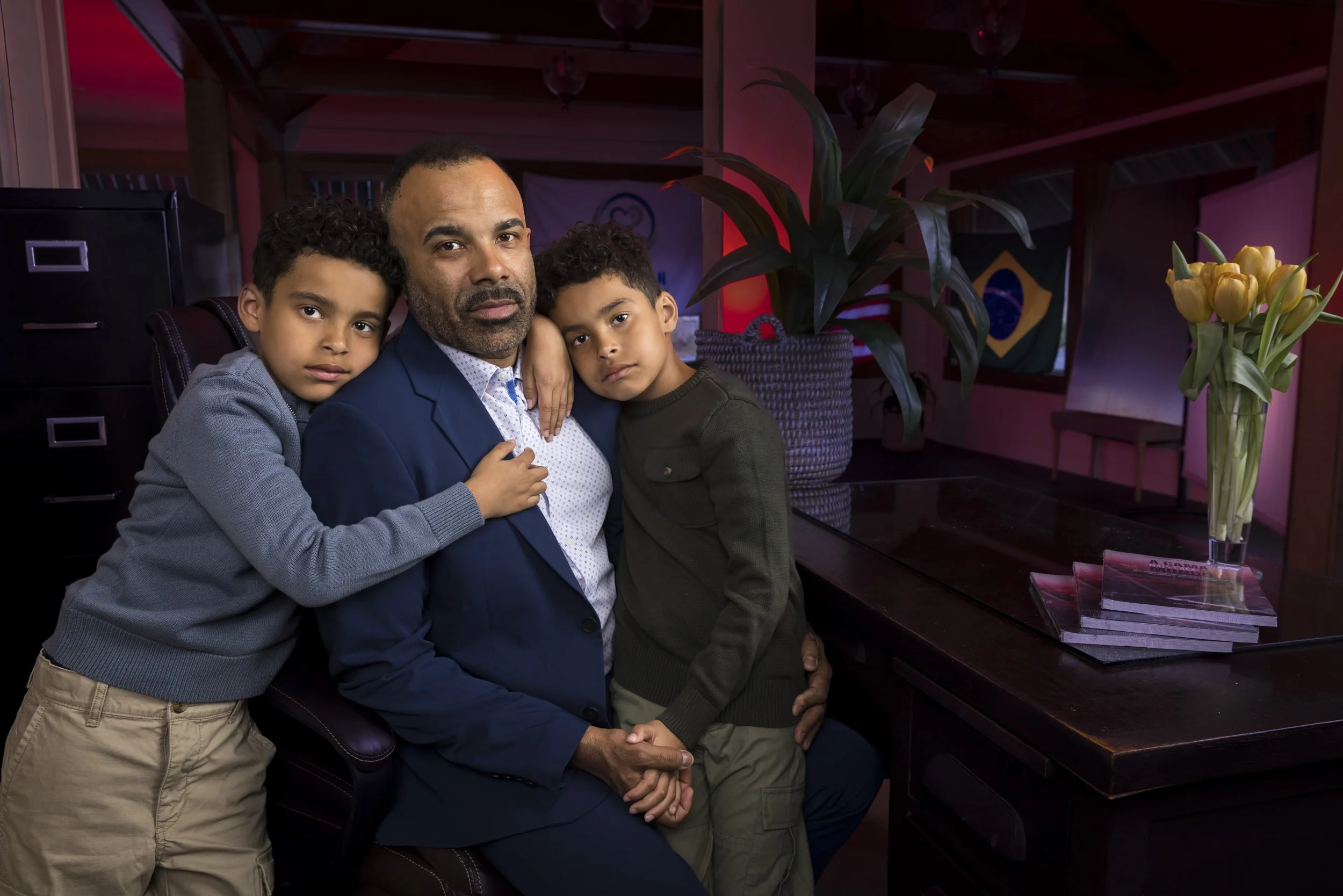
Michael --Brazil
Michael sits with his twin sons, Matthew and Gabriel, at the Brazilian Resource Center—a reminder of how far he’s come since arriving from Rio de Janeiro in 1998. The first in his family to attend college, he left Brazil after a year of law school hoping for a new path in medicine. On Cape Cod, he worked as a busboy, painter, and newspaper delivery driver, sometimes juggling three jobs while studying English at night.
Step by step, Michael built a future through education, earning a bachelor’s and then a master’s degree in psychology, later working at Cape Cod Hospital and Boston Medical Center. In 2023, he began leading the Brazilian Resource Center full-time, the nonprofit he founded to help immigrants access healthcare, mental health support, education, and basic necessities. “I know what it’s like to arrive with nothing,” he says.
For his sons, he hopes to pass on both resilience and purpose. “I want them to know they can do anything—and that giving back is the most powerful thing we can do.” -
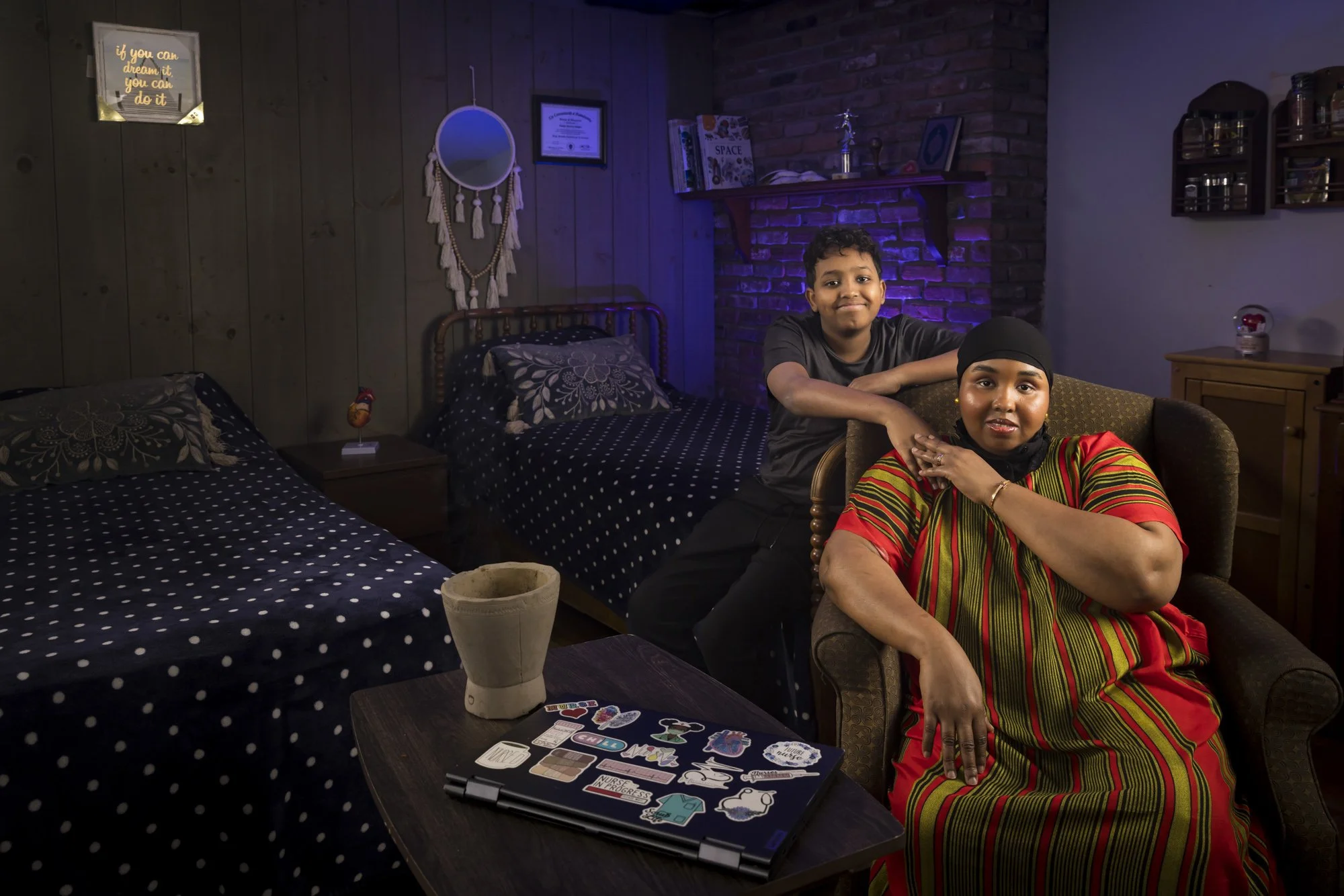
Deeqo--Somalia
Deeqo is photographed with her son, Msoud, in the bedroom they share—a private space shaped by necessity, tenderness, and determination. The image reflects a life built through displacement and endurance, and a mother’s belief that education is the surest path forward.
Born in Mogadishu, Somalia, Deeqo grew up amid civil war and tribal violence. Her family belonged to a minority clan, and as kidnappings increased—especially of young girls—safety became uncertain. Despite loving school, she stopped attending in sixth grade. “If you were not from the majority tribe,” she says, “you had to run.” When her father’s health declined, he made the difficult decision to sell land so she could leave and support the family. At twenty-two, Deeqo traveled alone to Egypt with one small bag. There, she worked as a translator within the Somali refugee community, married, and became a mother. After her marriage ended, she raised Msoud on her own, determined to remain independent.
Resettled in Massachusetts in 2021, she enrolled in a GED program within weeks. Starting at the most basic level, she advanced rapidly, teaching herself English late into the night. She completed her GED with top marks and is now pursuing a nursing degree—building a future grounded in care, resilience, and the belief that they are moving forward together.
-
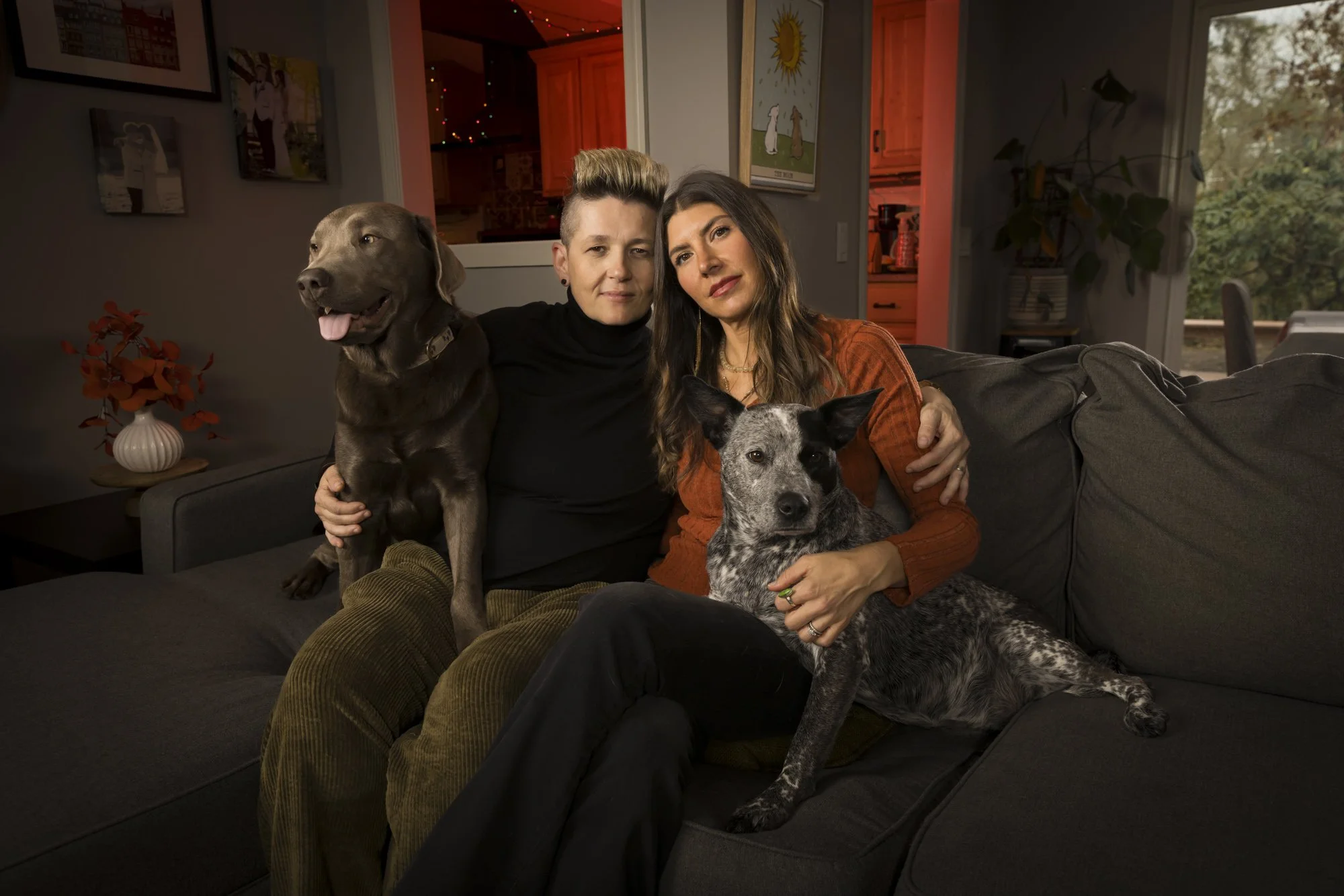
Aleks
Aleks sits in the family’s Cape Cod living room with their wife, Andrea, and dogs, Wayne and Rosie. Born in 1980 in Częstochowa, Poland, during the final years of Soviet influence, Aleks grew up in a world shaped by scarcity. “We had coupons for everything,” they say. After Poland’s transition in the 1990s, instability became part of daily life.
While studying applied physics, Aleks had a moment that reshaped their future—hearing someone speak openly about being gay. In their deeply Catholic hometown, that truth came with risk. “There was a lot of hate. You couldn’t really be yourself.” In 2005, Aleks came to Cape Cod on a J1 visa. After a series of jobs, a local contractor became a mentor, teaching them finish carpentry—a skill that grew into a career. When he became ill, Aleks stepped in, and eventually went on to build their own company, Mazzeo Construction. Today, the business supports multiple families, and Aleks is launching a nonprofit to provide roofs for those in need—extending that sense of stability to others. The path hasn’t been easy, shaped by distance from family and the challenges of building something from the ground up. But through it all, Aleks holds onto a guiding belief: “You can be who you are—and, with hard work and honesty, build something that lifts others along the way.”
-
Michael - Costa Rica
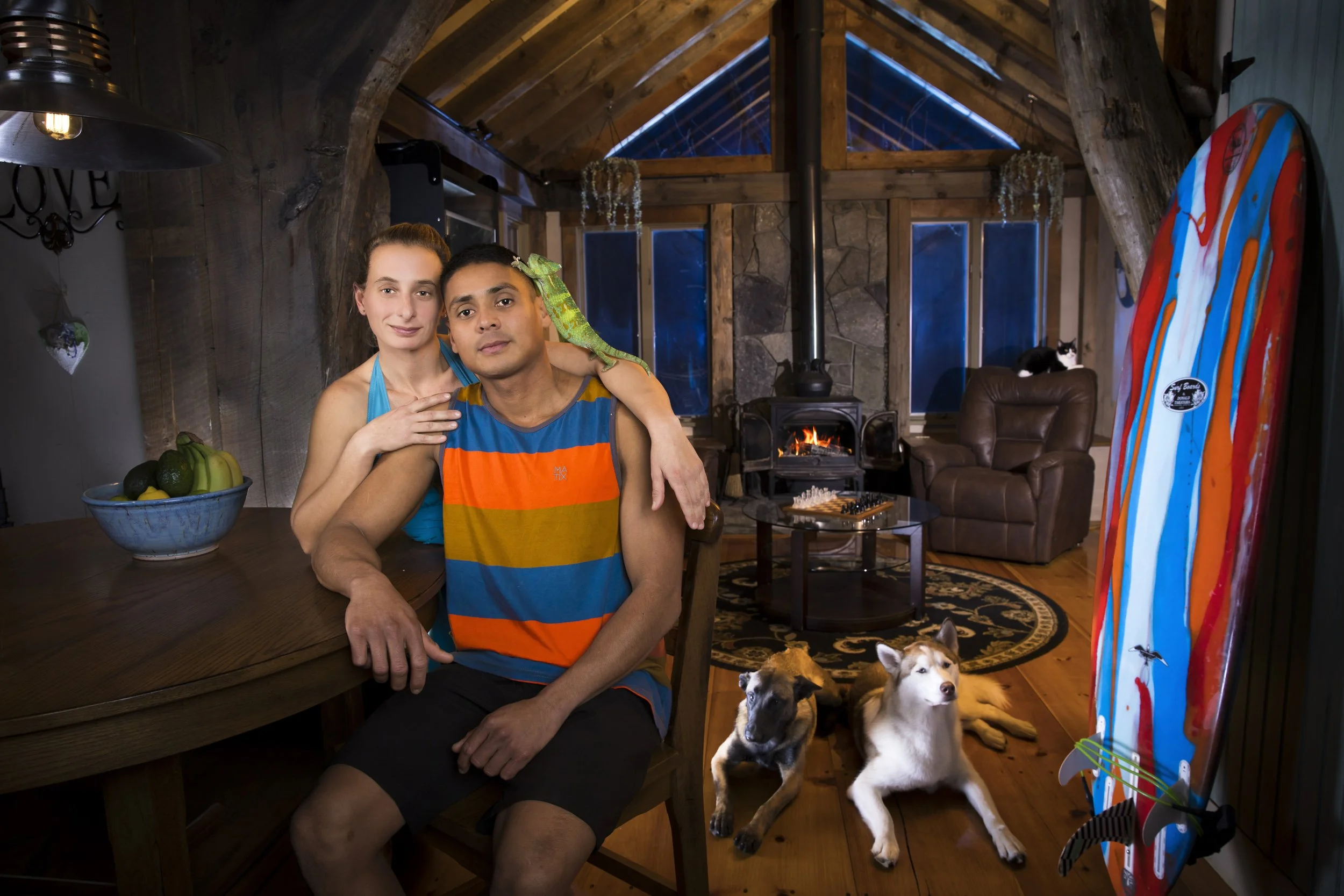
Michael sits with his wife, Miranda, in their Cape Cod home surrounded by pets—a far cry from his childhood in Playa Pallades, Costa Rica, where he and his five brothers were raised by their mother in a three-walled house with no electricity or running water. He began fishing at age five to help feed the family, and at 11 quit school to care for his siblings when his mother was jailed. “Those years taught me responsibility,” he says.
As a young adult, he worked on fishing boats and in restaurants, and while surfing met Miranda—sparking a long-distance relationship that led to a fiancé visa. He arrived in the U.S. in 2014, adjusting to the cold, the fast pace, and a new language. Today, he and Miranda run a successful pet care business, surf, compete in obstacle course races, bike races, and running events, often placing in the top three. “The best thing about being here is the freedom and opportunities,” Michael says. “I have a home, my wife, and a future I never thought possible.” -
Mohammed--Iraq
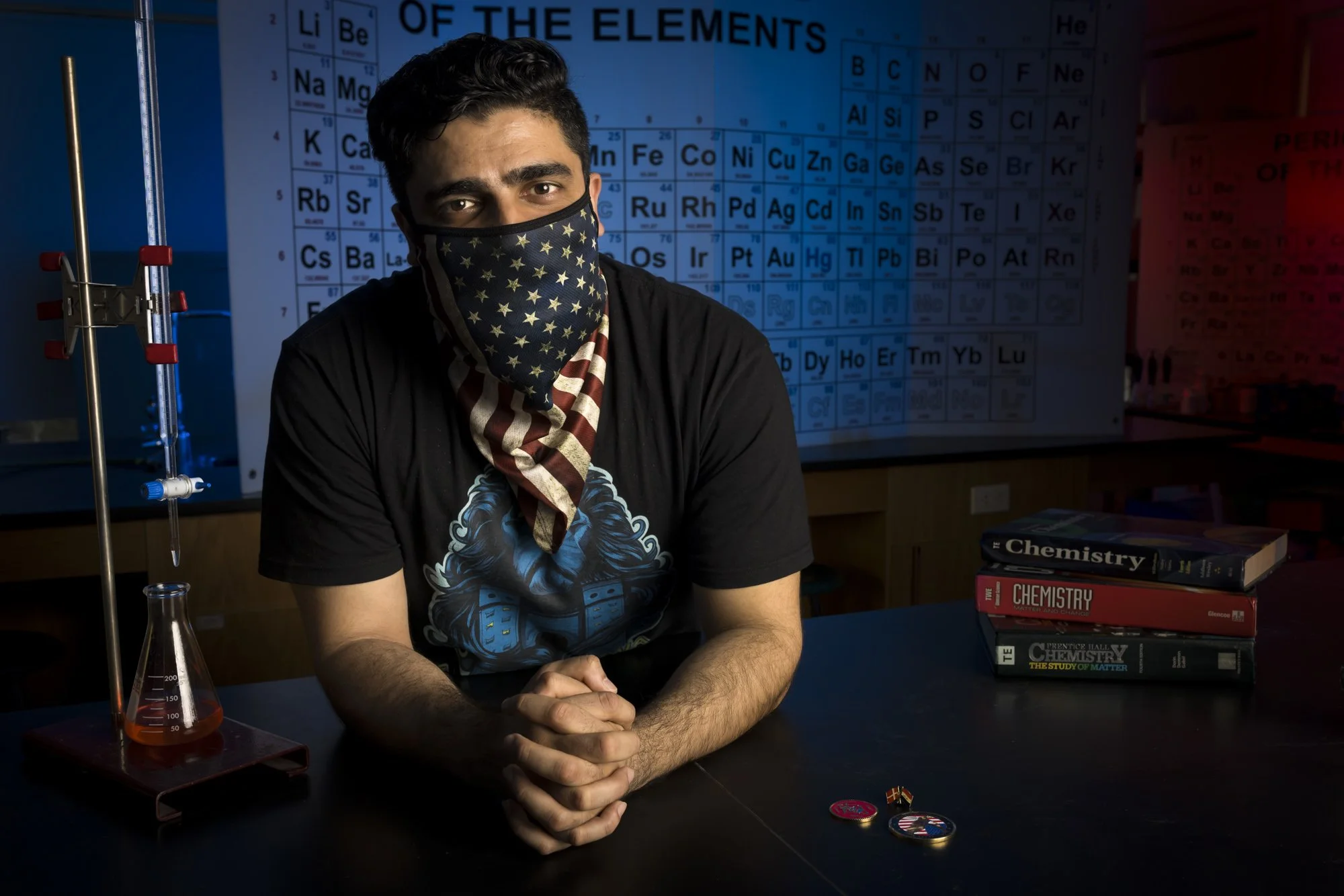
Mohammed is photographed in a Cape Cod high school chemistry lab where he teaches, the periodic table glowing behind him. His face is partially covered with a bandana—an act of caution shaped by his past work as an interpreter for U.S. and allied forces. On the table beside him rest military medals from his service in Iraq.
Born and raised in Baghdad, Mohammed developed an early fascination with English, studying subtitles while listening to American movies and music. When the U.S. invasion began in 2003, he became an interpreter, known for translating not just language but humor and cultural nuance. “I could understand the jokes,” he says. The work was dangerous. After his role became known, he received death threats from within his extended family. Through a Special Immigrant Visa program, he eventually came to the United States.
Today, he teaches high school chemistry, sharing both his knowledge and his story—offering his students not only an education, but a sense of what resilience, courage, and possibility can look like.
-
Dora - Philippines
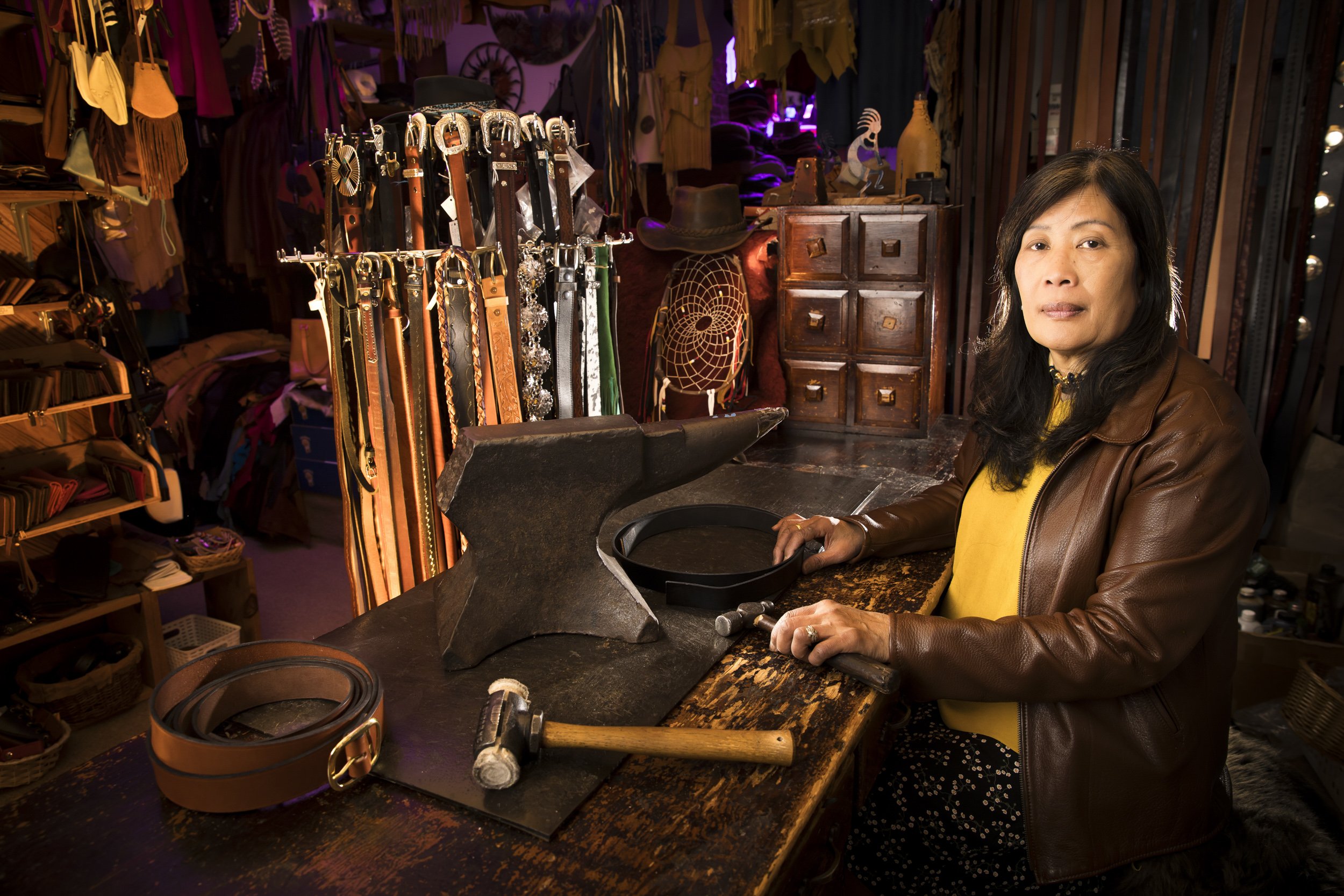
Teodora sits in her small Eastham shop, Four Winds Leather, surrounded by the tools she once shared with her late husband. Raised on a farm in rural Philippines with eight siblings, she studied dressmaking before leaving home to work in garment factories in Singapore, Manila, and Hong Kong. There, she met an American pen pal from Connecticut; after years of letters, they married and began a life together in the U.S.
The couple eventually moved to Cape Cod, opening Four Winds Leather in 1998. Teodora learned the craft through a short class and a great deal of self-teaching, creating the handmade bags, jackets, and dresses that fill the shop today. Her husband died eight years ago, a loss she still carries. Cape Cod has given her stability, faith, and community, and she hopes one day to sell the shop and split her time between the Cape and the Philippines. “I came here for a better life—and for love,” she says. “I’m grateful.” -
Jitka - Czech Republic
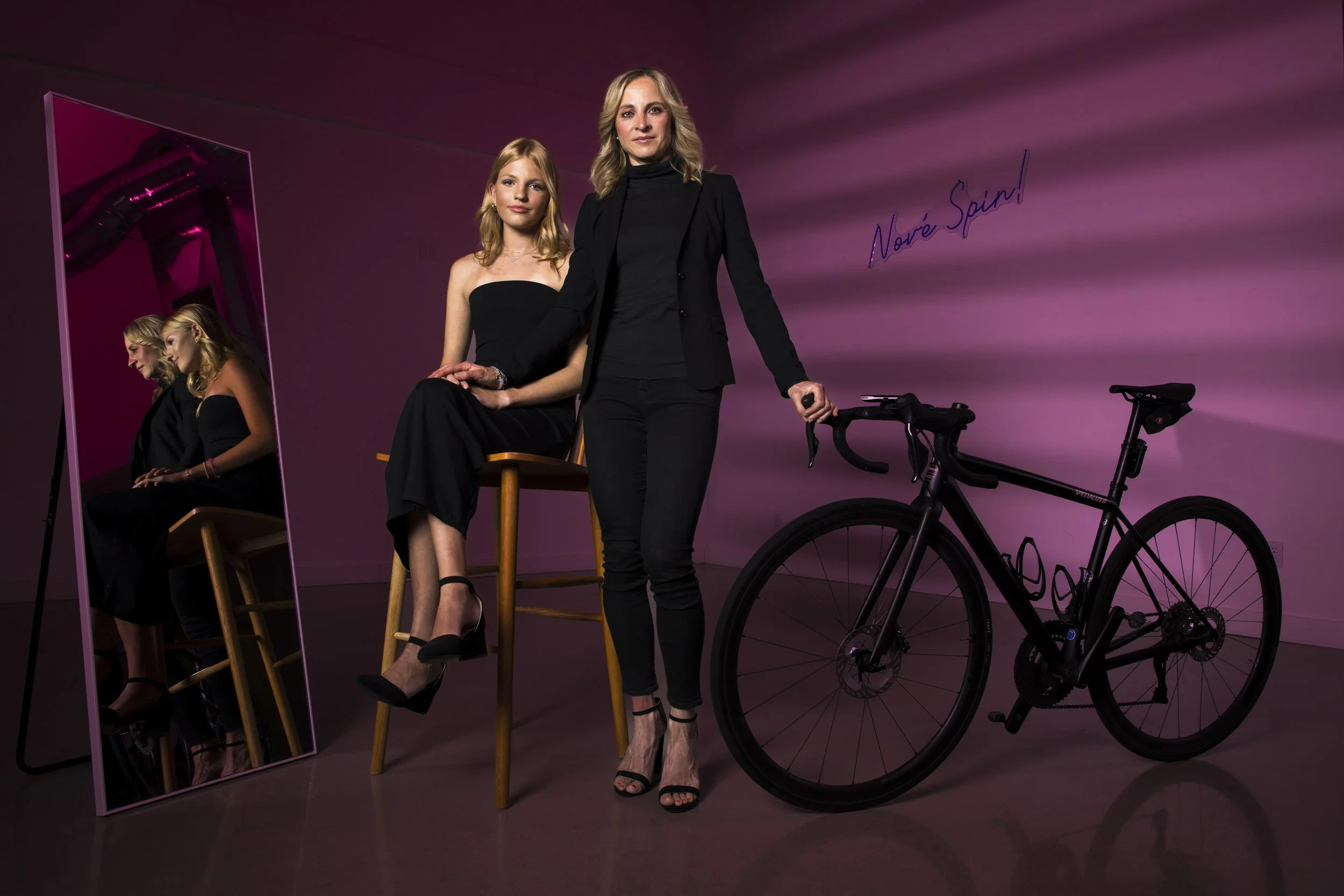
Jitka stands with her daughter Mischa inside Nove Yoga Studio, a reflection of the life she’s built on Cape Cod through resilience and community. Raised in a small Czech village during the last years of communism, she came to the U.S. in 2003 as an au pair with almost no English. Support from a Cape Cod Literacy Council tutor helped her find confidence and a sense of belonging.
She went on to earn her degree at Cape Cod Community College, launch Cleangreen—an eco-focused cleaning company employing more than 20 people—and later open Nove Yoga, a studio centered on inclusivity and wellness. A competitive cyclist and active volunteer with WE CAN and the Rotary Club of Hyannis, Jitka says, “The best thing about being here is the support. People show up because they want to see you succeed.” -
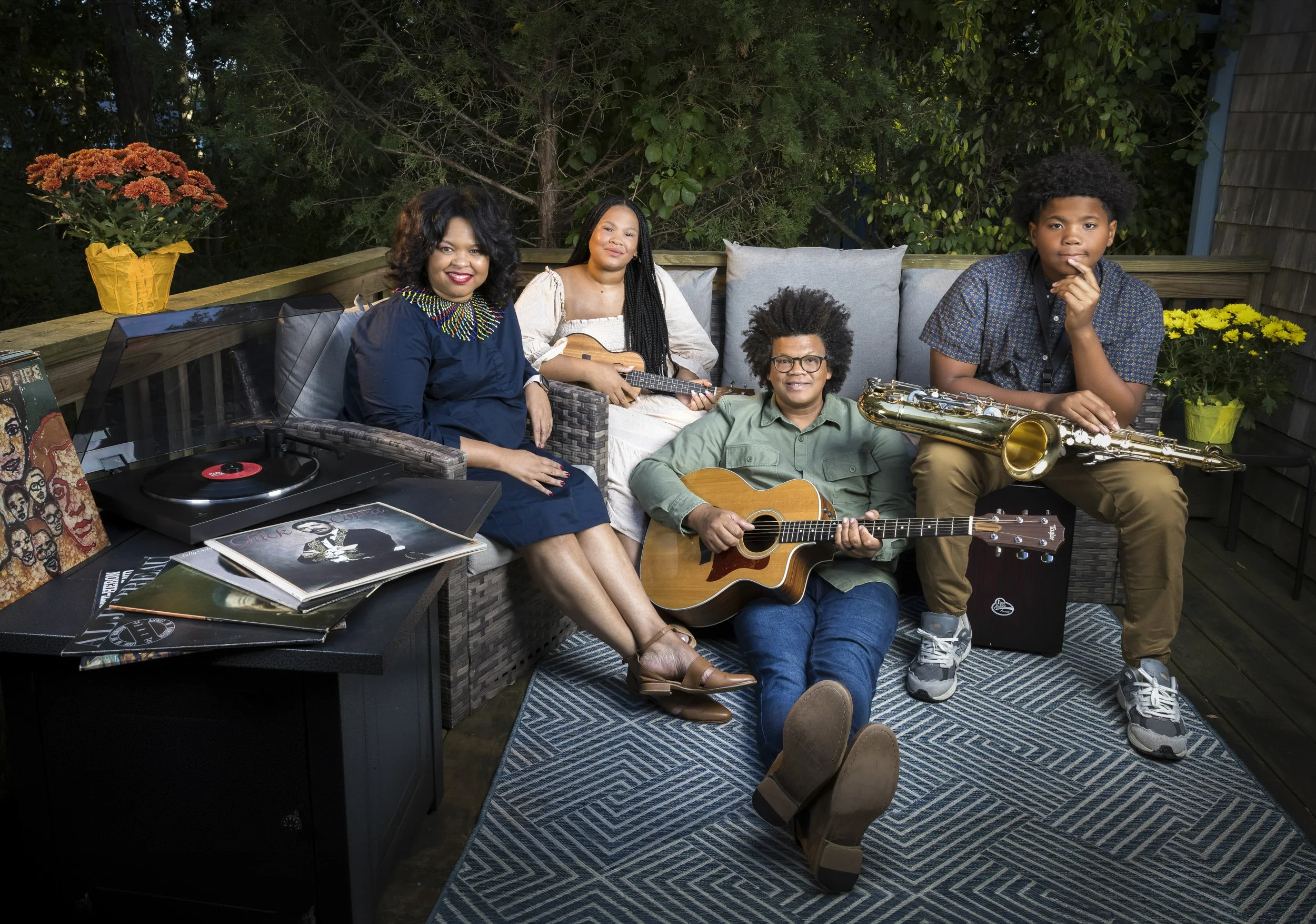
Emilio - South Africa
Emilio sits on his back deck surrounded by instruments and the old record player he grew up with. Raised in Cape Town during apartheid, he spent part of his childhood in a shack in Gugulethu, where instability and his father’s addiction made music his refuge. Through church, he discovered guitar and bass and later played in bands that shaped his life.
He met his wife, Claudine, through church and music, and after touring the U.S. with a racial reconciliation project, they returned to Cape Cod in 2015 seeking a better future for their children. With four suitcases and $3,000, they rebuilt their lives—Emilio leading youth programs and Claudine working in health care. Their children now thrive in music and sports. “The sky’s the limit here,” he says, as the family recently received their U.S. citizenship and a life rooted in faith, music, and community. -
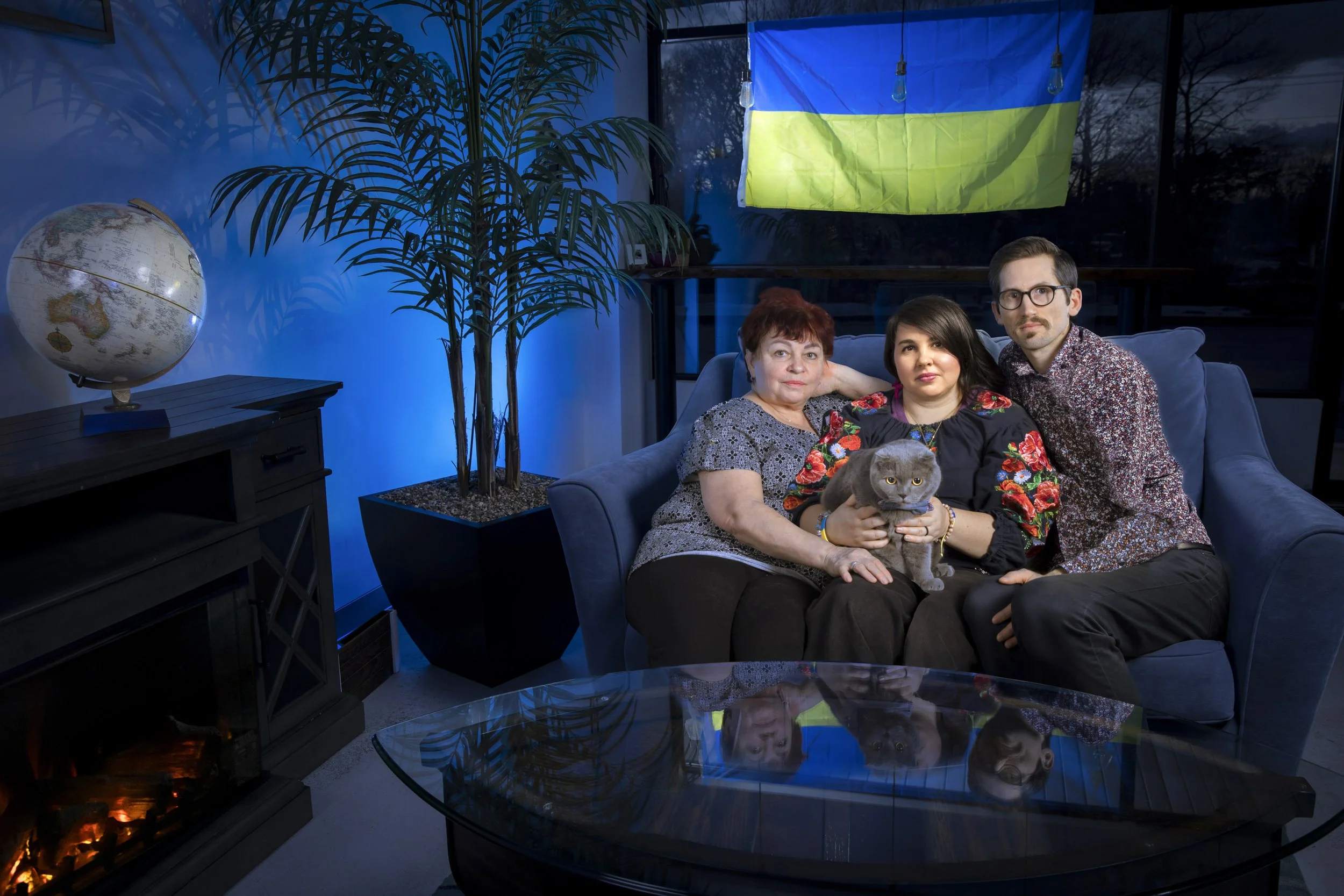
Inna - Ukraine
Inna sits with her husband, Andrew, her mother, Victoria, and their cat, Mars, inside Great Awakening Coffee Shop, the community space she and Andrew built on Cape Cod. Born in Hungary just days after the Chernobyl explosion, she grew up in Ukraine amid health concerns and political upheaval, spending summers in Spain through a Red Cross program. After moving to the U.S. for graduate school and marrying Andrew, she eventually found belonging on the Cape through teaching Spanish and supporting international J-1 students.
Inspired by the idea of creating a welcoming space, she and Andrew opened their coffee shop, which by night hosts open mics, recovery dinners, and community events. When the war in Ukraine began, Victoria escaped on one of the last flights out and joined them here. “My passion is bringing people together,” Inna says, grateful for a life rooted in connection and purpose. goes here -
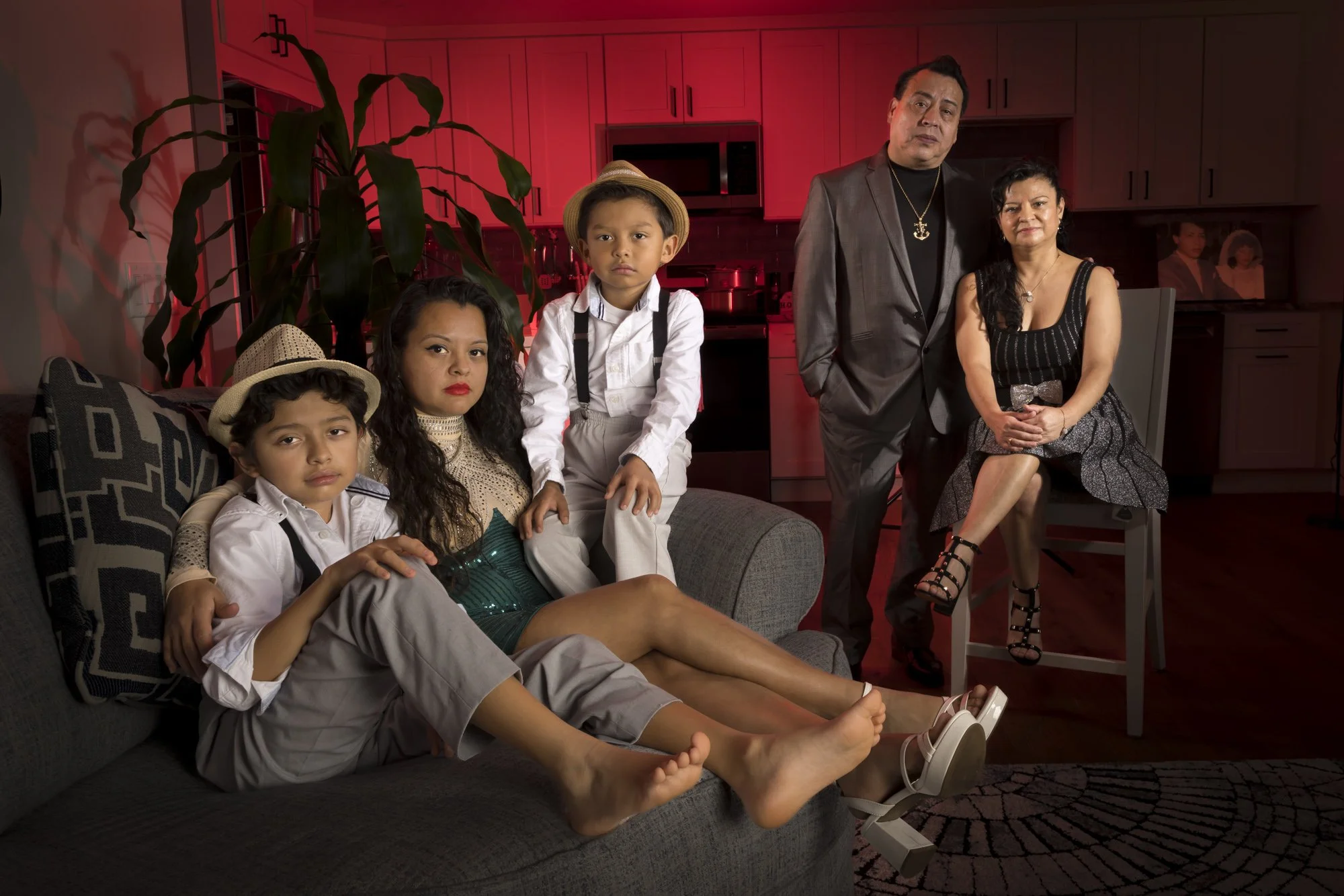
Patricia--Mexico
Patricia is photographed with her two sons, Jullian and Jozen, and her parents, Humberto and Irma, in her parents’ recently purchased home—a milestone shaped by decades of labor, migration, and perseverance. Born in Puebla, Mexico, Patricia grew up as her father moved back and forth to the U.S. for work, her parents doing whatever they could to survive. In 2000, the family settled in Provincetown, where stability came through constant work and shared responsibility.
As an adult, Patricia survived an abusive relationship that left her in debt and fear, until she found the strength to leave with the unwavering support of her parents and community. Today, she has full custody of her sons and speaks of Provincetown as a place of safety and generosity. “I’ve been through hell,” she says. “Now I’m not scared of anything.”
-
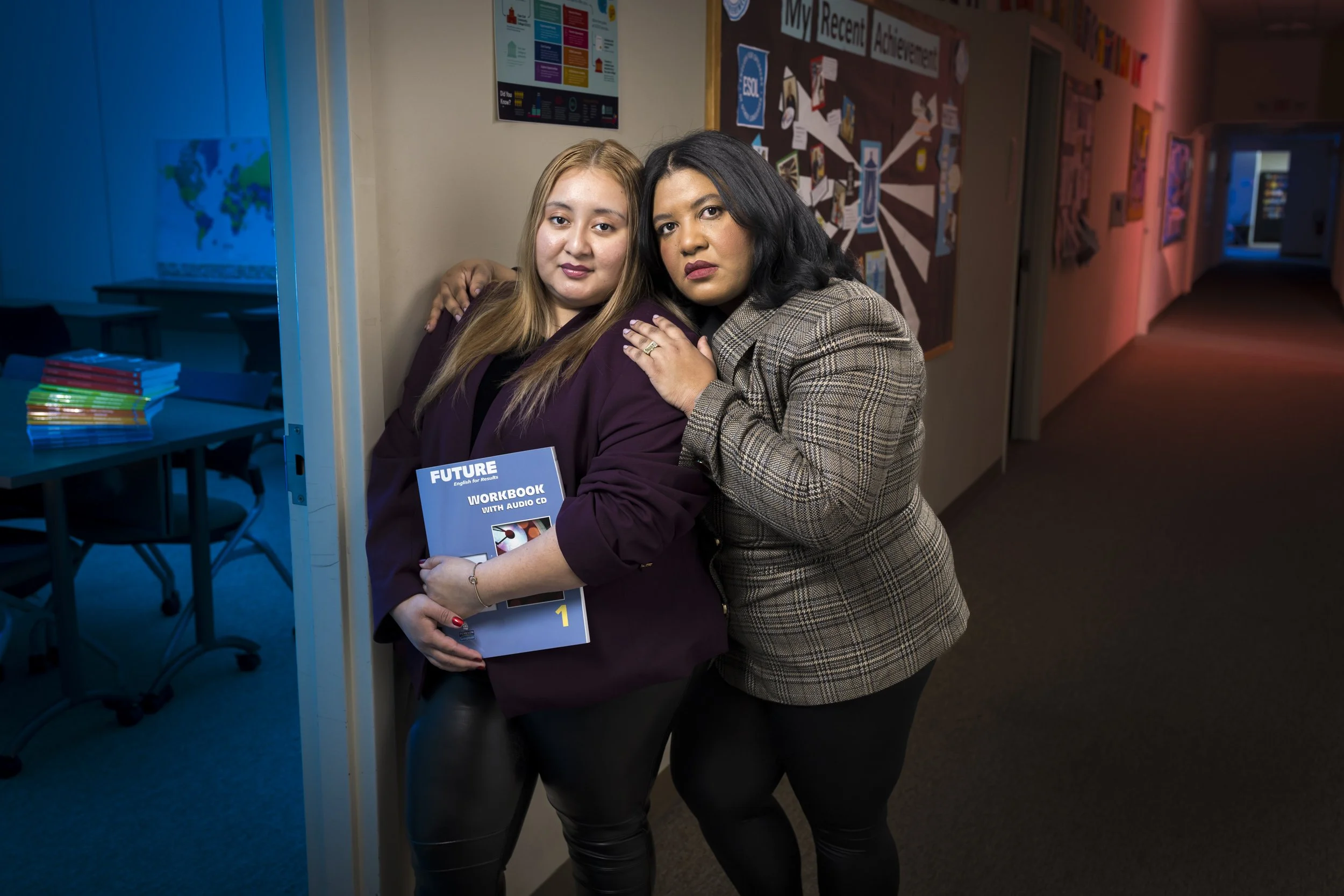
Tania and Yeicy--El Salvador and Dominican Republic
Yeicy and Tania met in an ESL classroom at Cape Cod Community College and quickly became, in their words, “like sisters.” Yeicy, who moved from the Dominican Republic four years ago, grew up between the beaches of Estero Hondo and the busy streets of Santo Domingo. Now a bus monitor for children with special needs, she calls her work a dream and hopes one day to host a Spanish-language radio show in Hyannis.
Tania’s path from El Salvador was far more urgent. After being separated from her mother for 20 years, she attempted to reunite through a program that was suddenly canceled. Determined to build a safer life, she crossed the U.S.–Mexico border and now has work authorization as she continues her immigration process. She hopes to become a preschool teacher or social worker and dreams of a home surrounded by trees and flowers.
Together, they share meals, laughter, and long conversations—two friends who have become family in a place where they are rebuilding their lives. -
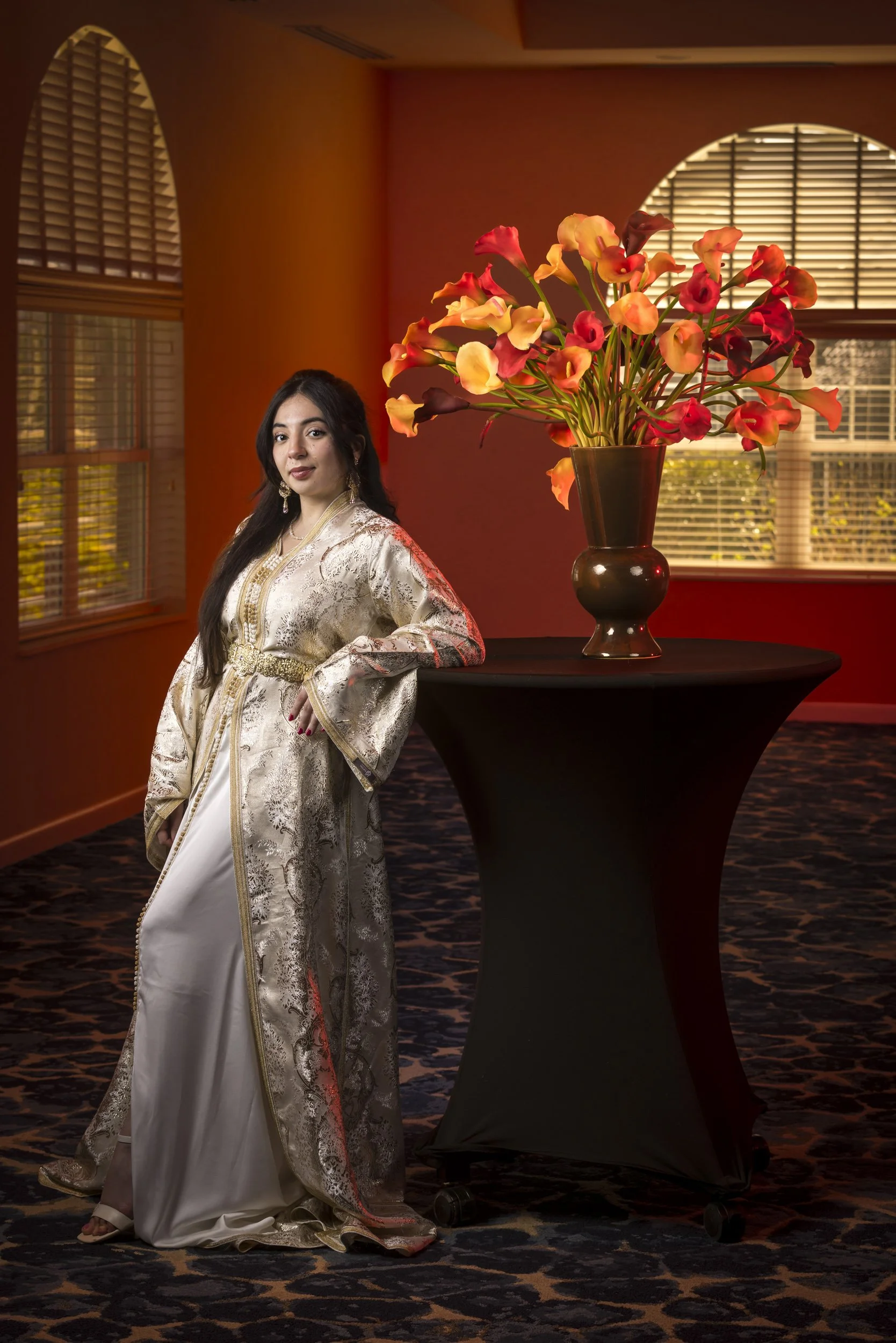
Hanane - Morocco
Hanane stands in the ballroom of the Cape Cod hotel where she works, wearing a flowing Moroccan kaftan gifted by her mother—a reminder of her roots in Casablanca. She grew up in a big, close-knit family, spending summers in Marrakesh surrounded by orange and olive trees. After earning a psychology degree, a friend urged her to enter the U.S. green card lottery; she won on her birthday and decided to take the leap.
Her first stop was Boston, then Cape Cod, where speaking French helped her feel grounded in her earliest job at a Hyannis café. Since then, she has managed restaurants, studied full-time at Cape Cod Community College, and earned Employee of the Year at the hotel where she now works. “The hardest thing is the cultural difference,” she says. “But the best thing is knowing I’ve built a life on my own.” Looking ahead, she hopes for a family and a home filled with the warmth and hospitality she grew up with. -
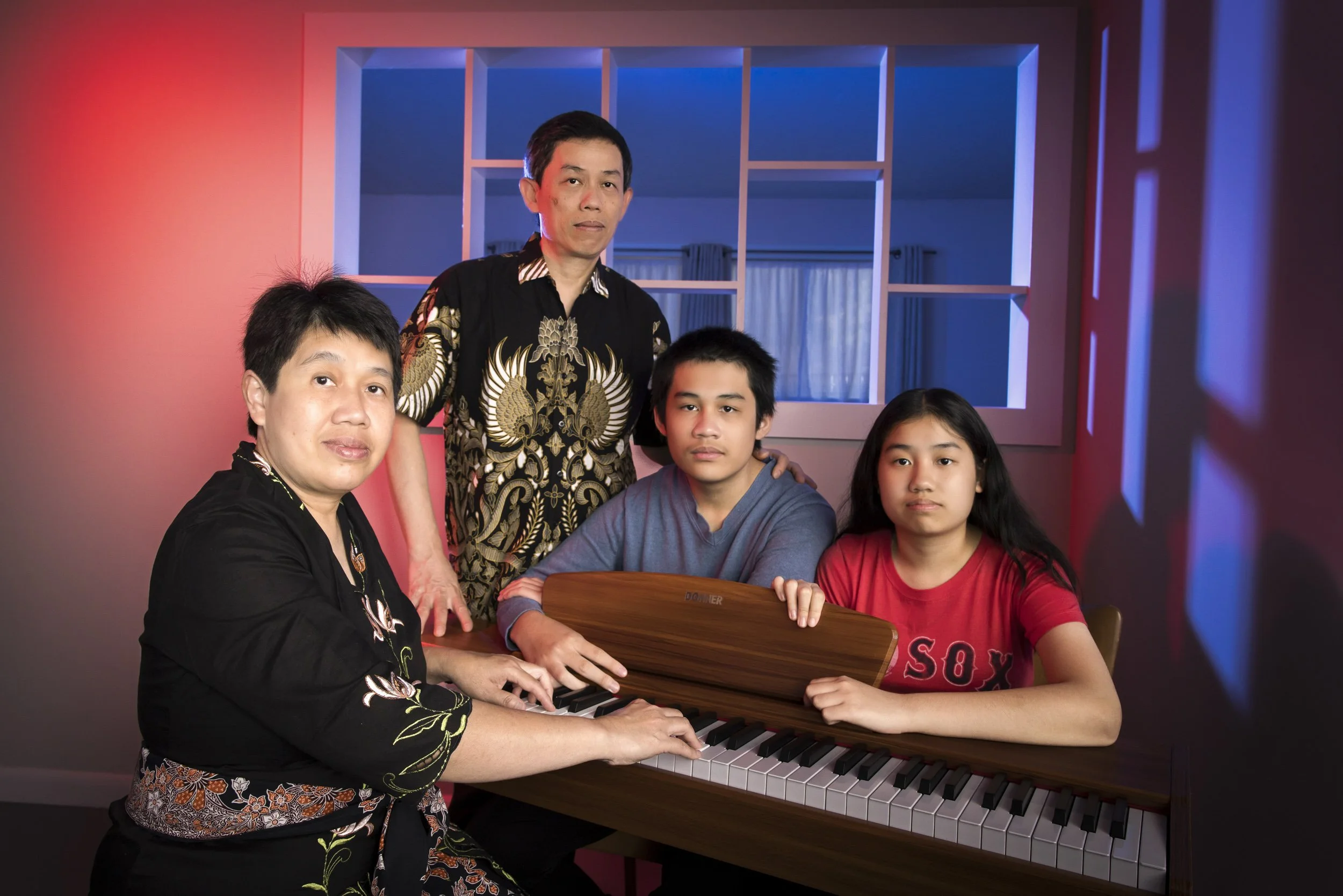
Sofia--Indonesia
Sofia sits beside her family at the piano she taught her daughter to play, their traditional Indonesian clothing beside their children’s American outfits—a reflection of the two worlds they’ve bridged. Born in Medan, Sumatra, she worked in Jakarta and later in Bali as a tour guide before discrimination against Chinese Indonesians and fears for her daughter’s safety pushed the family to seek a new life.
When the pandemic devastated Bali’s tourism industry, Sofia and her husband, Hoshen, moved to the U.S. through a family sponsorship. Their first job ended abruptly after a misunderstanding, but they persevered, eventually building two successful sush franchises in local grocery stores—and recently a third.
On Cape Cod, Sofia feels a safety she never knew at home. Her children thrive in school, and she dreams of sending them to college. “Here, I don’t have to worry about my daughter’s safety,” she says. “I’m a lucky mom.” -
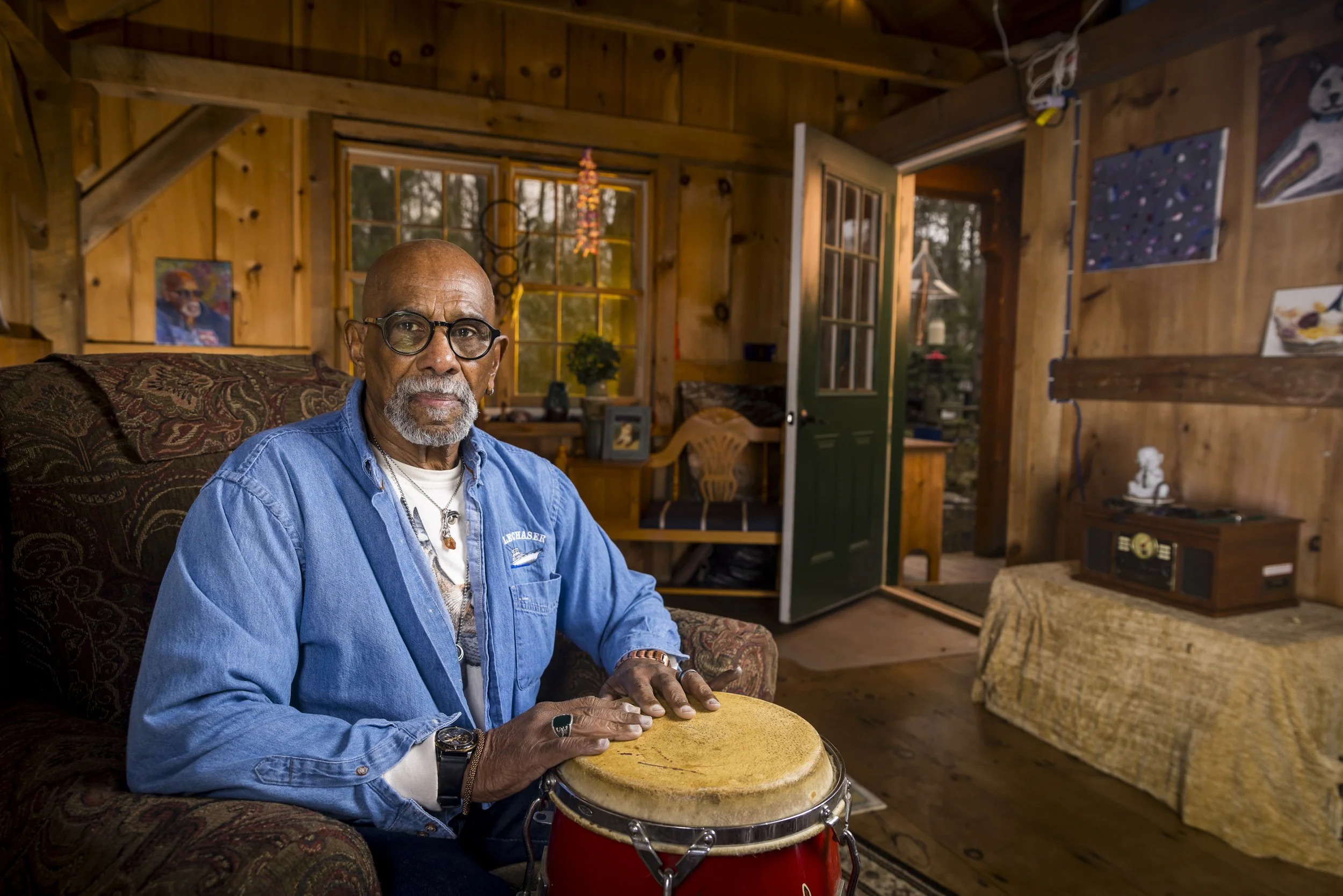
RaShaan - Trinidad and Tobego
In his small cabin in the woods, RaShaan rests his hands on the drum that has followed him through a lifetime of music. Born in Trinidad and Tobago in 1942, he grew up in a strict, British-influenced home before setting out on a path that took him from insurance jobs and chicken farming to singing in hotels, reconnecting with his son in New York, and performing in Boston.
He moved to Cape Cod at 66, where music, caregiving, and love shaped his later years, including a decade spent caring for a partner until her passing. Now in his 80s, he lives simply with a friend who offered him shelter, works as a caseworker for people with disabilities, and lives by four principles: love, openness, gratitude, and kindness. “The best thing about America is I get to be who I want to be,” he says. “I just try to be somebody’s angel every day.” -
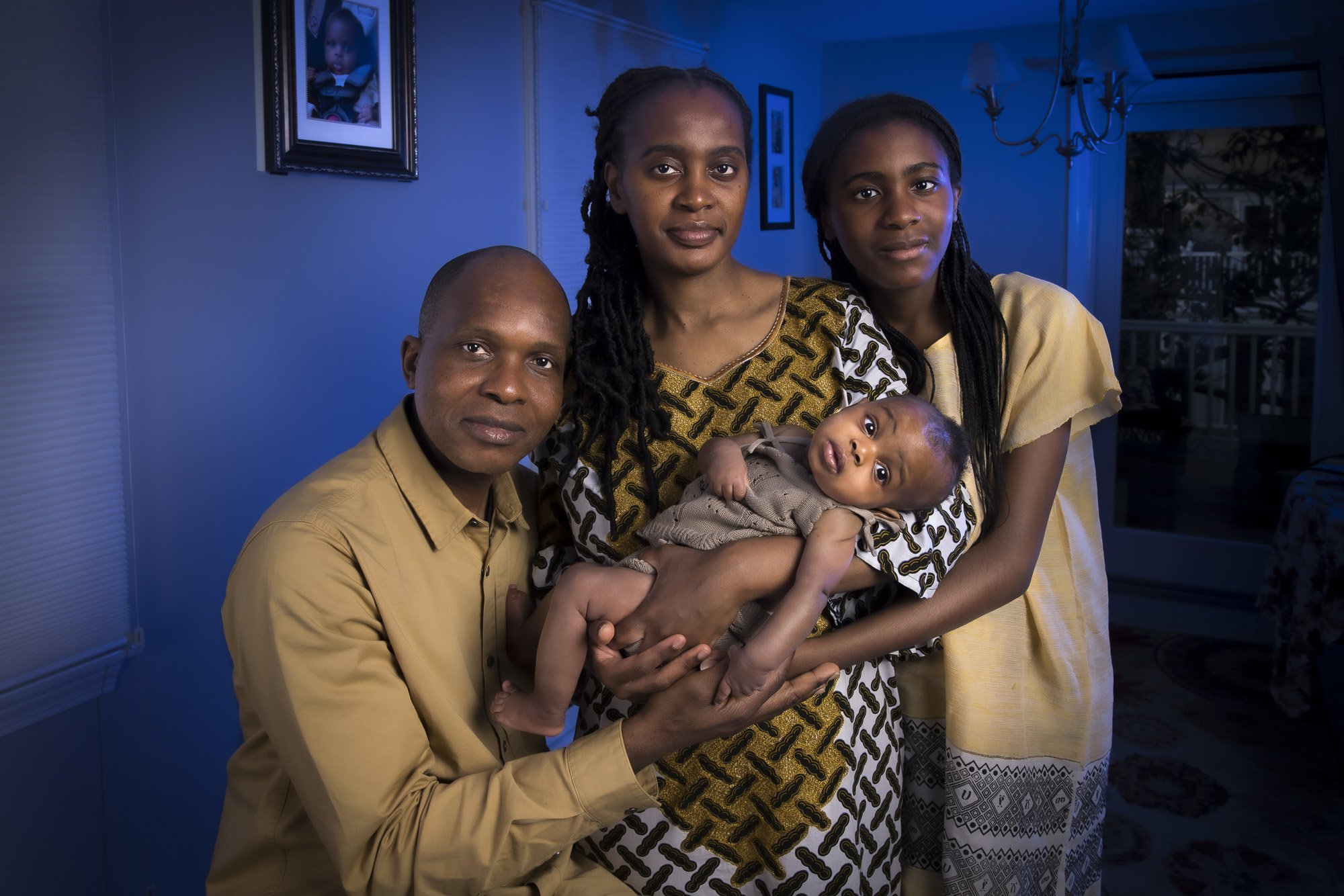
Tony- Democratic Republic of Congo
Tony sits with his wife, Joelle, and their daughters, Pearl-Hope and baby Faith, in their new Cape Cod home—a place of safety after years of danger. A former UN photojournalist in the Democratic Republic of Congo, Tony fled in 2014 after being kidnapped and tortured for documenting mass killings. He arrived in the U.S. alone, seeking asylum while Joelle prayed daily for his safety back home. It took years before they reunited, with their daughter Pearl arriving as an unaccompanied minor at age six.
Life on Cape Cod has been both grounding and challenging. Tony has worked stocking beverages and now drives for income while slowly returning to freelance photography. Joelle recently began a job as a community resource navigator. Their American-born daughter, Faith, symbolizes the resilience that carried them through years of separation. “I miss photojournalism—that’s who I am,” Tony says. “But Cape Cod feels safe, especially for my family. We named her Faith because we believe there is always a way forward.” -
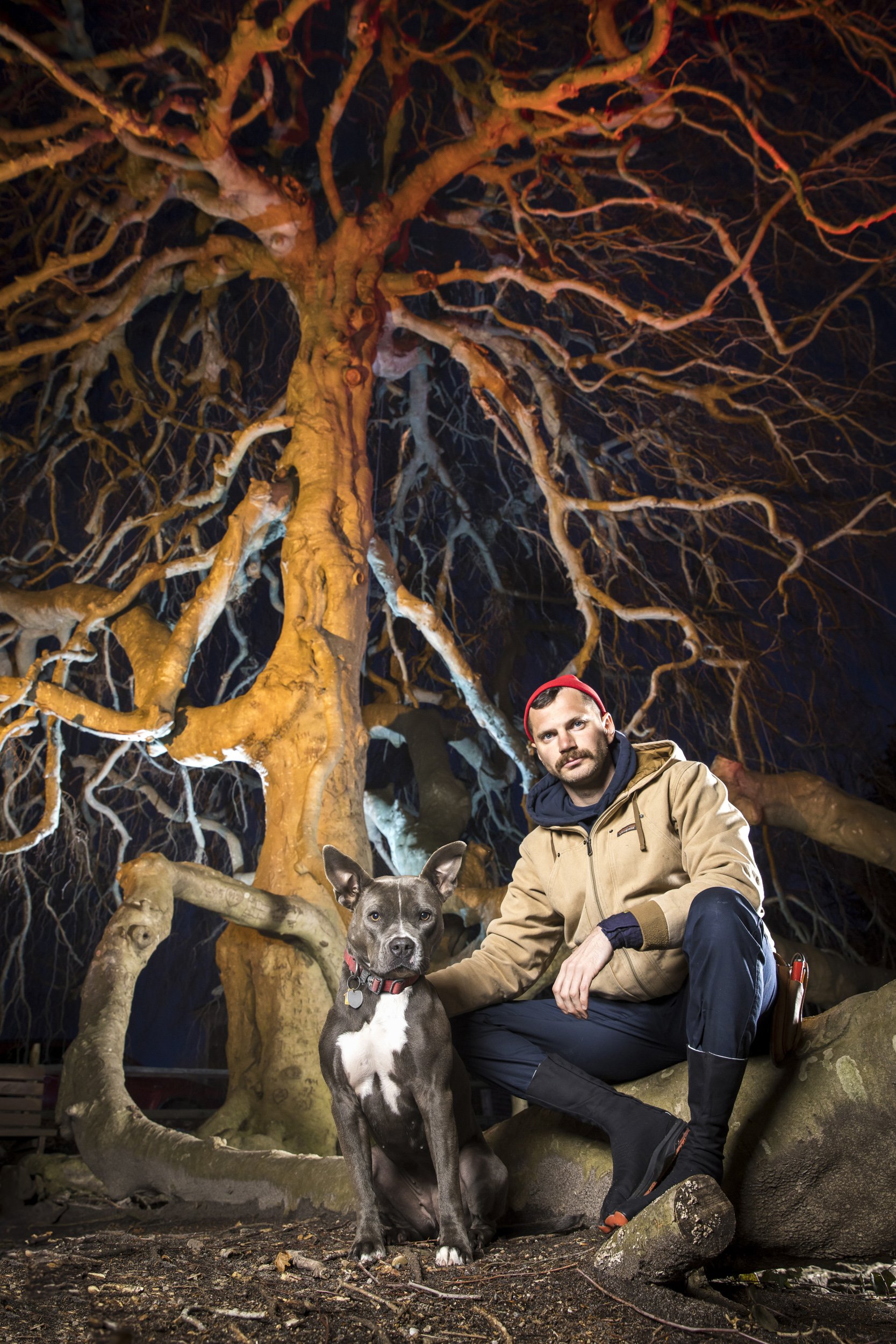
Eugene - Belarus
Eugene and his dog, Tulsa, sit beneath a century-old weeping beech tree, one of his favorite spots on Cape Cod. Born in Minsk when it was still part of the Soviet Union, he grew up amid scarcity and deep intolerance toward LGBTQ+ people. After first coming to the U.S. on a J-1 visa, an online joke about Provincetown led him to the place where, he says, “I could just be.”
As conditions worsened in Belarus, Eugene applied for political asylum and returned to the U.S. in 2015, eventually settling on Cape Cod. Today, he works as an arborist specializing in aesthetic pruning, a craft that lets him reveal the natural beauty of trees. Though he hasn’t seen his family in a decade, he’s found belonging here. “The best thing about Ptown is the ocean—and the people,” he says. “When you plant a tree, it’s because you want beauty. That’s what I’m trying to grow.”