

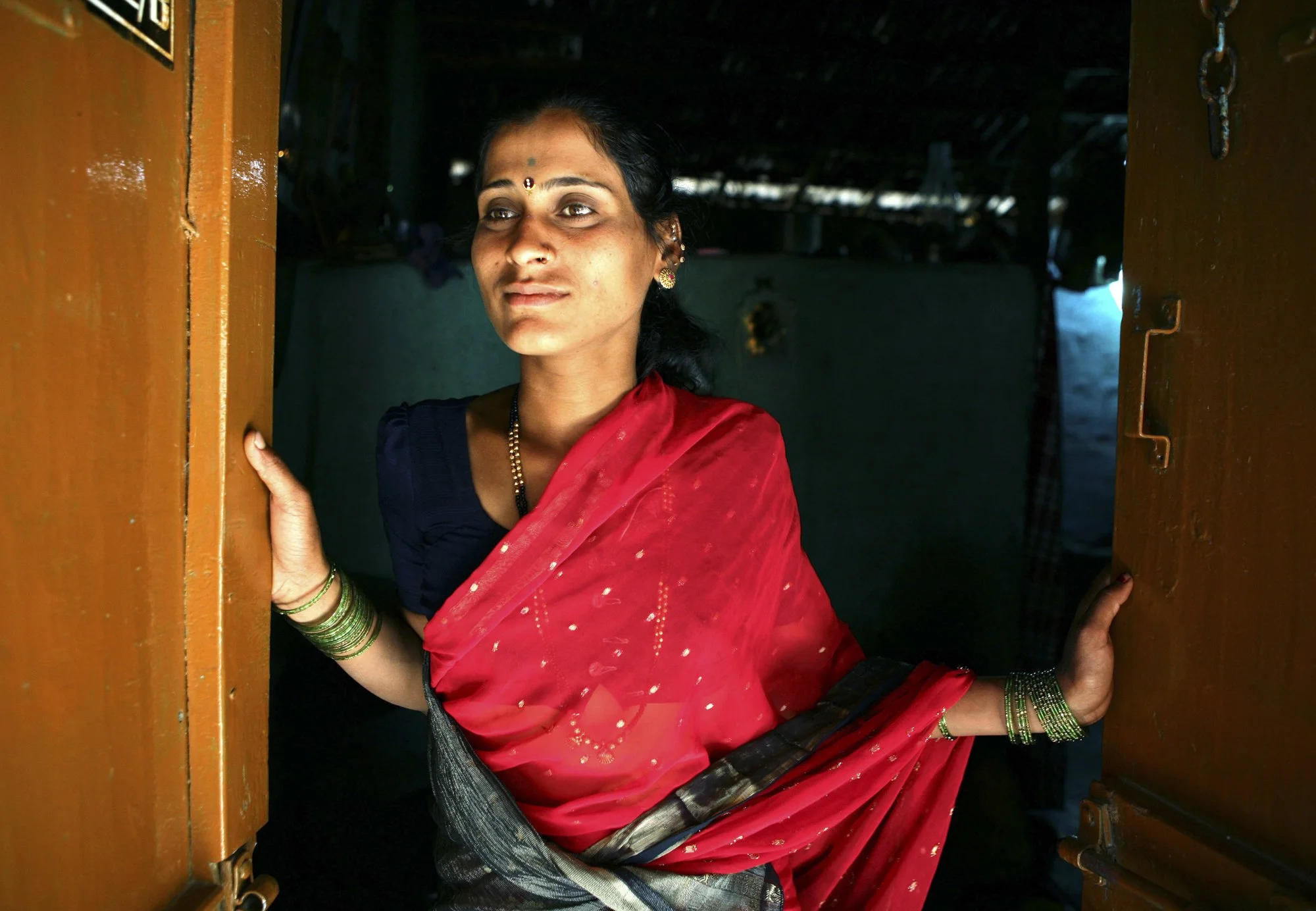
At 28, Kasvva Haragan waits for a customer at the door of the brothel where she lives and works with two other women in Gokak, India. Dedicated as a Devadasi at age 12 in a private ceremony to skirt the Devadasi Protection Act, she now supports her parents and siblings, while giving half her earnings to the brothel owner. "Who would want to marry me? I'm a Devadasi," she says. Illiterate and with few options, Kasvva worked in sugarcane fields as a child instead of attending school. Her story is part of a larger project exploring the lasting impact of the Devadasi tradition on women’s lives in contemporary India.
The Devadasi System: India’s Sacred Servitude Turned Exploitation
These photographs document the lives of women caught in India’s Devadasi system—an ancient religious tradition that, in its modern form, has become a pathway into systemic, caste-based sexual exploitation.
Kavita Kurbati, 18, sits quietly inside her family home in the bustling town of Gokak, India, waiting for a customer. Dressed in a red-and-white flowered salwar kameez, she watches over her sleeping daughters—three-year-old Rakshita and one-year-old Chaitra—curled at her feet.
When Kavita reached puberty, her mother, following a centuries-old ritual, dedicated her to the Hindu deity Yellamma. This act “married” her to the goddess, marking her as a Devadasi—a so-called "female servant of god." While once considered a sacred role, it now effectively bars her from marrying a mortal and instead binds her to a life of sexual servitude under the guise of religious offering.
Historically, Devadasis occupied a respected space in temple life—patronized by nobility and linked to classical art, music, and dance. But over time, that reverence eroded. Today, many Devadasis, like Kavita, survive as marginalized sex workers, earning barely enough to support extended families. Kavita's daily income of 300 rupees (just over $6) feeds not only her children but her parents and siblings as well.
Though cloaked in ritual, the modern Devadasi system has become a way to funnel lower-caste girls from impoverished families into the sex trade. What remains is a stark contradiction: a tradition once revered now perpetuates cycles of poverty, gender violence, and caste discrimination.
A companion multimedia documentary—combining still images with interviews and ambient sound—can be viewed here.
-
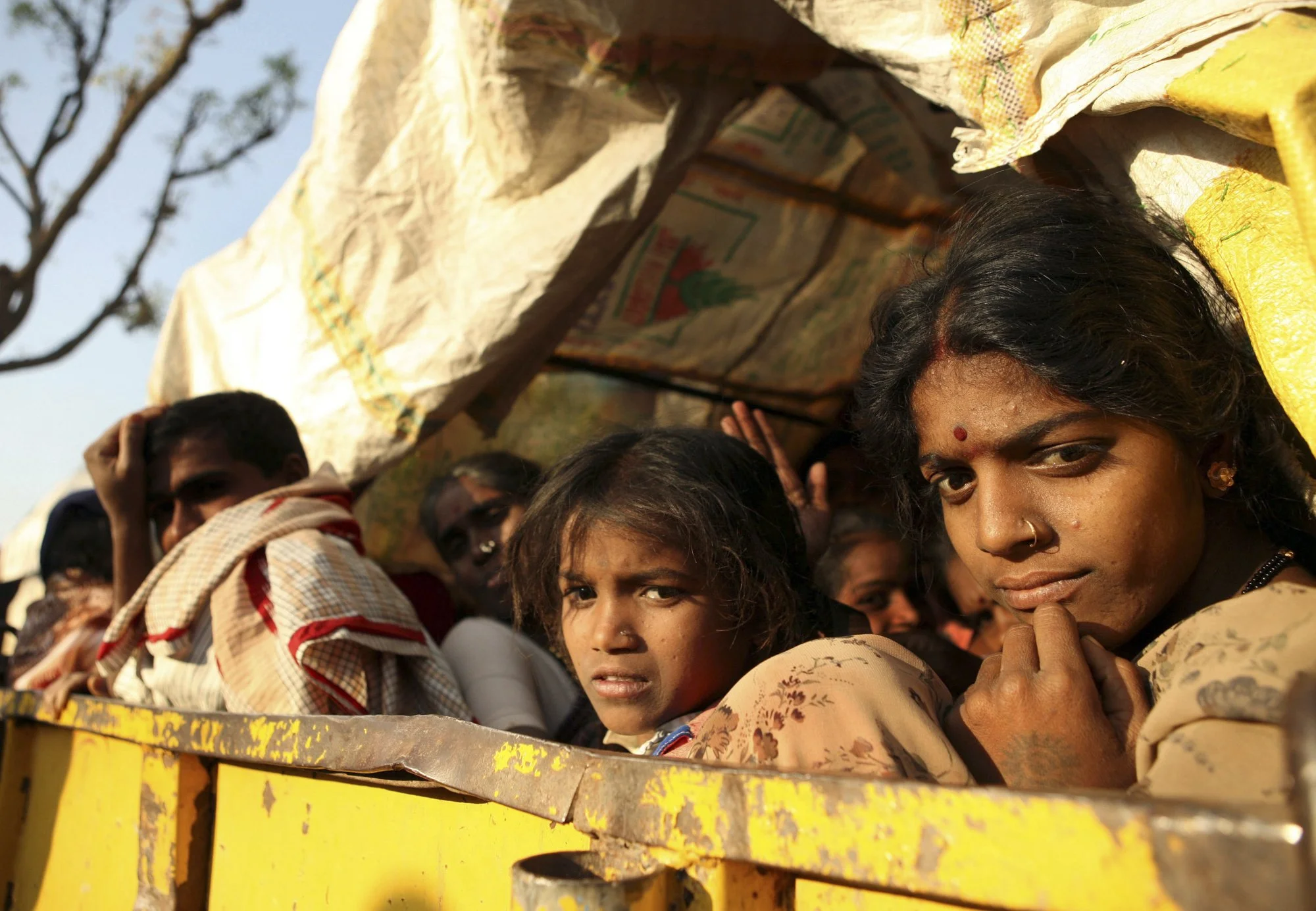
Young girls arrive with their families by bullock cart at the Yellamma Jatre festival in Saundatti, India. As part of a controversial tradition, girls from impoverished lower-caste families are "married" to the goddess Yellamma during the annual full moon celebration. Once dedicated, they are considered servants of the goddess—expected to perform temple duties and, tragically, often subjected to sexual exploitation. Many are later trafficked to urban red-light districts. Girls with matted hair, skin conditions, or disabilities are more likely to be chosen, as such traits are seen as signs of the goddess’s selection.
-
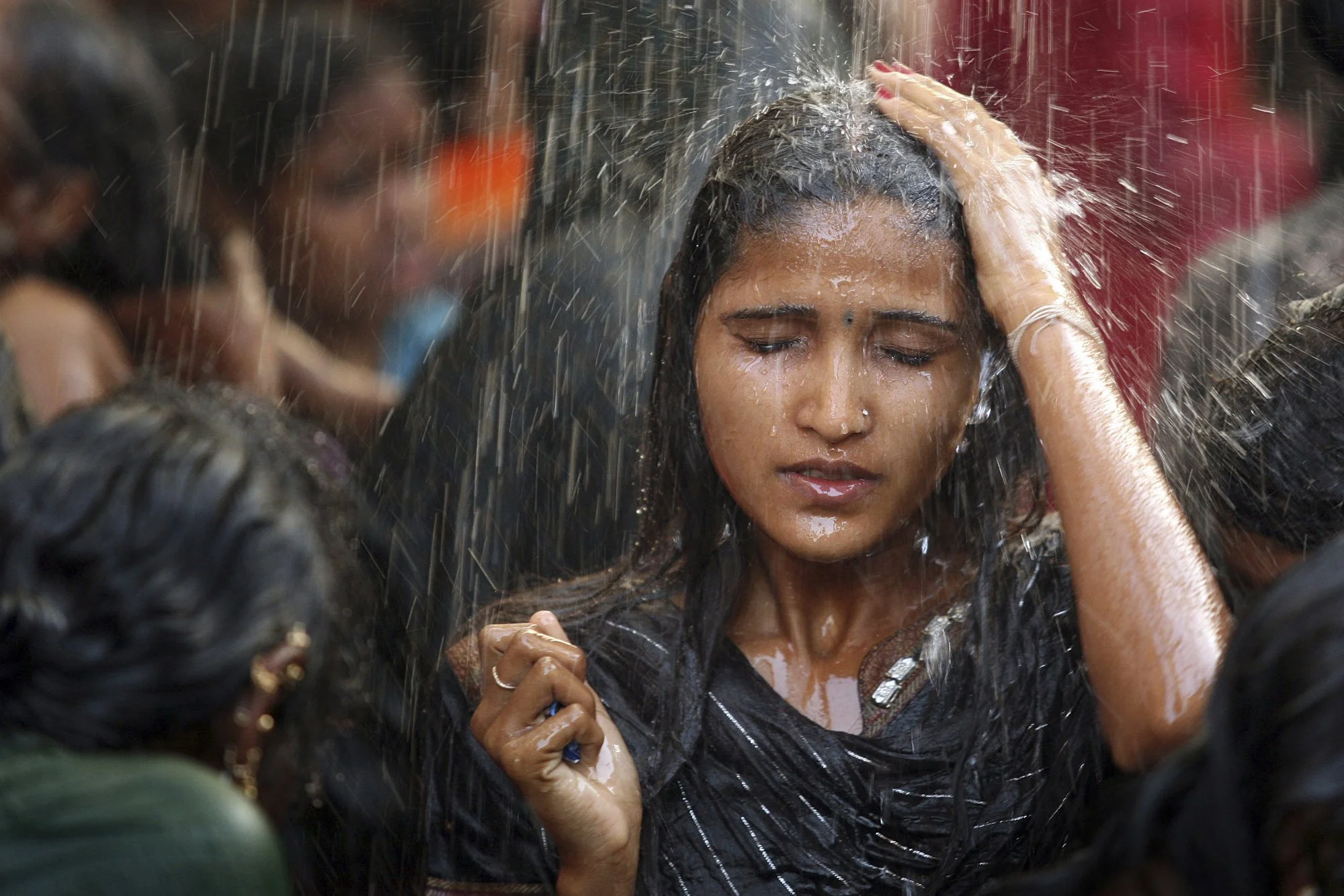
A young woman bathes in a communal washing area before worshipping at the Yellamma temple during the annual Yellamma Jatre festival in Saundatti, India. Ritual bathing is required before entering the temple. During the full moon festival, young girls from impoverished lower-caste families are often "married" to the goddess Yellamma. Once dedicated, they are considered servants of the goddess—expected to carry out temple duties and, in many cases, subjected to sexual exploitation. Forbidden from marrying, some are later trafficked to red-light districts in India’s cities.
-
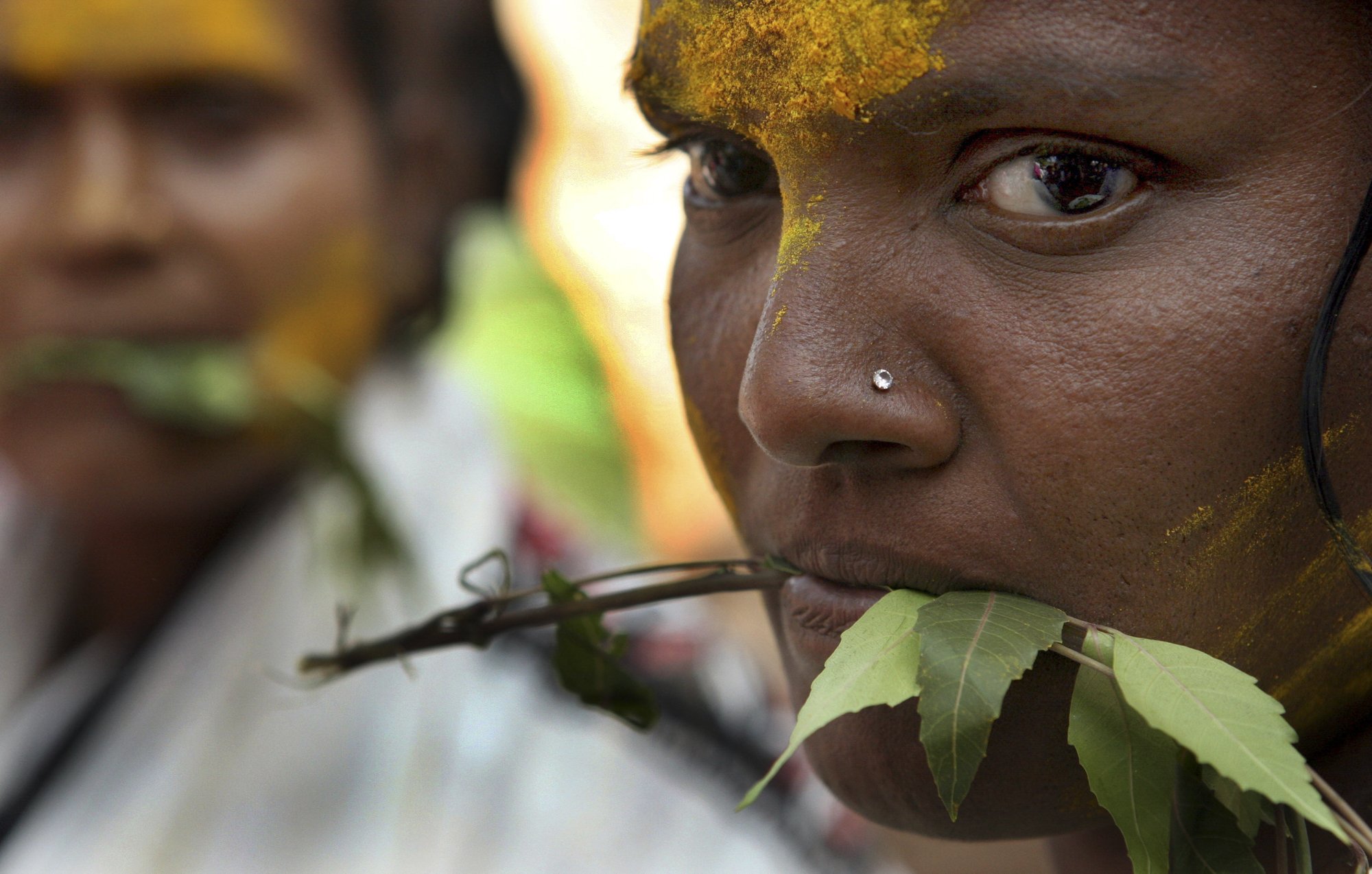
Yellamma worshippers hold neem leaves in their mouths as a gesture of devotion during the Yellamma Jatre festival in Saundatti, India. The practice echoes an older ritual in which young girls, once paraded nearly naked with neem leaves at their waists during their dedication to the goddess, were symbolically “married” to Yellamma. Though the public ritual is now outlawed, the practice continues discreetly, and many girls remain vulnerable to lifelong exploitation under the guise of religious service.
-
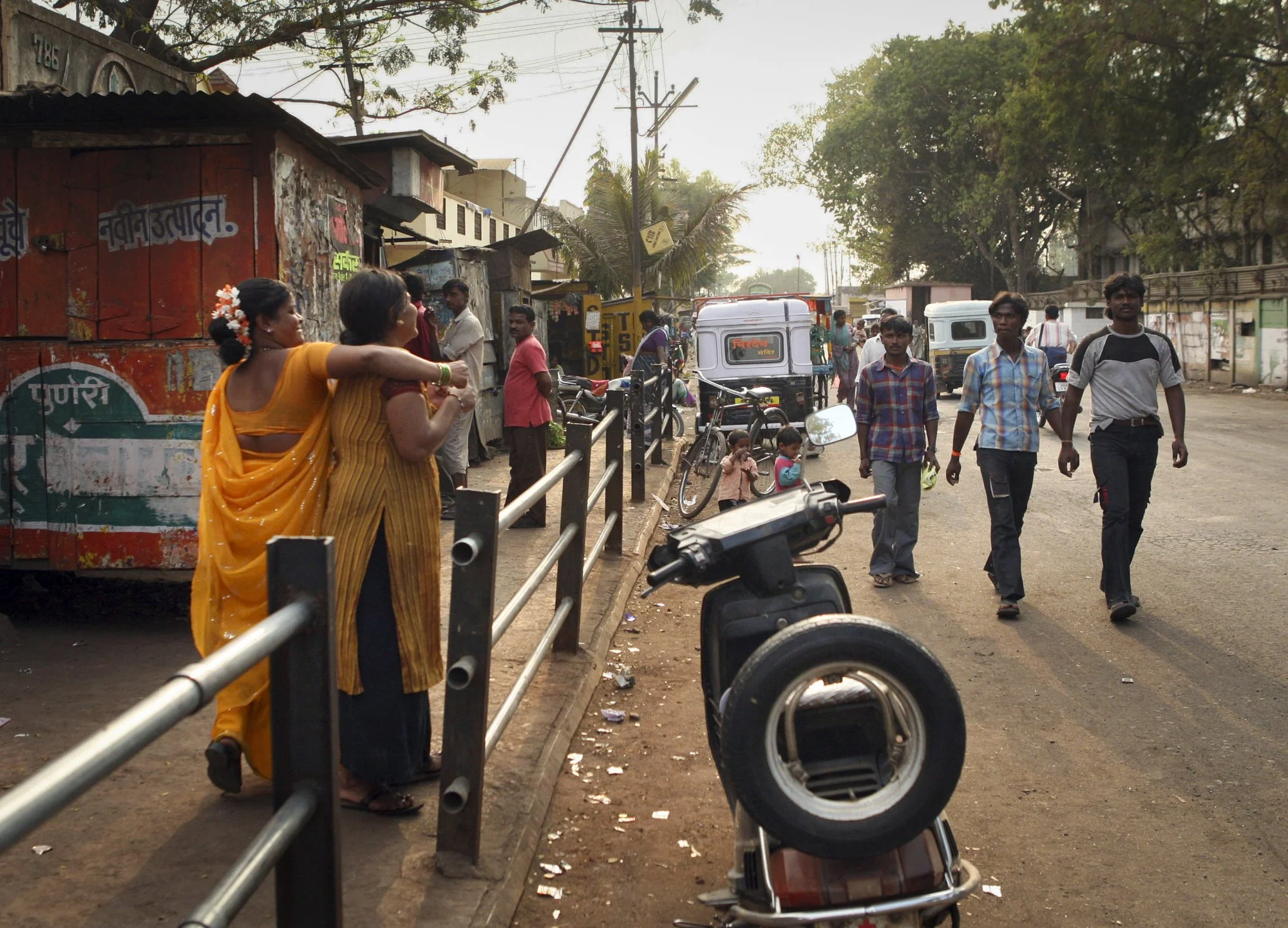
Surekha Kamble (far left) and a friend try to catch the attention of passing men in the red-light district of Miraj, where they live and work as Devadasi sex workers. Initiated into the tradition at sixteen, Kamble followed the path of her mother and sister. Today, she also works as a peer educator, raising awareness about HIV/AIDS and other STIs. Her daughters, Chandrike and Ropani, attend a residential school for children of Devadasis—part of Kamble’s hope that they will have opportunities beyond the life she inherited.
-
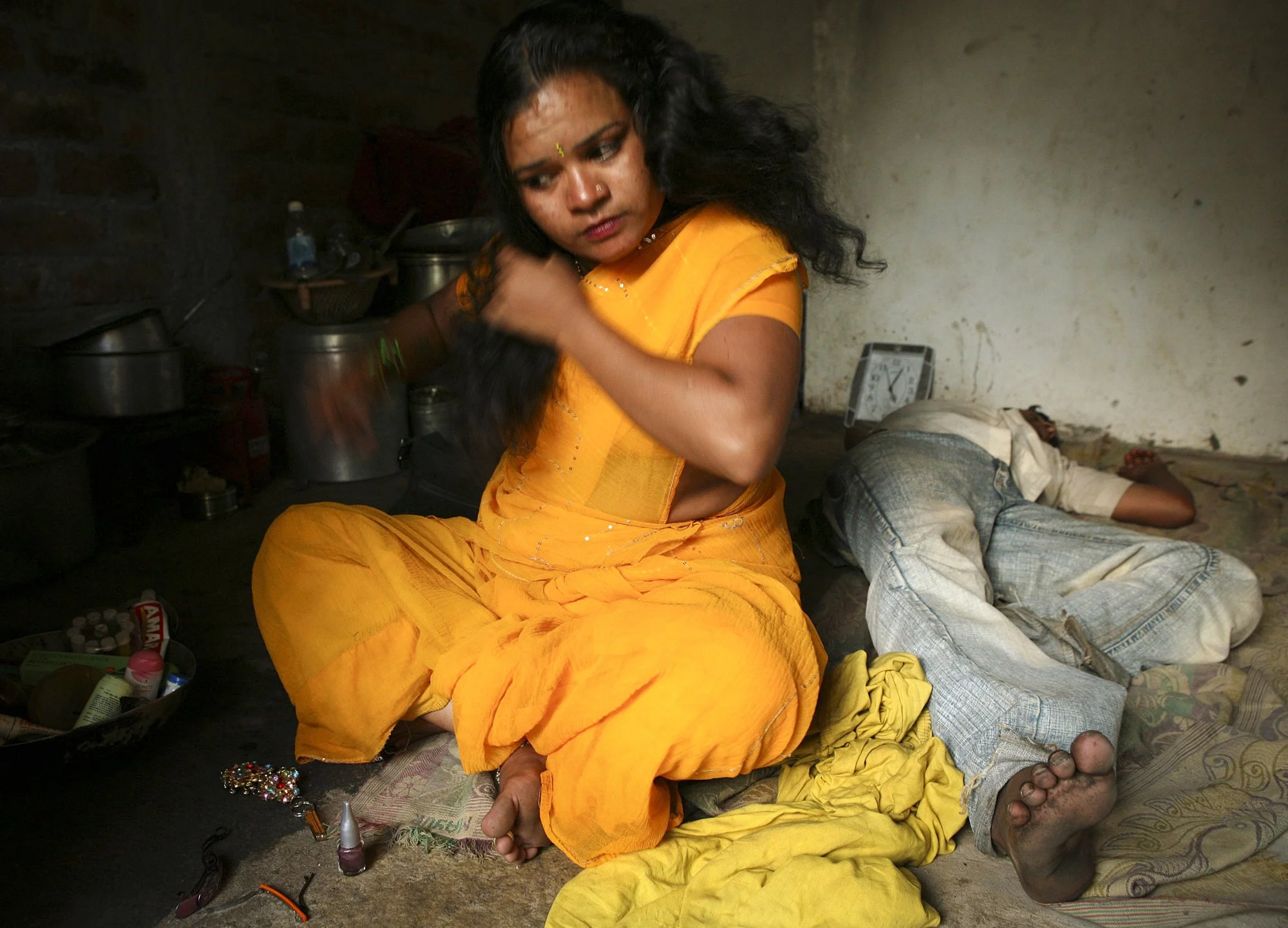
Surekha Kamble brushes her hair as she prepares for the evening in Miraj’s red-light district, where she has worked as a Devadasi sex worker since the age of sixteen. Like her mother and sister before her, she was dedicated to the tradition. Kamble now also serves as a peer educator, raising awareness about HIV/AIDS and other STIs in her community. Her daughters, Chandrike and Ropani, attend a residential school for children of Devadasis—part of her hope that they will forge a different path.
-
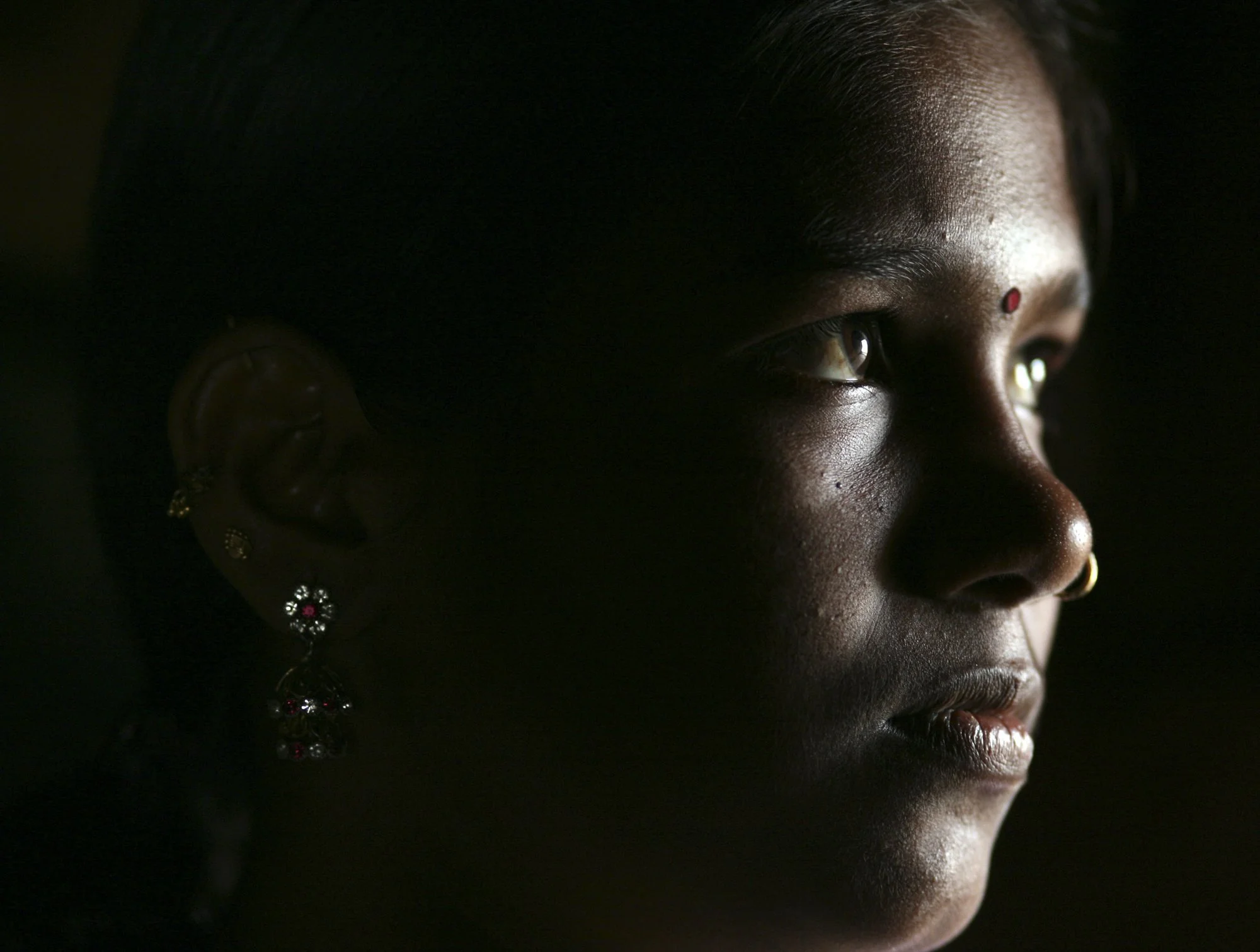
Devadasi women and their families have been severely impacted by HIV/AIDS. This young Devadasi girl spent less than a year working in Mumbai’s red-light district before being rescued by The Rescue Foundation, a local NGO. During her brief time there, she contracted HIV.
-
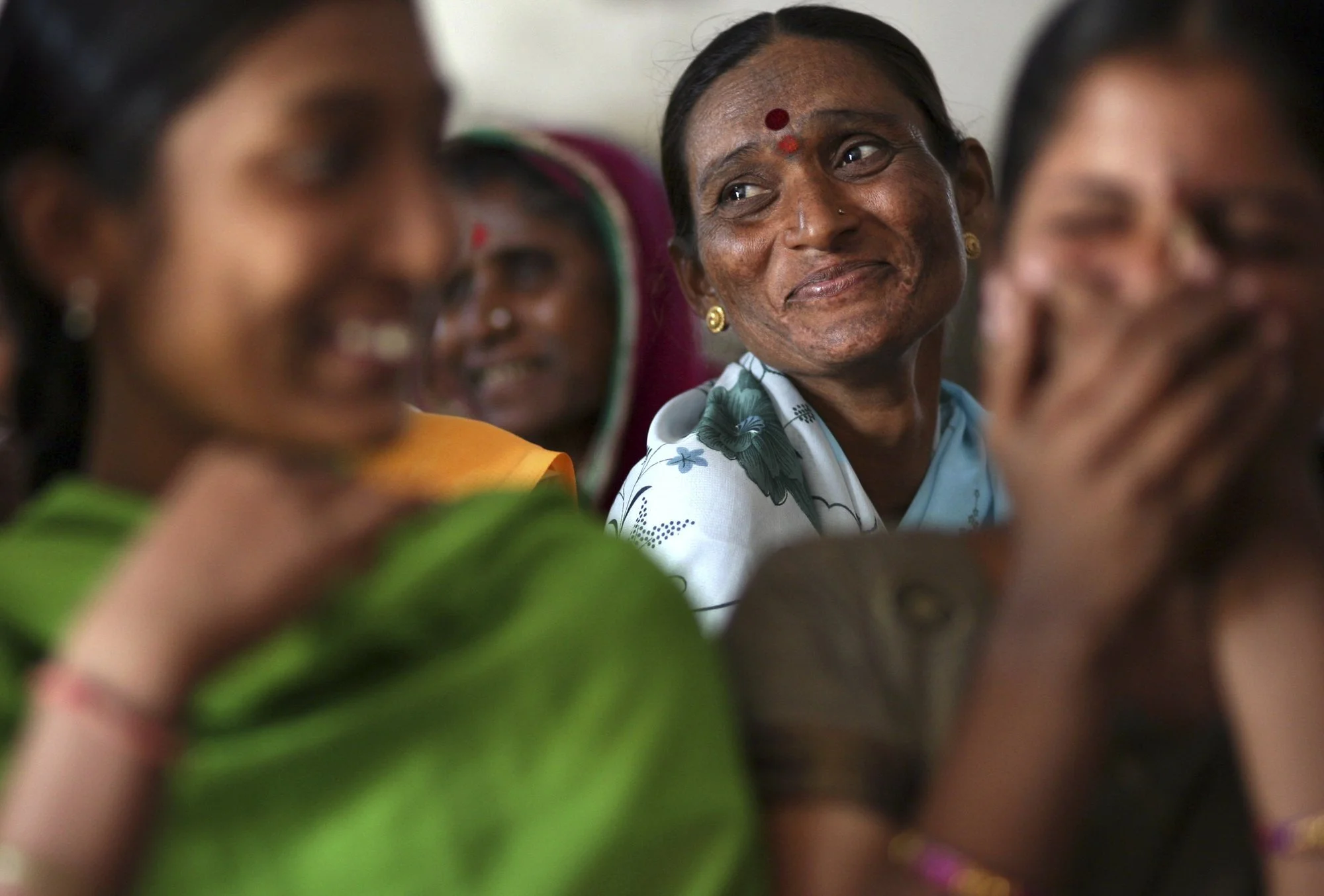
An older ex-Devadasi woman smiles during a self-help group meeting in Karnataka, India, organized by Vimochana Sangha, an NGO working to dismantle the Devadasi system. Self-help groups like this offer women tools for empowerment and a path out of the cycle of exploitation.
-
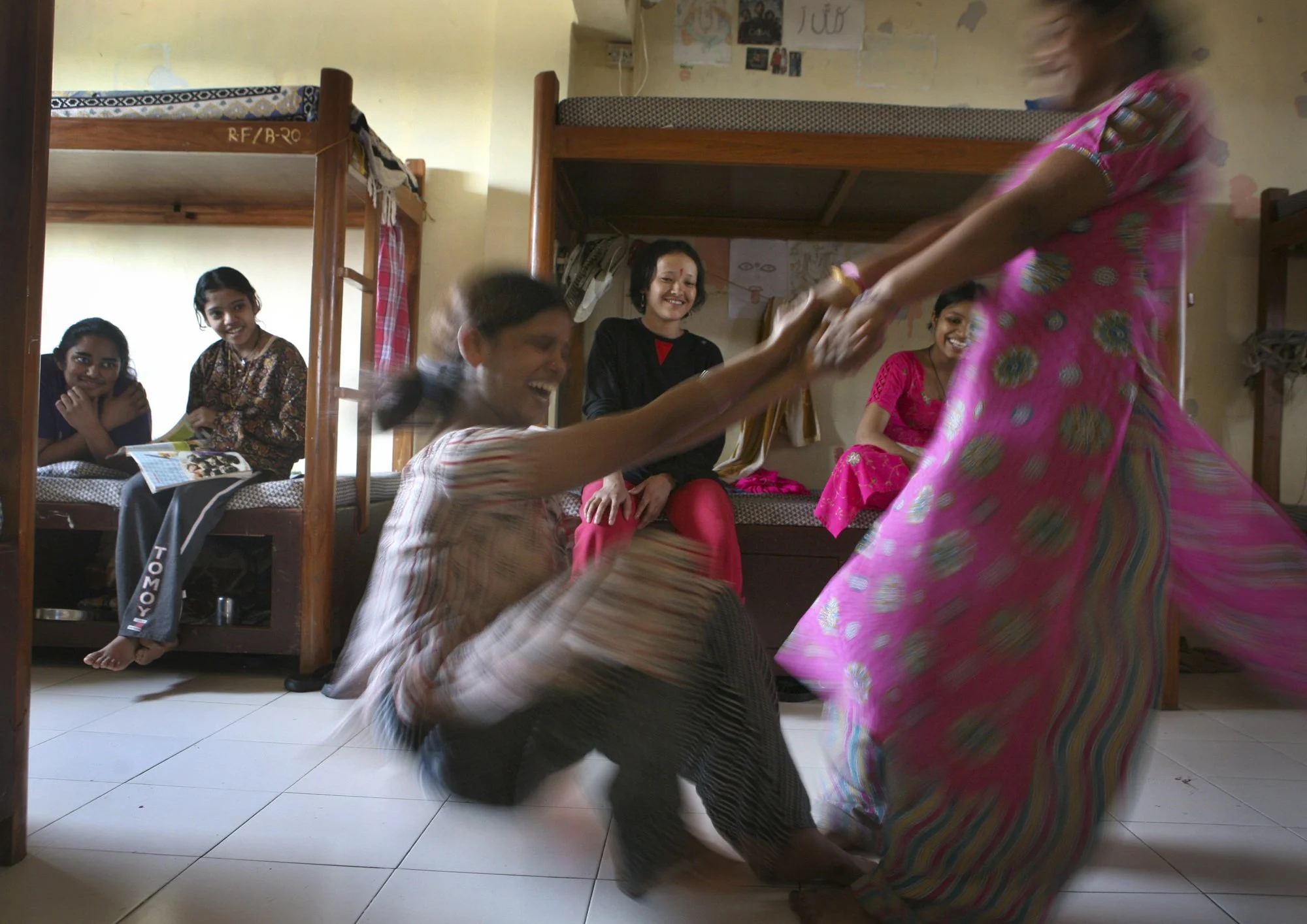
Young girls play a spinning game at the Rescue Foundation hostel near Mumbai, India. The organization provides shelter and support for over 50 girls at a time—many under 18—rescued from brothels, including some from the Devadasi belt in northern Karnataka. Many are healing from trauma, and the foundation offers a space for recovery, safety, and renewed possibility.
-
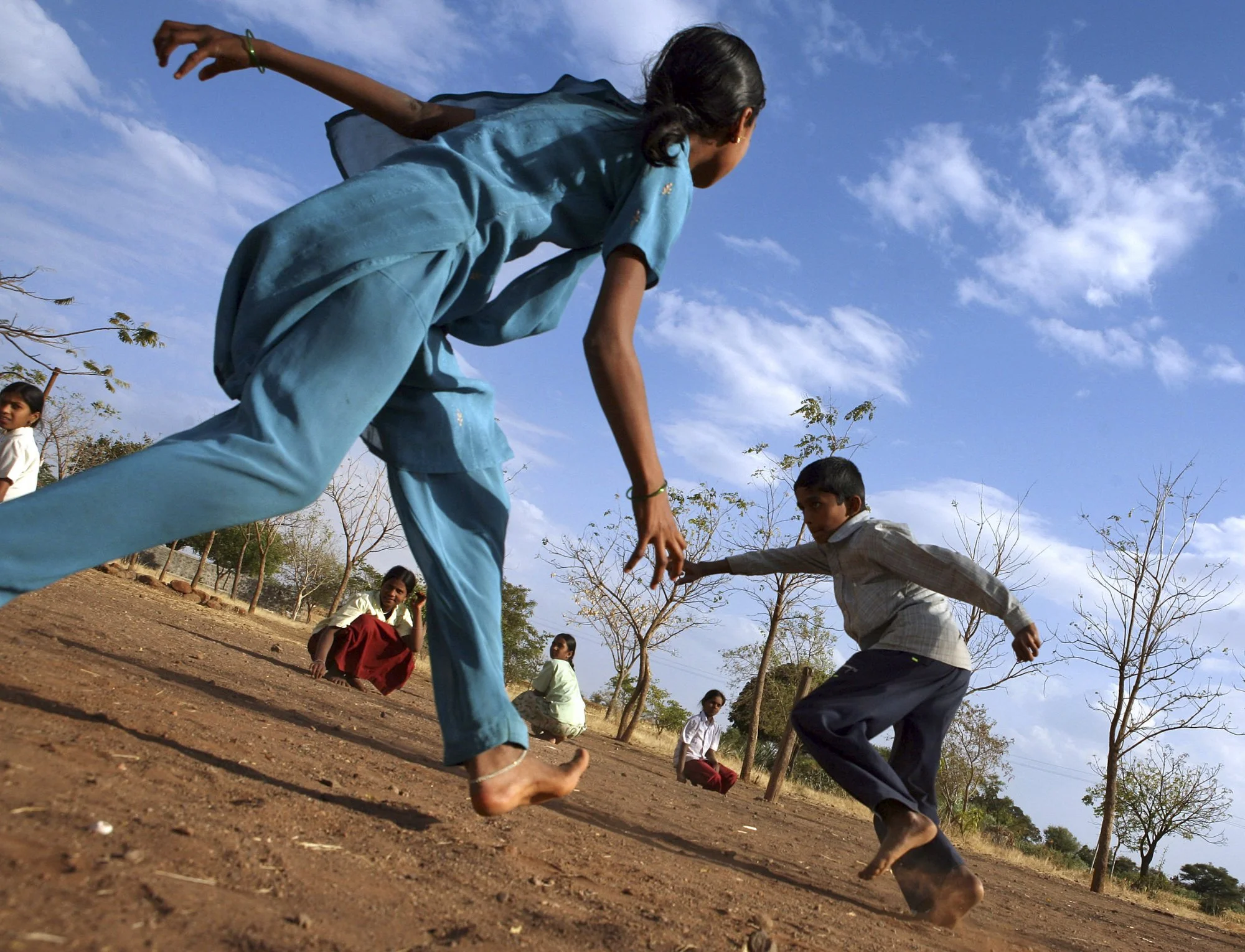
Students play during a physical education class at the Vimochana School in Malabad, India—the first residential school for children of Devadasis. Founded in 1990 to break the generational cycle, the school removes children from environments where the Devadasi tradition persists and provides free education, uniforms, food, and medical care.
-
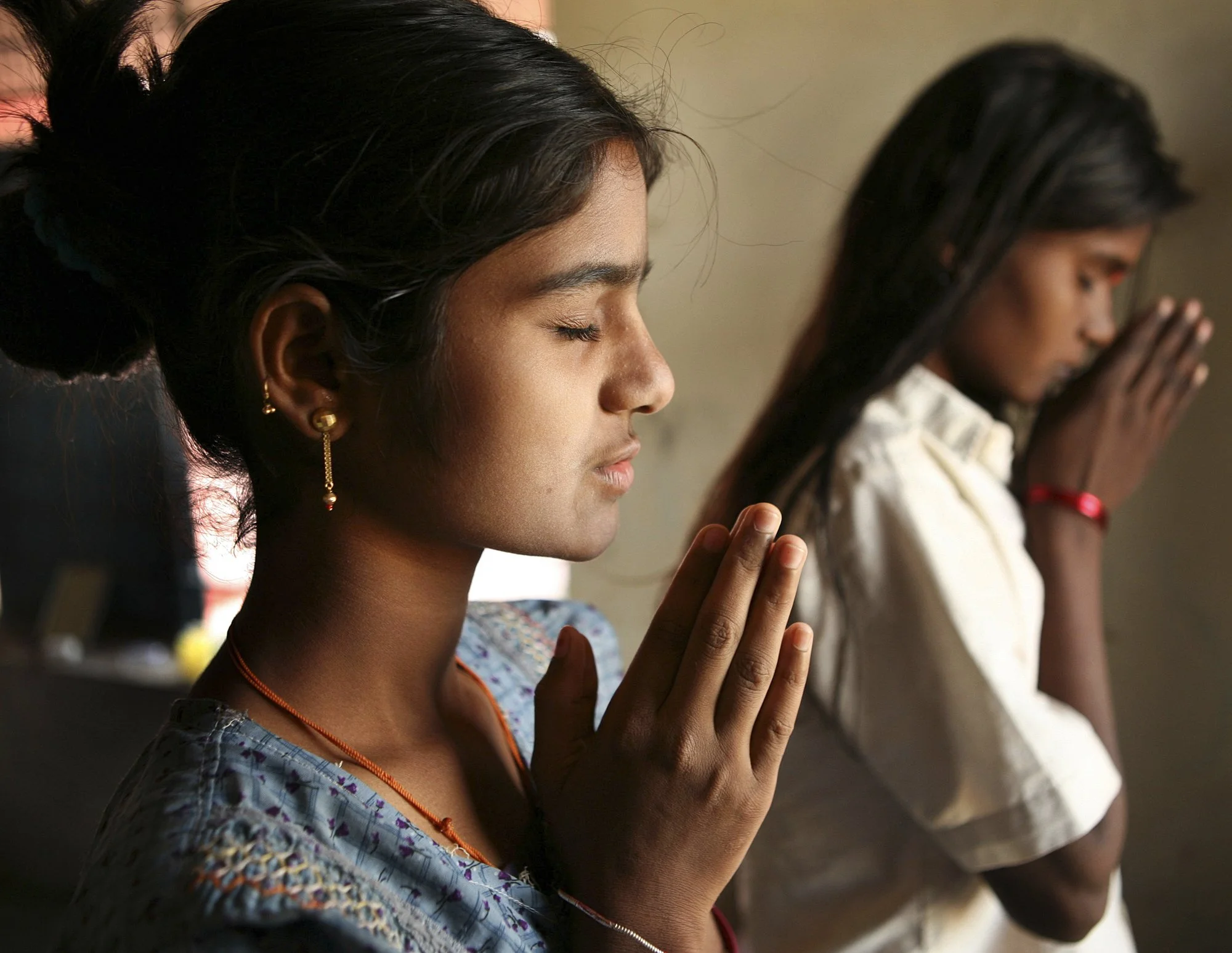
Akshata Jivoji (left) and Malashri Kamble perform morning prayers in their hostel room at Vimochana Sangha’s residential school for the children of Devadasis in Malabad, India. Founded in 1990 by B.L. Patil, the school was created to break the cycle of the Devadasi system by providing free education, food, and medical care. Graduates have gone on to become teachers, nurses, and engineers. “More than 300 girls are now married and living in the mainstream of society,” says Patil. “For us, that’s proof this generation has been spared.”