

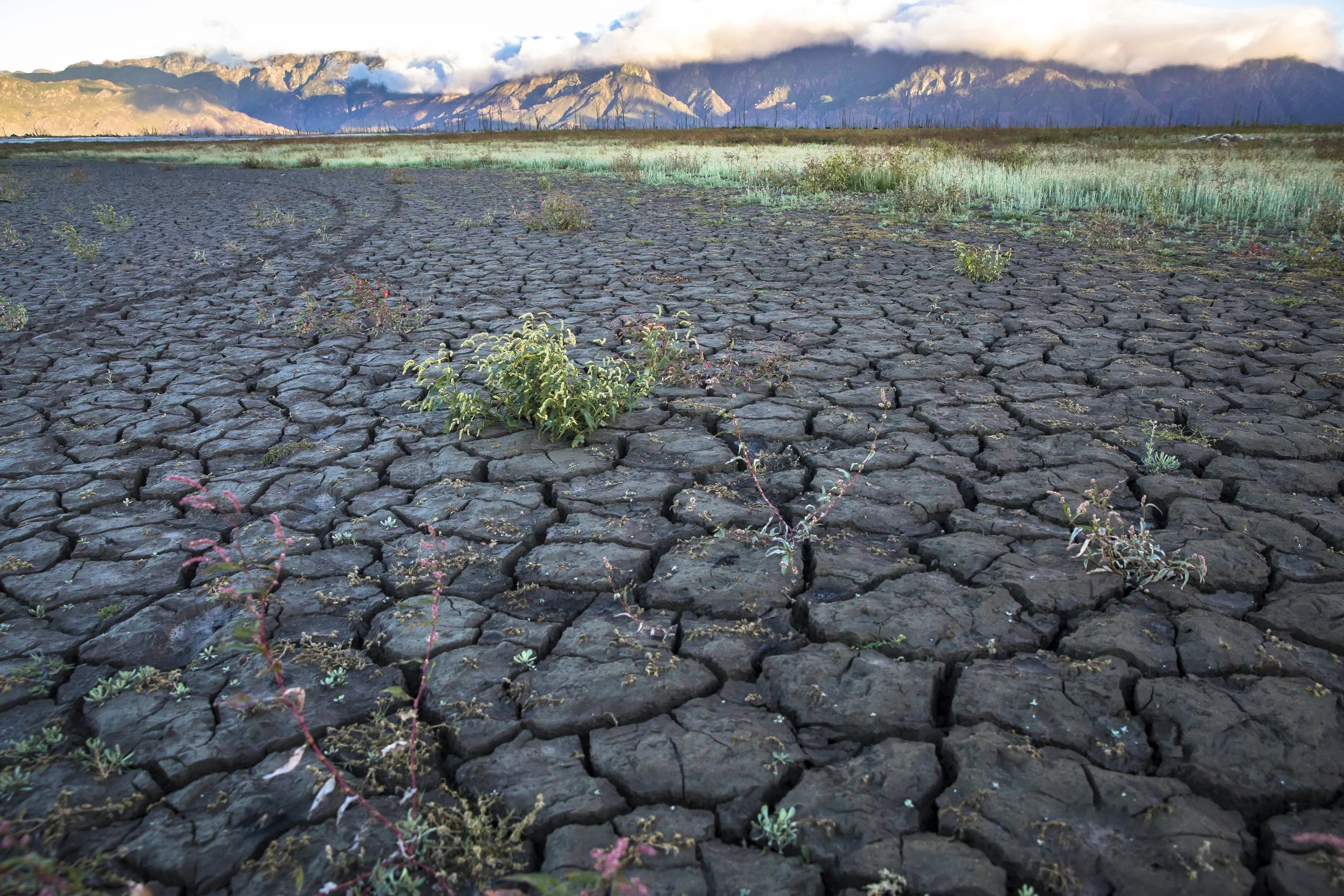
Deep cracks split the dry bed of Theewaterskloof Dam, once the largest reservoir in South Africa’s Western Cape water system. Normally supplying 41% of Cape Town’s water, the dam has dropped to critically low levels, exposing the region’s growing vulnerability to climate change and drought. In 2018, the city narrowly avoided “Day Zero”—the point at which municipal water taps would be turned off for over 4 million residents. While the immediate crisis was delayed, the threat still looms, and communities are adjusting to a new, water-scarce reality.
Cape Town’s Water Crisis
In 2018, while on assignment in South Africa, I took some time between projects to document Cape Town’s unfolding water crisis—an experience that has stayed with me ever since. At the time, the city was on the brink of becoming the first major urban center in the world to run out of water. Theewaterskloof Dam, Cape Town’s largest reservoir, had dropped to critically low levels, exposing deep cracks in its dry bed and in the region’s sense of environmental security. The dam, which normally provided 41% of the city’s water, had become a stark symbol of climate vulnerability.
Cape Town’s warning of “Day Zero”—the day when municipal water would be shut off and residents would line up under armed guard for daily water rations—made headlines across the globe. Although the date was ultimately pushed off thanks to stringent conservation efforts and a bit of rainfall, the crisis was a powerful reminder of how quickly a modern city can be brought to its knees by climate extremes.
Looking back from 2025, Cape Town’s near-catastrophe feels like an early chapter in a much larger global story. The images I made during that time offer a glimpse of what it looks like when the balance between people and natural resources begins to slip—and how communities adapt in the face of uncertainty. Below are some of the moments I captured during that tense and transformative time.
-
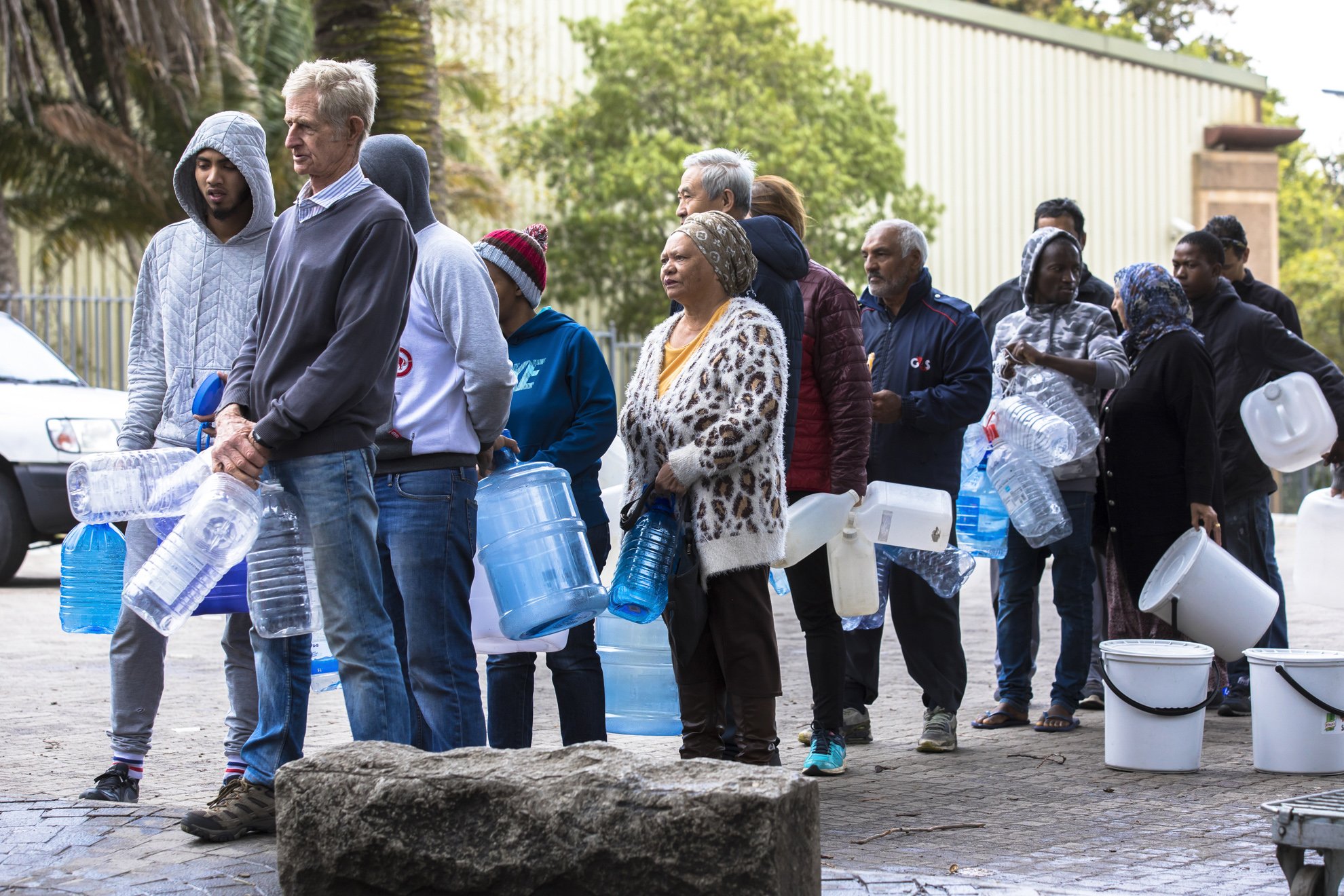
Capetonians line up with containers at the Newlands spring in suburban Cape Town. Fed by nearby Table Mountain, the spring has flowed reliably for generations but only recently became a vital public water source. With rising water costs and tight restrictions, residents now collect the clean spring water for drinking and cooking.
-
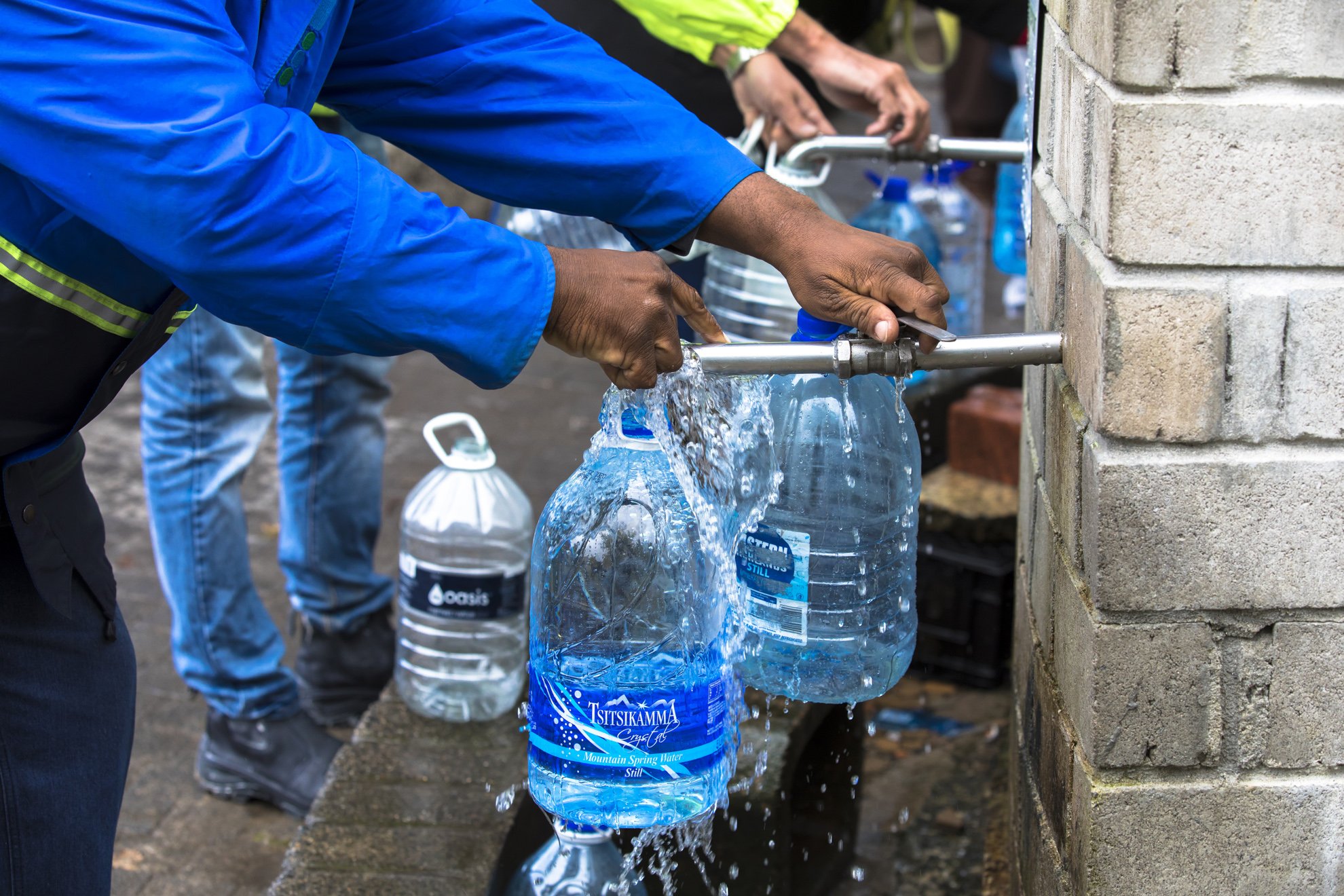
Hands work quickly as Capetonians fill containers at the Newlands spring—now a vital source of clean water for drinking and cooking amid strict municipal restrictions. Though the spring has flowed for generations, its role has shifted dramatically in the face of scarcity.
-
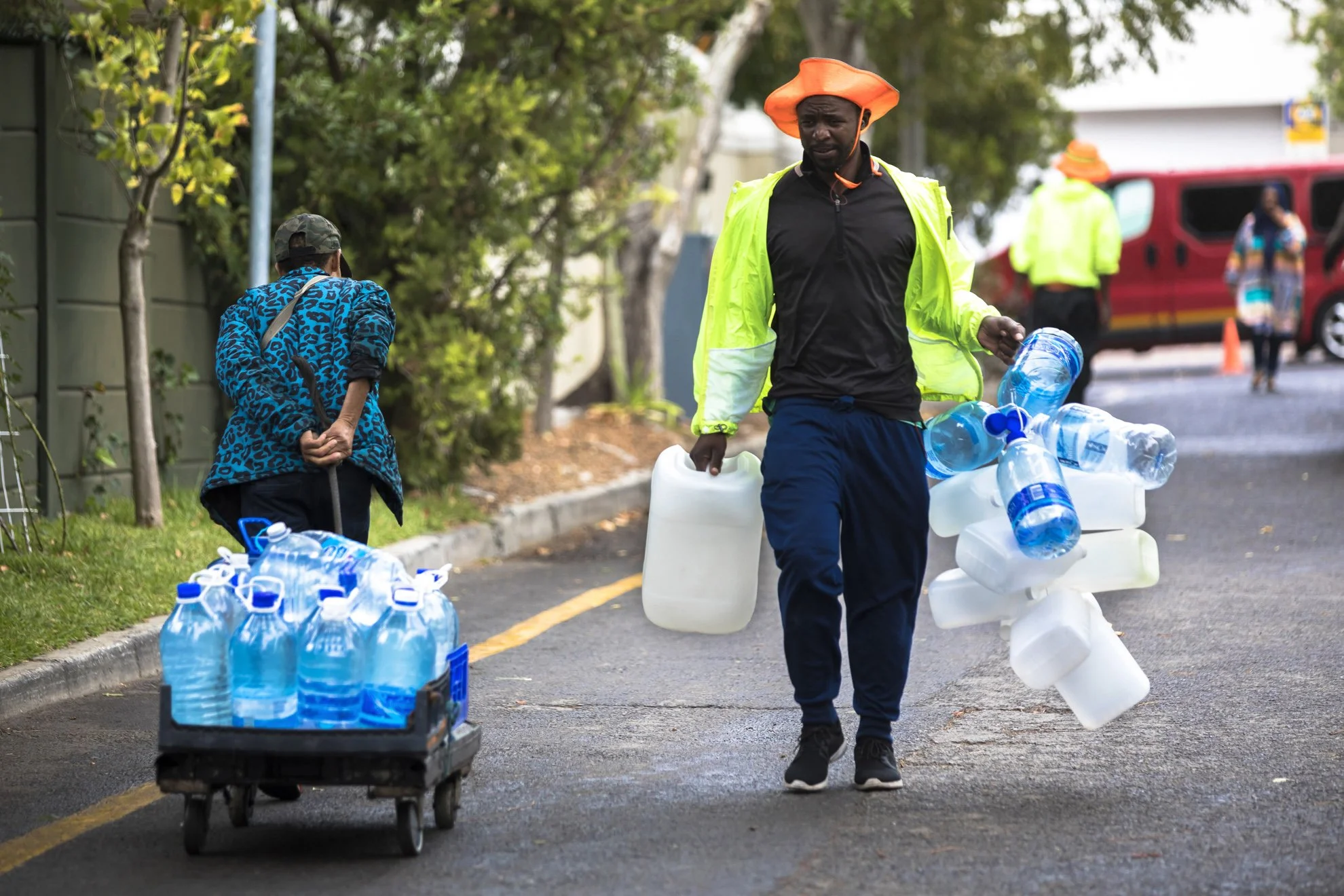
As with any crisis, creative entrepreneurs have found ways to earn income. On Spring Road, workers offer—for a fee—to transport heavy water containers from the public spring to residents’ waiting cars.
-
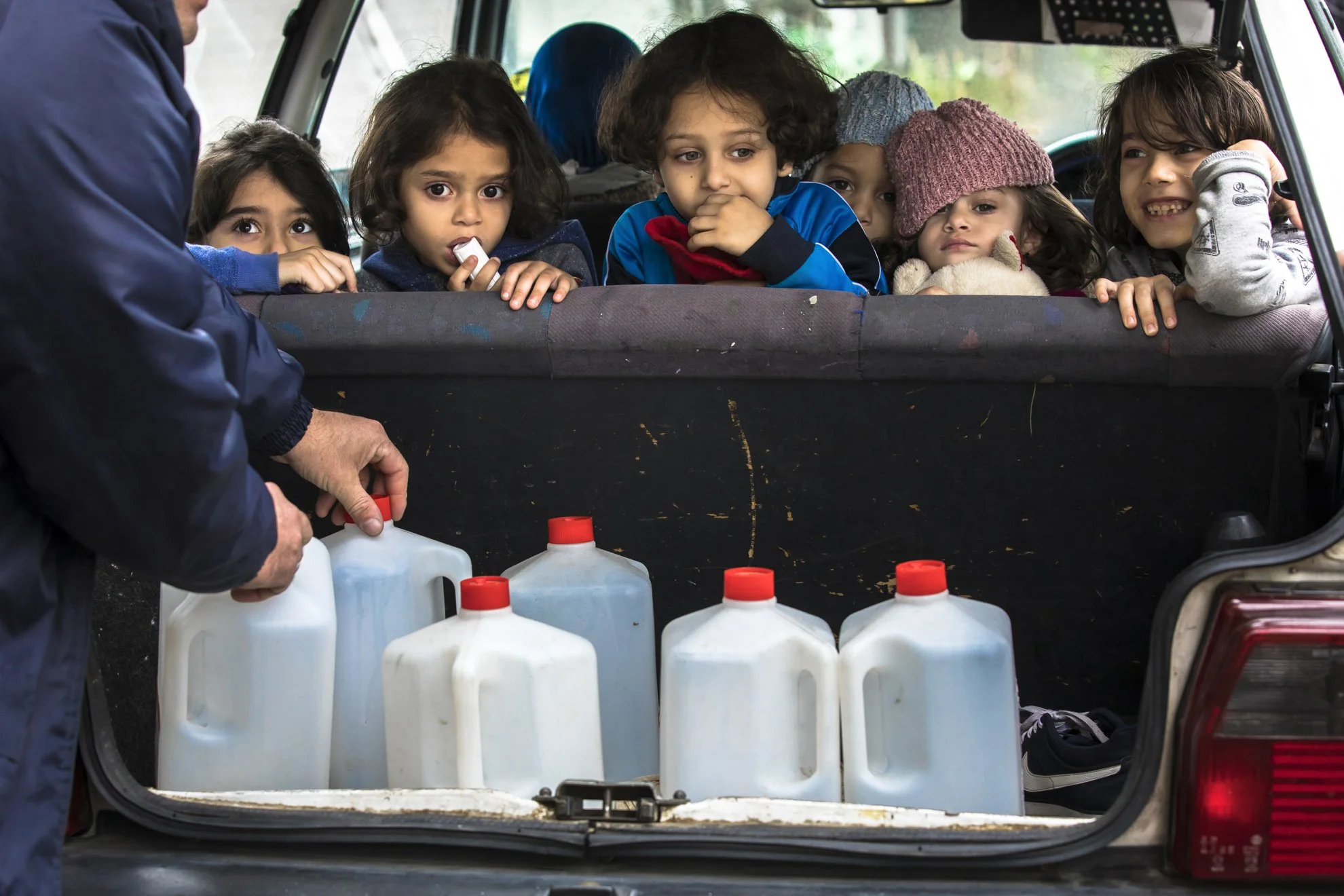
During Cape Town’s water crisis, family trips to public springs have become routine, with each visit limited to 25 liters. Many return two to three times a week to collect water for drinking and cooking.
-
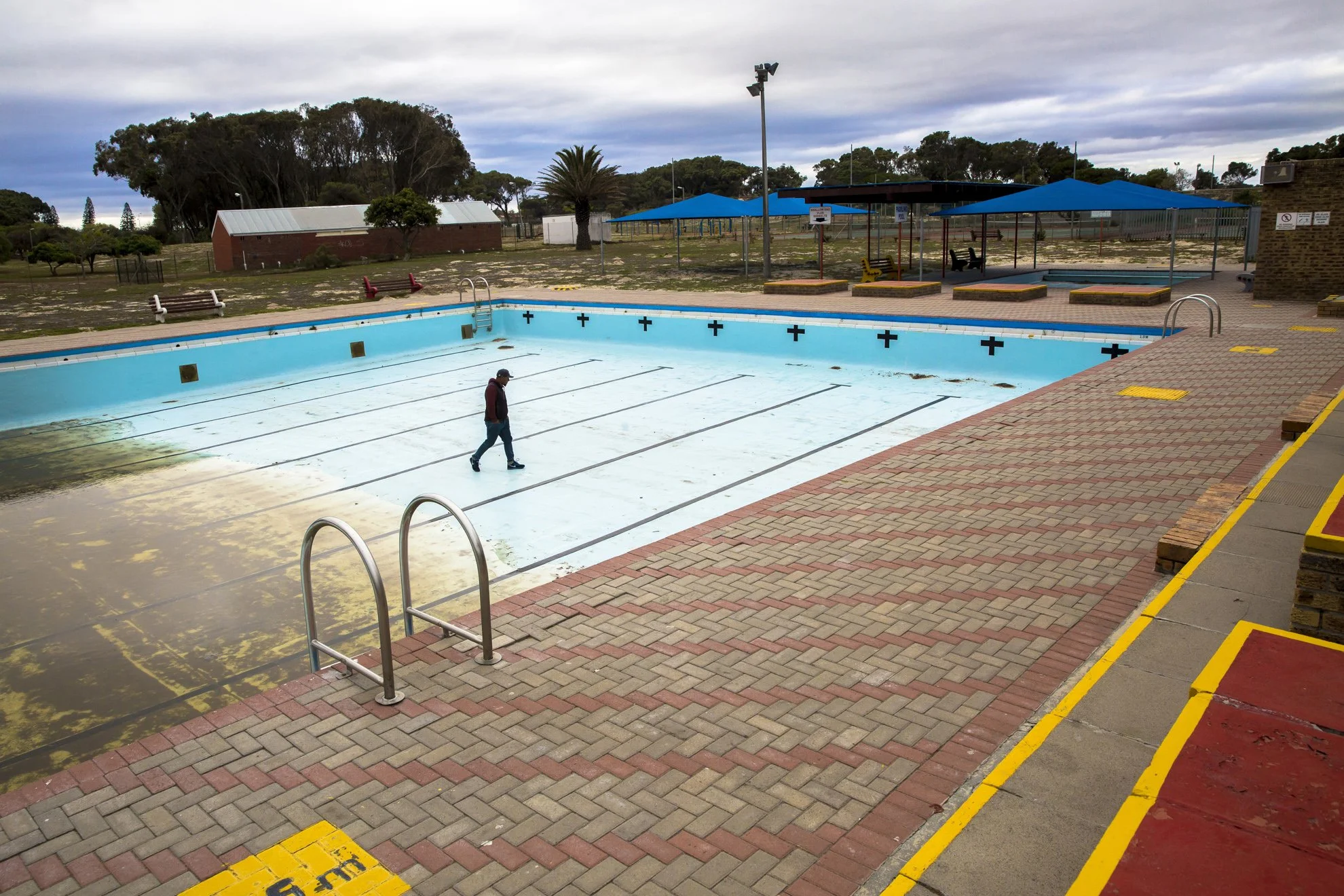
A man walks across an empty public swimming pool in Mitchell’s Plain, on the outskirts of Cape Town. The pool, like many others, was closed due to the ongoing water crisis.
-
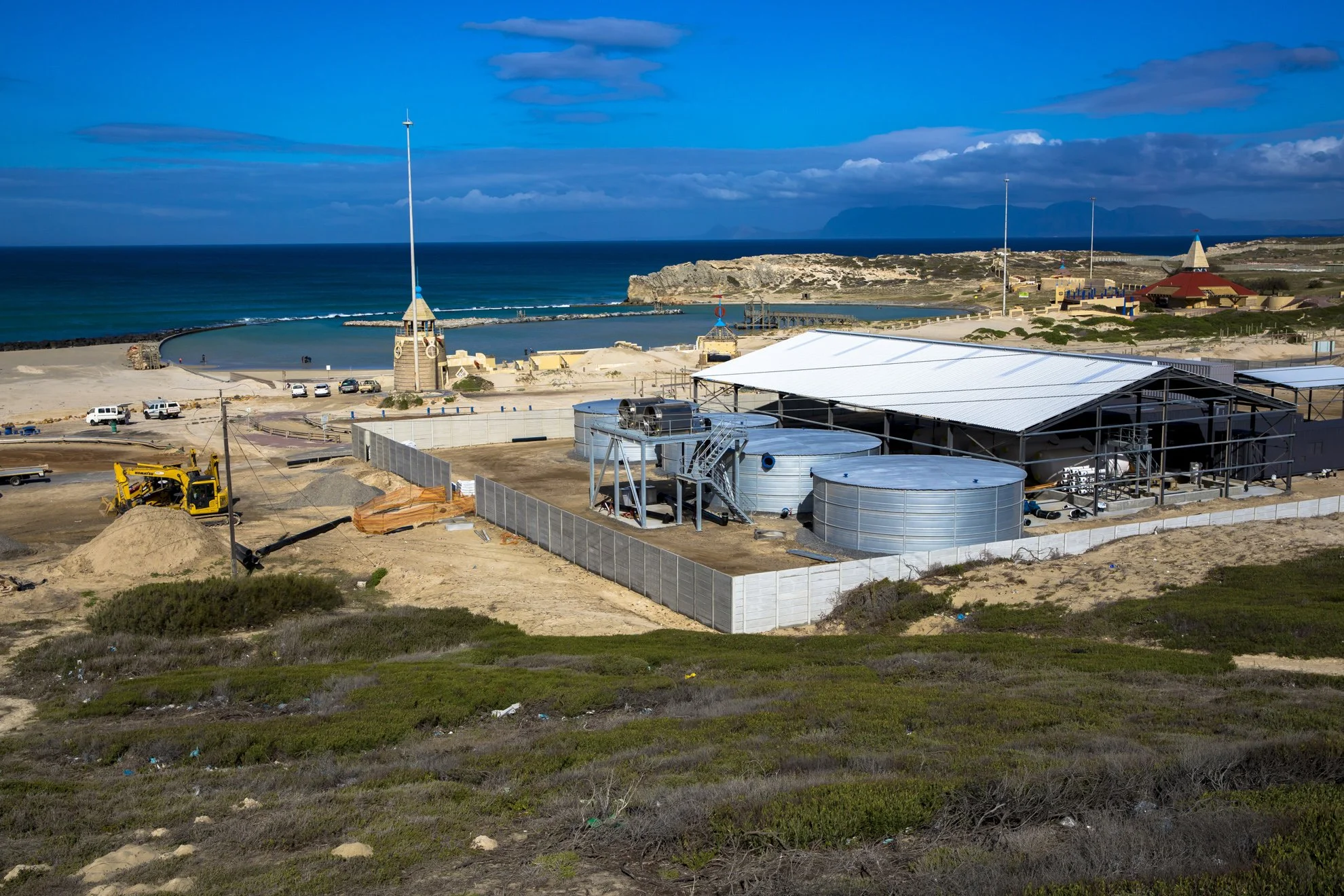
A temporary private desalination plant takes shape in Monwabisi on Cape Town’s False Bay. Built in response to the water crisis, the facility will draw seawater from 1 km offshore near a popular beach and is expected to produce seven million liters of drinkable water per day once operational.
-
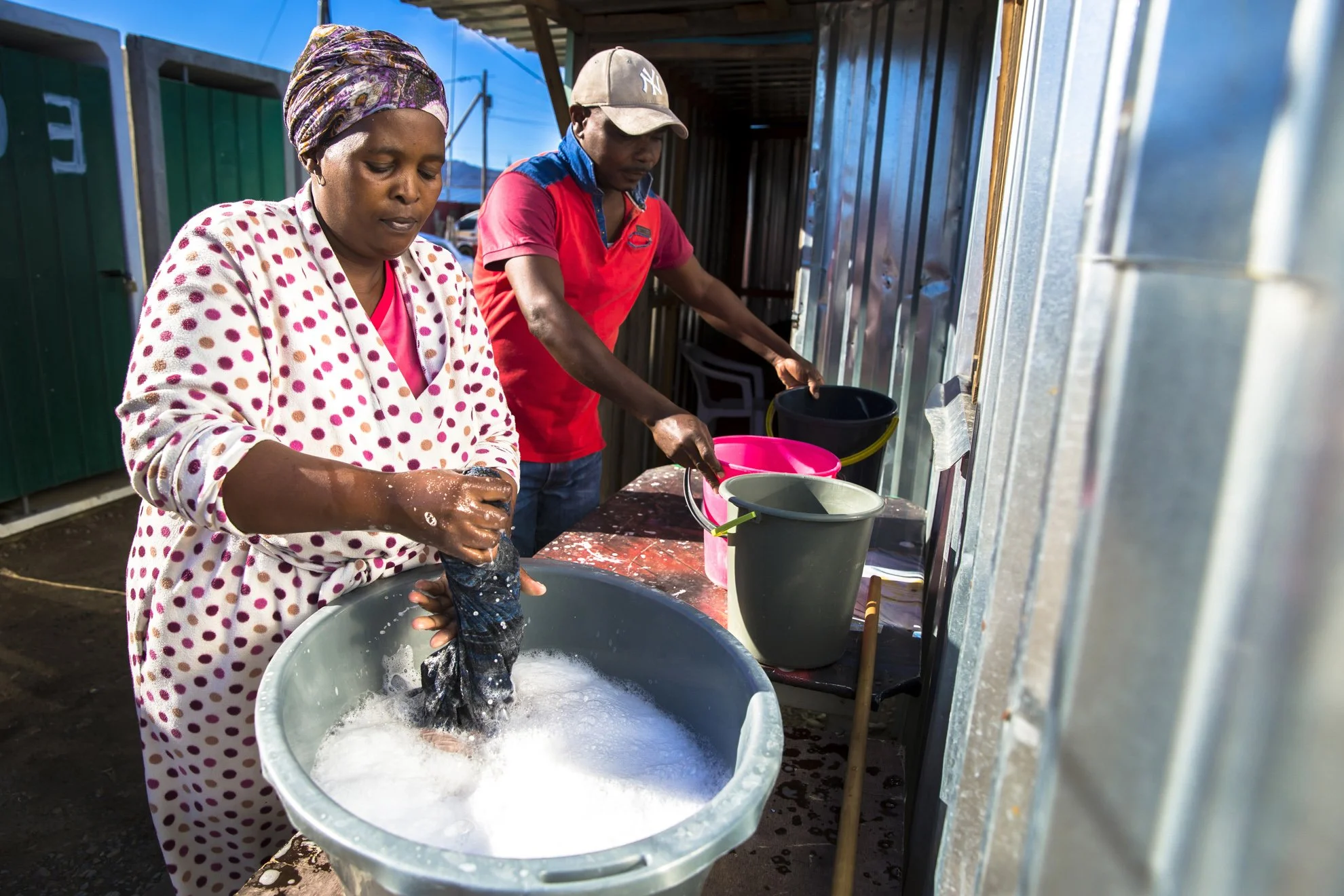
A woman washes clothes in a shallow bucket in Asanda Village, an informal settlement on the outskirts of Cape Town. Many residents here point out that poorer communities—without washing machines, dishwashers, or swimming pools—use far less water, yet feel more penalized than wealthier neighborhoods where private boreholes allow some to sidestep restrictions.
-
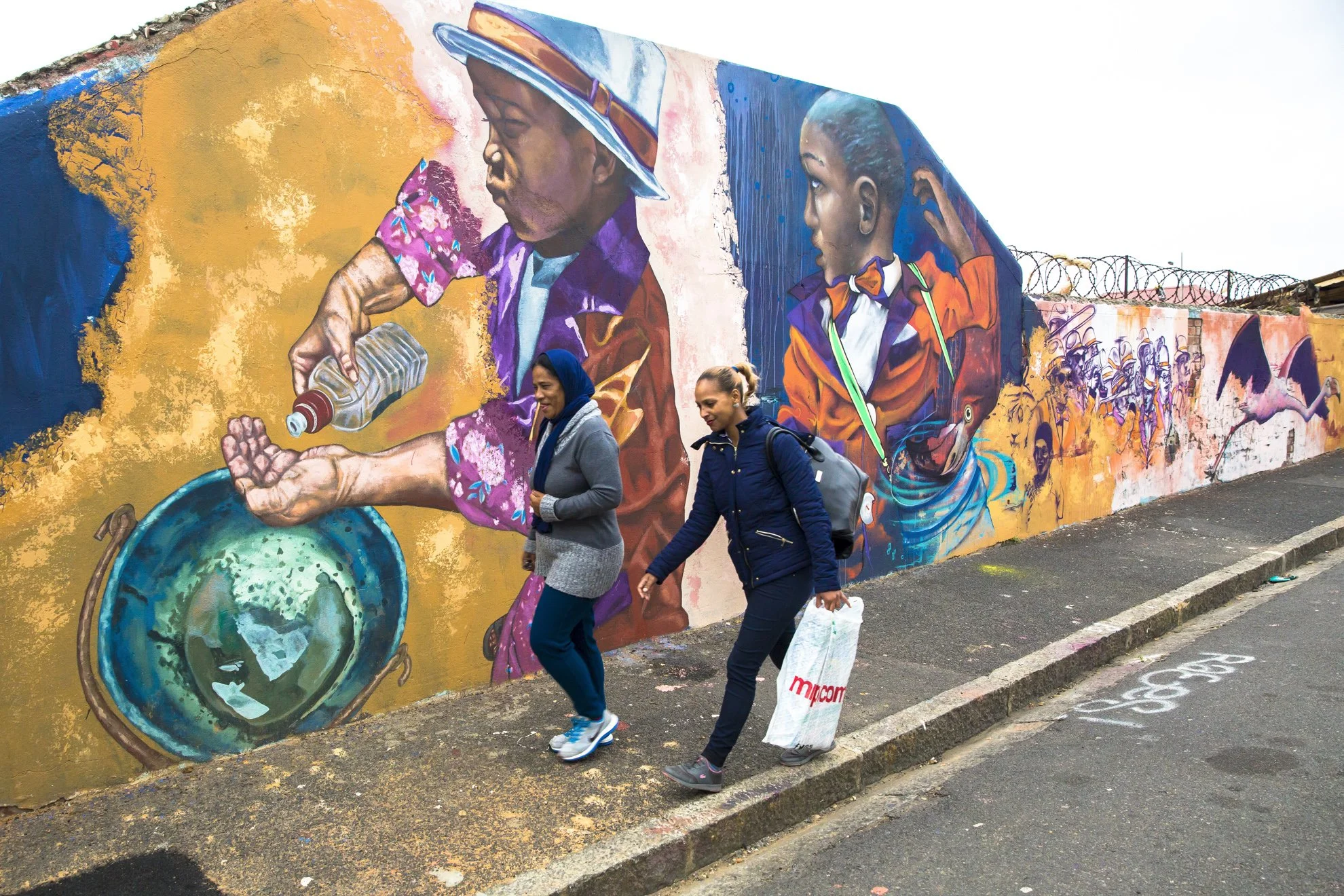
A public mural in Salt River, a suburb of Cape Town, is one of many artistic responses to the unfolding water crisis. During a street art festival in February, artists were invited to reflect on the theme: “Nature Doesn’t Need Us. We Need Nature.”